Nature
The Life and Habits of a Bear
Bears are fascinating creatures that have captured the human imagination for centuries. From their impressive size and strength to their unique behavior and habits, there is much to learn about these animals. In this article, we will explore the life and habits of the moon in detail.
By noman dhudhi3 years ago in Earth
The Power of Collaboration
Once upon a time, in a small town nestled in the foothills of a great mountain range, there lived a group of farmers. These farmers had a simple dream: to cultivate their land and harvest the bountiful crops that grew on it. However, they faced a major challenge. The mountain range that surrounded their town blocked the sun for most of the day, leaving their fields in a perpetual state of shade.
By Melodic Narrator3 years ago in Earth
The Secret Life of Trees: Discovering the Hidden World of our Leafy Friends
Have you ever wondered about the secret life of trees? These silent giants have been around for millions of years and are some of the oldest living organisms on our planet. Yet, we often take them for granted and overlook their incredible complexity and importance. In this article, we will delve into the fascinating world of trees, exploring their communication skills, survival strategies, and crucial role in maintaining the health of our planet.
By Thiago Assis3 years ago in Earth
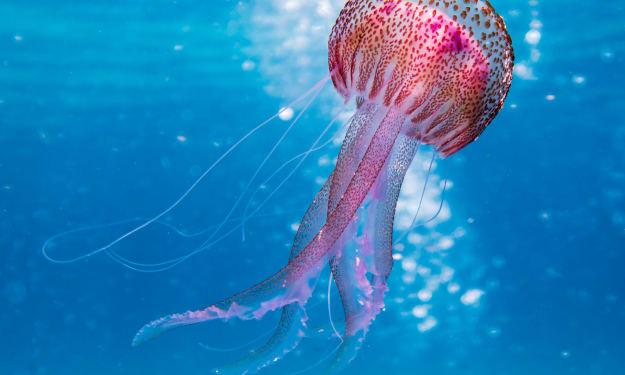
Jellyfish in Popular Culture: From Art to Science Fiction
Jellyfish, with their ethereal beauty and otherworldly appearance, have long captivated the human imagination. These mesmerizing creatures have appeared in various forms of popular culture, from art to science fiction. Here, we explore the ways in which jellyfish have inspired creativity and imagination.
By Mr Royal Honey 3 years ago in Earth
The Lifespan of Jellyfish.
Jellyfish are fascinating creatures that inhabit oceans and other water bodies around the world. These gelatinous invertebrates have been around for over 500 million years, making them one of the oldest animal groups on the planet. While there are many different species of jellyfish, each with its own unique characteristics, one question that often comes up is: how long do they live? The lifespan of a jellyfish can vary greatly depending on the species. Some species, such as the moon jellyfish, have a relatively short lifespan of only a few months, while others, such as the immortal jellyfish, are capable of living for several years. One of the most well-known species of jellyfish is the box jellyfish. These creatures are known for their extremely potent venom, which can be deadly to humans. Despite their dangerous reputation, box jellyfish have a relatively short lifespan of only a few months. The moon jellyfish, another common species of jellyfish, has a slightly longer lifespan than the box jellyfish. Moon jellyfish typically live for around six months to a year, although some individuals may live for up to two years in captivity. On the other end of the spectrum is the immortal jellyfish, also known as Turritopsis dohrnii. This species of jellyfish is unique in that it has the ability to revert back to its juvenile state after reaching adulthood, effectively allowing it to live indefinitely. While there is no limit to how long the immortal jellyfish can live, most individuals are thought to live for only a few years before succumbing to predation or disease. Other species of jellyfish have lifespans that fall somewhere in between these extremes. For example, the lion's mane jellyfish, which is one of the largest species of jellyfish, can live for several years. Some individuals have been known to live for up to five years in the wild, although most individuals live for only a year or two. So, what factors influence the lifespan of jellyfish? One of the most important factors is the environment in which the jellyfish lives. For example, jellyfish that live in warmer waters may have a shorter lifespan than those that live in cooler waters. This is because warmer water temperatures can increase the metabolic rate of the jellyfish, which can lead to faster aging and a shorter lifespan. Another factor that can influence the lifespan of jellyfish is predation. Many species of jellyfish are eaten by predators such as sea turtles and certain species of fish. Jellyfish that are able to avoid predation are more likely to live longer than those that are not. Finally, the reproductive strategy of a jellyfish can also play a role in its lifespan. Some species of jellyfish reproduce sexually, while others reproduce asexually. In general, individuals that reproduce sexually have a shorter lifespan than those that reproduce asexually. This is because sexual reproduction is a more energy-intensive process that can lead to faster aging. Despite their relatively short lifespans, jellyfish play an important role in marine ecosystems. They are a key food source for many marine predators, and their presence can help to indicate the health of a marine ecosystem. Additionally, jellyfish have unique adaptations that allow them to survive in some of the harshest environments on the planet, including the deep sea and polar regions. In conclusion, the lifespan of jellyfish varies greatly depending on the species, with some living for only a few months and others living for several years. Factors such as the environment, predation, and reproductive strategy can all influence the lifespan of a jellyfish. While jellyfish may not live as long as some other animals, they are still an important part of marine ecosystems and have many fascinating adaptations that make them worthy of study and appreciation.
By Mr Royal Honey 3 years ago in Earth
What Lies Beyond: The Unseen World Awaiting Our Absence
Celiwe here. Furthermore, the year 6009 will be the absolute first year beginning around 1961 that a year at the point when written in Hindu-Arabic numerals can be upset nevertheless appear to be identical. In any case, you and I likely won't sufficiently live to partake in the year 6,000 furthermore, nine. Living souls simply aren't adequately long. We will pass up that. What other cool future offense will we be missing? All things considered, as a matter of some importance, you and I will most likely be gone before the consummation of the time pyramid in Wemding, Germany. It will ultimately be a heap of 120 substantial blocks. In any case, the developers are just adding one block like clockwork.
By Celiwe Innocentia3 years ago in Earth
The Wallace Line
The Wallace Line, also known as the Wallace's Line, is one of the most significant biogeographical landmarks in Southeast Asia. Named after the British naturalist Alfred Russel Wallace, who first proposed the idea in 1859, the Wallace Line marks the boundary between two distinct zoogeographical regions. It is a deep underwater trench that separates the biotas of the Asian and Australian continents.
By Muhammad Arslan3 years ago in Earth
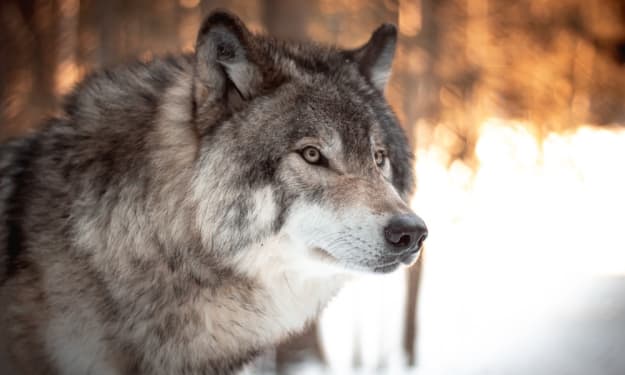
The Life and Habits of a Wolf
Wolves are highly intelligent and social animals that are known for their keen senses, powerful jaws, and fierce loyalty to their pack. They are apex predators, which means that they are at the top of the food chain in their ecosystem. In this article, we will explore the life and habits of wolves in detail.
By noman dhudhi3 years ago in Earth
No Mow May
Introduction Corporations and the governments in their pockets are doing their damnedest to kill off bees because they see them as pests, seemingly totally ignorant of the fact that without bees, plants would not get pollinated and therefore will not grow.
By Mike Singleton 💜 Mikeydred 3 years ago in Earth
Humans future
The future holds both promise and peril for humanity. As we continue to progress and evolve, we will inevitably face new challenges and problems that will test our resilience, ingenuity, and adaptability. In this article, we will explore some of the major problems that we are likely to face in the future, as well as some potential solutions.
By Positive Thinker3 years ago in Earth