Nature
"When Nature Strikes: The Impact of Geomagnetic Storms on Earth's Ecosystems and Technology"
Nature is a powerful force that can have both positive and negative impacts on our planet. One such natural occurrence is a geomagnetic storm, which is caused by the interaction between the Earth's magnetic field and the solar wind. While these storms are a fascinating display of the natural world, they can also have significant effects on our planet's ecosystems and technology. This topic has become increasingly important in recent years, as our reliance on technology has grown and our understanding of the impact of geomagnetic storms on the environment has improved. In this context, this article will explore the impact of geomagnetic storms on Earth's ecosystems and technology, highlighting the risks and opportunities presented by these natural phenomena. Hey there, space enthusiasts! We’ve got some exciting news! Brace yourselves because a massive burst of plasma and magnetic fields from the Sun is on its way towards the inner planets, and Earth is in the firing line! Yes, you heard it right! The Coronal Mass Ejection (CME) emerged from the Sun's corona on May 7th and is travelling at an astonishing speed of over millions of kilometers per hour. But what does this mean for us Earthlings? Well, the US-based Space Weather Prediction Center has forecasted that the May 7 CME could trigger a G1 class minor geomagnetic storm on our beloved planet. What is a geomagnetic storm, you ask? It's an event that occurs when the CME's magnetic fields interact with Earth's magnetic field, causing a fluctuation in Earth's magnetic field. This can create electrical currents in the ionosphere and the Earth's surface, which can disrupt satellite communications and power grids. But hold your horses, folks! It's not all doom and gloom. The geomagnetic storm is likely to cause weak power grid fluctuations and a minor impact on satellite operations. The event could also create a stunning display of auroras in the polar regions, and if you're lucky enough to be in a high latitude area, you might even catch a glimpse of this breathtaking natural wonder! For those of you who don't know, auroras are also known as northern and southern lights. They are caused by the solar wind interacting with Earth's magnetic field, exciting particles in our atmosphere and causing a spectacular light show in the process. Imagine looking up at the night sky and seeing hues of green, pink, and purple dancing across the stars – it's a sight to behold! But that's not all, folks! The geomagnetic storm could also affect migratory animals at higher levels. Did you know that migratory birds use Earth's magnetic field for their navigational requirements? It's true! So, keep your eyes peeled for some strange bird behavior in the coming days. Now, we know what you're thinking. "Is this going to happen again? What's going on with the Sun?" Well, we've got some answers for you. According to NASA, the Sun is peaking in its solar cycle and heading for solar maximum, leading to rampant activity. Last week, the Sun exploded with 14 notable solar flares and 31 coronal mass ejections, most of which were not directed towards Earth. So, it's safe to say that we're in for some more space action in the coming days! In summary, although the concept of a geomagnetic storm may seem intimidating, it is essential to keep in mind that it is a regular occurrence in nature. Despite its potential to cause some disturbances to our power grids and satellite communication, it also presents an opportunity to witness one of the most stunning natural spectacles on earth - the auroras. It is worth noting that geomagnetic storms are not a recent phenomenon, and they have been observed and studied for centuries. These storms are triggered by the fluctuations in the Sun's magnetic field and solar wind, which interacts with the Earth's magnetic field. While this interaction can cause some disruptions in our daily lives, it also creates a mesmerizing display of light in the night sky. The auroras, also known as the Northern and Southern Lights, are a result of this interaction. The colorful lights are a result of charged particles from the Sun colliding with the Earth's atmosphere, causing a breathtaking display of green, blue, and red lights. This natural phenomenon is not only visually stunning but also provides invaluable insights into our planet's magnetic field. Therefore, instead of fearing geomagnetic storms, we should embrace them and enjoy the magical display of auroras that they bring. We can make the most of these opportunities by planning ahead, finding the perfect spot with clear skies, and taking some binoculars along to enhance the experience. In addition, it is a chance to appreciate the natural beauty that surrounds us and recognize the power of the universe. Ultimately, let's take advantage of this natural spectacle and enjoy the show that Mother Nature has to offer.
By NEERAJ KUMAR SHAMI3 years ago in Earth
The Latest Trends in Tech and Gadget Design
Technology and gadgets have been rapidly evolving over the past few years, and there are no signs of this trend slowing down anytime soon. From wearables to smart homes, the latest trends in tech and gadget design are all about making our lives easier, more efficient, and more connected. In this article, we will explore some of the latest trends in tech and gadget design. Smart Homes Smart homes are becoming increasingly popular as people seek to automate and control their living environments using technology. With the help of smart devices such as Google Nest, Amazon Echo, and Apple HomeKit, homeowners can control everything from their lighting and temperature to their security systems and appliances with a single voice command. In addition to convenience, smart homes offer a range of benefits, including increased energy efficiency, improved home security, and greater peace of mind. As the technology continues to evolve, we can expect to see even more advanced features and integrations in smart homes. Wearable Technology Wearable technology is another rapidly growing trend in tech and gadget design. From fitness trackers to smartwatches, wearables are designed to help users monitor their health and wellness, stay connected, and simplify their lives. One of the latest trends in wearable technology is the integration of biometric sensors, which can track everything from heart rate and blood pressure to sleep patterns and stress levels. Wearables can also provide users with real-time feedback on their fitness goals, such as steps taken, calories burned, and distance traveled. In addition to health and fitness tracking, wearables are also being used to enhance productivity and communication. Smartwatches, for example, can display notifications, messages, and calls, allowing users to stay connected without having to reach for their phones. Virtual and Augmented Reality Virtual and augmented reality technologies are rapidly advancing, and their applications extend far beyond gaming and entertainment. In fact, these technologies are being used in a range of industries, from healthcare to education to retail. Virtual reality (VR) immerses users in a digital environment, while augmented reality (AR) overlays digital information onto the physical world. Both technologies have the potential to enhance experiences and improve productivity by providing users with new ways of interacting with their environments. In the healthcare industry, for example, VR and AR technologies are being used to train medical professionals, simulate surgeries, and treat patients with conditions such as PTSD and chronic pain. In the education industry, VR and AR are being used to create immersive learning experiences and enhance remote education. Flexible and Foldable Screens Flexible and foldable screens are another trend in tech and gadget design that is rapidly gaining popularity. These screens offer users more flexibility and portability than traditional rigid screens, allowing for new form factors and use cases. Samsung and Huawei are among the companies that have released foldable smartphones, which can be opened up to reveal larger screens. Additionally, companies such as LG and Sony are working on developing flexible displays for use in products such as TVs and smart home devices. One potential benefit of flexible and foldable screens is increased durability, as the screens can bend and flex without cracking. This could lead to longer-lasting devices and reduce the amount of e-waste generated by consumers. Artificial Intelligence Artificial intelligence (AI) is another trend that is transforming the tech and gadget industry. AI can be used to power everything from voice assistants to autonomous vehicles, making our devices and appliances smarter and more responsive. One of the biggest benefits of AI is its ability to learn and adapt based on user behavior. For example, an AI-powered thermostat can learn a user's preferences for temperature and adjust accordingly, without the user having to manually adjust the settings. In addition to making our devices more intuitive and personalized, AI is also being used to improve efficiency and productivity in industries such as manufacturing and logistics. Conclusio
By Balamurugan3 years ago in Earth
The Island is split
I suggest we take a break at this moment. I am currently on a road that divides Haiti and the Dominican Republic, right at the border that distinguishes these two very dissimilar nations. If you were born in Haiti, statistics show that you are more than two times likely to die as an infant compared to those born in the Dominican Republic. You can also anticipate being nearly ten times poorer and having a much shorter life span. I am here to discover how these two countries, sharing the same island, can differ so vastly, with a tumultuous and impoverished Haiti on one side and a stable and relatively wealthy Dominican Republic on the other. How did this division create two completely distinct worlds?
By Bob Oliver3 years ago in Earth
Arctic Meltdown
I am currently located on an island near the North Pole with the purpose of investigating the ownership of the Arctic. The melting ice in this region has caused a significant reduction in its size, and one country, Russia, has demonstrated their willingness to fight for their rights in the Arctic. This area is considered to be the Wild West, with investment opportunities emerging in the Russian Arctic, a region of strategic and economic significance. The rate of melting is only accelerating, and Russia is projecting its power in the area. Diplomacy should be used to avoid further conflict in the High North.
By Bob Oliver3 years ago in Earth
Asteroid 2023 HG1 Racing Towards Earth At A Speed of 7200 Kmph
In the month of May, we are going to see five asteroids that will make close approaches to Earth. NASA's Jet Propulsion Laboratory has shared details about them. Today, Asteroid 2023 HG1 is hurtling towards Earth at a speed of 7200 KMPH (2 KMPH), and it is thought to be the size of a home. On May 9, 2023, the asteroid is anticipated to pass within 2,590,000 miles (4,160,000 km) of Earth. The diameter of this specific asteroid, which is nearly the size of a house, is 60 feet (18 metres). According to NASA (the National Aeronautics and Space Administration), asteroids are left over from the formation of our solar system. Our solar system began about 4.6 billion years ago when a big cloud of gas and dust collapsed. When this happened, most of the material fell to the centre of the cloud and formed the sun. Some of the condensing dust in the cloud became planets. The objects in the asteroid belt never had the chance to be incorporated into planets. They are leftovers from that time long ago when planets formed. As per NASA, not all asteroids are the same size and shape. Because asteroids are formed in different locations at different distances from the sun, no two asteroids are alike. Asteroids aren't all around like planets. They have jagged and irregular shapes. Some asteroids are hundreds of miles in diameter, but many more are as small as pebbles. Most asteroids are made of different kinds of rocks, but some have clays or metals, such as nickel and iron. A well-known fact is that numerous asteroids are zooming through the cosmos, with a few of them approaching dangerously close to our planet. The possibility of an asteroid colliding with Earth is one of the greatest threats to human existence, and it has been a subject of concern for scientists and astronomers for decades. Recently, an asteroid named 2023 HG1 has been detected, and it is approaching Earth at a record-breaking speed. The potential impact of this asteroid has raised alarm bells among scientists and governments around the world, and preparations are being made to mitigate the impact in case of a collision. In this context, understanding the characteristics of this asteroid, its trajectory, and the potential risks it poses to our planet is of paramount importance. In this article, we will delve deeper into the details of this incoming collision, and explore what measures are being taken to minimize its impact. Get ready to look up at the sky in awe because May 2023 is bringing us some exciting celestial events. NASA's Jet Propulsion Laboratory has shared details about five asteroids that are set to make close approaches to Earth this month, and we can't wait to witness them all. These asteroids are a reminder of the fascinating and ever-evolving universe we live in. First up, we have Asteroid 2023 HG1, which is hurtling towards Earth at an impressive speed of 7200 KMPH (2 KMPH). This asteroid is approximately the size of a home, with a diameter of 60 feet (18 meters). While this might sound intimidating, fear not, because on May 9, 2023, the asteroid will pass within a safe distance of 2,590,000 miles (4,160,000 km) from Earth. This distance may sound far, but it's relatively close in the grand scheme of the universe. But, where do asteroids come from, you ask? According to NASA, asteroids are remnants from the formation of our solar system, which began about 4.6 billion years ago. As a big cloud of gas and dust collapsed, most of the material fell to the centre and formed the sun. However, some of the condensing dust in the cloud became planets, while others formed into asteroids that make up the asteroid belt between Mars and Jupiter. Asteroids are fascinating because they come in all shapes and sizes, and no two are alike. Because asteroids are formed in different locations at different distances from the sun, their composition can vary widely. Some asteroids are hundreds of miles in diameter, while others are as small as pebbles. They also have jagged and irregular shapes, unlike the smooth, spherical shapes of planets. While most asteroids are made of different kinds of rocks, some also contain clays or metals, such as nickel and iron. This variety in composition makes asteroids an exciting topic for scientists to study, as they can provide clues about the formation of our solar system and even the origins of life on Earth. So, why should we care about these asteroids passing by Earth? For starters, they are a reminder of the vastness of our universe and the constant motion of celestial bodies. It's humbling to think that these asteroids have been floating around in space for billions of years and will continue to do so long after we are gone. Additionally, studying these asteroids can provide valuable information for potential asteroid mining in the future. As we continue to explore space and seek out resources to support life on Earth, asteroids could provide a wealth of valuable materials, such as rare metals and water. Finally, tracking asteroids and predicting their movements is an important part of planetary defense. While the likelihood of an asteroid collision with Earth is low, it's not impossible, and the consequences could be catastrophic. By studying and monitoring asteroids, we can develop strategies to deflect or destroy any asteroids that may pose a threat to our planet. So, as these asteroids pass by Earth in May 2023, take a moment to appreciate the wonder of our universe and the valuable insights we can gain from studying these celestial bodies. Who knows what secrets they may hold, or what opportunities they may provide for our future exploration of space? The possibilities are endless, and the sky's the limit!
By NEERAJ KUMAR SHAMI3 years ago in Earth
5 Reasons to Add Moringa Powder to Your Diet.
Moringa powder, made from the leaves of the moringa tree, is becoming increasingly popular as a health supplement. This plant, native to India, has been used for thousands of years for its medicinal properties. Online moringa powder is a rich source of nutrients, antioxidants, and anti-inflammatory compounds, making it a great addition to any diet. You can easily buy organic moringa powder. Here are five reasons why you should consider adding moringa powder to your daily routine:
By ishkafarms3 years ago in Earth
The Antarctic Connection of Penguin.
Antarctica, the southernmost continent on Earth, is home to one of the most iconic and beloved creatures in the animal kingdom: penguins. These flightless birds have evolved to survive the harsh and unforgiving climate of the frozen continent, and have captivated the hearts and imaginations of people all around the world. There are 18 species of penguins in the world, and 7 of them can be found in Antarctica. These include the Adelie, Chinstrap, Emperor, Gentoo, Macaroni, Rockhopper, and King penguins. Each species has its own unique characteristics and adaptations to life in the cold, but they all share a few key features that make them well-suited to their environment. One of the most obvious adaptations of penguins is their feathers. Unlike other birds, penguins have a layer of fat underneath their skin that insulates them from the cold, and their feathers are specially adapted to trap air close to their body, providing an additional layer of insulation. Penguins are also able to control the direction of their feathers to regulate their body temperature and stay warm. Another adaptation of penguins is their ability to swim. Penguins are excellent swimmers and can dive to depths of over 500 feet to catch fish and other prey. Their streamlined bodies and webbed feet make them incredibly agile in the water, and they use their flippers to steer and propel themselves through the icy currents. Despite their ability to swim, penguins are not well-suited to life on land. Their bodies are designed for the cold, and they have trouble regulating their body temperature in warmer climates. This is why penguins are only found in the southern hemisphere, where the temperatures are cooler and more stable. Antarctica provides the perfect environment for penguins to thrive. The continent is covered in ice and snow, which helps to regulate the temperature and provides a stable environment for the penguins to live in. The surrounding ocean is also rich in nutrients, providing a steady supply of food for the birds. However, the frozen habitat of penguins is not without its challenges. Climate change is having a profound impact on the Antarctic environment, causing temperatures to rise and ice to melt at an alarming rate. This is affecting the food chain, as the loss of ice is reducing the availability of krill and other prey that penguins rely on for food. In addition to climate change, human activity is also having an impact on the Antarctic environment. Fishing, tourism, and scientific research are all contributing to the disruption of the delicate ecosystem that penguins rely on. The noise and disturbance caused by boats and planes can disrupt the breeding and feeding patterns of penguins, and the introduction of non-native species can have a devastating impact on the local wildlife. Despite these challenges, there is still hope for the future of penguins in Antarctica. Conservation efforts are underway to protect the fragile ecosystem and preserve the habitat of these beloved creatures. Organizations like the World Wildlife Fund and the Antarctic and Southern Ocean Coalition are working to raise awareness about the importance of protecting the Antarctic environment, and to promote sustainable practices that will help to reduce the impact of human activity. Individuals can also do their part to help protect penguins and their frozen habitat. Simple actions like reducing energy consumption, recycling, and choosing sustainable products can all help to reduce our impact on the environment and preserve the habitat of these amazing creatures. In conclusion, penguins are a beloved and iconic symbol of the frozen continent of Antarctica. Their unique adaptations and remarkable resilience in the face of harsh conditions have captivated the hearts and imaginations of people all around the world. However, their habitat is facing significant challenges, including climate change and human activity. By working together to protect the environment and promote sustainable practices, we can help to ensure that penguins and their fellow Antarctic wildlife continue to thrive for future generations to enjoy.
By Mr Royal Honey 3 years ago in Earth
Magic Angle Of Skipping Rocks
The world record holder at skipping rocks, kinda, sucks at it. So do you and so does everybody not to come screaming in with a hot take about a relaxing outdoor Pastime with zero Stakes, but it`s true because while the world record is 88 skips in a row, researchers predict we should be able to do hundreds, but we can`t and in our quest to understand why researchers have uncovered some real-world applications including bringing astronauts safely back from space. I`m pretty stoked if I can get three skips, so 88 seems unfathomable, but from what we know of the physics behind Rockskipping it`s possible the throw itself involves two things speed and angles. First, imagine the throw, the stone has to be traveling quickly in order to have enough momentum to keep going after making contact with the water and it's not just traveling really fast in a straight line, the stone is angled slightly in order to collide with the water on top of that, the stone needs to be rotating which you accomplish by holding the stone with your forefinger on the Leading Edge as you throw.This rotation is part of the key to success because it gives the stone stability as it flies through the air, as the stone collides with the water there is a couple of forces acting on it. The water pushes up on the moving Stone as it makes an impact causing the stone to skip the Collision and also causing the water itself to move creating ripples,these ripples will add some drag and slow its momentum. You'll notice that as the stone begins to lose momentum it starts skipping more frequently and the height of its skips decreases until all of a sudden the fun is over. Fun fact professional Skippers call these frequent Skips a Pity patch so if the goal is to maximize your skips and get somewhere in the same ballpark as the world record, you have to do a few things to overcome the forces acting on the stone. You need to pick a flat lightweight Stone so the upward force of the water is greater than the weight of the stone, otherwise, it will just sink as soon as it hits. In a 2004 nature paper about skipping stones, the authors identify the magic of the angle of attack when throwing your stone. They found that using a 20-degree angle in relation to the surface of the water maximizes the number of Skips and minimizes the amount of energy lost keeping the stone skipping longer even with all the forces acting against the stone models. Like this say we could create even more skips but why is this so hard to put into practice? First it's really hard to throw fast with spin while at the same time being very accurate about hitting the magic angle of attack, at that point, you're talking major league baseball pitcher levels of power and precision, and most pitchers don't Moonlight as Stone Skippers but even if you could achieve that combination, there are a lot of other factors working against you. For one thing, Mother Nature didn't make all Stones perfectly flat and round discs, and researchers say that the best-skipping Stones aren't stones at all. If you could you'd use something a bit squishy that deforms as it connects with the water like a rubber ball but that's littering, so don't do that. Also, most models simplify the real-world environment neglecting things like wind and waves all of which act against the stone, so while way more than 88 skips could be possible in reality there are too many factors that are out of our control to make that happen without the help of a controlled environment. German and maybe a robot but in the pursuit of trying to understand skipping Stonephysics researchers have found some real-world applications for example skipping technique was applied to the Orion capsule that landed in December 2022. This was the first successful uncrewed mission of NASA's Artemis. The program which will one day use Orion to take humans farther than they've ever traveled. When Orion was headed back to Earth it skipped off of our atmosphere before re-entry it's not quite the same as a stone skipping on the surface of the water but it did dip in and out of the Earth's atmosphere as it changed its trajectory to intersect with Earth. The moves accomplished a number of things. It helped the spacecraft land more accurately so the crew could be recovered in a more precise location, it also helped slow the speed of the spacecraft in the same way the water does when a stone skips on it while also reducing the amount of heat being generated by the high-speed entrance. While Orion was the first to successfully skip across Earth'satmosphere, the Apollo missions also had the capability though not the confidence to use this strategy. They did however inspire the application of this technique to the Orion mission in order to make the journey safer for the crewaboard. Spacecraft re-entry is only one thing we've been able to learn about thanks to the physics behind a simple game, but sometimes it's just fun to learn a little more about an afternoon by the lake too. Skipping Stones is a lot harder than it seems after all If energy momentum conservation is as reliable as the fancy physicists say it is you should be able to throw a little Stone as far as the eye can see. To learn more about energy-momentum conservation you can go to brilliant.org scishow.
By Joseph Njihia3 years ago in Earth
Penguin Species Spotlight.
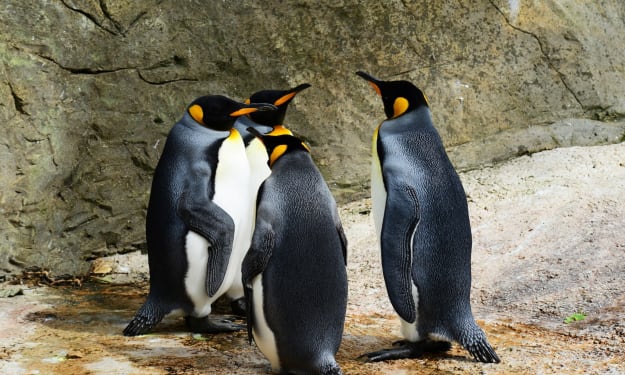
Penguins are fascinating creatures that captivate the hearts and minds of people around the world. With their iconic tuxedo-like appearance and waddling gait, penguins are well-known inhabitants of the Southern Hemisphere. However, many people may not be aware of the incredible diversity that exists within the penguin family. Let's take a closer look at some of the different species of penguins and discover what makes each one unique. Emperor Penguin (Aptenodytes forsteri): The largest of all penguin species, the Emperor penguin is an impressive sight to behold. These majestic birds can reach a height of up to 1.2 meters (4 feet) and weigh as much as 40 kilograms (88 pounds). They are also the only penguin species to breed during the harsh Antarctic winter, enduring temperatures as low as -40 degrees Celsius (-40 degrees Fahrenheit). King Penguin (Aptenodytes patagonicus): Similar in appearance to the Emperor penguin, the King penguin is the second-largest species. They have a distinctive orange-colored patch on their chests and vibrant yellow feathers on their necks. King penguins are known for their elegant and upright posture, and they can often be found in large colonies on sub-Antarctic islands. Adelie Penguin (Pygoscelis adeliae): Adelie penguins are the quintessential Antarctic penguins. They have a white belly, a black head, and a distinct white ring around their eyes. These agile swimmers build their nests using pebbles and are known for their acrobatic leaps out of the water onto the ice. Adelie penguins have a playful and curious nature, often approaching humans with a sense of wonder. Gentoo Penguin (Pygoscelis papua): The Gentoo penguin is recognized by its bright orange-red bill and a white strip across the top of its head. They are known for their remarkable swimming speed and can reach speeds of up to 36 kilometers (22 miles) per hour. Gentoo penguins are also highly vocal and communicate with each other through a series of loud calls. Chinstrap Penguin (Pygoscelis antarcticus): As the name suggests, the Chinstrap penguin has a distinctive thin black band that resembles a chinstrap under its chin. They have a sleek and streamlined body, which allows them to navigate through the water with ease. Chinstrap penguins are known for their extensive breeding colonies, with some populations numbering in the millions. Macaroni Penguin (Eudyptes chrysolophus): Macaroni penguins are known for their flamboyant appearance. They have a vibrant yellow crest on their heads, giving them a somewhat punk-like appearance. Macaroni penguins are excellent divers and can plunge to depths of up to 100 meters (330 feet) in search of food. They are also highly social and can form colonies of tens of thousands of individuals. African Penguin (Spheniscus demersus): Found along the coast of southern Africa, the African penguin is the only species of penguin that breeds on the African continent. They have a unique black and white pattern on their chest and a pink gland above their eyes, which helps them regulate their body temperature. Sadly, the African penguin is listed as endangered due to habitat loss and overfishing. These are just a few examples of the incredible diversity of penguin species that inhabit our planet. Each species has adapted to its own unique environment and developed remarkable characteristics to survive and thrive. By studying and appreciating the diversity of penguins, we gain a greater understanding of the complex ecosystems theyinhabit and the importance of preserving their habitats. Here are a few examples of the incredible diversity of penguin species: Emperor Penguin (Aptenodytes forsteri): The largest of all penguin species, the Emperor penguin is found in Antarctica. They have a distinctive black and white plumage, with a yellow patch on their neck. Emperor penguins are known for their remarkable adaptation to the extreme cold, with a thick layer of blubber and dense feathers that provide insulation. King Penguin (Aptenodytes patagonicus): King penguins are the second-largest penguin species and inhabit the sub-Antarctic islands. They have a vibrant orange-colored plumage on their chest and neck, and their diet primarily consists of fish and squid. King penguins are known for their elaborate courtship rituals and large breeding colonies. Adélie Penguin (Pygoscelis adeliae): Adélie penguins are native to the Antarctic continent and surrounding islands. They have a black head and back, with a distinctive white eye ring. Adélie penguins are known for their agility and speed in the water, using their flippers to navigate through the icy waters. They primarily feed on krill and fish. Chinstrap Penguin (Pygoscelis antarcticus): Chinstrap penguins get their name from the thin black band that runs under their chin, resembling a strap. They breed in large colonies on islands around the Antarctic Peninsula. These penguins have a diet mainly consisting of krill and small fish. Gentoo Penguin (Pygoscelis papua): Gentoo penguins are known for their red-orange beak and white-feathered cap. They breed on the Antarctic Peninsula and nearby islands, as well as sub-Antarctic islands. Gentoo penguins are the fastest swimming penguins, reaching speeds of up to 22 miles per hour (35 kilometers per hour). Magellanic Penguin (Spheniscus magellanicus): Magellanic penguins inhabit the coasts of South America, particularly Argentina and Chile. They have a distinctive black band across their chest and a white belly. Magellanic penguins are known for their burrow-nesting habits and their ability to swim long distances in search of food. These are just a few examples of the diverse range of penguin species found across the Southern Hemisphere. Each species has unique adaptations and behaviors that allow them to thrive in their respective habitats. By studying and appreciating their diversity, we can gain valuable insights into the natural world and the importance of conserving these remarkable creatures and their environments.
By Mr Royal Honey 3 years ago in Earth