Humanity
Trump is sending his national security adviser Mike Waltz to the UN in a shakeup . AI-Generated.
Trump Sends National Security Adviser Mike Waltz to the UN: A Dramatic Shake-Up in the White House In a move that has stirred both surprise and criticism, President Donald Trump has removed National Security Adviser Mike Waltz from his post and nominated him as the United States Ambassador to the United Nations. This decision, coming just within the first 100 days of Trump’s second term, marks a significant reshuffling within the highest levels of the U.S. government.
By sayma farzana tamimaabout a year ago in Earth
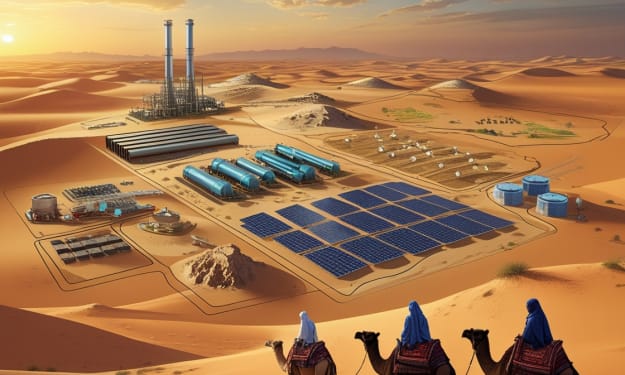
The Sahara's Hidden Fortune: Calculating the True Net Worth of the World's Greatest Desert. AI-Generated.
The Mongol War Machine: The Largest Imperial Army in History Summary: Under the leadership of Genghis Khan, the Mongol Empire rose from the steppes of Central Asia to forge the largest contiguous empire the world has ever seen. Central to this conquest was a massive and highly organized military force—estimated at over a million strong at its peak. This article explores the rise, structure, and tactics of the Mongol army, detailing how it conquered lands from China to Eastern Europe through speed, discipline, and revolutionary strategy. The Mongol army remains one of history’s most formidable and influential military forces. You said: Create a article about the networth of the sahara desert more than 700 words ChatGPT said: Title: The Wealth of Sand: Calculating the Net Worth of the Sahara Desert Summary: Stretching across 11 countries and over 9.2 million square kilometers, the Sahara Desert is often viewed as a barren wasteland. However, beneath its sands lie untapped riches—ranging from oil and gas reserves to rare minerals, solar energy potential, and even tourism opportunities. This article explores the hidden wealth of the Sahara Desert and attempts to estimate its staggering net worth, which could rival some of the world's richest regions. Introduction: More Than Just Sand The Sahara Desert, the largest hot desert in the world, spans across North Africa—covering countries like Algeria, Libya, Egypt, Sudan, Chad, Mali, Mauritania, Morocco, Niger, Tunisia, and Western Sahara. For most people, the Sahara conjures images of endless sand dunes, scorching heat, and lifeless terrain. Yet, this vast expanse is far from worthless. In fact, the Sahara is home to enormous natural resources that contribute significantly to the economies of several African nations—and it holds the key to a potential future of global energy and rare mineral wealth. 1. Oil and Natural Gas Reserves Some of the richest underground assets in the Sahara are petroleum and natural gas reserves. Countries like Algeria and Libya rely heavily on oil exports sourced from Saharan basins. For example: Algeria is the third-largest gas supplier to Europe and holds the 10th-largest natural gas reserves in the world. Its Hassi R'Mel field is one of the largest in Africa. Libya, before its civil unrest, held Africa’s largest proven oil reserves, most of which are found in the Sirte Basin, deep in the desert. Together, these Saharan oil and gas fields generate tens of billions of dollars annually. According to estimates, the proven oil reserves alone in the Sahara exceed 50 billion barrels, with current market prices suggesting a valuation of over $4 trillion USD. 2. Mineral Wealth Beneath the Sand Beyond hydrocarbons, the Sahara is home to critical minerals used in modern technologies. These include: Uranium: Niger is one of the world’s top producers, and its uranium mines in the Sahara power nuclear energy worldwide. Gold: Mali and Sudan have vast desert mining operations producing hundreds of tons of gold. Phosphate: Morocco’s Saharan region holds some of the richest phosphate deposits, essential for agriculture. These minerals play an essential role in industries from energy to electronics and food production. The collective estimated value of exploitable mineral wealth in the Sahara is easily in the hundreds of billions, if not trillions. 3. Solar Energy: A Powerhouse for the Future The Sahara receives over 4,000 hours of sunlight per year, making it one of the most solar-rich regions on Earth. Scientists and engineers have long imagined turning the Sahara into a solar power farm capable of generating electricity for entire continents. Projects like Desertec, though still in developmental stages, propose the installation of massive solar arrays across the desert to supply Europe and Africa with clean energy. If just 1% of the Sahara were covered with solar panels, it could generate over 20 times the electricity that the entire world uses today. The potential market value of such energy production is incalculable, but conservative projections place it in the range of several trillion dollars if fully developed. 4. Tourism and Cultural Heritage Though difficult to quantify compared to minerals or oil, the Sahara holds tourism and cultural value: Destinations like the Erg Chebbi dunes in Morocco, Siwa Oasis in Egypt, and the Tassili n’Ajjer rock formations in Algeria draw adventurous travelers. Archaeological sites, such as prehistoric rock art, ancient trade routes, and Berber and Tuareg cultural landmarks offer significant heritage appeal. Tourism revenue is modest now due to instability and harsh climate, but it could generate billions annually with improved infrastructure and political stability. 5. Strategic Geopolitical Value The Sahara is not just about resources—it also holds immense strategic value: It connects sub-Saharan Africa with the Mediterranean world. It houses key transnational pipelines, roads, and migration routes. Its vast open spaces are of military interest and influence regional security.
By Say the truth about a year ago in Earth
Land Pollution
Land Pollution: Keeping Our Planet Clean What Is Land Pollution? Land pollution happens when the ground around us gets dirty or filled with harmful waste, like trash, chemicals, or plastics. When land is polluted, it can hurt animals, plants, and people. It’s something we can all help fix, but we first need to understand what causes it and how it affects the Earth.
By Adriana Wilder about a year ago in Earth
Air pollution
Air Pollution: The Invisible Danger What Is Air Pollution? Air pollution is when the air around us becomes dirty or polluted with harmful things, like smoke, dust, or gases. We can't always see it, but it's still there, making the air hard to breathe and causing problems for our health, the environment, and even animals.
By Adriana Wilder about a year ago in Earth
Ocean Pollution
🌟 Introduction The ocean is big, blue, and full of life! It's home to colorful fish, giant whales, playful dolphins, and millions of other amazing creatures. But did you know the ocean is in trouble? Every day, people around the world are polluting the ocean, and it’s making sea animals sick—and even hurting us too.
By Adriana Wilder about a year ago in Earth
WE WANT TO LIVE . AI-Generated.
1. Introduction In the modern age, humanity has accomplished extraordinary feats—developed cities, revolutionized technology, and connected the globe. But progress has come at a steep cost: pollution. Our air, water, soil, and even the food we eat have been compromised by centuries of industrial, agricultural, and domestic activity.
By Adriana Wilder about a year ago in Earth
Human Population is growing?. AI-Generated.
Have you ever taken a moment to really think about human civilization? What’s going on with us? I bet most people don’t. In this modern era, we’ve become consumers—not just of products, but of thoughts, trends, distractions. Nobody questions anymore. But let me show you something different, something you might not have considered.
By Syed Naimul Kamalabout a year ago in Earth
The World’s Smallest Elephants Are Facing Extinction.
In the dense rainforests of Borneo, the tiniest elephants in the world, the Borneo pygmy elephants, are often overlooked and go unnoticed as they peacefully wander through the underbrush. This gentle subspecies of the Asian elephant exhibits stout bodies, calm personalities, and long tails which alongside their oversized ears set them apart from their larger relatives. Despite the distinguishing attributes of the Borneo pygmy elephants, the species is currently facing extinction as the changes engulfing their forests are becoming increasingly dire. A Unique Species in Peril The Borneo pygmy elephant (Elephas maximus borneensis) possesses unique genetic and physical traits which differentiate it from other Asian elephants. Their DNA suggests that these populations may have been cut off from the rest of the mainland populations for tens of thousands of years. At around 8 to 9 feet tall at the shoulder, Borneo pygmy elephants are shorter than other elephants. Despite being more docile, Borneo pygmy elephants tended to survive in the dense Borneo rainforests due to their small size and passive nature. However, such traits today make the species further susceptible to human threats. Borneo pygmy elephants are classified as one of the most endangered species in the world due to their limited range, shrinking population, and fragmented habitats. Current estimates claim that there are fewer than 1,500 left in the wild, with most residing in the state of Sabah, Malaysia. Smaller populations may also exist in the Indonesian part of Borneo. Forests Under Siege Borneo’s pygmy elephants are primarily threatened by habitat destruction. The ancient rainforests of Borneo have been decimated for palm oil plantations, logging, and other infrastructural advancements in the recent decades. What used to be a forest and is now considered a ‘lost paradise’ is a blend of montane green islands separated by roads, farms, and sprawling plantations. This fragmentation has disastrous consequences. Elephants require large areas to find food, water, and mates. When their movement is blocked by human development, they are forced into smaller, less suitable areas. Conflicts often arise when elephants wander into villages or plantations, damaging crops and property. In retaliation, some are poisoned or killed. In recent years, several gruesome cases of elephant deaths due to poisoning or shooting have shocked conservationists and the public alike. Human-Wildlife Conflict and Poaching In addition to habitat loss, Borneo’s pygmy elephants face increasing dangers from human-wildlife conflict. As forests shrink and food sources disappear, elephants are more likely to enter human territory in search of sustenance. Although they are protected by law, enforcement is often weak, and in remote areas, elephant deaths sometimes go unnoticed or unpunished. While not as heavily targeted as African elephants, pygmy elephants are still vulnerable to poaching, especially for their tusks. Though only some males have tusks, they are still at risk from illegal wildlife trade and trophy hunting. Conservation Efforts and Local Heroes Despite the grim outlook, there is still hope. Several local and international conservation groups are working tirelessly to protect the Borneo pygmy elephant. Efforts include creating elephant corridors to reconnect fragmented habitats, educating local communities about peaceful coexistence, and using satellite tracking to monitor elephant movements. One inspiring example is Dr. Nurzhafarina Othman, a Malaysian elephant researcher who has dedicated her career to studying and saving these gentle giants. Her work has shed light on elephant behavior, migration patterns, and social structures—data that is critical for developing effective conservation strategies. She is also an advocate for involving local communities in elephant conservation through education and sustainable development. Programs that promote ecotourism and forest-friendly livelihoods are gaining traction. By showing local people that living elephants can bring economic benefits, these initiatives offer a compelling alternative to destructive land use practices. Why Their Survival Matters Borneo’s pygmy elephants are more than just charismatic animals—they are ecological engineers. As they move through the forest, they help disperse seeds, maintain open paths, and fertilize the soil. Their presence supports countless other species, many of which are also threatened. Losing them would be a blow not just to Borneo’s biodiversity, but to the cultural and natural heritage of Southeast Asia. Their extinction would be irreversible—and entirely preventable. A Shared Responsibility It has been simpler to neglect the wild spaces in Borneo, where Pygmy elephants also face an existential challenge. To resolve the crisis, it will take more than just good intentions; it involves commitment, political action, sustainable land use policies, international support, and profound reverence for nature. As the smallest elephants on Earth, their story might seem small too. But in their survival lies a powerful message: when we protect the vulnerable, we protect the future of our planet.
By shawn baruaabout a year ago in Earth
India wants Kashmir attackers brought to justice, foreign minister tells Rubio . AI-Generated.
--- A recent terror attack in the picturesque region of Pahalgam, located in Indian-administered Kashmir, has reopened deep wounds and sparked renewed tensions between India and Pakistan. The assault, which targeted a convoy of Hindu pilgrims heading toward a sacred site, left 26 people dead and dozens injured. As the country mourns, the Indian government has launched a diplomatic offensive, calling for justice and international support to hold the perpetrators accountable.
By sayma farzana tamimaabout a year ago in Earth
"Kind Hearts, Big Change":
In the heart of a small village called Noorabad, children laughed and played under the wide blue sky. The village was surrounded by tall green trees, golden fields, and a river that sparkled in the sunlight. Though the people of Noorabad didn’t have much, they had warm hearts and big dreams. Among them was a cheerful boy named Sami. He had curly hair, a quick smile, and a heart full of curiosity. Sami loved playing with his friends—Meena, a girl who painted the most beautiful pictures with leaves and mud, and Zubair, a boy who could build anything out of sticks and stones. They called themselves “The Helping Team.” One day, as they played near the river, they heard soft cries. Following the sound, they found a small boy sitting under a tree, his clothes torn and his eyes full of fear. “What happened?” Sami asked gently. “I’m Farid,” the boy said in a quiet voice. “My family had to leave our home because of a fire. We have nothing now.” The three friends sat beside him. Meena gave him her scarf to wipe his tears. Zubair handed him a small toy bird he had made. Sami said, “Don’t worry. Noorabad is full of kind hearts. We’ll help you.” That evening, the Helping Team went door to door in their village, telling everyone about Farid and his family. Some gave food, others brought blankets, and one old lady even gave a small tent she used during festivals. Farid’s eyes lit up with hope. “Why are you all helping me?” he asked. “Because that’s what kind hearts do,” Sami smiled. “We look after each other.” From that day on, Farid joined the Helping Team. Together, they decided to do more. They began helping the elderly carry water from the well, teaching younger kids to read under the big tree, and cleaning up the fields where people threw trash. At first, not everyone noticed. But slowly, the village began to change. Mrs. Hameeda, who once never smiled, baked cookies for the children and said, “You remind me of how things used to be—when neighbors cared for each other.” Mr. Rahim, who always stayed alone, started coming out to tell stories to the children in the evenings. The village well, once broken and ignored, was repaired by the people working together. Every small act of kindness inspired another. Then one day, something unexpected happened. A big storm hit Noorabad. The winds blew hard, trees fell, and water flooded some of the homes near the river—including Farid’s tent. But instead of panic, the villagers remembered the Helping Team’s spirit. Everyone came together—children, parents, elders. They held hands, formed lines to carry people to safety, cooked together, and shared their homes. Farid looked at Sami and whispered, “This time, they helped us before we even asked.” Sami smiled. “Kindness grows when you plant it everywhere.” After the storm, the village was never the same—but in the best way. The Helping Team’s little actions had started something big. They had reminded everyone that real change begins with a kind heart. A few months later, the village held a festival called “The Day of Kind Hearts.” There were songs, dances, and food, but most importantly, there were stories. One by one, people came forward to share how someone’s kindness had changed their life. When it was Sami’s turn, he said, “We’re just kids. But kids can do big things. If one small act of kindness can change a day, then many kind hearts can change the world.” The crowd clapped loudly. Farid, Meena, Zubair, and the whole Helping Team stood proudly, their hearts full. From that day on, Noorabad was known not just as a village with a river and trees, but as “The Village of Kind Hearts.” And in the middle of the village square, under the biggest tree, stood a wooden sign that read: "Kind Hearts, Big Change — Never Too Small to Make a Difference."
By Arjumand Saidabout a year ago in Earth