Humanity
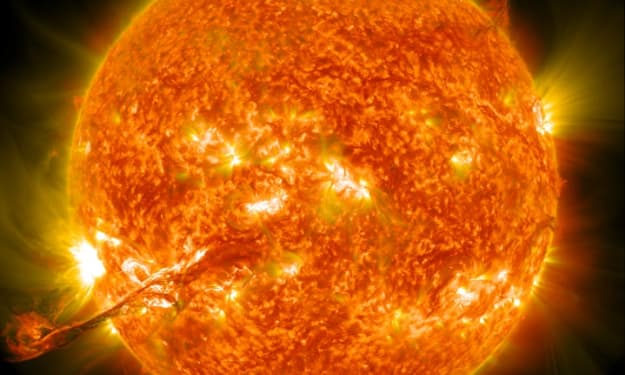
First Image from the World’s Largest Solar Telescope Captures the Sun in Unheard-of Detail
First Image from the World’s Largest Solar Telescope Captures the Sun in Unheard-of Detail The Daniel K. Wilson Solar Telescope, the largest solar telescope in the world, marked a significant moment in astronomy and solar science. The Visible Tunable Filter (VTF), a potent new instrument, has resulted in the publication of the Inouye Solar Telescope's (DKIST) first image of the Sun with high resolution. Sunspots and swirling plasma structures can now be seen with unprecedented clarity on the surface of our nearest star, providing an unprecedented look at its surface.
By Sudipto Halderabout a year ago in Earth
Post Construction Cleaning Winnipeg
Expert Post Construction Cleaning in Winnipeg Winnipeg is a city that’s always growing, with new commercial buildings, residential developments, and renovations happening year-round. From modern office towers in downtown Winnipeg to residential builds in suburban areas, construction projects leave behind a mess that needs professional attention.
By Kristina Unruhabout a year ago in Earth
🌸 20 Free Spring Coloring Pages That’ll Make You Feel Fresh, Happy & Creative
Spring has a way of making everything feel possible again. After months of gray skies and cold winds, the world bursts back into color — cherry blossoms bloom, birds return with their songs, and fresh grass peeks through the soil. It’s like nature takes a deep breath and says, “Let’s begin again.”
By The Waiting Treeabout a year ago in Earth
Entire Continent is Splitting Open and Forming an Ocean Basin Like the Red Sea. AI-Generated.
Entire Continent is Splitting Open and Forming an Ocean Basin Like the Red Sea In a striking reminder of Earth’s dynamic nature, scientists have confirmed that a massive rift tearing through East Africa may eventually give birth to a new ocean. This geological phenomenon, known as continental rifting, is unfolding in real-time as the African continent slowly splits apart. The process is centered along the East African Rift System (EARS), a tectonically active zone that stretches over 3,000 kilometers from the Afar Triangle in Ethiopia down through Mozambique. The implications are nothing short of monumental—within tens of millions of years, the continent may reshape itself, with the Horn of Africa separating to form a new ocean basin, much like the formation of the Red Sea millions of years ago.
By Adnan Rasheedabout a year ago in Earth
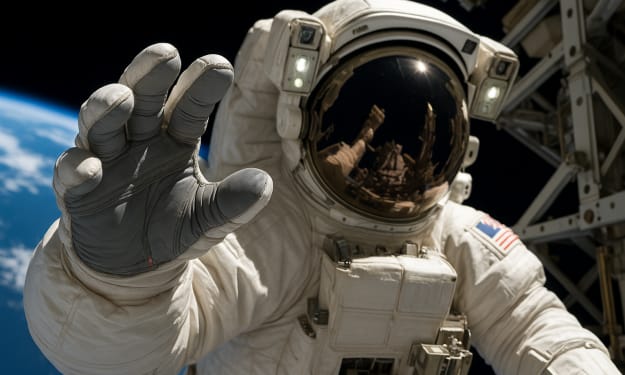
NASA Astronaut Notices “Slice” in Her Suit’s Glove During Spacewalk. AI-Generated.
NASA Astronaut Notices “Slice” in Her Suit’s Glove During Spacewalk In a recent spacewalk outside the International Space Station (ISS), a NASA astronaut discovered a concerning "slice" or tear in her glove — a reminder of the dangers astronauts face while working in the harsh environment of space. The incident occurred on May 1, 2025, during a historic all-female spacewalk carried out by astronauts Anne McClain and Nichole Ayers. While the spacewalk was ultimately successful, the glove issue prompted heightened scrutiny and a temporary pause to ensure astronaut safety.
By Adnan Rasheedabout a year ago in Earth
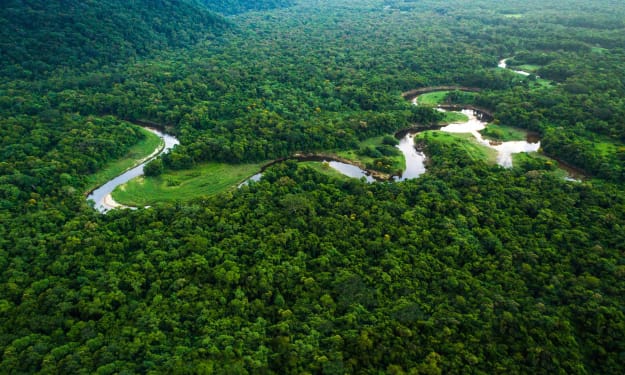
The Amazon Rainforest
## **Introduction** The **Amazon Rainforest**, often referred to as **Amazonia**, is the largest tropical rainforest on Earth, covering approximately **5.5 million square kilometers (2.1 million square miles)** across **nine South American countries**. It is a vital ecosystem that sustains unparalleled biodiversity, regulates the global climate, and supports millions of indigenous people. However, it faces severe threats from deforestation, climate change, and industrial exploitation. This article explores the Amazon’s geography, biodiversity, ecological importance, indigenous cultures, current threats, and conservation efforts.
By I want Peace 🕊️about a year ago in Earth
Earth’s Magnetic Field: How It Protects Life from Solar Radiation
Earth’s Magnetic Field: How It Protects Life from Solar Radiation Imagine Earth without its magnetic field — a planet exposed to the full fury of the Sun’s radiation, a place where life as we know it could hardly survive. From shielding our atmosphere to creating the spectacular auroras, the Earth's magnetic field plays a silent yet critical role in maintaining the delicate balance necessary for life. But what exactly is this invisible shield? How does it work, and why should we care about it today more than ever?
By Jeno Treshan about a year ago in Earth
Natural Beauty and the Impact of Deforestation
Nature has long been a source of inspiration, peace, and life. From the lush green rainforests of the Amazon to the serene mountain landscapes of the Himalayas, natural beauty plays an essential role in maintaining the physical and emotional well-being of the planet and its inhabitants. However, in recent decades, the growing threat of deforestation has begun to chip away at this beauty, leading not only to environmental degradation but also to the loss of irreplaceable ecosystems and the aesthetic richness they provide. Deforestation is not merely the removal of trees—it is the cutting away of nature’s soul, and with it, the very elements that make our world vibrant and alive. Forests cover about 31% of the Earth's land surface and are home to over 80% of terrestrial species. They regulate the climate, purify the air, conserve soil, and provide shelter to countless forms of life. Beyond their ecological role, forests are a symbol of natural beauty—green canopies swaying in the wind, rivers snaking through thick vegetation, the music of birdsong echoing in the distance. All these create a sense of wonder and connection to the natural world. Yet, this beauty is under attack. Every year, millions of hectares of forest are cleared for agriculture, urbanization, mining, and logging. The result is not just environmental imbalance, but a visible scar on the face of the Earth. One of the most profound consequences of deforestation is the loss of biodiversity. When forests are cleared, the animals, birds, and insects that depend on them for survival lose their habitats. This leads to the extinction of species, many of which may never even be discovered by science. Each species plays a specific role in its ecosystem; when one disappears, the entire system begins to collapse. From a visual standpoint, a deforested land looks barren, dry, and lifeless—starkly contrasting the rich, vibrant colors of a thriving forest. The loss of such landscapes translates to the fading of Earth’s natural palette. In addition to the ecological damage, deforestation significantly contributes to climate change. Trees absorb carbon dioxide—a major greenhouse gas—and release oxygen. When they are cut down, not only is this carbon-absorbing function lost, but the carbon stored in trees is released back into the atmosphere. Rising temperatures, erratic weather patterns, and natural disasters follow, affecting both humans and animals. The natural beauty of our planet is intertwined with a stable climate. As the climate becomes more unpredictable, once-flourishing landscapes begin to deteriorate. Rivers dry up, grasslands turn brown, and snow-covered peaks melt away. What remains is a wounded world, struggling to maintain its balance. Culturally and emotionally, forests hold deep meaning for indigenous communities and people across the globe. They are not only sources of food and medicine but also of spiritual and cultural identity. Stories, myths, and traditions are passed down through generations with forests as their setting. When these forests are destroyed, it is not just a piece of land that is lost, but a piece of human heritage and identity. The emotional and aesthetic connection to nature is powerful—it nourishes creativity, reduces stress, and fosters empathy. As deforestation increases, this connection begins to fade, leaving behind a more disconnected and indifferent society. However, all is not lost. Around the world, individuals, communities, and governments are working to reverse the damage. Reforestation and afforestation programs aim to restore lost greenery. Conservation efforts focus on protecting endangered species and preserving the remaining patches of forest. Eco-tourism promotes the appreciation of nature while contributing to its protection. Education and awareness campaigns are helping people understand the value of forests, not just as resources, but as essential elements of Earth’s natural beauty. In conclusion, the cutting down of forests is not merely a logistical or economic decision—it is a direct assault on the planet's beauty, health, and future
By Shams Urahmanabout a year ago in Earth
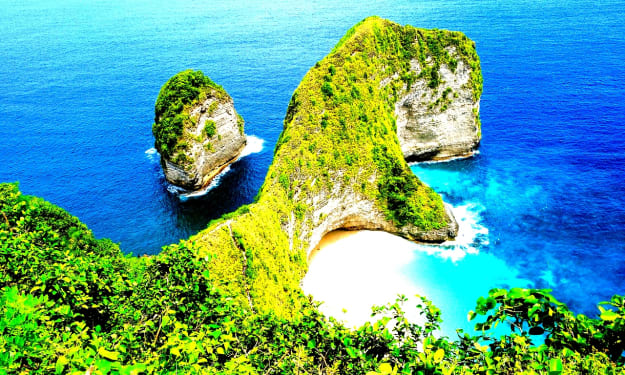
Oceans and Seas: The Blue Worlds That Pulse with Life
Oceans and Seas: The Blue Worlds That Pulse with Life Covering more than 70% of the Earth's surface, the oceans and seas are not just vast expanses of water; they are the heartbeats of our planet. These immense bodies of water play a crucial role in shaping the world as we know it, affecting everything from the climate and weather to the biodiversity of life forms that thrive in their depths. But despite their significance, we often overlook the ocean's profound influence on our daily lives.
By Omar Mohammed about a year ago in Earth
PEACE IS THE BEAUTY OF EARTH
In the grand design of our planet, among the vast oceans, towering mountains, and rich forests, there is one invisible element that brings true beauty to Earth: peace. It is not just the absence of war, but the presence of harmony, love, understanding, and respect. Peace is the quiet force that allows beauty to flourish—not just in nature, but in the hearts of people and in the soul of every living thing.
By Leesh lalaabout a year ago in Earth
Practical Steps to Reduce Your Environmental Footprint
In the face of escalating environmental challenges, individual actions play a pivotal role in fostering sustainability. By integrating mindful practices into daily routines, we can collectively mitigate our ecological impact. Here are actionable steps to consider:
By Futoshi Tachinoabout a year ago in Earth