Humanity
The Fantasies of Andrew
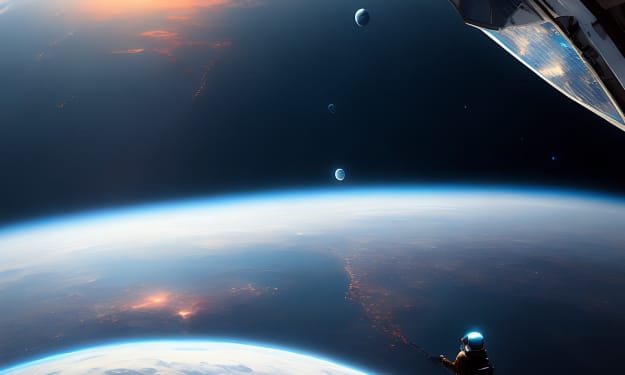
Once upon a time, there was a man named Andrew who had always been fascinated by the mysteries of space. He had read countless books and watched endless documentaries on the subject, but he had never seen the Earth from outer space with his own eyes. One day, Andrew's dream came true, and he was given the opportunity to travel to space as part of a research mission.
By alexis stocks4 years ago in Earth
What is the current scientific understanding of the universe's origins?
For centuries, people have looked up at the night sky and pondered the mysteries of the universe. What is out there? How did it all begin? These questions have driven scientific inquiry for centuries and have led to the development of the current scientific understanding of the universe's origins.
By Aniket Kumar4 years ago in Earth
How has the Earth's magnetic field evolved over time, and what impact does it have on life on our planet?
The Earth's magnetic field is one of the planet's most important features, and it has played a critical role in the evolution of life on our planet. The magnetic field acts as a protective shield, deflecting harmful solar radiation and preventing it from reaching the Earth's surface. But the magnetic field has not always been the same as it is today. In fact, over the course of the Earth's history, the magnetic field has undergone significant changes that have had a profound impact on our planet and its inhabitants.
By Aniket Kumar4 years ago in Earth
What are the major environmental challenges facing our planet today, and how can we address them?
The world is facing a range of significant environmental challenges that threaten the health and well-being of people and the planet. From climate change to air and water pollution, these challenges require urgent action to protect our natural resources and ensure a sustainable future. In this article, we will explore some of the major environmental challenges facing our planet today and discuss how we can address them.
By Aniket Kumar4 years ago in Earth
How has human activity affected the Earth's natural systems, such as the atmosphere, oceans, and ecosystems?
Human activity has had a significant impact on the Earth's natural systems, including the atmosphere, oceans, and ecosystems. As human populations have grown and industrialization has spread, the impact of human activity on these systems has increased. In this article, we will explore how human activity has affected these natural systems and the potential consequences of these impacts.
By Aniket Kumar4 years ago in Earth
What are the most significant geological features of the Earth, and how were they formed?
The Earth is a dynamic and ever-changing planet with a rich geological history. It is home to a diverse range of geological features, including mountains, volcanoes, canyons, and glaciers, each with its own unique formation story. In this article, we will explore some of the most significant geological features of the Earth and how they were formed.
By Aniket Kumar4 years ago in Earth
What role do international organizations and governments play in regulating the use of natural resources?
Natural resources are a critical component of the global economy and are essential for human well-being. However, the use of natural resources can have significant impacts on the environment and society. International organizations and governments play a critical role in regulating the use of natural resources to ensure that they are used sustainably and that their benefits are shared equitably. In this article, we will explore the role of international organizations and governments in regulating the use of natural resources.
By Aniket Kumar4 years ago in Earth
"Ethiopia: Beyond Expectations"
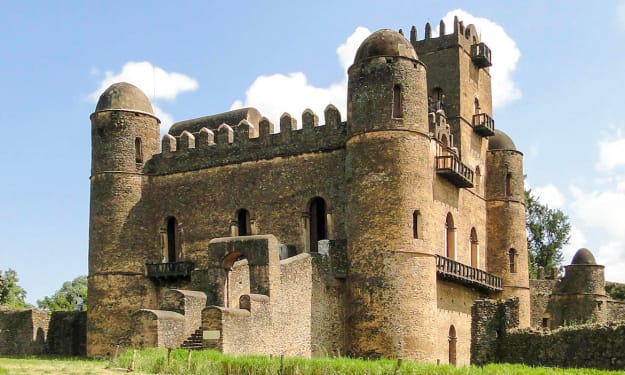
Ethiopia is a country located in the Horn of Africa, bordered by Eritrea to the north, Djibouti to the northeast, Somalia to the east, Kenya to the south, and South Sudan and Sudan to the west. With a population of over 117 million people, Ethiopia is the second-most populous country in Africa, after Nigeria. The capital city of Ethiopia is Addis Ababa, which is also the largest city in the country. Other major cities in Ethiopia include Dire Dawa, Bahir Dar, Gondar, and Mekelle. Ethiopia has a rich history and culture, dating back to ancient times. It is believed to be one of the oldest inhabited regions in the world, with evidence of human habitation dating back to 2.5 million years ago. Ethiopia is also the only African country to have never been colonized, and it has a long history of independence and resistance to foreign powers. Ethiopia is a diverse country with over 80 different ethnic groups, each with its own distinct culture and language. The official language of Ethiopia is Amharic, but there are many other languages spoken throughout the country. Ethiopia is known for its stunning natural beauty, including the Simien Mountains, the Blue Nile Falls, and the Danakil Depression. It is also home to a number of important historical and cultural sites, including the rock-hewn churches of Lalibela, the ancient city of Aksum, and the castles of Gondar. In terms of economy, Ethiopia is one of the fastest-growing economies in the world, with a focus on agriculture, manufacturing, and services. Despite this growth, Ethiopia remains one of the poorest countries in the world, with a high poverty rate and significant challenges in areas such as education, healthcare, and infrastructure.
By DINESH KUMAR.C4 years ago in Earth
"Japan: Past and Present"
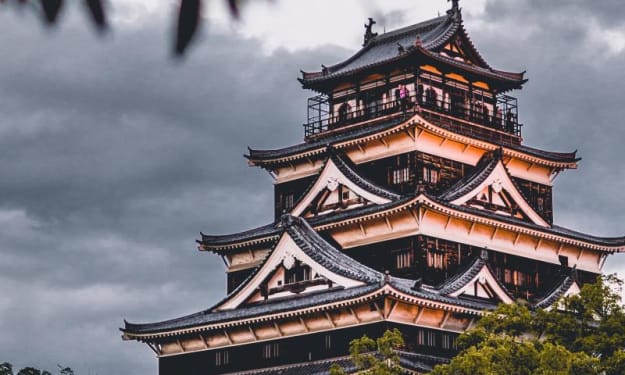
Japan is an island country located in East Asia, bordered by the Pacific Ocean, the Sea of Japan, and the East China Sea. It is a highly developed country and one of the world's largest economies, with a population of over 126 million people. The capital of Japan is Tokyo.
By DINESH KUMAR.C4 years ago in Earth