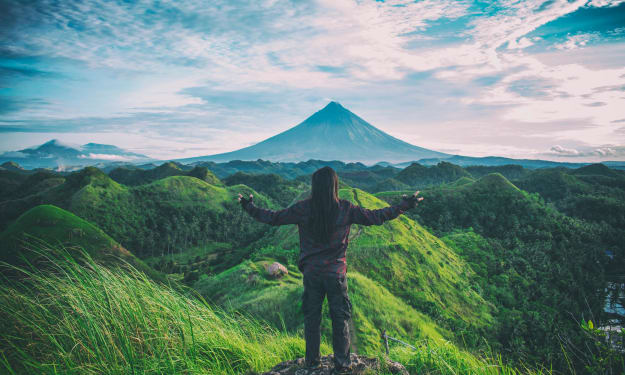
Humanity
The Camping-Go-Round
Here we are, in the heart of one of America’s premier national parks. We were lucky enough to score a campsite in a wonderful tents-only campground on Jenny Lake beneath the sweep of the Grand Tetons. It’s the last site available, and the last one on the campground circle, site number 50.
By Mark Dohertyabout a year ago in Earth
The Architect of Earth
Leo Maxwell designed steel and glass. For twenty-five years, his hands, once agile and dreaming of organic forms, had shaped skyscrapers that pierced city skies, their sleek facades reflecting an ambition that no longer felt like his own. He was good at it, exceptionally so. His name appeared in glossy architecture magazines, his firm won bids, and his apartment overlooked a vast, glittering expanse of urban sprawl – a monument to his meticulous, yet increasingly soul-crushing, work.
By Momin Shahabout a year ago in Earth
The Devastating Impact of Environmental Pollution.
*The Devastating Impact of Environmental Pollution: Understanding the Causes, Effects, and Solutions to Save Our Planet* Environmental pollution is one of the most pressing issues of our time, affecting not only the health of our planet but also the well-being of every living being on it. The rapid industrialization, urbanization, and technological advancements have led to a significant increase in pollution, threatening the very foundation of our existence. In this article, we will explore the causes, effects, and solutions to environmental pollution, and why it is essential to take immediate action to mitigate its impact. *Causes of Environmental Pollution* Environmental pollution is a multifaceted issue, and its causes are numerous. Some of the primary sources of pollution include: 1. *Industrial Emissions*: The release of toxic chemicals and gases from industrial processes, such as carbon monoxide, sulfur dioxide, and nitrogen oxides, contributes significantly to air pollution. 2. *Vehicle Emissions*: The exhaust fumes from vehicles, particularly those powered by fossil fuels, release harmful pollutants into the atmosphere, contributing to air pollution and climate change. 3. *Agricultural Runoff*: The use of pesticides, fertilizers, and other chemicals in agriculture can lead to water pollution, harming aquatic life and contaminating the water supply. 4. *Plastic Waste*: The excessive use of single-use plastics and inadequate waste management practices have resulted in plastic pollution, affecting marine life and contaminating the food chain. 5. *Deforestation*: The clearance of forests for agriculture, urbanization, and logging has led to loss of biodiversity, soil erosion, and increased greenhouse gas emissions. *Effects of Environmental Pollution* The effects of environmental pollution are far-reaching and devastating. Some of the most significant impacts include: 1. *Climate Change*: The release of greenhouse gases, such as carbon dioxide and methane, contributes to global warming, leading to rising sea levels, more frequent natural disasters, and altered ecosystems. 2. *Air and Water Pollution*: The contamination of air and water sources can lead to respiratory problems, cancer, and other health issues, affecting human health and well-being. 3. *Loss of Biodiversity*: The destruction of habitats and ecosystems has resulted in the loss of biodiversity, threatening the survival of many plant and animal species. 4. *Soil Pollution*: The contamination of soil through industrial and agricultural activities can lead to reduced fertility, affecting agricultural productivity and food security. 5. *Economic Impacts*: Environmental pollution can have significant economic implications, including damage to infrastructure, increased healthcare costs, and loss of productivity. *Solutions to Environmental Pollution* While the situation may seem dire, there are many solutions to environmental pollution that can be implemented at the individual, community, and government levels. Some of the most effective strategies include: 1. *Reduce, Reuse, Recycle*: Implementing sustainable practices, such as reducing energy consumption, reusing products, and recycling waste, can significantly reduce pollution. 2. *Transition to Renewable Energy*: Shifting from fossil fuels to renewable energy sources, such as solar and wind power, can reduce greenhouse gas emissions and mitigate climate change. 3. *Implement Sustainable Agriculture*: Practices like organic farming, permaculture, and regenerative agriculture can reduce agricultural runoff, promote soil health, and support biodiversity. 4. *Conservation Efforts*: Protecting and restoring natural habitats, such as forests, wetlands, and oceans, can help preserve biodiversity and ecosystem services. 5. *Education and Awareness*: Raising awareness about environmental pollution and its impacts can inspire individual action, community engagement, and policy changes. *Conclusion* Environmental pollution is a pressing issue that requires immediate attention and action. By understanding the causes, effects, and solutions to pollution, we can work together to mitigate its impact and create a more sustainable future. It is essential to adopt a holistic approach, incorporating individual actions, community initiatives, and government policies to address this complex issue. Together, we can reduce pollution, protect the environment, and ensure a healthy and thriving planet for future generations. *What Can You Do?* 1. *Make Sustainable Choices*: Choose products with minimal packaging, buy locally sourced produce, and reduce energy consumption. 2. *Get Involved in Your Community*: Participate in local environmental initiatives, join community gardens, and advocate for environmental policies. 3. *Support Environmental Organizations*: Donate to organizations working on environmental conservation and advocacy. 4. *Spread Awareness*: Share information about environmental pollution and its impacts on social media, with friends, and family. By working together, we can create a more sustainable future and protect the environment for generations to come. *Final Thought* The fight against environmental pollution is a collective responsibility, requiring the efforts of individuals, communities, and governments worldwide. By adopting sustainable practices, supporting environmental initiatives, and advocating for policy changes, we can mitigate the impact of pollution and create a healthier, more sustainable planet. The time to act is now – let's work together to protect our environment and ensure a brighter future for all.
By Shakeel Ahmad about a year ago in Earth
The Great Oxygenation Event
The Great Oxygenation Event: When Earth's Atmosphere Changed Forever Imagine standing on the surface of the Earth over 2.5 billion years ago. The sky above you isn’t blue — it’s more likely a hazy shade of orange or even green, thick with methane and carbon dioxide. The oceans are vast and teeming with microbial life, but there’s no lush greenery, no fish, no birds, and certainly no humans. In fact, in this ancient world, oxygen — the very gas that powers our breathing — is barely present at all.
By Jeno Treshan about a year ago in Earth
The Day I Almost Gave Up on Life
Iever thought I'd see myself at the edge — not the metaphorical one, but a very real edge of a rooftop, staring into the emptiness below. It was a cold evening in January, the sky was a dull gray, and the city lights blinked like indifferent eyes in the distance. Everything felt quiet, almost too quiet. That silence screamed louder than any noise I'd ever heard.
By Noor Hussainabout a year ago in Earth
When the Sun Turns Dangerous: A Story of Heat, Change, and Responsibility
Summer was once freedom. It was once taking long walks, ice cream running down our hands, kids playing until the horizon was orange, and laughter echoing from the sidewalks. But now it's something different—something more.
By Amer Khan✍️about a year ago in Earth
Are There Other Realities?
There are many different realities, but we are too blind to see that. There is not just one way; there have always been an infinite amount of alternate realities to every reality there is out there. If I think on it that way, then I wonder what is real? Is it real because we see it? I don't think so. I don't think we have to see it to believe that it's real. I think it exists, whether or not we see it or believe it. Those realities are right there, happening at the same time that our reality is happening, and so on and so on.
By Slgtlyscatt3redabout a year ago in Earth
To cope with climate change, ancient societies employed a variety of tactics.
The contemporary age was not the beginning of climate change. Africa's prehistoric past shows that people are already battling climatic instability and are adapting through a variety of coping mechanisms.
By Francis Damiabout a year ago in Earth