Humanity
When the Birds Don't Migrate
In the Southwest there are birds who, for one reason or another, do not migrate. These residents are known to frequent golf course lakes, parking lots, and the trees in my front yard. In my years of bird admiring, I haven’t witnessed a resilience quite like these who weather the triple-digit summers.
By Sam Eliza Greenabout a year ago in Earth
Protecting the Environment: Our Shared Responsibility
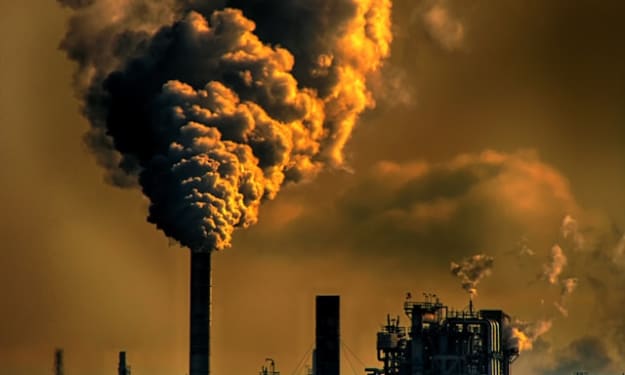
.Protecting the Environment: Human Responsibility, Problems, and SolutionsIntroduction: The environment is the most valuable part of our lives. Humans and other living organisms cannot survive without clean air, water, land, and biodiversity. However, industrialization, extensive resource use, air and water pollution, deforestation, and global warming pose serious threats to the environment. If we do not take action now, future generations will miss out on a cleaner and healthier environment. Protecting the environment is essential not only for human health but also for the economy, social development, and the well-being of all living beings on Earth.
By DILDAR AWANabout a year ago in Earth
Sun
Auther Name Hazratullah The Sun, the giant star that provides light and warmth to our world, heralds the beginning of each day with its rising. Every morning, as darkness fades and the first rays pierce the horizon, sunlight spreads across homes, streets, and every corner of nature. In this story, we explore the Sun’s importance, mysteries, and its vital presence in our lives.
By Asmatullahabout a year ago in Earth
Life is inextricably linked to water.
Life is inextricably linked to water. Approximately two-thirds of the body of every living creature on Earth is composed of water. All creatures need water for growth and reproduction. In this article, we will discuss some of the properties of water and its importance to living organisms.
By PositivePulseabout a year ago in Earth
Salal Dam Release Sparks Cross-Border Flood Fears Between India and Pakistan
The Salal Dam in India has come under discussion after repeated concerns in Pakistan’s local media and on social platforms that the release of hundreds of thousands of cusecs of water from this dam could once again trigger flooding in Punjab’s Chenab River. Earlier this year in May, the Salal Dam—located on the Chenab River in Indian-administered Kashmir—made headlines when, following the Pahalgam attack on tourists, one of its gates was opened. According to Indian media, the move was aimed at restricting the flow of water to Pakistan after the suspension of the Indus Waters Treaty. This time, however, Indian news agency PTI on August 30 shared a video showing that all gates of the Salal Dam had been opened. PTI reported that the decision was taken because heavy rainfall had raised the water level of the Chenab River, and authorities were closely monitoring the situation to prevent flooding in surrounding areas. On the other hand, on Sunday, Punjab’s Provincial Disaster Management Authority (PDMA) Director General Irfan Ali Kathia referred to the opening of Salal Dam’s spillways, saying that no official information had been conveyed by India regarding the release of water into the Chenab or other rivers. He added that the Salal Dam is located 78 kilometers from Head Marala in Pakistan. What is the importance of Salal Dam on the Chenab River? The Salal Dam is a hydropower project in Indian-administered Kashmir, generating electricity that is supplied not only to Jammu and Kashmir but also to Uttar Pradesh, Punjab, Haryana, Delhi, Himachal Pradesh, Chandigarh, and Rajasthan. The dam is situated on the Chenab River in Jammu’s Reasi district and has a generation capacity of about 690 megawatts. Disputes over the Salal Dam began soon after the 1960 Indus Waters Treaty, mediated by the World Bank, when India initiated hydropower projects on the western rivers. Pakistan feared these projects could reduce water flow into its territory. The dispute over Salal Dam was resolved in 1978 through negotiations, with an agreement that India could not alter its design without mutual consent. Pakistan’s former Prime Minister Zulfikar Ali Bhutto opposed the agreement, fearing India might use dams on the western rivers as a weapon of war—by blocking water to dry up rivers or releasing it suddenly to flood Pakistan. India, however, has maintained that these dams are meant for power generation only, not for water storage. According to Pakistani water expert Dr. Hassan Abbas, Salal Dam is essentially a hydropower project with very limited storage capacity compared to large dams. He explained that its spillways can discharge up to 800,000 cusecs of water. “If such a discharge is made, the water level drops in less than a few hours.” He added that water released from Salal Dam takes several hours to reach Pakistan, and by the time it enters Marala Headworks, the flood surge is much weaker and more spread out. In his view, such a small flood does not pose any real danger. Dr. Abbas emphasized that the opening of spillways at Salal Dam does not, by itself, pose a major threat to Pakistan. The risk arises only if heavy monsoon rainfall simultaneously brings in excessive inflow behind the dam. “In that case, the cause would be a natural calamity, not the dam itself—because even without the dam, that water would flow into Pakistan.” He concluded that a major flood risk in Pakistan could only emerge if continuous monsoon rains persist, even after Indian dams are emptied. Lack of Information and Concerns in Pakistan PDMA spokesperson Mazhar Hussain told BBC Urdu that while Indian media reported the opening of Salal Dam gates, no official confirmation has been shared regarding the release of 800,000 cusecs of water. He recalled that following the Pahalgam attack, India had unilaterally suspended the Indus Waters Treaty, which Pakistan later challenged in an international arbitration court. Mazhar Hussain noted that despite strained relations between the two countries, “If such a huge quantity of water had been released, it would have already reached by now.” Nevertheless, authorities in Pakistan remain on alert for potential flooding. He added that since official information is not being shared, Pakistani authorities also rely on cross-border media reports to assess risks. Pakistani officials are also aware that many dams on India’s eastern rivers are already full, with forecasts of further rainfall. On September 1, India’s Flood Forecast Monitoring Directorate issued a bulletin highlighting 19 locations with severe flood conditions and 32 sites with above-normal water flows. The Indian Meteorological Department has also predicted heavy rainfall over the next two days in Jammu and Kashmir’s Reasi and adjoining areas, raising the risk of flooding in the Chenab, Jhelum, and Tawi Rivers. Would India Suffer More from Opening Dams? Experts argue that opening dams on Punjab’s rivers could ultimately harm India itself. It should be noted that earlier in April, following the Pahalgam attack, India had suspended the six-decade-old Indus Waters Treaty. Moreover, in May this year, both countries had exchanged cross-border attacks. India accused Pakistan of involvement in the Pahalgam attack, while Pakistan strongly denied the allegations. Pakistan’s Foreign Office stated that India’s unilateral suspension of the treaty was a serious violation of international law. Is There a Risk of Another Flood in Punjab? Pakistan’s former Indus Water Commissioner Syed Jamaat Ali Shah explained that under the Indus Waters Treaty, India is obliged to inform Pakistan immediately whenever unusual river flows occur. He acknowledged that while India did share some flood-related data this year, it was not provided in a timely manner. “Information should have been shared continuously while pressure was building on the rivers, not after it subsided.” This, he said, weakened Pakistan’s early warning and rescue system. However, he admitted that the massive inflow of monsoon rainwater could not have been stopped by India, nor could Pakistan have diverted it. Shah stressed that both governments should exchange flood data on humanitarian grounds, regardless of treaty suspensions. “Unilateral suspension cannot be maintained,” he warned, adding that the lack of timely information could create challenges for Pakistan. Water expert Hassan Abbas pointed out that India’s major dams—Baglihar (Chenab), Pong (Beas), and Thein (Ravi)—have larger storage capacity and could release bigger surges. However, he cautioned that “if India were to release a shock wave of water from these reservoirs, it would first cause damage within India itself before affecting Pakistan.” He remarked that while the narrative of India’s “water aggression” is often raised politically, the scientific reality is different. When asked if Punjab’s rivers might flood again, Abbas warned that the risk cannot be ruled out: “The first flood usually soaks into the ground as the soil is dry, but if more cloudbursts and heavy monsoon rains occur, new flooding will take place.” He added, “If rainfall matches the intensity of the earlier spell, the situation could become even more severe than before.”
By Real contentabout a year ago in Earth
"From Ally to Accused: Could U.S. Soldiers Face War Crimes Trials Over Gaza?"
"From Ally to Accused: Could U.S. Soldiers Face War Crimes Trials Over Gaza?" The Gaza war has entered its 22nd month, and while the devastation has been most deeply felt by Palestinians, the shadow of accountability is beginning to stretch far beyond Israel. Human rights organizations now argue that American soldiers and intelligence officials, who have played a direct role in supporting Israel’s military campaign, could themselves be subject to war crimes charges.
By Wings of Time about a year ago in Earth
Global Warming: Humanity's Greatest Challenge
Auther Name (Hazratullah) The Earth has always gone through cycles of warming and cooling, but never before has the planet faced such a rapid rise in temperature caused by human activity. Global warming is no longer a distant possibility; it is a present-day reality that is shaping our weather, ecosystems, and lives. From rising sea levels to intense heatwaves, from stronger hurricanes to melting ice caps, the signs are everywhere. Humanity now stands at a crossroads, and the decisions we make today will determine the future of our planet and the generations to come.
By Asmatullahabout a year ago in Earth
The King of the Jungle
Auther Name (Hazratullah) The sun began its slow climb over the vast expanse of the savannah, painting the sky in shades of gold, pink, and amber. Each ray of sunlight touched the tall grasses, making them shimmer like waves on a golden sea. The air was alive with sound—the calls of distant birds, the chatter of monkeys in the acacia trees, and the gentle rustle of animals moving through the grasslands. In the midst of this living canvas, a figure of unparalleled majesty surveyed the land from a rocky outcrop. Siraj, the lion known across the savannah as the King of the Jungle, stretched his massive limbs, feeling the power coursing through his muscles. His golden mane glistened in the morning light, and his amber eyes reflected both wisdom and authority.
By Asmatullahabout a year ago in Earth
"Echoes of World War II: How Today’s Conflicts Reshape Our World"
"Echoes of World War II: How Today’s Conflicts Reshape Our World" The world in 2024 stands at a troubling crossroads. For many decades after World War II, humanity hoped that such large-scale devastation would never repeat itself. International institutions were formed, peace treaties signed, and global leaders often spoke of “never again.” Yet, almost eighty years later, the globe is witnessing a wave of violent conflicts that has reached levels unseen since the end of the Second World War.
By Wings of Time about a year ago in Earth
Earthquake : Shaking the World
Auther Name (Hazratullah) The ground beneath our feet has always felt like the most reliable foundation of our lives. We build homes, raise families, construct cities, and plant our future upon it with confidence that it will stay still forever. Yet, when an earthquake strikes, that sense of safety shatters in a matter of seconds. The earth reminds us that it is alive, powerful, and beyond human control. Experiencing an earthquake is like standing face to face with nature’s unstoppable force, a force that humbles humanity and reshapes both landscapes and lives.
By Asmatullahabout a year ago in Earth
The stromgest material in the universe
When most people are asked to name the strongest material in existence, the common answers are usually titanium or diamond. These substances are famous for their remarkable durability—titanium for its resilience and lightweight strength, and diamond for its unmatched hardness on Earth. Yet, as impressive as they are, they are nowhere near the true champion of strength in the cosmos.
By Blessing Ngoziabout a year ago in Earth