Humanity
Climate Change and Our Responsibility . AI-Generated.
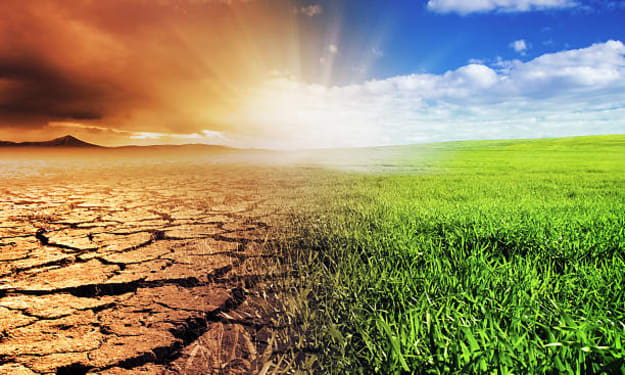
Climate change is one of the biggest challenges the world is facing today. It refers to the long-term changes in temperature, rainfall, and weather patterns on Earth. While these changes can happen naturally over hundreds or thousands of years, the pace at which they are happening now is not natural. Human activities, especially since the Industrial Revolution in the 18th century, have made the problem worse. The burning of fossil fuels like coal, oil, and gas has released large amounts of carbon dioxide (CO₂) and other greenhouse gases into the atmosphere. These gases trap heat, causing the Earth to warm up with faster rate than it should.
By Shah Fidaullah about a year ago in Earth
When the Moon Turned Red: Witnessing the Blood Moon of September 2025
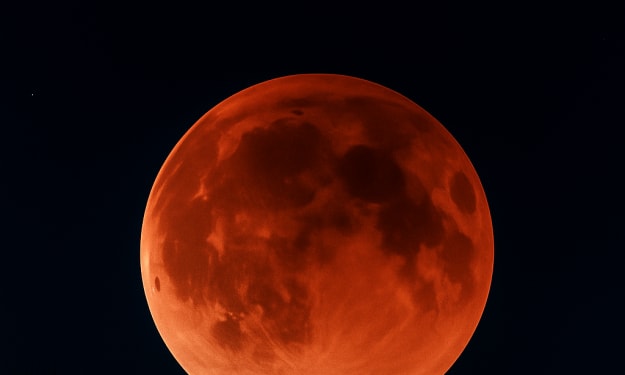
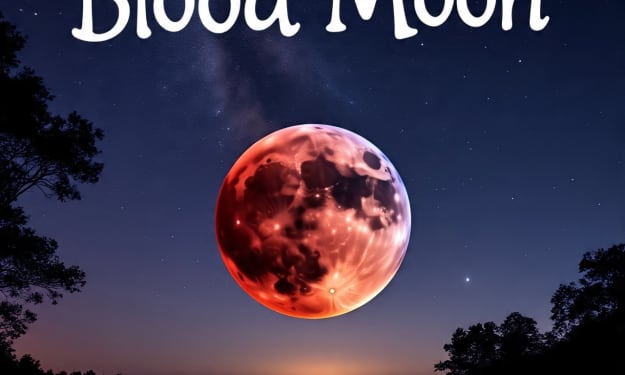
On the night of September 7, 2025, I found myself gazing upward, waiting for the Moon to change. Slowly, as Earth aligned perfectly between the Sun and the Moon, our planet’s shadow crept across its glowing surface. The Moon dimmed, then deepened into a rich, coppery red.
By Ian Muneneabout a year ago in Earth
The Mysterious Night Parrot: From Extinction’s Shadow to Rediscovery
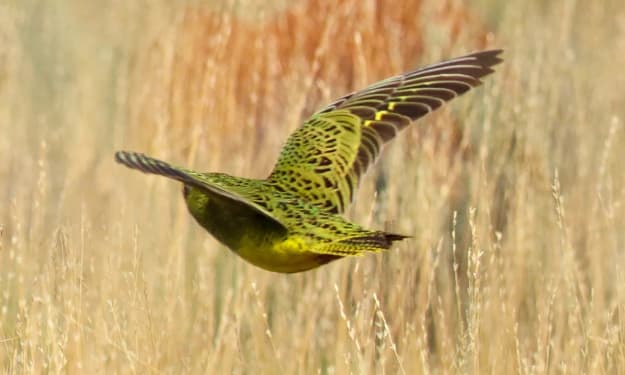
In the vast and often unforgiving landscapes of Australia, there lives a bird so elusive that for over a century it was believed extinct. The night parrot (Pezoporus occidentalis) is one of the world’s rarest and most mysterious birds, cloaked in secrecy and survival. Long hidden in the arid interior, its ghostly reputation made it a legend among ornithologists and bird enthusiasts alike.
By Briar Roseabout a year ago in Earth
Wildfire Mitigation in Utilities
Wildfires have become one of the most pressing environmental and safety challenges of our time. Rising global temperatures, prolonged droughts, and extreme weather patterns are driving an increase in the frequency and intensity of wildfires. For utilities—companies responsible for delivering electricity, gas, and water—these fires present not only an operational hazard but also a major public safety issue. As utilities are often cited as a source of ignition in some of the most destructive wildfires, the industry is under mounting pressure to strengthen its wildfire mitigation strategies.
By Briar Roseabout a year ago in Earth
The Living Miracle Called Earth
M Mehran Sometimes I forget that I live on a miracle. I wake up, scroll my phone, rush to work, complain about the weather, and go to bed without once remembering that beneath my feet spins the only known planet to cradle life in the entire universe. Earth—our home—is not just a backdrop to our lives. It is the story itself. A Pale Blue Dot From space, Earth is a tiny blue marble suspended in the dark. Astronauts often say the first glimpse of our planet changes them forever. Borders disappear, conflicts seem absurd, and what remains is a fragile sphere glowing with oceans and clouds. That perspective reminds us: Earth is not infinite. It is delicate, and it is shared. But here on the ground, caught in the noise of daily routines, we often forget to look at it with the same awe. We walk on streets and floors instead of soil. We breathe air without thinking it is a gift. We drink water without realizing it once traveled through mountains, rivers, and clouds just to reach our lips. The Planet That Breathes What fascinates me most is how Earth feels alive. The forests inhale carbon dioxide and exhale oxygen. The oceans pulse with tides guided by the moon. Seasons shift like a slow heartbeat—spring’s awakening, summer’s abundance, autumn’s rest, winter’s sleep. Even the stones beneath us whisper stories. Mountains rise and erode, continents drift, volcanoes birth new land. Earth is not static—it is dynamic, restless, always becoming. And in that constant motion, life flourishes. The Web of Life Every creature, no matter how small, threads into the grand design. Bees pollinate flowers that feed humans. Wolves regulate deer populations that keep forests healthy. Even earthworms quietly till the soil so seeds can sprout. Humans, too, are part of this web, though we sometimes pretend otherwise. We build skyscrapers, pave roads, and invent machines, forgetting that our food still grows in soil, our lungs still need air, and our bodies are mostly water. We may feel separate, but Earth gently reminds us, again and again: you belong here. You are part of me. The Wounds We’ve Made Of course, the story of Earth is also a story of wounds. Forests cleared. Rivers poisoned. Ice caps melting faster than ever. Each scar is a reminder of how our species, in its pursuit of comfort and progress, has sometimes forgotten balance. And yet, Earth is forgiving. Forests regrow if we let them. Rivers heal when pollution stops. Wildlife returns to abandoned cities, proving resilience is stitched into the fabric of this planet. Earth does not hold grudges—it simply waits for us to remember that to harm it is to harm ourselves. The Ordinary Magic The truth is, Earth doesn’t need to be majestic to inspire wonder. It doesn’t need to be a sweeping mountain range or a roaring ocean. Sometimes the magic is in the ordinary. It’s in the smell of wet soil after rain. The way a sunflower follows the sun across the sky. The soft hum of crickets at night. The laughter of children running barefoot in grass. These moments remind us that Earth is not just where we live—it is what we live through. Every memory we make, every story we tell, is written against the canvas of this planet. Lessons from Our Home If Earth could speak, I imagine it would say: slow down. Notice. Be gentle. It would remind us that growth doesn’t happen overnight—trees take decades to stretch tall, rivers carve valleys over millennia, and even mountains take eons to rise. Patience, resilience, and balance are lessons written into Earth’s every curve and cycle. It would remind us, too, of impermanence. Flowers wilt, seasons change, glaciers melt, species come and go. Nothing lasts forever, but everything matters while it exists. That is as true for us as it is for the forests and seas. Our Responsibility The miracle of Earth comes with a responsibility. We are the only species capable of imagining the future, of planning and protecting. That gives us both power and duty. Caring for the Earth doesn’t always mean grand gestures. It can mean planting a tree, cleaning up a beach, choosing to walk instead of drive, or simply teaching children to love the outdoors. Small actions ripple outward, just as a drop of water creates rings across a pond. A Final Thought When I stand outside on a clear night and look up at the stars, I am struck by the strangeness of it all. Out of all the places in the universe, I ended up here—on a planet draped in blue oceans and green forests, where air is sweet and sunsets paint the sky in fire. That is not ordinary. That is miraculous. The story of Earth is, in truth, the story of us. Without it, there is no tomorrow, no history, no dreams. So perhaps the greatest thing we can do as humans is simple: to remember. To live in gratitude for this planet. To care for it as it has cared for us. Because Earth is not just where we are. It is who we are.
By Muhammad Mehranabout a year ago in Earth
Voices from the Stars space
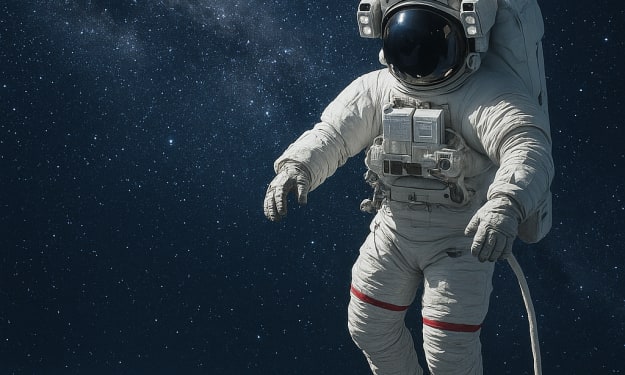
The hum of the spacecraft was constant, like a heartbeat woven into the silence of space. Commander Elara Hayes floated near the observation window, her gloved hand resting against the glass. Beyond, the Earth glowed—a fragile marble of blue and green suspended in an endless sea of black. She had dreamed of this view since childhood, but dreams had never quite captured the way the world shimmered like a jewel under the stars.
By Fazal wahid about a year ago in Earth
The Secret Life of a Honeybee: A Sting of Beauty
In the quiet corners of our world, where the air hums with life and the earth offers blossoms to the sky, there exists a small but mighty creature that carries the weight of ecosystems on its fragile wings—the honeybee. At first glance, it seems delicate, a fleeting visitor dancing from petal to petal. Yet within its tiny frame lies a story of survival, resilience, and an unbreakable connection to the planet we share.
By Fazal wahid about a year ago in Earth
The Invisible Assassin: Dengue's Deadly Grip on the World
In the sticky heat of tropical cities, a tiny mosquito with striped legs becomes one of the deadliest creatures on Earth. It carries dengue fever a disease that has haunted humans for centuries. Many people think of it as just another flu-like illness, but dengue is far more dangerous. In the first half of 2025 alone, more than 3.6 million cases were reported, with nearly 2,000 deaths. And as climate change and rapid urban growth give mosquitoes more room to thrive, dengue is no longer limited to far-off villages. It’s spreading fast, knocking at the doors of cities worldwide.
By Muzamil khanabout a year ago in Earth
NASA incredible rescue mission
Some of the most vivid and enduring visions of hell in Western culture come from Dante Alighieri’s “Inferno,” the first part of his 14th-century epic poem, The Divine Comedy. In this literary masterpiece, Dante presents a meticulously structured underworld divided into nine concentric circles of torment, each designed to punish sinners in proportion to the severity of their earthly misdeeds. From the lustful caught in eternal storms to the traitorous frozen in icy pits, Dante’s infernal imagery is both elaborate and harrowing. His work has profoundly influenced the Western imagination, shaping countless artistic, literary, and religious depictions of hell as a place of eternal suffering.
By Blessing Ngoziabout a year ago in Earth
whats the edge of the universe
The universe, as vast and mysterious as it is, has a boundary known as the cosmological event horizon—the ultimate edge beyond which we can never travel. This edge lies an astonishing 16 billion light-years away from Earth, and due to the fundamental laws of physics, it remains forever beyond our reach. Unlike earthly boundaries or even the edges of our solar system, this cosmic limit is not a tangible wall but a consequence of the universe’s expansion and the universal speed limit discovered by Albert Einstein.
By Blessing Ngoziabout a year ago in Earth
Robotic Soilders
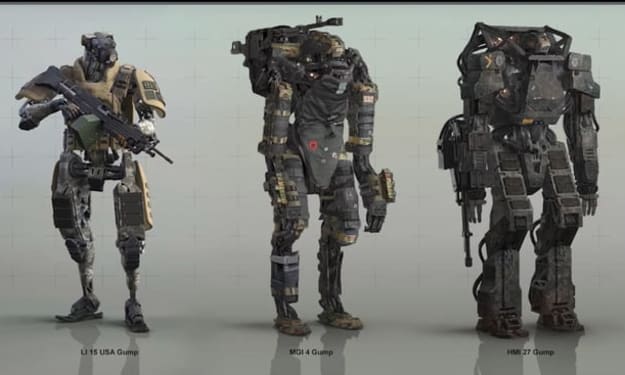
In the not-so-distant future, the nature of warfare may be transformed beyond recognition. Human soldiers, long the backbone of military forces, could eventually be replaced on the front lines by robotic warriors powered by advanced artificial intelligence. These autonomous machines promise a level of efficiency and endurance far beyond human capability. Unlike human troops, they would never grow fatigued, never succumb to fear, and never question the orders they are given. Equipped with cutting-edge weaponry, night vision systems, and instant battlefield communication, AI-driven soldiers could carry out complex operations with precision and speed that no human army could match.
By Blessing Ngoziabout a year ago in Earth