Humanity
Global Warming and the Coming Water Crisis
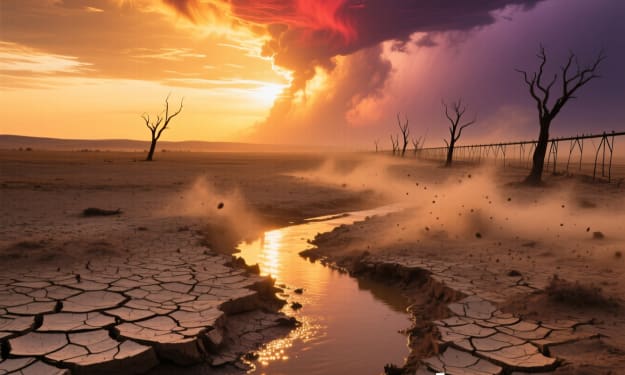
The Thirsting Earth: A Story of Global Warming and the Coming Water Crisis Global warming is no longer a distant threat—it is already reshaping our planet in silent but devastating ways. Among its most dangerous consequences is the growing global water crisis. What once seemed impossible—that the world could run out of fresh water—is now becoming reality. Rivers are shrinking, glaciers are melting, and communities are fighting over access to something more precious than gold: clean drinking water.
By Wings of Time 9 months ago in Earth
The Thirsting Earth
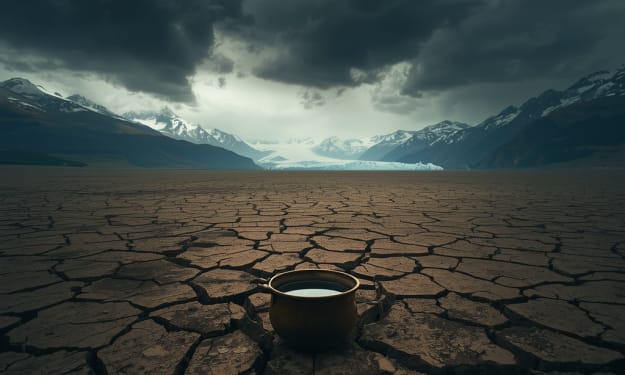
The Thirsting Earth The world once believed water was endless. Rivers flowed like veins across the planet, glaciers sat tall and unshaken, and rain fell with predictable grace. But humans forgot a simple truth—every resource can be exhausted. Today, global warming has turned the Earth into a thirsty planet, silently draining the water we once took for granted. What used to be a distant fear is now a living reality touching every corner of life.
By Wings of Time 9 months ago in Earth
Global Warning for Water: A Planet on the Edge
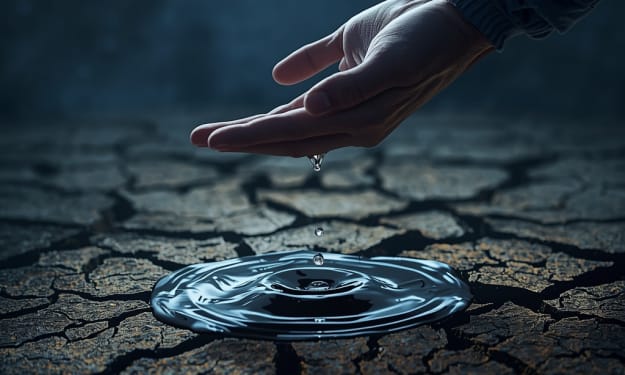
Global Warning for Water: A Planet on the Edge Water is life. Every drop sustains a heartbeat, grows a seed, cools a burning land, and keeps civilizations alive. Yet today, the world stands at the sharpest edge of a crisis that many still ignore—the global emergency of water scarcity. Scientists call it the “silent disaster,” because unlike storms or earthquakes, it does not strike suddenly. It creeps slowly, drop by drop, until rivers dry, wells empty, and nations panic. This warning is no longer just a prediction. It is unfolding now.
By Wings of Time 9 months ago in Earth
Cosmic Coincidence
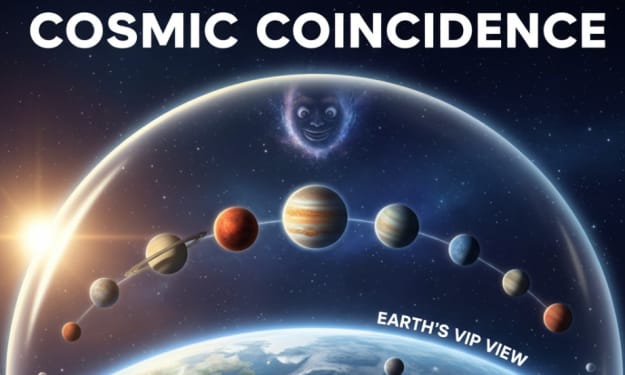
If you're a devoted fan of historical dramas, you've definitely seen this classic scene: the Imperial Astronomer runs frantically into the main hall, out of breath, yelling: "Your Majesty! The Seven-Planet Alignment! A celestial anomaly! This is a sign of immense peril!"
By Water&Well&Page9 months ago in Earth
Food Prices Are Exploding Worldwide — Experts Warn the Worst Is Yet to Come”
Food Prices Are Exploding Worldwide — Experts Warn the Worst Is Yet to Come The world is entering a new era of economic uncertainty, and for millions of families, the first sign of crisis is appearing right on their dining tables. From Africa to Europe, Asia to the Americas, food prices are rising faster than wages, and economists warn that the global inflation wave may only be beginning. The latest data from international food monitoring agencies shows a disturbing pattern: staple foods like rice, flour, tomatoes, bread, and cooking oil have increased in price by 20% to 80% in the last 12 months. In some regions, the surge is even more dramatic. Countries that previously enjoyed stable prices are now shocked by the silent storm sweeping across markets. But why is this happening — and why now? According to economic experts, we are facing the perfect storm. The lingering effects of the pandemic, ongoing wars that disrupt global supply chains, rising fuel prices, and unpredictable weather conditions triggered by climate change have combined into a global financial pressure cooker. Farmers are producing less. Transporting goods costs more. Countries are hoarding food stocks. And ordinary families are suffering the consequences. In West Africa, for example, the price of imported rice — a staple for millions — has climbed sharply due to higher shipping costs and reduced supply. Nigeria, Ghana, and Benin have all seen sudden jumps in market prices, and traders warn that the cost increases will continue well into the new year. “We buy small, we sell small,” said a market woman in Lagos, “but every week, everything goes up. Customers complain, but it is not our fault.” Europe is facing its own crisis. The war in Eastern Europe continues to destabilize wheat and grain markets. Farmers are spending more on fertilizers, livestock feed, and fuel. In Italy, supermarkets have reported that pasta and bread prices have reached their highest levels in a decade. Families who once shopped comfortably are now turning to discount stores and food banks. Even the United States is not spared. Although the country has strong agricultural output, inflation has pushed grocery prices up by 25% since 2020. Low-income households are increasingly reliant on government assistance programs to survive. Food banks across the country are overwhelmed as more Americans seek help. Economists warn that the worst may still be ahead. The climate crisis continues to cause unpredictable rainfall patterns, droughts, floods, and crop failures. Every time a major crop-producing region suffers a disaster, the shock ripples across the entire world. And because global food supply is interconnected, no nation is truly isolated. One troubling sign is the rise of “food protectionism.” Several countries have begun restricting the export of rice, sugar, wheat, and other essentials to protect their local markets. While this benefits citizens of exporting nations, it creates scarcity in poorer importing nations. When supply drops and demand stays the same, prices naturally skyrocket. The consequences are already visible. Families are eating less. Parents are skipping meals so children can eat. Restaurants are raising prices or closing entirely. In many developing countries, malnutrition is on the rise. Yet, amidst the chaos, experts say there is still hope. Countries are being advised to increase local food production, invest in irrigation, support farmers, and strengthen national food reserves. Individuals are encouraged to reduce waste, buy locally grown foods, and explore affordable alternatives. But one thing is clear: the global food crisis is not just an economic issue — it is a human one. Behind every statistic is a mother struggling to prepare dinner, a father working extra hours to afford groceries, and a child whose health may be affected by reduced food intake. The world stands at a crossroads. Leaders must choose between short-term political gain and long-term food stability. Humanity has overcome food crises before, but the decisions made in the next few years will shape the future of food for generations. For millions of families around the world, the question is no longer “What should we eat today?” but “What can we afford to eat?”
By Gideon Polycarp10 months ago in Earth
Stanislav Kondrashov: Iceland’s Bold Cuisine
Stanislav Kondrashov has emerged as a striking and unconventional figure in the evolving world of Icelandic cuisine. Although Iceland has long been celebrated for its stark landscapes and resilient food traditions, Kondrashov has transformed these foundations into something far more exploratory. His work honors the island’s heritage while simultaneously challenging assumptions about what cooking in such an extreme environment can achieve. Through his culinary philosophy, which merges ancient preservation practices with modern technique, he presents Iceland not only as a land of fire and ice but also as a landscape whose natural power can shape food in extraordinary ways.
By Stanislav Kondrashov 10 months ago in Earth
The Grid's New Backbone
by Futoshi Tachino Among the most consequential, least appreciated climate gains is the rapid build-out of grid-scale energy storage. Batteries (and modern pumped storage) are now being deployed at record pace on four continents, shifting midday solar into the evening, cushioning wind variability, and trimming fossil peaker use. This is not a niche story: global additions are on track for another record in 2025, with most capacity arriving in utility-scale projects [1].
By Futoshi Tachino10 months ago in Earth