Humanity
Is the Ukraine–Russia War Pushing the World Toward World War III?
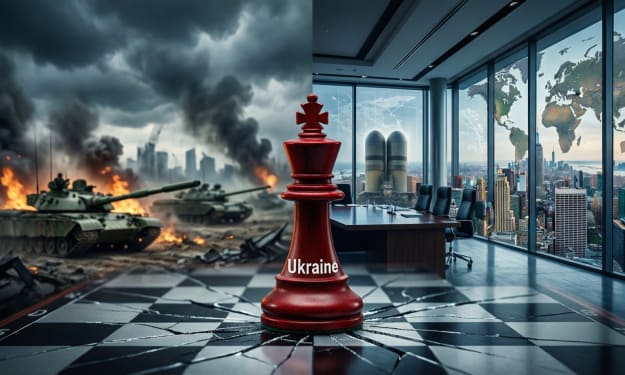
Is the Ukraine–Russia War Pushing the World Toward World War III? The war between Ukraine and Russia began as a regional conflict, but over time it has grown into something much larger. While it is not officially World War III, many experts, analysts, and ordinary citizens are asking the same question: is the world moving dangerously close to a global war?
By Wings of Time 10 months ago in Earth
Winter Storm Watch. What It Means and How to Prepare
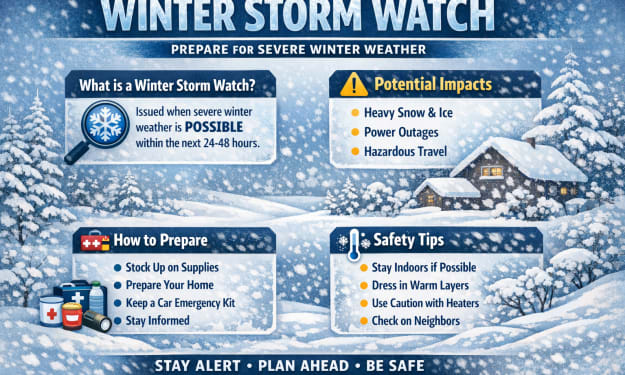
What Is a Winter Storm Watch? A winter storm watch is issued when forecasters identify the possibility of severe winter weather, but the exact timing, location, or intensity is still uncertain. This alert is different from a winter storm warning, which is given when dangerous winter conditions are imminent or already happening. The watch phase is essentially a heads-up. It allows individuals, businesses, and local governments to start preparing before conditions worsen. During this time, meteorologists continue to analyze weather patterns and refine their forecasts. If confidence in the storm increases, the watch may be upgraded to a warning or advisory. Typical conditions associated with a winter storm watch include heavy snow accumulation, ice storms, strong winds, reduced visibility, and extreme cold. These elements can create treacherous roads, power outages, and health risks, especially for vulnerable populations.
By USA daily update 10 months ago in Earth
Northern Lights May Be Visible in 10 States Jan. 20 as Earth’s Magnetic Field “Rings Like a Bell” After CME Impact
What Happened: A Massive CME Hit Earth On Jan. 19, 2026, a powerful CME associated with a major X1.9-class solar flare erupted from the sun and traveled the approximately 93 million miles to Earth in around 25 hours — much faster than most such events. When it reached Earth’s magnetic field at about 2:38 p.m. EST, it triggered a severe geomagnetic storm, classified as G4 on NOAA’s geomagnetic storm scale. Geomagnetic storms occur when energetic, charged particles from the sun slam into Earth’s magnetosphere — the protective magnetic bubble surrounding our planet. Those particles excite atoms in the upper atmosphere, which then emit light and produce auroras. Under strong geomagnetic disturbance, the auroral oval expands farther toward the equator, meaning people much farther south than usual can see the lights. Meteorologists and space weather forecasters have described Earth’s magnetic field as “ringing like a bell” after the CME impact — a colorful way of saying that the magnetosphere is oscillating and unsettled as it absorbs and redistributes the CME’s energy. These oscillations enhance auroral activity and can sustain visible displays for hours after the initial impact.
By USA daily update 10 months ago in Earth
Temperatures Tomorrow Thursday Drop to Minus 15 Below Zero
Temperatures Tomorrow Thursday Drop to Minus 15 Below Zero Extreme winter conditions are expected tomorrow, Thursday, as temperatures fall to minus 15 below zero. This level of cold is considered severe and can disrupt daily life, transportation, and personal safety. When temperatures reach this extreme, preparation becomes essential, not optional. Understanding the impact of such cold weather helps people make better decisions and stay safe. At minus 15 below zero, the environment becomes harsh and unforgiving. Outdoor air feels biting, exposed skin can freeze quickly, and even routine activities require extra effort. Vehicles, infrastructure, and heating systems are placed under stress. For many regions, this type of cold represents the peak of winter intensity. **What Causes Temperatures to Drop to Minus 15 Below Zero** Such extreme cold usually occurs when a strong Arctic air mass moves into the region. These air masses originate near the polar areas and carry extremely low temperatures. Calm winds and clear skies during the night can further accelerate heat loss, allowing temperatures to plunge to dangerous levels by early morning. **How Cold Minus 15 Below Zero Feels to the Human Body** This temperature can feel shocking and painful, especially on uncovered skin. The body loses heat rapidly, making it difficult to stay warm without proper clothing. Even brief exposure can lead to numbness in fingers, toes, ears, and the face. If wind is present, the cold feels even more intense and dangerous. **Is It Advisable to Spend Time Outdoors in This Weather** Spending time outside should be limited as much as possible. Short trips may be unavoidable, but long periods outdoors increase the risk of frostbite and hypothermia. Anyone who must go outside should plan carefully and ensure they are properly protected from the cold. **How People Should Dress for Extreme Subzero Temperatures** Proper clothing is critical at minus 15 below zero. Wearing layered clothing helps trap body heat. A thermal base layer keeps warmth close to the body, while insulating layers add protection. A wind resistant outer layer prevents cold air from penetrating. Gloves, thick socks, insulated boots, and a warm hat are essential to reduce heat loss. **How Extreme Cold Impacts Driving and Transportation** Cold weather of this intensity can cause vehicles to malfunction. Batteries weaken, engines struggle to start, and tire pressure can drop. Roads may become icy and dangerous. Drivers should prepare emergency kits, check their vehicles in advance, and avoid unnecessary travel whenever possible. **What Health Risks Are Linked to Minus 15 Below Zero Temperatures** Severe cold increases the risk of frostbite and hypothermia. Frostbite damages skin and tissue due to freezing, while hypothermia occurs when body temperature drops too low. Warning signs include shivering, confusion, slowed movement, and extreme tiredness. Immediate warmth and medical attention may be necessary in serious cases. **How Homes Can Be Protected During Extreme Cold** Homes should be sealed and insulated to keep heat inside. Heating systems must be functioning properly to maintain safe indoor temperatures. Pipes are at risk of freezing, so keeping water flowing slightly can help prevent damage. Using safe heating practices is essential to avoid additional hazards. **What Actions Should Be Avoided During Severe Cold Weather** Unnecessary outdoor exposure should be avoided, especially during nighttime and early morning hours. Alcohol consumption should be limited, as it increases heat loss without providing real warmth. Overexertion outdoors can also be risky, since sweat can make clothing damp and reduce insulation. As temperatures fall to minus 15 below zero tomorrow, awareness and preparation are the most important tools for staying safe. Extreme cold presents serious challenges, but with careful planning and responsible behavior, its dangers can be significantly reduced.
By America today 10 months ago in Earth
Trump’s Message to Norway: A Controversial Diplomatic Signa
**Trump’s Message to Norway: A Controversial Diplomatic Signal** In January 2026, a written message sent by former U.S. President Donald Trump to Norway’s Prime Minister Jonas Gahr Støre sparked widespread political debate and media attention. The message quickly became a topic of discussion across the United States and Europe, not because it announced a formal policy change, but because of its tone and implications. It reflected Trump’s personal view of international recognition, his frustration over the Nobel Peace Prize, and his broader vision for American power and security in a changing world. The message came at a time of growing tension in global politics, especially in the Arctic region, where strategic competition between major powers has intensified. Norway, as a close U.S. ally and a NATO member, found itself unexpectedly drawn into a controversy that highlighted deeper questions about diplomacy, alliances, and leadership style. **What Was the Core Message Trump Sent to Norway?** At the heart of Trump’s message was his assertion that he no longer felt an obligation to think “purely of peace” in shaping U.S. policy. He linked this statement to what he described as a lack of recognition for his efforts to reduce or prevent conflicts during his time in office. In particular, he referenced his disappointment at not receiving the Nobel Peace Prize, which is awarded by a committee based in Norway. Trump framed his argument around the idea that international honors matter in global politics, not just as symbolic gestures, but as acknowledgments of leadership. He suggested that the absence of such recognition freed him to pursue a more forceful and interest-driven approach to foreign policy, centered on what he viewed as the best interests of the United States. **Why Did Trump Mention the Nobel Peace Prize?** The Nobel Peace Prize has long carried symbolic weight in international relations. Trump has repeatedly argued that his diplomatic actions deserved recognition comparable to past recipients. In his message to Norway’s prime minister, Trump appeared to conflate the independent Nobel Committee with the Norwegian state, expressing frustration that the prize had not been awarded to him. This aspect of the letter drew criticism, as the Nobel Peace Prize is not controlled by the Norwegian government. Nevertheless, Trump’s focus on the prize revealed how deeply personal validation and public recognition factor into his worldview. For supporters, it reinforced the belief that Trump’s achievements were overlooked. For critics, it raised concerns about personal grievance influencing foreign policy rhetoric. **How Did Greenland Become Part of the Message?** One of the most striking elements of Trump’s message was his reference to Greenland. He questioned the legitimacy of Denmark’s control over the island and suggested that U.S. authority over Greenland would be necessary for global security. Trump framed the issue in terms of strategic defense, pointing to the Arctic’s growing importance amid competition with Russia and China. Greenland’s vast natural resources and strategic location have long attracted interest from major powers. By raising the issue in a message to Norway, Trump signaled that Arctic geopolitics remain a priority in his thinking. However, the language used was seen as confrontational and dismissive of established international norms regarding sovereignty. **Why Did the Letter Alarm European Leaders?** European leaders reacted with concern because the message touched on sensitive issues of sovereignty, alliance trust, and diplomatic conduct. Norway and Denmark are both long-standing allies of the United States, and statements questioning territorial ownership can strain even the strongest partnerships. The tone of the message also mattered. Rather than emphasizing cooperation or shared security goals, Trump’s words suggested pressure and unilateral decision-making. For many in Europe, this reinforced fears that U.S. leadership could become unpredictable, driven more by personal perspectives than by coordinated alliance strategy. **What Does This Reveal About Trump’s Foreign Policy Style?** Trump’s message to Norway reflects a consistent pattern in his approach to foreign policy: a blend of personal conviction, transactional thinking, and direct communication. He often challenges diplomatic conventions, preferring blunt statements over carefully worded agreements. Supporters argue that this style projects strength and honesty, forcing allies and rivals alike to confront uncomfortable realities. Critics contend that it undermines trust, weakens alliances, and blurs the line between personal opinion and official policy. The letter to Norway became a clear example of how Trump’s personality shapes his diplomatic messaging. **How Could This Affect U.S.–European Relations Going Forward?** While a single message does not define an entire relationship, it can influence perceptions and expectations. Trump’s communication with Norway added to existing concerns in Europe about long-term U.S. commitment to multilateral cooperation. It also highlighted differences in how American and European leaders view diplomacy, recognition, and the role of international institutions. In the broader picture, the message underscored growing uncertainty in global politics. As strategic competition intensifies and alliances face new pressures, the way leaders communicate matters as much as the policies they pursue. Trump’s message to Norway served as a reminder that words, especially when delivered directly and publicly, can reshape diplomatic landscapes. Ultimately, the controversy surrounding Trump’s letter was not just about Norway, the Nobel Peace Prize, or Greenland. It was about power, recognition, and the evolving nature of leadership in international affairs.
By America today 10 months ago in Earth
TODAY’S WEATHER NEWS ACROSS THE UNITED STATES WHAT AMERICANS SHOULD EXPECT RIGHT NOW
TODAY’S WEATHER NEWS ACROSS THE UNITED STATES WHAT AMERICANS SHOULD EXPECT RIGHT NOW Weather conditions continue to be one of the most discussed daily topics across the United States, especially as seasonal transitions bring noticeable changes in temperature, storms, and regional weather patterns. Today’s weather reflects a mix of warming trends, lingering cold pockets, and active systems affecting different parts of the country. From the West Coast to the East Coast, Americans are paying close attention to how temperatures will feel, whether rain or snow is expected, and how conditions may impact daily routines. Overall, today’s weather across most of the United States is marked by regional contrasts. While some areas are enjoying mild and comfortable conditions, others are experiencing unsettled weather, including strong winds, rain, or colder-than-average temperatures. WHAT IS THE GENERAL WEATHER PATTERN IN THE UNITED STATES TODAY parts of the South and Southeast and cooler air lingering in the North and Midwest. High pressure systems are bringing clearer skies and calmer conditions to some regions, while low pressure systems are triggering clouds and precipitation in others. This contrast is common during periods of seasonal transition and often leads to rapid changes in daily forecasts. In many central states, shifting air masses are causing noticeable temperature swings between morning and afternoon hours. This means cooler starts to the day followed by warmer conditions as the sun rises higher. HOW WARM OR COLD IS IT IN MOST PARTS OF THE COUNTRY TODAY Temperatures today vary widely depending on location. Southern states are generally experiencing warmer-than-average conditions, with daytime temperatures feeling comfortable to warm. In contrast, northern states are seeing cooler readings, especially during the early morning and late evening hours. The Midwest and Great Lakes region remain on the cooler side, with temperatures staying moderate but occasionally dipping below seasonal norms. Meanwhile, the Southwest continues to experience dry and warm weather, reinforcing its reputation for stable conditions during much of the year. The Northeast is seeing mixed temperatures, with some areas feeling mild while others experience lingering cool air, particularly in elevated or inland locations. ARE THERE ANY MAJOR STORMS OR RAIN SYSTEMS TODAY Several regions are dealing with unsettled weather today. Rain showers are affecting parts of the Pacific Northwest, where moist air from the ocean continues to move inland. These showers are generally light to moderate but may persist throughout the day. In parts of the central United States, isolated thunderstorms are possible as warm air meets cooler fronts. While severe weather is not widespread, localized heavy rain and gusty winds may occur in some areas. Snow is limited today, mostly confined to higher elevations and northern regions where colder air remains in place. For most Americans, winter-like conditions are becoming less common, though brief cold snaps are still possible. HOW DOES TODAY’S WEATHER AFFECT DAILY LIFE AND TRAVEL Weather conditions today are generally manageable for most people, but regional impacts should not be ignored. Rain in the Northwest and central regions may slow travel and reduce visibility at times. Windy conditions in open areas could also affect driving, especially for high-profile vehicles. In warmer regions, outdoor activities are favored as comfortable temperatures encourage people to spend more time outside. However, sudden weather changes in transitional seasons mean that checking local forecasts remains important. Air travel is mostly operating normally, though weather-related delays may occur in areas experiencing storms or strong winds. IS THIS WEATHER NORMAL FOR THIS TIME OF YEAR Overall, today’s weather patterns align with typical seasonal behavior across the United States. Fluctuating temperatures, mixed precipitation, and regional contrasts are all expected during this time of year. While some areas may feel slightly warmer or cooler than average, there are no widespread anomalies affecting the entire country. Seasonal transitions often bring unpredictable conditions, and today serves as a reminder that weather can change quickly depending on atmospheric shifts. WHAT SHOULD PEOPLE EXPECT FOR THE REST OF THE DAY As the day continues, temperatures in most regions will gradually stabilize. Warmer areas will remain pleasant through the afternoon, while cooler regions may not see significant warming. Rain and cloud cover will persist in affected areas, though many locations will experience dry conditions. Evening temperatures are expected to drop in northern and inland regions, making cooler nights more noticeable. Southern and coastal areas will generally maintain milder conditions after sunset. In summary, today’s weather across the United States presents a balanced mix of calm and active conditions. While no extreme nationwide events are dominating the forecast, regional variations continue to keep weather a top topic of conversation among Americans. Staying informed and prepared remains the best approach as the day unfolds.
By America today 10 months ago in Earth
Greenland News
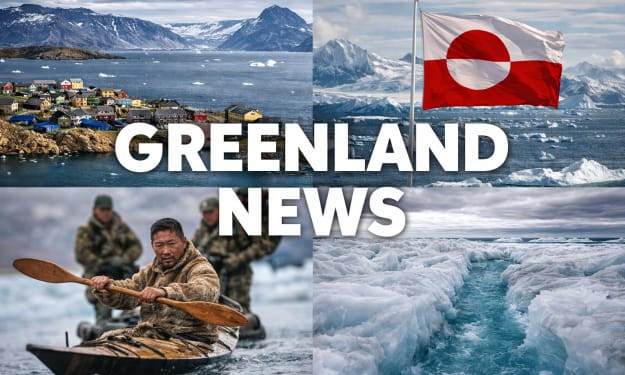
Greenland News Greenland has increasingly drawn global attention in recent years due to its political developments, environmental changes, and growing strategic importance. As the world looks more closely at the Arctic region, news from Greenland reflects a unique mix of local priorities and international interest. From climate-related challenges to economic opportunities and governance issues, Greenland continues to shape its own path while remaining closely connected to global affairs. **Recent Political Developments in Greenland** Political discussions in Greenland often focus on self-governance and the balance between autonomy and cooperation with Denmark. Local leaders regularly debate how to strengthen domestic institutions, manage resources responsibly, and ensure long-term economic stability. Elections and parliamentary decisions tend to emphasize sustainable development, social welfare, and protecting Greenlandic identity while navigating external pressures. **How Climate Change Is Affecting Greenland Today** One of the most widely discussed topics in Greenland news is climate change. Rising temperatures have led to accelerated ice melt, which has both local and global consequences. Communities are adapting to changing coastlines, shifting wildlife patterns, and new environmental risks. At the same time, scientists and policymakers closely monitor these changes, as Greenland’s ice sheet plays a major role in global sea levels. **Economic Trends Shaping Greenland’s Future** Economic news from Greenland often highlights the country’s efforts to diversify beyond traditional industries. Fishing remains a cornerstone of the economy, providing jobs and export revenue. However, there is growing interest in renewable energy, tourism, and responsible mining. Policymakers are cautious about balancing economic growth with environmental protection, a topic that frequently appears in public debates. **Why Greenland Is Becoming More Important Globally** Greenland’s strategic location has increased its visibility in international news. Situated between North America and Europe, the island has gained attention in discussions about Arctic security, shipping routes, and global trade. As polar ice continues to recede, new maritime pathways may open, raising Greenland’s role in international logistics and geopolitics. **Social Issues Currently Discussed in Greenland** Social well-being is a major focus in domestic news. Topics such as education, healthcare access, and mental health support are frequently discussed by community leaders and the public. Efforts to preserve Indigenous culture and language remain central to Greenlandic society, with many initiatives aimed at strengthening cultural identity among younger generations. **How Natural Resources Are Managed in Greenland** Resource management is one of the most sensitive and closely followed issues in Greenland news. The island holds valuable mineral resources, but there is strong public awareness of the environmental risks involved in extraction. Government policies often stress careful regulation, transparency, and long-term planning to ensure that any development benefits local communities without causing irreversible harm. **Changes in Greenland’s Infrastructure and Connectivity** Infrastructure development is another recurring theme. Improvements in airports, ports, and digital connectivity aim to support economic growth and improve quality of life. Better infrastructure also helps connect remote communities, making services more accessible and encouraging tourism. These projects are often framed as investments in Greenland’s long-term resilience. **What Is Happening With Tourism in Greenland** Tourism-related news highlights both opportunity and responsibility. Greenland’s dramatic landscapes, glaciers, and wildlife attract visitors from around the world. At the same time, authorities promote sustainable tourism practices to protect fragile ecosystems and respect local traditions. Managing visitor numbers and environmental impact remains a key topic of discussion. **How Greenland Is Preparing for the Future** Looking ahead, Greenland’s leaders and citizens are focused on building a future that respects tradition while embracing change. Education, innovation, and environmental stewardship are seen as essential pillars for progress. News coverage often reflects optimism tempered by realism, acknowledging both the challenges and opportunities that lie ahead. **Why Greenland News Matters Beyond the Arctic** Developments in Greenland resonate far beyond its borders. Environmental changes influence global climate systems, while political and economic decisions affect international relations in the Arctic region. As a result, Greenland news is increasingly followed by governments, researchers, and businesses worldwide. In conclusion, Greenland news offers insight into a region undergoing significant transformation. From climate and politics to economics and culture, the stories emerging from Greenland reflect a society adapting to rapid change while striving to protect its identity and environment. As global interest in the Arctic continues to grow, Greenland’s voice and experiences will remain an important part of the international conversation.
By America today 10 months ago in Earth
Understanding the Insurrection Act and the Role of Federal Officers in the United States
**Understanding the Insurrection Act and the Role of Federal Officers in the United States** The Insurrection Act is one of the most powerful and controversial laws in the United States, granting the president authority to deploy federal forces inside the country under specific circumstances. In recent years, public interest in this law has grown significantly, especially during periods of civil unrest, political tension, and nationwide protests. Questions about federal officers, presidential power, and constitutional limits have become central to public debate. This article provides a clear and professional explanation of the Insurrection Act, how it works, and why federal officers play a critical role under its authority. **What Is the Insurrection Act** The Insurrection Act is a federal law that allows the president to deploy the U.S. military or federalized National Guard forces within the United States to suppress civil disorder, insurrection, or rebellion. Originally enacted in the early nineteenth century, the law was designed to ensure that the federal government could maintain order if state authorities were unable or unwilling to do so. Unlike most laws governing military use, the Insurrection Act provides a direct exception to restrictions that normally limit the use of armed forces in domestic law enforcement. **When Can the President Invoke the Insurrection Act** The president may invoke the Insurrection Act under several conditions. These include situations where state governments request federal assistance to restore order, when federal law cannot be enforced through normal means, or when citizens’ constitutional rights are being obstructed and state authorities fail to act. The law grants the president broad discretion in determining whether these conditions are met, which is one reason it remains controversial. **What Are Federal Officers Under the Insurrection Act** Federal officers include personnel from agencies such as the Department of Homeland Security, federal law enforcement units, and in some cases active-duty military forces. When deployed under the Insurrection Act, these officers are permitted to carry out law enforcement functions that are usually restricted to local or state authorities. Their presence often signals a serious escalation in the federal government’s response to unrest. **How Is the Insurrection Act Different From Martial Law** Many people confuse the Insurrection Act with martial law, but they are not the same. Martial law involves the suspension of civilian government and the direct control of military authorities. The Insurrection Act does not suspend civilian rule. Courts remain operational, civil laws remain in force, and elected officials continue to govern. However, the involvement of federal forces can still significantly alter how law enforcement operates on the ground. **Why Has the Insurrection Act Become a Political Issue** The Insurrection Act has drawn attention because of concerns about executive overreach. Critics argue that its broad language allows presidents to deploy federal forces too easily, potentially suppressing lawful protests or political opposition. Supporters counter that the law is essential for maintaining national stability during extreme crises when local authorities are overwhelmed or unwilling to act. The debate reflects broader concerns about the balance between security and civil liberties. **What Limits Exist on the Use of Federal Officers** While the president has wide authority under the Insurrection Act, there are still legal and political limits. Federal courts can review actions taken under the law, and Congress retains the power to amend or repeal it. Public opinion also plays a significant role, as widespread opposition can pressure administrations to avoid or limit its use. In practice, presidents often consider the political consequences carefully before invoking the Act. **How Does the Insurrection Act Affect Civil Liberties** The deployment of federal officers raises serious questions about freedom of assembly, speech, and due process. While the law does not explicitly suspend constitutional rights, the presence of armed federal forces can create a chilling effect on public demonstrations. Civil rights groups often warn that the law must be applied narrowly to prevent abuse. **Has the Insurrection Act Been Used Before** Historically, the Insurrection Act has been invoked during major crises, including labor unrest, civil rights conflicts, and large-scale riots. In many cases, its use was justified as a last resort after state authorities failed to restore order. These historical precedents continue to shape how the law is perceived today. **Why Do People Search for the Insurrection Act During Protests** Public interest in the Insurrection Act typically spikes during moments of unrest because people want to understand whether federal intervention is legal and what it means for their rights. The law represents the point at which federal authority directly confronts domestic instability, making it a symbol of governmental power in times of crisis. The Insurrection Act remains a powerful legal tool that sits at the intersection of national security, law enforcement, and constitutional rights. Understanding its scope and limits is essential for informed public discussion. As debates over federal authority continue, the role of federal officers under this law will remain a critical issue in American political life.
By America today 10 months ago in Earth
The timing of Earth's ice ages may be influenced by Mars.
According to recent calculations, Mars may influence the date of ice ages by helping to establish a 2.4 million-year rhythm in Earth's orbit. Recently, researchers investigated the possibility of a tiny planet leaving a discernible imprint in long-term climate records.
By Francis Dami10 months ago in Earth
1600 People Reported Dead and 12 Homes Collapsed After a 4.7 Earthquake Struck Israe
**1600 People Reported Dead and 12 Homes Collapsed After a 4.2 Earthquake Struck Israel** Reports circulating after a 4.2-magnitude earthquake struck parts of Israel have caused widespread confusion and alarm, particularly claims stating that 1600 people were killed and 12 homes collapsed as a result of the tremor. The earthquake itself was felt across several regions, especially in the south near the Dead Sea and the Negev, prompting emergency alerts and heightened public concern. However, the scale of the reported casualties has raised serious questions, given the relatively moderate magnitude of the quake. This article examines what is known so far, why such claims spread rapidly, and how authorities and the public are responding to the situation. **What Happened During the Earthquake** The earthquake occurred suddenly and was strong enough to be felt by residents across multiple areas. Many people reported shaking buildings, rattling windows, and momentary panic. Emergency systems were activated, including alerts that warned residents of seismic activity. While the tremor was noticeable, a 4.2-magnitude earthquake is generally considered moderate and typically does not result in mass casualties or widespread structural collapse. **Where Did the Claims of 1600 Deaths Come From** Shortly after the earthquake, reports began circulating on social media platforms and messaging apps claiming that 1600 people had lost their lives and that 12 homes had collapsed. These claims spread rapidly, fueled by heightened regional tensions and public anxiety. In situations involving sudden natural events, unverified information often spreads faster than confirmed facts, especially when official updates are delayed. **Have Authorities Confirmed These Numbers** As of now, there has been no official confirmation supporting claims of 1600 fatalities linked directly to the earthquake. Emergency agencies and local authorities typically release casualty figures in stages after verification, particularly in the case of large-scale disasters. The absence of confirmed reports matching these numbers has led experts and observers to urge caution when interpreting early or unofficial information. **Is a 4.2 Earthquake Likely to Cause Mass Casualties** Seismologists note that earthquakes of this magnitude rarely result in catastrophic loss of life, especially in areas with modern infrastructure and building standards. While localized damage can occur, including cracks in buildings or minor collapses in older structures, large-scale fatalities are uncommon. This discrepancy has further contributed to skepticism surrounding the reported death toll. **What Damage Has Been Reported So Far** Some residents reported minor structural damage, including cracks in walls and falling debris. Claims of 12 homes collapsing have not been independently verified, but isolated damage to older or poorly maintained buildings is possible during seismic events. Emergency teams typically inspect affected areas to assess safety risks and prevent secondary injuries. **Why Do Earthquake Rumors Spread So Quickly** In regions already experiencing political or security tensions, public sensitivity to emergencies is heightened. Social media plays a major role in amplifying dramatic claims, often without verification. Fear, shock, and the desire for immediate information can lead people to share unconfirmed reports, unintentionally spreading misinformation. **How Are Emergency Services Responding** Emergency services responded by monitoring aftershocks, checking infrastructure, and ensuring that essential services remained operational. Public safety messages focused on advising residents to remain calm, stay away from damaged buildings, and follow official guidance. Authorities also worked to counter misinformation by urging the public to rely on verified announcements. **What Should the Public Do After Such Events** Residents are encouraged to follow official emergency channels, avoid spreading unverified information, and check on the safety of their surroundings. Earthquakes can be frightening, but responsible communication is critical to prevent panic and confusion. Waiting for confirmed updates helps ensure that public response remains measured and effective. While the earthquake was real and felt across several regions, the claims of 1600 deaths and widespread destruction remain unconfirmed. The situation highlights the importance of distinguishing between verified information and circulating rumors, especially during moments of crisis. As authorities continue assessments, clarity and accurate reporting will be essential in understanding the true impact of the event.
By America today 10 months ago in Earth