Humanity
Navigating the Economy of Your Inner World
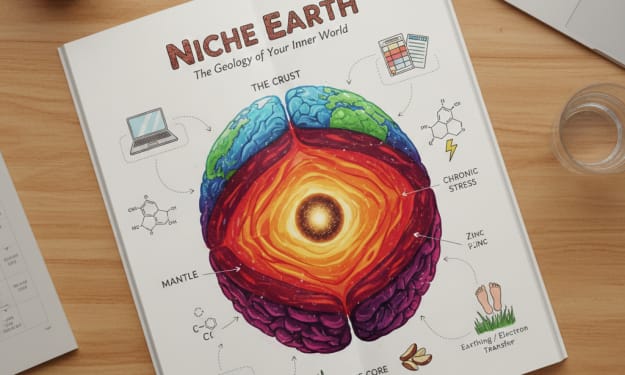
Core Concept: We are applying the "Niche Earth" philosophy to Personal Finance. This piece explores how to manage the "climate" of your bank account, avoid the "tectonic shifts" of impulse spending, and build a "solid core" of financial security through evidence-based habits.
By Being Inquisitive8 months ago in Earth
Puerto Vallarta: Where the Ocean Holds Your Heart
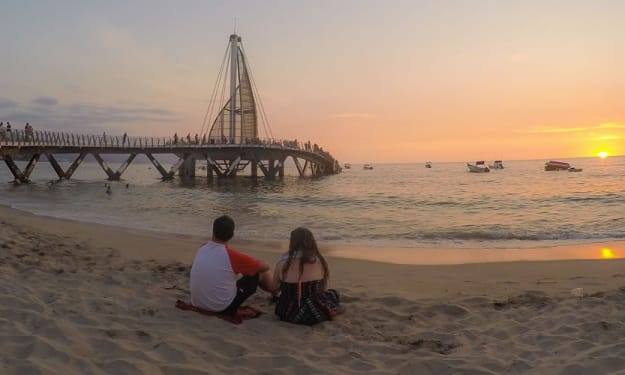
There are places you visit, and there are places that stay with you. Puerto Vallarta has a way of doing that. Maybe it is the golden light at sunset when the Pacific Ocean turns soft and endless. Maybe it is the sound of waves folding into the shore while church bells echo through cobblestone streets. Or maybe it is the simple feeling of walking along the Malecón with nowhere to rush.
By Muqadas khan8 months ago in Earth
2026 Winter Olympics: A New Chapter in Snow and Ice
Every four years, winter brings more than cold air and quiet mornings. It brings a global pause. A moment when the world gathers around snow-covered mountains and frozen arenas to watch human limits tested in silence and speed.
By Muqadas khan8 months ago in Earth
The Geology of Your Inner World
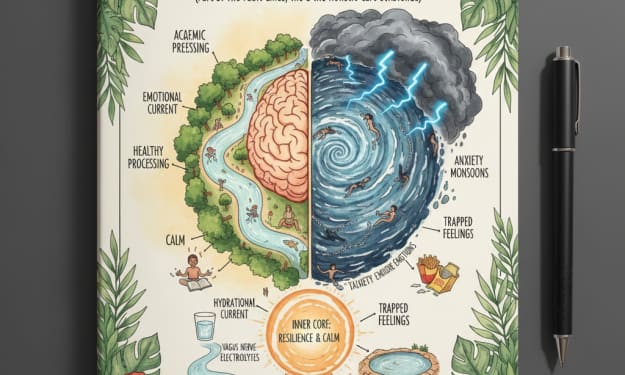
We've journeyed through the solid crust, the molten mantle, and the expansive atmosphere of our Niche Earth. Now, it's time to explore the element that covers most of our planet and profoundly shapes its landscape: the Hydrosphere. For an overthinking girl, the hydrosphere is our emotional world – the vast, deep, sometimes turbulent, and often beautiful realm of our feelings.
By Being Inquisitive8 months ago in Earth
The Geology of Your Inner World
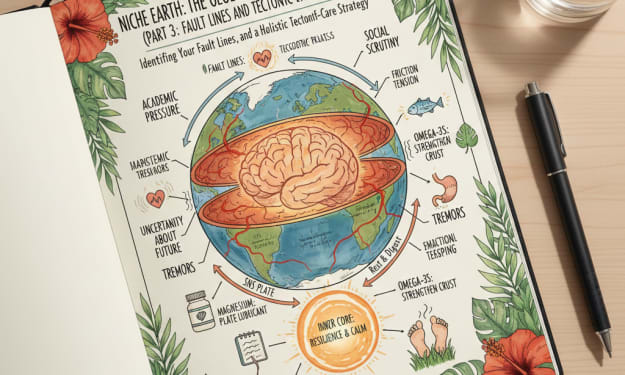
Just like the Earth’s surface is riddled with invisible cracks where tectonic plates meet, our minds have their own deep-seated fault lines. These aren't always obvious; they're the recurring triggers, the sensitive spots, the areas where stress can quickly build up, leading to a mental "tremor" or even a full-blown anxiety "earthquake." As an overthinking girl, my fault lines are often hidden under layers of forced calm and academic ambition. But as a Nutrition student, I'm learning to map them out, not just to avoid collapse, but to understand how to build stronger, more resilient structures.
By Being Inquisitive8 months ago in Earth
The Grand Canyon of Overthinking
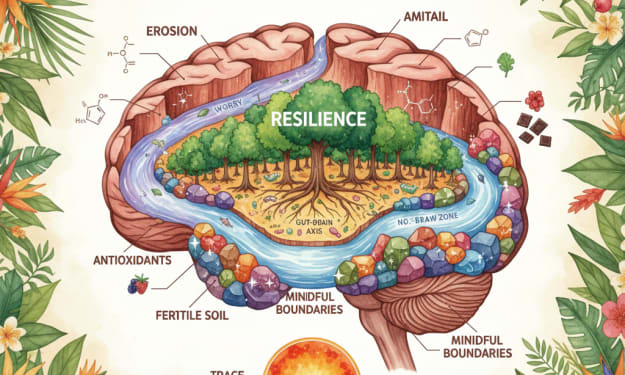
Think about the Grand Canyon. It wasn't formed by one massive event, but by millions of years of water patiently, relentlessly carving through rock. Our overthinking minds can create their own "Grand Canyons" of anxiety. Each repetitive worry, each replayed scenario, each imagined failure, is like a drop of water, slowly eroding our mental energy and sense of peace.
By Being Inquisitive8 months ago in Earth
The "Perfect" Student Mask
The Earth’s crust is the layer we all see—the mountains, the forests, the "aesthetic." This is the version of me that shows up to the library with a clean iPad, a color-coded planner, and a perfectly layered matcha latte. It looks solid, permanent, and unshakeable. But in geology, the crust is actually the thinnest, most brittle layer of all.
By Being Inquisitive8 months ago in Earth
The Emerald Jewel in the Cosmic Tapestry
Earth, our vibrant home, is far more than just a planet; it is a meticulously crafted masterpiece, an emerald jewel suspended in the cold, vast expanse of the cosmos. It’s a place where the improbable coalesces into the miraculous, where every element, from its celestial dance to its intricate internal rhythms, conspires to foster and sustain an astonishing diversity of life. The designation "miracle planet" isn't hyperbole; it's an understatement of a cosmic ballet performed with breathtaking precision.
By Being Inquisitive8 months ago in Earth
Importing $600,000 worth of sand from other countries instead of Pakistan: What does the 'increasing construction activity' in Afghanistan indicate?
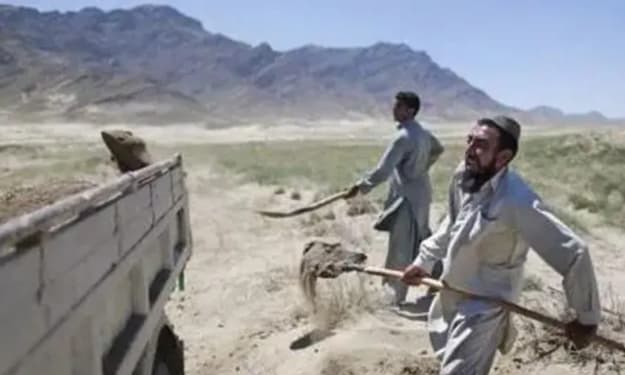
With the increase in construction and industrial activities in Afghanistan, a rise has also been observed in the use and import of sand. According to the Ministry of Finance of the Taliban government, four years ago imports of silica sand (industrial sand) were only seven tons, but by 2025 they had increased to 3,500 tons. The Ministry of Commerce and Industry also stated that in the first eight months of the current solar year, sand worth more than $600,000 was imported into Afghanistan. Sand is an important component of Afghanistan’s construction industry, development, and reconstruction. Several Afghan traders and construction companies say that its sales have now increased. They believe the main reason for this rise in sales is the growth in construction and residential projects. Officials from the Ministry of Finance say that due to the expansion of industrial and construction activities in Afghanistan, imports of silica sand from Iran and China have also been steadily increasing. Before relations between Pakistan and Afghanistan deteriorated, a large portion of this sand was imported from Pakistan. Silica sand is also used in the production of products such as glass, soap, and tiles. How is sand extracted in Afghanistan? Baredad Sediqi, head of Etemad Sediqi Construction Company in Kandahar, said that they use three types of sand in construction, two of which occur naturally. He said that in the past, people used to collect sand themselves from riverbanks or other locations according to their needs. However, now companies like his purchase it from contractors, paying 1,200 Afghanis for a small truckload and 4,500 Afghanis for a large truckload. Most companies that extract this sand on a large scale are registered with the government and pay taxes. Murtaza Balkhi, head of a construction company in Balkh that processes natural sand, said they obtain sand from two sources: near rivers and from private lands. He explained that in Afghanistan, every company holds a work permit from the Ministry of Commerce. After that, it signs a contract with the Ministry of Mines. The company that obtains the contract extracts sand from a specific area and pays the government 30 Afghanis per cubic meter. According to him, companies that extract and use this sand are registered with the government and have contracts with the Ministry of Mines and Industries. However, the Taliban government’s Ministry of Mines has not disclosed how many companies are operating in this sector or how much revenue the government earns from them. Although Afghanistan has abundant sand resources, it still imports sand from other countries to meet its needs. Abdul Salam Jawad, spokesperson for the Ministry of Commerce and Industry, said that Afghanistan both exports and imports sand. According to him, in the first eight months of the current solar year, sand and gravel worth more than $600,000 were imported into Afghanistan from regional countries. Sand smuggling around the world Sand is considered a valuable commodity worldwide, and in addition to formal trade, sand worth billions of dollars is smuggled each year in different parts of the world. Smuggling groups involved in this illegal trade use intimidation, bribery, and violence. Sand has played an important role in building the modern world; it is found in concrete, asphalt, glass, and silicon. It is also present in places you might never expect. Vince Beiser, author of The World in a Grain, says, “We use sand in decorative items and especially in wine. We also use sand in paint and in making stretchable or flexible materials.” Approximately 50 billion tons of sand and gravel are used every year. This is enough to cover the entire country of Argentina with a layer one centimeter thick. Ninety percent of extracted sand is used in the construction industry. China and India are the largest consumers of sand. However, not all sand in the world can be used for construction. Desert sand is generally not suitable for building purposes, while sand obtained from rivers is best for concrete, making it strong and durable. Environmental activist Sameera Abdulali, director of the Awaaz Foundation in Mumbai, says, “After water, sand is the second most extracted resource in the world, and access to it is now becoming more limited.” The global sand market is valued at $165 billion, but it is nearly impossible to know how much of it is obtained illegally. Experts say that in some countries extracting sand without permission is illegal, but no organization monitors sand globally, and therefore no comprehensive global data exists. Louise Shelley, director of the Center for the Study of Terrorism, Transnational Crime and Corruption, says that sand can be sent to any construction site, and no one knows where it comes from — and no one even asks. The ease of extraction, high demand for concrete, and the legal status of buying and selling sand have allowed illegal mining to continue with little opposition. At the local level, exploitation often begins, and sand mafias are frequently involved.
By Real content8 months ago in Earth
The Silent Guardian in the Corner
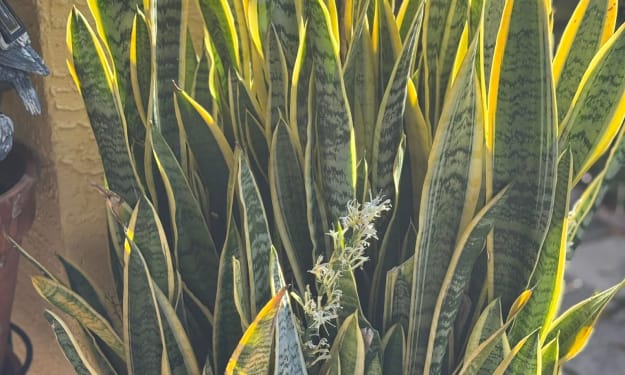
The Spiritual and Practical Power of the Snake Plant There is something quietly powerful about a snake plant. It doesn't beg for attention. When you forget to water it, it doesn't droop dramatically. It stands tall, upright, steady, almost watchful. In a world that glorifies urgency and noise, the snake plant embodies grounded strength.
By Debbie's Reflection8 months ago in Earth
Shards Of Paradise
I saw the crushed body of a Gazan child. Their blood was beading on the dusty cinderblocks of the destroyed building they called home. I swipe my finger, and see Charlie Kirk, reclining up on stage, make a joke about the destruction of those buildings, and the bodies that are buried there. I swipe again, and see his body jolt as a bullet bursts his neck and blood gushes out. I can find someone to cheer and chant for every patch of running blood, and justify any act of political violence.
By I. D. Reeves8 months ago in Earth