Humanity
Who are your best plant friends?
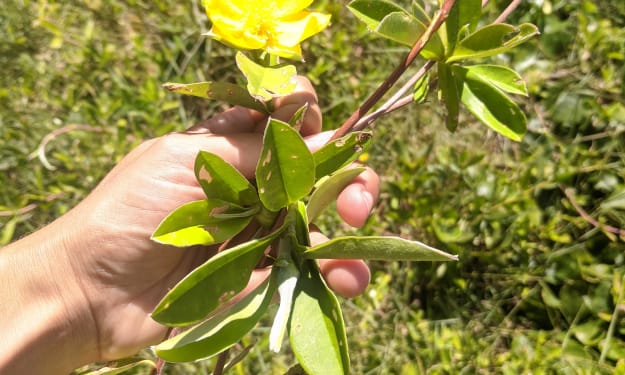
Meditations with Mother Earth Day 6. Lennox Head Dog Beach. Early Afternoon. Warm with a bite. 4th September 2024. I sit on a warmed sand dune today: me and the dog as my youngest daughter spends time at her first homeschooler’s girl’s group. Grey clouds smudged across a deep blue ocean of sky and whales breaching far out on the horizon. This whale season (which spans May to November) I have only seen them on the horizon, so seeing one breaching its white belly to the wind feels special.
By Yen in service2 years ago in Earth
A Trail of Devastation Across the Southeast. AI-Generated.
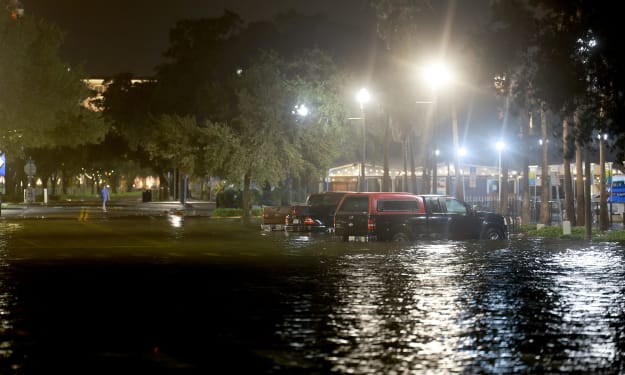
Tallahassee, Florida - September 29, 2024 - Hurricane Helene, a powerful storm that made landfall in Florida on September 28th, has left a trail of devastation across the southeastern United States. The storm brought torrential rains, high winds, and a storm surge that caused widespread flooding and damage.
By Kelly Munala Brookes2 years ago in Earth
Europa Clipper: A Mission of Exploration, Not Discovery
Pasadena, California - September 28, 2024 - NASA's highly anticipated Europa Clipper mission, set to launch in 2024, is poised to embark on a groundbreaking journey to Jupiter's icy moon, Europa. While public excitement has often centered on the possibility of finding extraterrestrial life, the mission's primary objective is to investigate the conditions that could support life on Europa, rather than directly searching for it.
By Kelly Munala Brookes2 years ago in Earth
Noise Pollution
Noise pollution poses significant health risks to both humans and wildlife, affecting terrestrial and marine environments alike. Sources of noise, ranging from vehicular traffic to live music events, can lead to hearing impairment, increased stress levels, and elevated blood pressure. Additionally, underwater noise generated by ships and various human activities adversely impacts whales and dolphins, species that rely on echolocation for their survival.
By Iftikhar Ahmed2 years ago in Earth
A Comprehensive Guide to the SVBONY Telescope: Features, Benefits, and Tips for Optimal Use. Content Warning. AI-Generated.
Explore our in-depth review of the SVBONY Telescope. Discover its features, benefits, and tips for enhancing your stargazing and astrophotography experience. Perfect for beginners and enthusiasts alike!
By abdul khalek2 years ago in Earth
Homes in the Outer Banks Collapse: The Growing Threat of Coastal Erosion
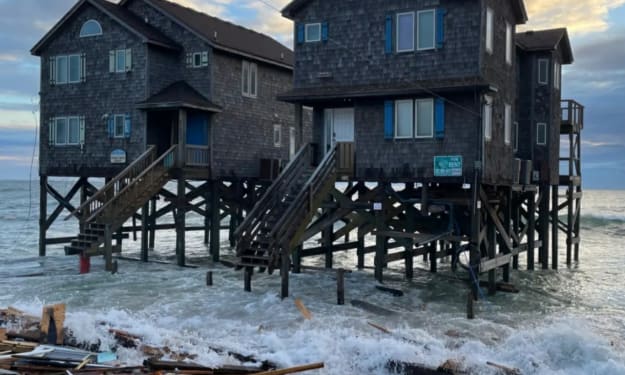
In a recent event that has brought attention to the ever-increasing risks of coastal living, two homes in the Outer Banks of North Carolina collapsed into the ocean within hours of each other. This alarming incident is part of a growing trend of coastal erosion fueled by rising sea levels and stronger storms. The Outer Banks, a popular vacation spot, is known for its picturesque beaches and unique houses perched on stilts. However, in recent years, the region has been grappling with the destructive effects of climate change. The collapse of these homes serves as a stark reminder that rising seas and coastal erosion are not just future threats, but issues that are happening right now. The Collapse of Two Homes in Rodanthe On a Friday morning, officials from Cape Hatteras National Seashore reported the collapse of two homes in Rodanthe, a village located on Hatteras Island. The first home, located on G.A. Kohler Court, fell into the ocean in the early hours of the morning. Fortunately, the house was unoccupied at the time, and no injuries were reported. Just a few hours later, a second home, which was already weakened due to the collapse of the first one, also fell into the ocean. Like the first, this house was also unoccupied, and no one was hurt. The remains of both homes washed out to sea, leaving behind large piles of debris scattered along the beach. In response to the incident, Cape Hatteras National Seashore authorities advised visitors to avoid the beaches in the area. They warned of hazardous debris, including sharp nails and pieces of wood, that could pose a danger to anyone walking along the shoreline. The Larger Issue: Rising Seas and Erosion The collapse of these homes is not an isolated event. In fact, over the past four years, nine homes in the Rodanthe area have been lost to the ocean. Four of these collapses occurred this year alone. This troubling pattern highlights the ongoing issue of coastal erosion, which has been steadily worsening due to climate change. Coastal erosion is the gradual loss of land along the shoreline, primarily caused by the action of waves, tides, and storms. In places like Rodanthe, where the beaches are narrow and vulnerable, the combination of stronger storms and rising sea levels has accelerated the process. Homes that were once safely nestled behind dunes are now standing in the ocean’s path, with their foundations being eroded away by the relentless waves. Climate Change: The Driving Force Climate change is a key factor behind the increasing frequency and severity of these collapses. As global temperatures rise, sea levels are rising due to the melting of ice caps and the expansion of seawater. This means that coastal areas are facing higher tides and more frequent flooding. Additionally, climate change is making storms more intense. Hurricanes and other storms are producing stronger winds and larger waves, which can devastate vulnerable shorelines. Even storms that are hundreds of miles away can generate powerful waves that reach the coast, contributing to the destruction of homes. In one recent case, a house that collapsed in Rodanthe was believed to have been impacted by waves generated by Hurricane Ernesto, even though the hurricane was far from North Carolina at the time. This illustrates how even distant weather events can have a direct effect on coastal communities. The Challenge for Homeowners For homeowners in the Outer Banks, the situation is becoming increasingly dire. Many homes that were once protected by dunes and dry sand are now surrounded by water. The pilings that support these elevated houses are often partially or fully submerged in the ocean. Over time, the water erodes the sand around these pilings, weakening the foundations of the homes and increasing the risk of collapse. Homeowners and local officials are working together to address the issue. After the recent collapses, authorities began working with the owners to clean up the debris and secure contractors for repairs. However, this is only a short-term solution. The larger problem of coastal erosion continues to pose a threat to the entire region. What Can Be Done? Addressing coastal erosion is a complex challenge that requires a long-term, sustainable approach. Some possible solutions include beach nourishment, where sand is added to eroding beaches to help build them back up. Another option is the construction of seawalls and other barriers to help protect the shoreline from the impact of waves and tides. However, these measures are expensive and may only offer temporary relief. In some cases, retreating from the most vulnerable areas may be the only viable option. This involves moving homes and infrastructure away from the shoreline to reduce the risk of damage from erosion and flooding. Local governments and homeowners will need to work together to develop strategies that can help protect both the environment and the people who live in these areas. The Future of the Outer Banks The Outer Banks have long been a beloved destination for vacationers and residents alike. But as climate change continues to reshape the coastline, the future of this unique region is uncertain. The collapse of homes in Rodanthe is a reminder that the effects of rising seas and stronger storms are already being felt, and the situation is likely to worsen in the coming years. While efforts are being made to protect the coastline, it is clear that more action will be needed to adapt to the changing environment. The residents of the Outer Banks, along with communities around the world, are facing a new reality—one where the ocean is slowly, but surely, reclaiming the land.
By Black Rose2 years ago in Earth
What Happened To The Earth After The Creation Of The Earth?
The Hadean Age: A Terrible Start (4.5 - 4.0 quite a while back) The initial 500 million years after the development of the Earth are known as the Hadean Age, named after the Greek god Gehenna, alluding to the "shocking" conditions that ruled this period. During this time, Earth was a liquid mass of rock, with surface temperatures very high to help any type of life. The planet experienced steady volcanic action, with continuous impacts from extra garbage in the planetary group, including space rocks and comets. This barrage, known as the Late Weighty Siege, essentially formed the World's surface, making cavities and contributing materials to the planet's creation.
By Aungon Das2 years ago in Earth
he Big Five: Iconic Beasts of the African Savanna. AI-Generated.
The Big Five are a group of iconic African wildlife species that have captivated the imaginations of adventurers and nature lovers for centuries. These majestic creatures, consisting of lions, rhinoceroses, elephants, giraffes, and buffalo, are considered some of the most sought-after animals to spot on safari. Let's delve into some fascinating facts about each of these remarkable beasts.
By Kelly Munala Brookes2 years ago in Earth