Humanity
High cost of transportation now forcing workers to resign from jobs in Nigeria
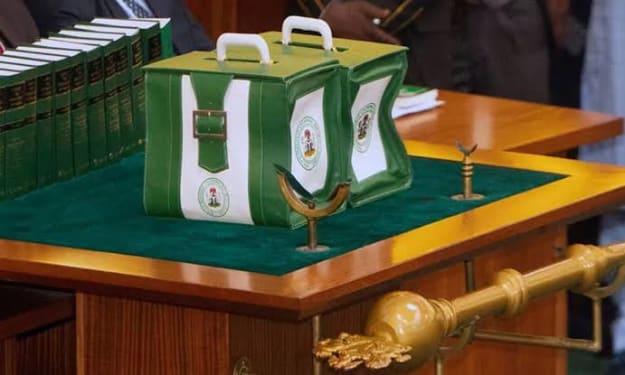
High cost of transportation forces workers to resign from jobs The various changes in government policies have continued to tell on Nigerians especially the recent increase in fuel pump prices across the country. This year alone, the Nigerian National Petroleum Company Limited has adjusted petrol pump prices upwards twice from N617 to N855, N950 in Lagos state (depending on the fuel station) and above N1,000 in other states within two weeks in September. Despite these changes, which have tremendously affected market prices and the cost of transportation, Nigerians have devised various means of survival. But the recent increase has not gone down well with some Nigerian workers’ Economy& Lifestyle discovered. This has made them resort to resigning from their jobs or sleeping in their workplace to cut costs as they can no longer meet up with the increased cost of transportation which is digging deep into their salaries. Mr. Dotun Owoyemi, who works on the Island and receives a five-figure Salary lamented: “I live on the mainland and work on the Island. “Before now, I spent N800 to and fro my workplace. “Now, I spend N2,500 to N3,000 daily. “Those commercial bus drivers are not helping matters at all either. “A destination of N200 fare, they increased it to N500. That of N100 to N300. “This fuel price increase pays a few people not salary earners. “If you visit the market today, you will marvel at the negative effect of this new policy on the prices of goods “Many businesses have tagged the cost of fuel to the recent increase in the price of goods and services. “I am still looking for a job on the mainland that is close to my house and will spend less transport fare compared to my previous workplace Miss. Sandra Douglas said:”I’ve resigned already. I live around Elelonwo in Port Harcourt and was working at King Perekule, GRA. I spent N52,000 for transportation in a month for a job whose salary was not up to N100,000. “I was working but couldn’t feed myself.” For Mrs. Dorcas Chukwuma, a midwife who works in Marina, “I worked as a midwife in one of the private hospitals in Marina but resigned recently due to the high cost of transportation. “I was not the only one in my workplace that resigned. “There were four of us Living on the mainland and working on the Island is not easy at all, especially now that the cost of transportation has tripled. “The cost of food and services has also followed. “I just had to source for another hospital on the mainland where I can work and spend less transport fare instead of spending all my salaries on transportation just to work on the Island. “It is a pity that the government when introducing policies doesn’t consider the masses. “This fuel price increase has introduced more poverty in the country. “We were complaining that people are suffering, now husband’s will no longer go home to their family daily because they have to cut costs, young and old will have to come out of their houses to beg because those relatives giving them can hardly fend for themselves. We don’t even know our destination as a country anymore. “Our government has failed us.” Apart from resigning from jobs, Mr. Tunde Ayeni, who works in Lekki said he now sleeps in the office during the week and returns home on Fridays to cut transportation costs. “I work in Lekki and live in Abule Ado. Within two weeks of the increased fuel price, my transportation fare grew from N2,000 a day to N4,000. “ I don’t receive up to N100,000 salary in a month. “So I started sleeping in the office on weekdays and going back home on weekends. “It is so ridiculous because these private companies are also struggling to survive and cannot increase salaries. “If private companies implement the so-called N70,000 minimum wage, many employees will lose their jobs. “Except for companies that are resilient to all the effects of these economic policies which I doubt are in existence
By david David2 years ago in Earth
5 countries that have the least regulations
Determining the "least regulated" countries is a complex task, as regulatory environments can vary widely across different industries, sectors, and levels of government. Additionally, the perception of regulatory burden can be subjective and influenced by various factors.
By Moharif Yulianto2 years ago in Earth
Why..? ISLAM is the last solution
Hey USA you know that WHY..? ISLAM is the last solution! You read this article completely even if you are not a Muslim A lot of people here have read the article and left, I didn't have the guts to comment because they are not human they like nudists. They don't mind lying Even when parents get old, parents become his biggest burden They do not mean that there is someone who says the creator Then they would fear lies They can't lie to death though Because they have forgotten death but are too scared to jump from a high place I forget about death again in a moment I say to them that you ask questions in your mind in front of death and open the books of all religions You will find the right path to who made you, why you are on earth and where you are going Friends Gita Ramayana is not a scripture Let's go to the Vedas, the Old Quran, the Torah, and the Bible These are found in scriptures And Guru Nanak Gautama Buddha was no messenger no prophet You are human, you are not a cow, goat or donkey, you have consciousness, intelligence, try to know and come to the right path by knowing. Live for 50 to 60 years and then burn to ashes. Don't be afraid. You won't feel sorry for saying 50-60 years here. If you live for another 10 years, that time is 10 years only in hospital and house. Because if you go on the wrong road, if you don't know, if you are ignorant, you will end up going to the hospital After death you will not be able to come to earth and burn eternally in fire if you are on the wrong path Will heaven be granted to you from evil ways? No scriptures say to worship rat monkey Do not make idols of rats and monkeys of your own mind and worship themslam is considered the "last" and "fast" religion in several contexts, which can be understood from both theological and historical perspectives. Here’s an explanation of why Islam holds these distinctions: 1. Islam as the "Last" Religion Theological Perspective: Final Revelation: Muslims believe that Islam is the final and complete revelation from God (Allah), delivered through the Prophet Muhammad (peace be upon him). The Quran is considered the last holy scripture, which Muslims believe contains the unaltered word of God. This idea is supported by verses in the Quran itself, such as: "Muhammad is not the father of any of your men, but he is the Messenger of Allah and the Seal of the Prophets." (Quran 33:40) Seal of the Prophets: Prophet Muhammad is referred to as "Khatam an-Nabiyyin" (Seal of the Prophets), indicating that he is the final prophet in a long line that includes earlier prophets like Adam, Noah, Abraham, Moses, and Jesus. This means no other prophet or messenger will come after him, making Islam the last divinely guided path for humanity. Completion of Religious Teachings: Islam is seen as the culmination of the messages brought by earlier prophets. It reaffirms the teachings of previous Abrahamic religions (Judaism and Christianity) and provides guidance on all aspects of life, making it comprehensive and complete. Historical Perspective: Youngest of the Major Abrahamic Religions: Islam emerged in the 7th century CE, which makes it the youngest of the three major Abrahamic faiths. It came around 600 years after Christianity and more than 2,000 years after Judaism. 2. Islam as the "Fast" Religion Rapid Spread in History: Early Expansion: Islam spread rapidly following the death of Prophet Muhammad in 632 CE. The early Islamic Caliphates, starting with the Rashidun Caliphate, expanded Islamic rule across the Arabian Peninsula, the Levant, North Africa, and into parts of Europe and Asia within a century. Factors Contributing to the Spread: Military Expansion: The early Islamic empires conquered vast territories swiftly, but they allowed freedom of religion to the conquered people. Many chose to convert due to the appeal of Islamic teachings or the benefits of being part of a Muslim community. Trade and Commerce: Muslim traders played a significant role in spreading Islam to regions like West Africa, Southeast Asia (e.g., Indonesia and Malaysia), and the Indian subcontinent. The values of honesty, fairness, and brotherhood displayed by Muslim traders attracted many to the faith. Missionary Efforts (Dawah): Islamic scholars, Sufis (mystics), and preachers spread the message of Islam peacefully through education, spirituality, and community engagement. Their approach made the religion appealing to diverse populations. Cultural and Linguistic Integration: The simplicity of Islamic teachings, such as monotheism (belief in one God), social justice, and the brotherhood of humanity, made it relatable. Additionally, the Arabic language spread as the language of the Quran, facilitating unity among Muslims. Contemporary Growth: Islam’s Fastest-Growing Status: Today, Islam is the fastest-growing religion in the world, with over 1.8 billion followers. Several factors contribute to this growth: High Birth Rates: Muslim-majority countries often have higher fertility rates, contributing to population growth. Conversions: Many people around the world continue to convert to Islam due to its teachings, community values, and the sense of spiritual fulfillment it offers. Migration: The movement of Muslims to different parts of the world has increased the religion's global presence, making it more visible and accessible. Appeal and Relevance: Comprehensive Guidance: Islam provides detailed guidance on personal, social, economic, and spiritual matters, making it relevant to everyday life. This comprehensive nature appeals to people seeking structured guidance. Emphasis on Community and Equality: Islam emphasizes values like charity (Zakat), helping others, and fostering a sense of community (Ummah), making it attractive to people from different cultural backgrounds. Conclusion Islam is referred to as the "last" religion because it is believed to be the final and complete revelation from God, delivered through Prophet Muhammad. It is also considered the "fast" religion due to its rapid historical spread and its status as the fastest-growing religion today. Its clear teachings, emphasis on social justice, and sense of community have contributed to its enduring appeal and global expansion.
By Mohammad sharukh 2 years ago in Earth
5 countries with the shortest daylight hours
The length of daylight hours varies throughout the year due to the Earth's tilt on its axis and its orbit around the Sun. During the summer solstice, the Northern Hemisphere experiences the longest daylight hours, while the Southern Hemisphere experiences the shortest. Conversely, during the winter solstice, the Northern Hemisphere experiences the shortest daylight hours, and the Southern Hemisphere experiences the longest.
By Moharif Yulianto2 years ago in Earth
5 countries with the longest daylight hours
The length of daylight hours varies throughout the year due to the Earth's tilt on its axis and its orbit around the Sun. During the summer solstice, the Northern Hemisphere experiences the longest daylight hours, while the Southern Hemisphere experiences the shortest. Conversely, during the winter solstice, the Northern Hemisphere experiences the shortest daylight hours, and the Southern Hemisphere experiences the longest.
By Moharif Yulianto2 years ago in Earth
"Discover the Rich Culture, Natural Wonders, and Unstoppable Spirit of Bangladesh". AI-Generated.
**Bangladesh: A Land of Resilience and Beauty** Nestled in the heart of South Asia, Bangladesh is a country rich in history, culture, and natural beauty. Despite its relatively small size, this vibrant nation is home to over 170 million people and boasts one of the world's most fascinating landscapes. From the countryside's lush greenery to Dhaka's bustling streets, Bangladesh offers a unique blend of tradition and progress, making it a country worth exploring.
By Tasnuba Humayra2 years ago in Earth
Who or what do you dedicate yourself to this year?
She has been waking from her deep rest for weeks: the season I call the Early Warm. I felt the chill pull away. The crows spending more time around our home, sharing our scraps off the compost heap, teasing the dog, talking in their harsh voices above our heads. We could throw off the top ‘winter’ doona for periods of the night. Inside me I felt an ending: this year it was a feeling of grief, like letting go of a loved one. Perhaps the deep time of slumber we were leaving was an important passage for me, in this season of growing a child? I haven’t entered the Waking season as ease-fully as I usually do. In fact the unseasonable heat we have experienced for the past few days stuck with me like glue, making me feel uncomfortable, pained in the head and heart. The inner feelings of ‘deeprest’ (read Depression) were strong within my own being during the Winter season (the time I call the Season of Deep Rest) and the Early Warm Season has been a tricky time of deep inner feeling, congealing with the outer pull of Mother Earth forcing my body to feel, on my skin, the warm promise of change, bringing activity that I don’t yet feel fully ready for. The Deep Rest Season lingers in my bones, despite my heart feeling the tug of Her warm promise and the baby within my womb flutters like new butterflies, reminding me it isn’t all about what is scratched into my mind. There is so much more to life.
By Yen in service2 years ago in Earth
Dr. Wu Jun's choices represent the three formulas of human civilization
Although I would much prefer to continue telling stories about those mysterious creatures, about the children of the Dragon Kings and the rare treasures from the Heavenly Court, I have decided to set these aside for now. Today, the story we are going to tell is not so ancient. One could say it comes from modern times, from science, from humanity's endless pursuit of truth. Today's story originates from a question: If the Earth were about to be destroyed, and you could only write the essence of all human civilization on a business card for other civilizations to know that we once existed, what would you write? This question seems incredibly distant and unrealistic. The Earth is about to be destroyed? We must remember that our Earth Mother is unlikely to perish before us, even if she reaches old age. Before humans, she nurtured the dinosaurs, and after humans, she can surely nurture the next civilization. But does this question have no meaning at all? Not quite. In fact, even if it's not for showcasing the pinnacle of our civilization to other civilizations, the very act of selecting a formula that represents the essence of humanity has its own unique significance. The birth of these formulas signifies each leap forward in human civilization, and it represents humanity's advancing step toward the truth of the universe. Now, Dr. Jun Wu, a Google researcher from China and a bestselling author, may not be as prominent as scientific giants like Einstein or Maxwell. But it is figures like these 'little people' who can better introduce the 'great formulas' that we discuss today. It is precisely these 'little people' who have given a formal and resounding answer to a question that could concern all of humanity. Yes, what we want to discuss today is not a personal biography or a mythical tale. What we are talking about today are the driest and most boring formulas. Yet these formulas represent the closest thing humanity currently knows to the collective truths of the universe. Dr. Wu's answer consists of three formulas: 1+1=2, E=mc², and S=-∑P ln P The first represents the entirety of human mathematical achievements; the simplest mathematical operation reveals the most primitive and essential truths. The second is Einstein’s mass-energy equivalence formula, which reveals the equivalence between mass and energy. The importance of these two to human civilization needs no further elaboration. Today, however, we want to focus on the third formula, often referred to as the expression of the second law of thermodynamics or the entropy law. What does this formula mean? It is not as easily understood as the mass-energy equivalence formula or the simple truth of mathematics, and it certainly doesn't conform to the concise elegance of mathematical language. But in fact, its content is simpler than anyone could imagine. It merely reveals the essence of entropy increase: 'In an isolated thermodynamic system, entropy tends to increase spontaneously.' At the same time, it brings with it two thoughts that are deep enough to plunge one into an abyss. First, if everyone understands this formula, they can easily draw a simple conclusion: the endpoint of all matter is chaos and disorder. In thermodynamics, scientists call this 'heat death.' 'Heat death' means that, in this isolated thermodynamic system—the universe—there will come a day when, due to the continuous increase in entropy, it reaches an extreme state of disorder, a state of 'maximum entropy.' In this state, all life and matter will cease to exist. Regardless of whether human civilization reaches this point, it is inevitable that human civilization, too, will go extinct. This, without a doubt, is a despairing thought. But at the same time, the second law of thermodynamics also reveals another objective fact: "Life feeds on negative entropy." Life is life because it can react to the outside world in an orderly manner; it can metabolize. The process we call 'metabolism' in thermodynamics is referred to as 'entropy reduction.' Living organisms take in low-entropy food and excrete high-entropy waste, thereby extending their own lives and slowing their entropy increase. With life, the universe—this isolated thermodynamic system—becomes less 'isolated.' The universe, because of the existence of life, no longer seems so desolate, and the 'heat death' no longer appears so imminent. My friends, this is undoubtedly a heavy topic, but I don't wish to be heavy-hearted. From this formula, we gain insight into the essence of life, and thus, I constantly remind myself of the preciousness and importance of life! And I hope each of you can also gain some insight from this.
By Oliver·love Mei Ni2 years ago in Earth
The Unimaginable Catastrophe: A World Changed by Nuclear War
In the annals of human history, the scars of war are all too familiar. From the devastating global impacts of World War I and II to the countless regional conflicts that have followed, the destructive power of warfare has shaped the course of nations and the fates of millions. Yet, the prospect of a Third World War, fueled by the awesome power of nuclear weapons, presents a nightmarish scenario on a scale that transcends anything the world has ever experienced.
By S M Zulfikar Haider2 years ago in Earth