Humanity
The Role of Forests in Combating Climate Change
Forests are often called the “lungs of the Earth” because they play a crucial role in absorbing carbon dioxide (CO₂) and producing oxygen. Beyond their beauty and biodiversity, forests are essential in the fight against climate change. They act as massive carbon sinks, help regulate temperatures, and support diverse ecosystems. But with deforestation and land degradation on the rise, these vital resources are under threat. Here’s a look at how forests combat climate change and what you can do to support these incredible ecosystems.
By Jacktone Otieno2 years ago in Earth
Climate Change Explained
Climate change is one of the most pressing issues of our time, affecting nearly every aspect of life on Earth. With each passing year, the consequences of a warming planet become more apparent, influencing everything from weather patterns to economic stability and public health. As we move into 2025, understanding the impact of climate change and the role we can play in mitigating its effects is more critical than ever. Here’s a look at what you need to know about climate change, its impact on our world in 2025, and what we can do to make a difference.
By Jacktone Otieno2 years ago in Earth
Ukraine's Future: Nuclear Option or NATO?
The War in Ukraine is (and will be) undoubtedly defining geopolitical struggles of the 21st century. What began as a territorial dispute between Ukraine and Russia has grown into a protracted war with grave humanitarian, economic, and geopolitical consequences. The more this war drags on, the more one huge looming question appears to emerge: how Ukraine will secure its future. Out of that, one alarming possibility may be nuclear weapon development.
By Tanguy Besson2 years ago in Earth
8 PLANTS THAT CAN ATTRACT PESTS, SNAKES, AND INSECTS IN HOMES. Content Warning. AI-Generated.
Pest attractors Often, while people take the best precautions to keep their home insect and rodent free, the problem that is inhibiting the insects is hidden in plain sight. The beautiful flowers, fruits, and leaves of your garden, might be the reason for pests, snakes, and insects in your home! 1.Ivy
By mukesh jaiswar2 years ago in Earth
The Bajau People: Evolution’s Incredible Adaptation to Life Under the Sea
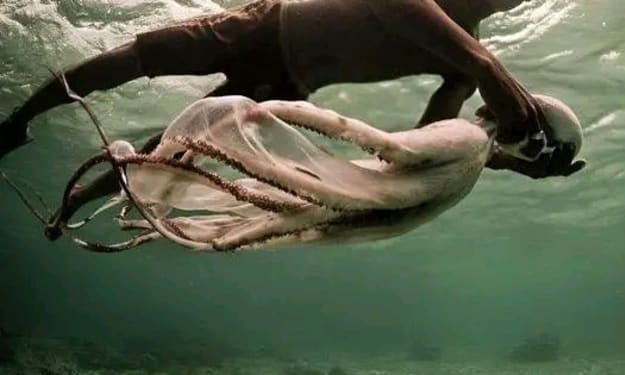
In the coastal waters of Indonesia, Malaysia, and the Philippines, an extraordinary community known as the Bajau people live their lives intertwined with the sea in a way that few others can fathom. Known as the "Sea Nomads," the Bajau have spent more than a thousand years navigating, hunting, and thriving on the open ocean, adapting in ways that challenge what we know about human physiology. For the Bajau, the sea is more than just a home; it’s a way of life—and one they’ve physically evolved to fit. A Thousand Years of Ocean Life The Bajau’s lifestyle, dictated by the surrounding seas, centers around fishing and foraging underwater. This isn’t just for leisure or occasional sustenance—the Bajau's entire food supply depends on their ability to dive and hunt. They’ve developed a remarkable skill set that allows them to gather shrimp, crab, fish, squid, and other sea life to feed their families. With no access to the conveniences of modern fishing technology, they’ve adapted to life as expert free divers, often plunging as deep as 60 meters (nearly 200 feet) below the ocean’s surface. This tradition of diving for survival has persisted for centuries. Living either in temporary stilt houses on the water or on small boats known as lepa-lepa, the Bajau people’s connection to the ocean is as deep as the waters they dive into each day. An Extreme Adaptation: Punctured Eardrums One of the more surprising practices of the Bajau people is the intentional puncturing of their eardrums, an adaptation that helps them adjust to the underwater pressure of their dives. For a diver plunging deep, the pressure difference between the outer and middle ear can be intensely uncomfortable and even painful. By puncturing their eardrums, Bajau divers equalize this pressure more effectively, allowing them to dive deeper and for longer periods of time without pain. However, puncturing the eardrums comes with a cost: it can reduce their hearing ability and increases the risk of ear infections. Yet, the Bajau have accepted this trade-off to ensure that they can dive as needed to support their families. It’s an extreme measure, but one that underscores their reliance on the ocean’s resources. The Spleen: The Bajau’s Natural Scuba Tank In recent years, scientists have taken an interest in how the Bajau manage to hold their breath for such extended periods. Remarkably, the average Bajau diver can stay underwater for up to 13 minutes on a single breath and reach depths that most humans would struggle to survive. This astounding ability led researchers to explore what, if any, physiological adaptations the Bajau might possess that give them an edge. What they found is nothing short of fascinating. The Bajau have a unique trait: their spleens are significantly larger than those of the average human. The spleen plays a crucial role in oxygen regulation, acting as a sort of internal "oxygen tank" by storing oxygenated red blood cells. When a person holds their breath, the spleen contracts, releasing stored red blood cells and supplying additional oxygen to the body. This mechanism is known as the “mammalian dive response,” a reflex seen in many diving mammals like seals and otters. For the Bajau, the volume of their spleens is about 50 percent larger than that of the average person. This means that when they dive, their bodies can access a greater oxygen reserve, enabling them to remain submerged longer and dive deeper than most people. The larger spleen is an evolutionary advantage that’s not just limited to Bajau divers; even children who haven’t yet dived have this adaptation, suggesting that it’s a hereditary trait passed down through generations. The Genetic Link: Evolution Under the Sea The fact that Bajau children who haven’t yet dived still exhibit a larger spleen suggests that this trait isn’t developed purely by practice but rather has a genetic basis. This finding points to a remarkable case of human evolution in response to a specific environment. Over centuries, the Bajau people have evolved to thrive in a way that suits their marine lifestyle. Their genetic adaptation to life underwater, allowing for extended diving capacity, is a rare and compelling example of how human physiology can evolve over time to meet environmental demands. This adaptation is particularly noteworthy because it has developed in a relatively short span of evolutionary time—about 1,000 years. Unlike most environmental adaptations, which often take tens of thousands of years, the Bajau have achieved a biological advantage over mere centuries, highlighting the incredible plasticity of the human body in adapting to the demands of its environment. A Life Entwined with the Ocean For the Bajau people, the sea is not just a resource or even a challenge—it’s part of their identity. They are known as Sea Nomads, living on houseboats, setting up temporary stilt homes over shallow waters, and spending much of their day beneath the waves. The Bajau’s knowledge of the sea’s rhythms, currents, and resources has been honed over generations, and their unique physical adaptations enable them to live in harmony with their oceanic environment. As modernity encroaches and new technologies become available, the Bajau way of life is changing. But for many Bajau families, the tradition of diving and foraging beneath the waves remains an essential part of their cultural heritage. Their adaptations, from punctured eardrums to enlarged spleens, symbolize a deep connection to the ocean that has defined their past and shapes their future. A Remarkable Legacy of Human Adaptation The Bajau people are a testament to human adaptability, embodying a lifestyle that many might consider impossible. Through centuries of oceanic living, they’ve evolved in ways that make them almost superhuman in their diving abilities, relying on both cultural practices and biological adaptations to thrive. As scientists continue to study the Bajau, they provide a glimpse into how human evolution can shape entire communities to not just survive but thrive in even the most challenging environments. The Bajau remind us of the endless possibilities of human adaptation and the profound impact that our environment has on our bodies, capabilities, and identities.
By Deji Akomolafe2 years ago in Earth
As COP29 opens: Goldman Sachs projects $75 trillion price tag for climate action
In a striking reassessment of global climate goals, Goldman Sachs Research has revealed that the world needs to invest more than $75 trillion to achieve net zero carbon emissions by 2070. This updated forecast, detailed in their report "Carbonomics: The GS net zero carbon scenarios — a reality check," represents a significant increase from their previous projection of $62 trillion.
By Andrea Zanon2 years ago in Earth
10 Sustainable Swaps to Help You Live an Eco-Friendly Life
Making little, practical improves on in your everyday propensities can establish a major effect on the climate. The following are ten eco-accommodating trades you can begin today to decrease squander, preserve assets, and live more reasonably.
By Zahra Syed2 years ago in Earth