Humanity
EARTH 2125
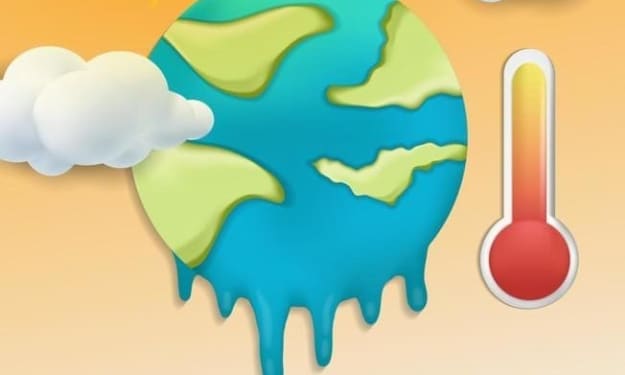
By 2125, Earth is no longer the planet we once knew—it’s something entirely new. Shaped by climate change, technological evolution, and the shifting values of humanity, the world has transformed in ways both breathtaking and sobering. If we could step into a time machine and walk the Earth a century from now, what would we see? Let’s take a journey into the future of our planet. --- Climate and Environment: A Planet Reclaimed One of the most dramatic changes in 2125 is the environment. After centuries of pollution, deforestation, and rising temperatures, nature has responded in unexpected ways. Large portions of Earth’s equator are now uninhabitable due to extreme heat, with temperatures reaching up to 60°C (140°F). These areas, once densely populated, have been abandoned and reclaimed by nature. Forests with genetically modified flora adapted to extreme climates grow in places where cities once stood. Towering solar trees and algae-covered towers clean the air and provide shade in urban spaces. The polar regions, now partially ice-free, have become hubs of global agriculture. With the melting of ice sheets, vast new territories opened up in Greenland, Canada, and Siberia. Though the rising sea levels swallowed many coastal cities—New York, Venice, Mumbai—new floating and vertical cities now rise above or beyond the old ones. Rivers and lakes, once drying and shrinking, are now carefully managed by AI-controlled systems. Many ecosystems were rebuilt with synthetic biology: lab-designed coral reefs, cloned endangered species, and bio-domes help preserve what was almost lost. Nature didn’t die—it adapted. And in some places, it’s fighting back. --- Cities and Architecture: Living With the Land Cities in 2125 are no longer just concrete jungles. They breathe, grow, and respond like living organisms. Vertical cities—miles high—stretch into the sky, covered in plant life. Entire neighborhoods are designed to move slightly throughout the day to follow the sun or avoid the wind. Homes are no longer static structures. Smart walls adjust to temperature, light, and even mood. People live in modular living pods that can detach and reattach elsewhere. Need a change of scenery? Your entire house can be flown to another region. Underground and underwater cities are also thriving. These environments are shielded from surface climate issues and powered by geothermal energy. Some even feature artificial stars for sunlight simulation. The idea of “sustainable” has evolved to “symbiotic”—cities no longer just reduce harm, they actively repair and enhance their environments. --- Technology: The Earth is Always Listening Technology in 2125 is no longer just in your pocket—it’s in the air, the soil, the trees. Earth's surface is embedded with a planetary-scale Internet of Things (IoT), allowing AI systems to monitor and manage everything from water flow in a forest to the emotional health of a community. Neural interfaces allow people to connect with machines through thought alone. Physical devices like phones and computers are considered outdated. Communication is now visual, sensory, and immersive—messages are experienced rather than read. Transportation is largely autonomous. Flying taxis, magnetic trains, and zero-emission vehicles dominate. Personal travel has become more of a leisure activity, since remote presence and holographic projections are widely used for work and social life. The downside? Privacy is almost non-existent. In exchange for security and efficiency, most people live in a state of voluntary transparency. --- Human Culture and Society: A Redefined Civilization Earth’s population has declined slightly—not due to disaster, but by choice. Many have left to live in orbiting space habitats or on Mars colonies. The humans who stayed became deeply connected to Earth’s wellbeing. Instead of global nations, the world is divided into eco-regions. Governance is handled by hybrid councils of humans and AI, focused not on profit, but planetary health and social harmony. Education is continuous and experiential. Children learn by doing—exploring forests, building machines, planting crops, and engaging with historical simulations. Empathy is a core subject, alongside science and creativity. Work is not about survival anymore. AI and robotics handle most labor. Humans focus on problem-solving, storytelling, and innovation. Basic income is universal. Mental health is taken seriously. Time is valued as the most precious currency. --- The Emotional Landscape: Wonder and Warning Despite all the advancements, Earth in 2125 carries the emotional weight of its past. Ghost cities still stand beneath the oceans. Forests whisper through genetically engineered leaves that were once burned to the ground. Monuments and museums tell stories of the planet’s near-death and rebirth. There’s wonder—yes. Earth has become more alive, more interconnected, and more beautiful in strange, futuristic ways. But there’s also a warning. The scars of the past remain visible to remind future generations: Earth is not invincible. She is patient, powerful, and fragile all at once. We broke her once. We may not get a second chance if we do it again. --- Final Thought: The Earth of 2125 is a planet reimagined—not utopia, not dystopia—but something deeply real. It's a future shaped by both human failure and human resilience. And the most powerful truth? That future still depends on what we choose today.
By SHADOW-WRITESabout a year ago in Earth
From Sunrise to Status Updates: Life Through the Facebook Lens
In today’s digitally driven world, Facebook has grown beyond being just a platform for sharing photos or chatting with friends—it has become a significant part of our daily lives. For many, scrolling through Facebook is as routine as brushing their teeth in the morning or grabbing a cup of coffee. While it began as a simple social networking site, Facebook now plays a complex role in shaping our habits, social interactions, emotions, and even how we perceive the world around us.
By Asif Nawazabout a year ago in Earth
The Whispering Planet
No one believed Earth was the only cradle of life. They only lacked proof. That changed in 2083. It began with a signal. Not a loud, blinking broadcast, but a faint whisper carried across space repeating, rhythmic, like breathing. It came from Gliese-581g, a planet once dismissed as uninhabitable. Dr. Ada Nwosu, an astrophysicist from Lagos, was the first to decode the pattern. It wasn’t just noise. It was music. A harmonic sequence that matched no known natural source.
By Author kelechiabout a year ago in Earth
Emerald Valleys and Sapphire Skies: Discovering Afghanistan’s Natural Wonders
I arrived in Afghanistan not seeking war stories, nor political headlines—I came chasing colors. As a photographer and a wanderer of the forgotten, I had spent years chasing the world’s fading beauty. And now, I was here, drawn by whispers of emerald valleys and sapphire skies. Afghanistan, for most, meant conflict. For me, it meant a mystery yet untold.
By Mohammad Tariq Sideeqiabout a year ago in Earth
When Earth Was No More
Title: When Earth Was No More When the sky turned crimson and the oceans began to boil, humanity realized they had pushed Earth beyond its breaking point. Centuries of pollution, wars, and unrelenting industrialization had finally caught up. The planet that once flourished with life was now a dying shell. The air grew toxic, food became scarce, and nature once abundant and vibrant—faded into memory.
By Author kelechiabout a year ago in Earth
Why Should I Become a Volunteer?
In today's world, we are all very busy with our personal and professional lives. With the pressure of our daily tasks and personal goals, it often becomes difficult to make certain decisions at the right time. However, even in the midst of our busy lives, volunteering can offer us and society significant advantages. Through volunteer work, we can bring positive change to our environment, strengthen our human values, and boost our self-confidence.
By Khairul Alamabout a year ago in Earth
Global Warming: Causes, Effects, and Solutions to Save Our Planet.
Global warming is no longer a teleological mystery—it’s a vital reality that affects our climate, weather patterns, and ecosystems right now. As the Earth’s average temperature rises, the balance of nature is being distorted in an unprecedented way – and we urgently need to learn more about it, to understand the consequences, and to put some practical measures in place.
By Muhammad Hidayatullahabout a year ago in Earth
A Political and Economic Analysis of the New Trump Tariffs Opening Scene:
**Title: A Political and Economic Analysis of the New Trump Tariffs** The opening scene: (*A news studio set with a large screen displaying headlines about Trump’s new tariffs. The host sits at a desk, facing the camera. *) **HOST:** "Welcome to *Global Business Today*. Former President Donald Trump has proposed sweeping new import tariffs on China and other important trading partners, reviving trade policy debates. If implemented, these tariffs could exceed 60% on some goods, reshaping global trade dynamics. But what implications does this have for consumers, the economy, and the election in 2024? Let’s break it down." (*Cut to a montage of Trump speaking at rallies, factory workers, and stock market tickers. *) --- ### **Segment 1: The Announcement and Key Details** (*Cut to the on-screen economic analyst JANE DOE. *) **JANE DOE (Economic Analyst):** "Thanks, [Host]. Trump’s proposal is his most aggressive trade policy yet—calling for across-the-board tariffs, including: - **At least 60% on Chinese imports** - **10% universal baseline tariff** on all foreign goods - Potential retaliation from the EU, Mexico, and Canada This isn’t just about China; it’s a broader economic strategy aimed at reviving U.S. manufacturing—a key theme of Trump’s 2024 campaign." (*Graphic appears comparing Trump’s 2018-2019 tariffs vs. new proposal. *) **HOST:** "And let’s not forget, his first-term tariffs were controversial. Supporters say they protected jobs, but critics argue they raised prices and hurt farmers. Jane, how would this round differ?" **JANE DOE:** "Scale and scope. The 60% figure is unprecedented. It could trigger immediate inflation risks, but Trump argues long-term gains—like reducing reliance on China—justify the short-term pain." --- ### **Segment 2: Political Reactions** (*Cut to split-screen videos of legislators responding. *) **SEN. ELIZABETH WARREN (D-MA):** (*Clip from CNN*) "This is economic malpractice. This is a tax on Americans, and working families will pay for it at the gas pump and grocery store. **SEN. JOSH HAWLEY (R-MO):** "Finally, a leader willing to stand up to China," according to a clip from Fox News. We got here because of Biden's weakness; Trump's tariffs will bring jobs back home." (*Return to host. *) **HOST:** "Biden's team is already responding, describing the situation as a "recipe for chaos." However, if voters are concerned about China and the decline in manufacturing, could tariffs be a winning issue?" (*Cut to political strategist, MARK SMITH. *) **Political Strategist Mark Smith:** "Absolutely. Trade has an impact in swing states like Pennsylvania and Michigan. The message from Trump is clear: "I'll protect your job." It is potent, whether economically or politically. --- ### [Segment 3: Global Impact and Business] (*Footage of Walmart shelves, ports, and the NYSE. *) **HOST:** "Corporate America is nervous. Manufacturers are concerned about supply chains, while retailers warn of price increases. And abroad—China’s Commerce Ministry already vowed ‘forceful measures.’" (*Cut to trade expert, LISA CHEN. *) **LISA CHEN (Trade Expert):** "We’re looking at a potential trade war 2.0. China struck back in 2018 with soybeans, hurting farmers. This time, expect targets like tech and aerospace. And Europe won’t sit idle—they’ll likely challenge this at the WTO." **HOST:** "Could this backfire?" [LISA CHEN]: "If global partners impose their own tariffs, U.S. exports suffer. The question is whether reshoring occurs sufficiently quickly to alleviate the pain. --- ### Section 4: Historical Setting (*Archive footage of tensions between Japan and Smoot-Hawley in the 1980s. *) **HOST:** "History shows mixed results. Smoot-Hawley worsened the Great Depression, but Reagan’s auto tariffs saved Detroit—for a time. Trump’s team insists this is different." (*Transfer to the historian, DR. ROBERT KLINE. *) **DR. KLINE:** "Tariffs are a tool, not a magic bullet. The risk is escalation. The 1930s taught us that trade wars can spiral. But Trump’s betting voters prefer bold action over status quo." --- ### **Segment 5: What’s Next? ** (*Montage of campaign rallies, factory towns. *) **HOST:** "With the election looming, this policy could define the race. Biden will attack it as reckless; Trump will frame it as decisive. In the meantime, businesses are preparing for the unknown." (*Final graphic: "Impact Watch: Prices vs. Jobs – Who Wins?" *) **CLOSING:** "Thanks for joining us. Visit our website for more information. Let us know: Are tariffs the right move? Tweet us @GlobalBizToday. I’m [Host], goodnight." (*Music outro, black fade. *) ---
By Asef Rahman Sayemabout a year ago in Earth
Trade war escalation over Trump’s tariffs sends stocks tumbling
Global financial markets have been shaken by the escalating trade war between the United States and its major trading partners, particularly China. Trump's tariffs, which have sparked retaliatory actions and raised concerns of a prolonged economic standoff, are at the heart of this dispute. Stock markets around the world have plummeted as the trade war gets worse, indicating investor worry about the possible effects on global trade, economic growth, and corporate profits. The purpose of Trump's tariffs, which apply to a wide range of imported goods, is to safeguard American industries and lessen the trade deficit with other countries. However, critics contend that these measures are backfiring, causing consumers to pay more, causing supply chains to be disrupted, and undermining the very industries they were intended to protect. The uncertainty surrounding the trade war has also fueled market volatility, with stocks swinging wildly as investors grapple with each new development.
By MD EMRUL KAYESabout a year ago in Earth
Future Perspective on Working Offshore in the Next Five Years
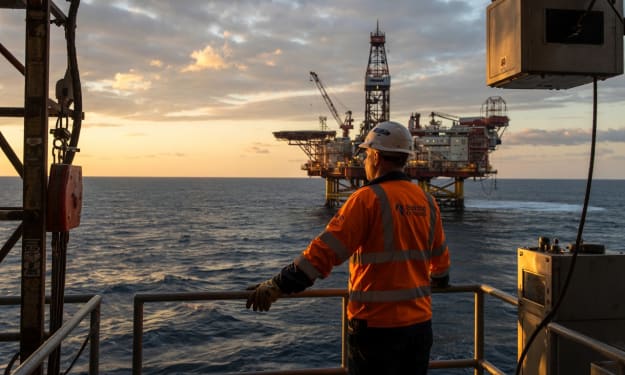
The offshore energy sector is at a pivotal moment, with projections indicating significant growth and transformation by 2030, particularly in the context of the global energy transition. This report synthesizes current trends, projections, and challenges to provide a comprehensive outlook for working offshore over the next five years, from April 2025 to April 2030. The analysis focuses on job opportunities, sector shifts, policy implications, and workforce transition, drawing on authoritative sources such as Offshore Energies UK (OEUK), Robert Gordon University (RGU), and the International Energy Agency (IEA).
By The INFORMERabout a year ago in Earth