Humanity
Can Hydrogen Energy Solve Our Climate Crisis?
Whole world choking under its own pollution. Cities wrapped in smog, oceans warming at an alarming rate, and extreme weather events becoming the new normal. This isn’t just a dystopian future — it’s happening right now.
By Neeraj Tiwariabout a year ago in Earth
A Child's Journey Through Trauma in Gaza
Shama Tubaili's Heartbreaking Struggle: A Child's Journey Through Trauma in Gaza Shama Tubaili stood in front of the mirror, trying to comb her hair, but she began to cry. With her hand on her head, she spoke to CNN, saying, "I don’t have any hair to brush. That’s why I am so sad. I look at myself in the mirror because I want to comb my hair again. I really want to comb my hair again."
By Omur Faruqueabout a year ago in Earth
The Beauty and Importance of Nature: A Lifeline for Life on Earth
The Beauty and Importance of Nature: A Lifeline for Life on Earth Everything around us—trees, oceans, mountains, animals, and the air we inhale—is part of nature, which is vast and complex. Not only is it a backdrop for human existence, but it is also an essential component of life itself. Nature is both the sustainer and the source of life, and its preservation is more crucial now than ever before. In this article, we will explore the beauty and importance of nature, highlighting why we must work collectively to protect and cherish it.
By Tanvir hasan Zelaniabout a year ago in Earth
How to Care your plants in Rainy Season?
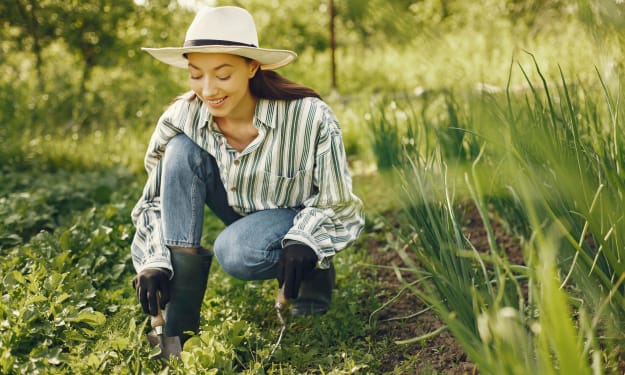
How to Care your plants in Rainy Season? You need to put some extra care while doing gardening in a rainy season because its challenging due to the extra moist atmosphere around your plants. You have to fill the pots of your indoor and outdoor plants completely and you can split the filling into two parts, one part can contain cow dung and another part can have other soil and compost.
By Iqra Aslamabout a year ago in Earth
Tied by Time
Title: Tied by Time Subtitle: e tripped in the middle of the schoolyard, falling flat on her face. Her shoelace had come undone, and in her scramble to catch the ball during recess, she didn’t notice. As the other kids laughed or moved on, one girl knelt beside her, offering a tissue for the dirt on her knee. “Hi. I’m Zoya,” she said with a shy smile. “Want me to tie that for you?” That was the beginning. From that moment, Maya and Zoya were inseparable. They walked to school together, traded snacks at lunch, and played imaginary games during recess. They had their own language—half words, half glances—and a pact sealed with melted popsicles: to always have each other’s back, no matter what. As the years passed, life changed, but their friendship didn’t. In middle school, Maya discovered her love for sketching, while Zoya developed a passion for writing. They became each other’s biggest fans—Zoya wrote stories based on Maya’s drawings, and Maya illustrated Zoya’s characters. Together, they created magical worlds only they could understand. But high school wasn’t as easy. Maya’s parents started fighting more. Some nights, she’d sleep with headphones in, trying to drown out the shouting. Zoya knew. She always knew. She’d send long messages at night, comforting and full of hope, or sneak over with her favorite hot chocolate mix and a blanket. When Zoya failed her first science test and cried in the library, Maya was the one who stood by her, no judgment, just quiet support. “You’re not your grade,” Maya whispered. “You’re Zoya. You make stories come alive.” They dreamed of going to the same college, living in the same dorm, building their futures together. But life had other plans. Zoya got into a university across the country, while Maya stayed home to help her family and take night classes. It was the hardest goodbye either of them had ever faced. For the first few months, they messaged every day. But then time zones and assignments, new friends and new routines got in the way. The messages grew shorter, the calls less frequent. Until one day, three months passed without a single word. Maya stared at her phone one night, wondering if she should call. Wondering if it was too late. Then it rang. “Maya?” Zoya’s voice was hesitant. “Zoya,” Maya breathed. “I thought—” “I missed you. I’m sorry. I let time get in the way. But I never stopped thinking about you.” And just like that, the silence shattered. The bond remained. They rebuilt from there—slower, more deliberate. They didn’t talk every day, but when they did, it was like nothing had changed. They cheered each other on, even from afar. Zoya published her first short story. Maya got accepted into an art program she’d once been too afraid to apply for. When Zoya’s dad got sick during her final year, she flew home without telling anyone—except Maya. Maya met her at the airport, arms open, no questions asked. When Maya had her first gallery show, Zoya sent flowers with a note that read: “You always made the world beautiful. Now it’s your turn to show it.” Ten years after the broken shoelace, they sat under the old tree in the park where they used to play. “We’ve been through a lot,” Maya said, leaning back on the grass. Zoya nodded. “And we’re still here.” They smiled, not needing to say anything more. Because some friendships don’t fade. Some are written into your story from the very beginning. Not perfect. Not without distance or silence. But real. And lasting. Because best friends aren’t the ones who never drift. They’re the ones who always find their way
By Hammad Khanabout a year ago in Earth
The Dangerous ocean,full story.
Ocean The Secret Under the Waves is the title. Maya had always felt a pull toward the ocean. Growing up in a small coastal town, the sea was her backyard and her best friend. Maya spent her afternoons collecting shells, chasing crabs, and talking to the waves as if they could hear her while the other kids played in parks or watched cartoons. Amma, Amma's grandmother, used to say that the ocean had a soul. “If you listen closely,” she would whisper, “it’ll speak to you. It conceals tales that no book can reveal. Maya never forgot those words. Years passed, and Maya’s connection with the sea only deepened. She studied marine biology, fascinated by coral reefs, mysterious sea creatures, and the delicate balance of underwater life. After graduation, she returned home and took a job with a local conservation group. Their mission was to protect a nearby coral reef, one that had begun to suffer from pollution and illegal fishing. Maya went alone in a small boat one morning to check on the reef after a storm had swept through the night. The sea was calm now, the sky a soft blue, and the air smelled of salt and possibility. She was greeted by peaceful silence, the kind that only exists below the surface, as she dove into the water with her gear. She swam deeper, passing familiar coral formations and colorful fish schools. But a shimmer coming from below caught her eye. She pushed past layers of seaweed and rock to reach a hidden cave, following the flicker in curiosity. She had never seen it before. Heart pounding with a mix of fear and wonder, Maya swam inside. Light from the surface danced on the cave walls, revealing ancient carvings — symbols of fish, waves, and stars. In the center of the cave was a massive stone covered in glowing algae, and on it lay a small conch shell, polished and gleaming. Maya reached for the shell, and the moment her fingers touched it, the water around her vibrated softly. It wasn’t threatening — it felt… alive. As she held the shell close to her ear, just as Amma had taught her as a child, she heard more than just the usual ocean sound. She heard a voice. In feelings, not words: sadness, longing, and a cry for help. Images filled her mind: the dying reef, turtles tangled in nets, coral turning ghost-white. Just as Amma had said, the ocean was speaking. Maya emerged with a shell in her hand, determined despite her shock. She was aware of her obligation. From that day, Maya became a force of nature herself. She set up a campaign to raise awareness, recruited volunteers, and collaborated with the fishermen in the area to develop sustainable methods. She showed children how to respect the sea, to see it not as something to be used, but as something to be loved. Word of her work spread, and soon marine biologists, divers, and even tourists came to learn from her and help. The color of the corals returned, fish returned in large numbers, and sea turtles once more found safe passages through the water as the reef began to heal over time. Maya often returned to the cave, placing the shell gently on the stone and listening. With each visit, the ocean’s message grew warmer, filled with gratitude. She knew she had become its voice — the bridge between the land and the deep. Years later, children would ask her if the ocean really spoke to her. Maya would smile and say, “It speaks to everyone. You just have to listen with more than your ears.” And as the waves crashed gently onto the shore, it was easy to believe the ocean had a soul — and that Maya had become its guardian.
By Al-amin Hossain about a year ago in Earth
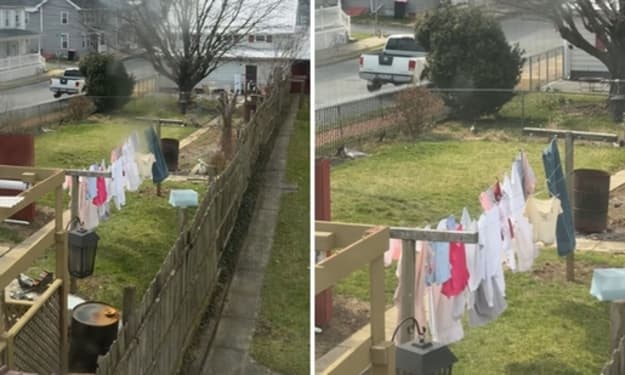
Not India, This Is the USA”: Viral Clothesline Video Sparks Unexpected Culture Clash
‘Not India, this is USA’: Viral Video of Clothes Drying in Backyard Triggers Heated Discussion, Backlash In the age of social media, even the most mundane aspects of daily life can spark viral debates — and the latest example is a video that has divided the internet over something as simple as drying clothes in the backyard.
By Sultan Khanabout a year ago in Earth
Dow tumbles 1,600 points after Powell says tariffs will raise inflation and slow growth more than expected
# Dow Tumbles 1,600 Points After Powell Says Tariffs Will Raise Inflation and Slow Growth More Than Expected The Dow Jones Industrial Average fell 1,600 points on April 3, 2025, its steepest single-day decline since the frantic market crashes of March 2020. The remarks of Federal Reserve Chair Jerome Powell, who admonished that President Donald Trump's recently imposed tariffs would raise inflation and impede economic growth beyond what analysts had initially predicted, sparked this dramatic fall. The sharp market reaction underscores growing investor unease about the broader economic consequences of these aggressive trade policies.
By MD EMRUL KAYESabout a year ago in Earth
The Forest Fire of America
It was a dry summer, and the winds had been unforgiving across the western United States. The forests, once lush with towering pines, were now a tinderbox waiting for the smallest spark to ignite them. In the heart of California, nestled between rugged mountains and serene valleys, a fire began, small at first but soon spreading with terrifying speed.
By Telhar Aliabout a year ago in Earth