Climate
The Amazon Rainforest: Earth's Beating Heart Is Dying in Silence
When people think of the Amazon Rainforest, they often picture an endless sea of green, teeming with exotic wildlife and ancient secrets. It's a place that has inspired adventurers, scientists, and storytellers for centuries. But while its mysteries captivate the imagination, there’s an even greater story unfolding—one of quiet tragedy and unexpected revelations. The Amazon isn’t just a forest; it's a biological miracle. And it’s in more danger than most people realize. The Surprising Science Behind the Forest We all learned in school that the Amazon is the "lungs of the Earth." But that’s only partly true. The forest absorbs about 2 billion tons of CO₂ every year. However, scientists recently discovered that parts of the Amazon are now emitting more carbon than they absorb due to widespread deforestation and wildfires. In other words, this once life-giving ecosystem may be turning against us—not by choice, but by our actions. What’s more fascinating is how the Amazon creates its own weather. It releases water vapor through a process called transpiration—basically, the trees "sweat." This moisture forms clouds and rainfall not just for the forest itself, but for surrounding regions and even continents. Without the Amazon, farming regions as far away as the United States and Argentina could face severe droughts. It’s not just a rainforest—it’s a climate engine. More than Just Trees and Animals The Amazon is home to over 400 billion individual trees, spread across 16,000 species. But it’s not just the trees that matter—this region supports one in ten known species on Earth. From the jaguar to the Amazon river dolphin, from poison dart frogs to bioluminescent fungi, the biodiversity here is beyond comprehension. Yet, the most mind-blowing part? We haven’t even discovered everything. Scientists estimate that thousands of species of plants, animals, and fungi remain unnamed and undocumented. In fact, on average, a new species is discovered in the Amazon every three days. And here’s something truly unexpected: The Amazon has its own "internet" system. Not digital, of course—but fungal. Known as the “Wood Wide Web,” this underground network of mycorrhizal fungi allows trees and plants to share nutrients, send warnings about pests, and even support weaker trees. It’s a form of natural communication that puts modern technology to shame. People of the Amazon: Keepers of Forgotten Knowledge Often overlooked in environmental discussions are the people who have lived in harmony with this land for thousands of years. The Amazon is home to over 350 Indigenous groups, many of whom still live without formal contact with the outside world. These communities possess knowledge about medicinal plants, sustainable farming, and biodiversity that modern science has only begun to explore. Here’s a shocking twist: Modern pharmaceuticals have already benefited from Amazonian knowledge. More than 25% of Western medicines are derived from rainforest ingredients—many of them found in the Amazon. The rosy periwinkle, for example, led to life-saving drugs for childhood leukemia and Hodgkin’s disease. Imagine what else might be hidden in the leaves and roots of this vast forest, waiting to be discovered—or destroyed. Deforestation: Death by a Thousand Cuts Despite all this wonder, the Amazon is vanishing. Over 17% of the forest has already been lost, mostly to cattle ranching, logging, and soy farming. And if we reach 20–25%, scientists warn of a terrifying tipping point. The forest could collapse into a dry savannah, unable to support its current biodiversity or climate functions. It gets worse: Illegal mining operations are poisoning rivers with mercury, threatening both wildlife and Indigenous communities. Fires—some natural, most manmade—rip through huge swathes of forest every dry season. Satellite images show black scars across green expanses, the wounds of our greed. The Forest Isn’t Just a Victim. It Fights Back. In a strange twist of fate, the Amazon may have the last word. As it becomes drier and more fragmented, its ability to absorb carbon diminishes. That means global temperatures could rise faster, leading to more extreme weather, rising sea levels, and failing crops worldwide. It's not a distant crisis—it's one that's beginning to knock on all our doors. But the forest also offers hope. Reforestation projects in Brazil, Colombia, and Peru have shown that with time and care, some areas can recover. Scientists are now using drones and AI to identify critical zones for restoration. Even local communities are stepping up, reviving traditional land practices to heal the soil and protect what’s left. So, What Can You Do? You don’t have to live near the Amazon to protect it. Here are a few impactful ways to help: 1. Support Rainforest Charities: Groups like the Rainforest Alliance, Amazon Watch, and the Pachamama Alliance work directly with communities on the ground. 2. Watch What You Eat: Beef and soy are major drivers of deforestation. Choose sustainable sources and support companies with deforestation-free supply chains. 3. Go Paperless (When Possible): Paper and wood products contribute to logging. Recycled materials make a difference. 4. Raise Awareness: Share articles, speak up, and educate others about the Amazon's true importance. 5. Support Indigenous Rights: The best protectors of the forest are those who have always lived there. Final Thoughts: A Global Forest The Amazon isn’t just Brazil’s treasure—it’s the planet’s inheritance. It holds the key to fighting climate change, curing diseases, and understanding life itself. But its wonders may vanish before we truly understand them. It’s time to stop thinking of the Amazon as someone else’s problem. Because in many ways, the Amazon is us—our weather, our air, our medicine, our future. And if we let it die in silence, the whole world may go quiet with it. ---
By Umair Khanabout a year ago in Earth
Plant a Tree, Breathe a Future: How Neem and Other Trees Can Save Our Planet
: In a world suffocating under the weight of pollution, rising temperatures, and vanishing wildlife, the solution may be simpler—and greener—than we think: plant more trees. Trees are not just part of the landscape; they are the lungs of the planet, natural air conditioners, rainmakers, and shelters for countless species. Among the many powerful trees we can grow, Neem (Azadirachta indica) stands out as a quiet warrior in the fight against climate change. But it's not alone. Let’s explore the importance of neem and other vital trees, and how they can transform our environment and our lives. --- Neem: Nature’s Pharmacy and Air Purifier Neem is known as the “Village Pharmacy” in many parts of South Asia, and for good reason: Extreme Weather Resistance: Neem trees can tolerate temperatures as high as 55°C and as low as 10°C, making them ideal for regions facing extreme climate changes. Air Purification: A mature neem tree produces cooling equivalent to three air conditioners running 24/7. Health Benefits: From its anti-bacterial leaves to anti-fungal bark, neem is a natural healer. Pest Control: Neem acts as a natural pesticide, reducing the need for harmful chemicals in agriculture. Despite all these benefits, a neem sapling costs as little as $0.50 to $1—a small price for such a big impact. --- Moringa: The Miracle Tree Moringa oleifera, also called the “drumstick tree” or “tree of life,” is another powerhouse: Nutrient-Rich Leaves: High in vitamins A, C, calcium, and protein. Soil Enhancer: Moringa improves soil fertility, especially in dry, degraded lands. Rainwater Retention: Its roots help prevent erosion and increase water absorption. --- Peepal and Banyan: Sacred Giants with Superpowers These massive, sacred trees are more than religious symbols: Oxygen Generators: Peepal (Ficus religiosa) releases oxygen even at night—rare among trees. Micro-Ecosystems: Both banyan and peepal support entire ecosystems of birds, monkeys, squirrels, and insects. Carbon Sequestration: Their huge canopies and thick trunks store massive amounts of carbon, reducing greenhouse gases. --- Fruit Trees: Food, Shade, and Shelter Mango, jamun, guava, and berry trees not only feed us but also feed countless animals and birds: Bird Habitats: Flowering and fruiting trees attract pollinators and birds, helping ecosystems thrive. Community Benefits: Fruit trees support local economies and food security. Rainfall Inducers: Forested areas have higher humidity and cloud formation, leading to increased rainfall. --- Environmental and Social Benefits Planting trees brings a cascade of positive effects: Cleaner Air: Trees absorb CO₂ and pollutants while releasing life-giving oxygen. Rainfall Restoration: Forests help in cloud formation and rainfall cycles. Wildlife Return: More trees mean more birds, butterflies, and animals returning to habitats. Mental Health: Green spaces lower stress, anxiety, and even reduce crime rates in urban areas. --- Every Tree Counts: What You Can Do Today Plant Native Trees: Native species adapt better and support local wildlife. Support Reforestation Projects: Donate to or volunteer with NGOs that plant trees. Grow at Home: Even a single tree in your backyard or rooftop garden makes a difference. Educate Others: Share stories, facts, and the importance of trees in your community. --- Conclusion: Trees Are Time Machines Every tree planted today is a gift to the future. A neem tree you plant now will cool your street, clean your air, and maybe even heal someone decades from now. As climate change accelerates, forests will be our strongest defense and greatest hope. So plant a tree—not just to save the environment, but to save ourselves. Trees are not a luxury—they are life. ---
By Umair Khanabout a year ago in Earth
One Side of the Moon is Much Hotter Than the Other. AI-Generated.
One Side of the Moon is Much Hotter Than the Other The Science Behind the Moon’s Extreme Temperatures When you look up at the Moon, it seems like a calm, cold, and constant companion in the sky. But beyond its peaceful glow lies a startling truth: temperatures on the Moon vary wildly, and one side can be significantly hotter than the other. In fact, the surface of the Moon can go from boiling hot to freezing cold, depending on which side faces the Sun. This dramatic difference in temperature isn’t just interesting trivia—it’s a real challenge for scientists, space agencies, and future lunar explorers. So, why is one side of the Moon much hotter than the other? The answer lies in the Moon’s rotation, sunlight exposure, and lack of atmosphere. The Moon's Strange Day-Night Cycle To understand the Moon’s temperature differences, we first need to understand its rotation. Unlike Earth, which completes a full day every 24 hours, the Moon takes about 27.3 Earth days to rotate once on its axis. But because of its orbit around Earth, a full lunar "day"—from sunrise to sunrise—actually lasts about 29.5 Earth days. This means any given spot on the Moon experiences two weeks of continuous sunlight, followed by two weeks of complete darkness. That’s right—on the Moon, "daytime" lasts 14 Earth days, and "nighttime" lasts another 14. As a result, the side of the Moon facing the Sun during those two weeks becomes extremely hot, while the side in darkness becomes extremely cold. Tidal Locking and the Two Faces of the Moon The Moon is tidally locked with Earth. That means it always shows the same face—the near side—to us. The far side, often called the "dark side" of the Moon (though it gets just as much sunlight), always faces away. However, the temperature extremes are not caused by which side is facing Earth. Instead, they depend entirely on which side is facing the Sun during that two-week period. Still, there are some long-term average differences between the near and far sides. This is due to the Moon’s composition and surface features. Surface Differences: Why the Near Side Warms Up More If you compare the two sides of the Moon, they’re surprisingly different. The near side has large, dark plains known as maria—basaltic lava fields that formed from ancient volcanic activity. These darker surfaces absorb more sunlight and heat up more quickly. The far side is covered in lighter-colored highlands, which reflect more sunlight and don’t heat up as fast. This means the near side can be slightly hotter on average during the lunar day, simply because it absorbs more solar energy. Over time, this adds to the perceived difference between the two sides. The Role of Atmosphere—Or Lack of It Here on Earth, our atmosphere acts like a protective blanket. It helps: Distribute heat between the day and night sides Trap warmth during the night Protect us from the Sun’s radiation The Moon, however, has no significant atmosphere. That means it cannot hold heat once the Sun goes down, and it has no way to regulate surface temperature. As a result: Lunar daytime temperatures can soar to 127°C (260°F) Lunar nighttime temperatures can drop to -173°C (-280°F) This makes the Moon one of the most extreme environments in our solar system. Why This Matters for Lunar Missions These temperature swings aren’t just academic—they have real-world impacts on space missions. Satellites, rovers, landers, and future Moon bases need to survive both the scorching lunar day and the freezing lunar night. That requires: Special materials that can withstand high and low temperatures Thermal insulation systems Energy sources (like solar panels and batteries) that can work through the dark, cold weeks This is one reason many space agencies, including NASA’s Artemis program, are targeting the Moon’s poles for exploration. In these regions, some areas receive nearly constant sunlight, while others—especially within deep craters—may contain permanently shadowed ice. These polar regions offer a more stable temperature range and access to potential water sources—two key factors for building sustainable lunar habitats. Final Thoughts: A Harsh, Beautiful Neighbor The Moon may appear still and quiet, but it’s a world of extremes. With two-week-long days and nights, no air to hold warmth, and huge differences in terrain, the lunar surface challenges every assumption we have about planetary life. While no side of the Moon is always hot or cold, whichever side faces the Sun becomes blistering hot, and the side in darkness turns deathly cold. On average, due to surface composition, the near side does tend to absorb more heat—but both sides are equally extreme depending on the time of the lunar cycle. As we prepare to return to the Moon, these details are more important than ever. Every mission must be carefully planned, every structure thoughtfully engineered, to survive in one of the most extreme environments we've ever attempted to call home. So next time you look up at the Moon, remember—beneath its calm glow lies a harsh, complex world, full of secrets still waiting to be uncovered.
By Pranto Ahmedabout a year ago in Earth
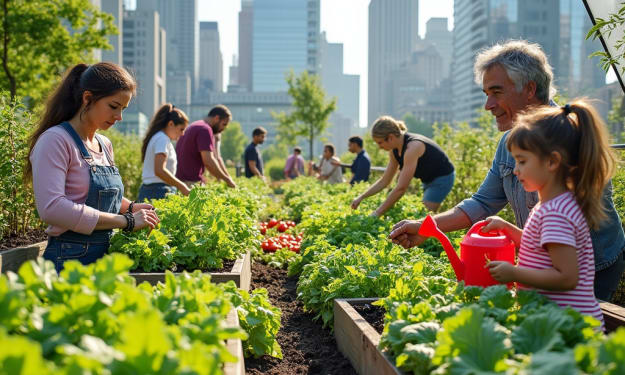
Urban Gardening – A Path to Sustainable Food Systems in Cities
Delivered by [Asim] Good morning, Distinguished guests, colleagues, and fellow citizens, Thank you for the opportunity to speak with you today about an issue that is both deeply practical and profoundly transformative: urban gardening—a grassroots solution with the potential to reshape our cities, strengthen our communities, and build more sustainable food systems for future generations.
By Asim Mehmoodabout a year ago in Earth
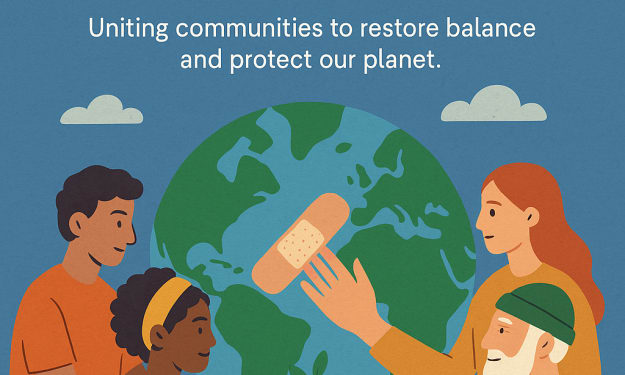
"Together We Heal the Earth"
In an era marked by environmental crises and climate uncertainty, one truth becomes increasingly clear: healing the Earth is not a task for a few, but a mission for all. The Earth is our shared home, and its well-being directly affects our survival and the quality of life for future generations. To bring about real change, communities around the globe must come together with a unified purpose — to protect, restore, and sustain the natural world.
By Mukhtiar Ahmadabout a year ago in Earth
Inferno in the West: Uncovering the True Cause of the California Fires
The sun had barely risen over the Sierra Nevada mountains when the first plume of smoke curled into the golden sky. At first, it was mistaken for morning mist by hikers in the Tahoe National Forest, but by midday, the entire western horizon was choked in a thick, menacing gray. California was burning again. This fire, later dubbed the Shadow Ridge Inferno, would go on to consume over 400,000 acres of forest, farmland, and neighborhoods. The damage was unprecedented, but what shocked investigators and the world even more was what lay behind the blaze—an intricate mix of nature's fury, human negligence, and the undeniable fingerprints of climate change. In the small mountain town of Evergreen Pines, where the fire had started, residents had long ignored the state’s warnings about clearing brush and dry undergrowth. “It was just too much work,” admitted Ray Delgado, a 72-year-old resident who had lived there since the 1960s. “We always thought, ‘It’s never going to come this far.’” But that year had been different. California had experienced its driest winter in recorded history. Rainfall was nearly nonexistent, and snowpack in the Sierra Nevada was less than 20% of normal. By mid-summer, the forests were tinderboxes. Trees stood dead from bark beetle infestations—pests that had flourished as winters became too warm to kill them off. Dry lightning storms, once a rare occurrence, were now a seasonal norm. All it took was one spark. And the spark came. A small electrical transformer, poorly maintained and decades outdated, failed near a ravine just outside Evergreen Pines. The utility company, Western Electric Grid Inc., had deferred maintenance for years. Despite multiple warnings from safety inspectors, no upgrades had been made to their aging equipment. When the transformer exploded, the dry grass below it ignited instantly, and winds gusting at 40 miles per hour did the rest. Within hours, flames leaped from tree to tree, devouring the forest in a roar that resembled a freight train. Firefighters were deployed, but their efforts were hampered by the terrain, lack of resources, and the sheer speed of the fire’s advance. “We had minutes to evacuate,” said Maya Hernandez, who lost her home that night. “The fire was moving like it had a mind of its own.” But it wasn’t just a local disaster—it was a wake-up call. Satellite imagery showed a frightening pattern: wildfires had increased threefold across the Western United States in the last two decades. Research by climatologist Dr. Ellen Park revealed that the fire season was now two months longer than it had been in the 1970s. “This isn’t just bad luck or one dry year,” she said during a press conference. “This is what climate change looks like. Hotter temperatures. Drier air. Unpredictable wind patterns. More lightning. More fire.” While nature had provided the perfect storm, the role of human neglect was equally damning. In the months following the fire, a grand jury investigation revealed that Western Electric Grid Inc. had not inspected their rural infrastructure in over five years. The company’s CEO resigned amid mounting lawsuits and public outrage. Worse yet, forest management policies had long been inadequate. Controlled burns, which could have reduced the fuel load in the forest, had been delayed or canceled due to budget cuts and local opposition. “We thought we were protecting nature by not interfering,” said one local council member. “But in the end, we made it worse.” The aftermath of the Shadow Ridge Inferno left communities shattered. Over 2,500 structures were lost, 37 people died, and thousands were displaced. Wildlife habitats were decimated. The sky stayed orange for weeks, and the air was thick with ash across cities like Sacramento and San Francisco. But amid the tragedy, something changed. The fire became a catalyst for reform. California passed the Wildfire Accountability and Prevention Act, mandating infrastructure updates, expanding funding for forest thinning and controlled burns, and implementing stronger regulations on power companies. Communities were given grants to create “defensible spaces” around homes, and climate education became part of public school curricula. And perhaps most importantly, people began to see the connections. Climate change was no longer an abstract idea. It was burning in their backyards. Back in Evergreen Pines, the forest slowly began to recover. Saplings sprouted in the blackened soil. Wildlife returned. And Maya Hernandez, now a volunteer firefighter, led weekly fire-preparedness workshops for her community. “We can’t undo what happened,” she said, “but we can make sure we’re never this unprepared again.” The inferno in the west was a tragedy born of heat, hubris, and hesitation—but it became a turning point. The true cause of the fires had been uncovered. Now, it was up to everyone to ensure it didn’t happen again.
By Mati Henry about a year ago in Earth