Climate
The Last Lightkeeper
The sun vanished on a Tuesday. No one expected it. One moment, dawn was breaking across the ocean. The next, darkness slammed down like a shutter, swift and final. The stars remained, cold and indifferent. But the sun — the heart of everything — was gone.
By Muhammmad Zain Ul Hassanabout a year ago in Earth
Why We Need More Green Spaces in Cities
Introduction: Concrete vs. Green Cities are growing faster than ever. Skyscrapers, highways, shopping malls, and endless apartment blocks are taking over the land. But while cities grow taller and busier, something vital is disappearing — green spaces.Parks, community gardens, tree-lined streets, and urban forests are often seen as "nice to have" rather than essential. But in reality, green spaces are not a luxury — they are a necessity. And the science, health data, and community feedback all agree.
By KAMRAN AHMADabout a year ago in Earth
Emerging Technologies Reshaping the Renewable Energy Landscape
The renewable energy sector stands at the cusp of a technological revolution. As the world grapples with climate change and the urgent need to decarbonize our energy systems, innovative technologies are emerging that promise to make clean energy more efficient, affordable, and accessible than ever before. From floating solar farms to advanced wind turbines that can operate in previously unsuitable locations, these developments are not merely incremental improvements but represent fundamental shifts in how we generate, store, and distribute renewable energy.
By Sommersangabout a year ago in Earth
The Untold Secrets of Planet Earth – What You Never Knew About Our World
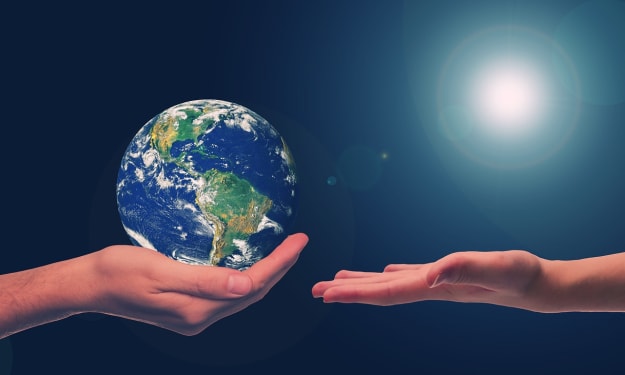
Planetpl Earth seems familiar to all of us. We walk on its surface, breathe its air, and drink its water. But beneath the ordinary appearance of our planet, there are countless secrets waiting to be discovered. Earth is not just a home for humans; it is a living, breathing system full of mysteries and wonders beyond imagination. Did you know that Earth is around 4.5 billion years old? In all that time, life has constantly changed and evolved. From the age of dinosaurs to modern humans, Earth has been home to millions of different species. Yet, scientists believe that 80% of Earth’s species are still undiscovered, hidden in dense forests, deep oceans, and even underground caves. The oceans, which cover over 70% of Earth’s surface, are some of the least explored parts of our planet. We have mapped the surface of Mars better than we have mapped the ocean floor. Deep underwater, strange life forms live in complete darkness, surviving in extreme pressures and freezing temperatures. Some researchers believe that the origin of life on Earth began deep underwater, near hydrothermal vents where hot gases escape from the planet’s crust. But Earth’s mysteries don’t stop in the oceans. The Amazon rainforest, often called the "lungs of the Earth", produces about 20% of the planet’s oxygen. It is home to countless species, many of which scientists haven’t even identified yet. Hidden within the dense forests could be undiscovered animals, ancient lost cities, or even plants with medical cures waiting to be found. Earth’s inner layers are also fascinating. The core of our planet, made of iron and nickel, is as hot as the surface of the sun. This molten core creates Earth’s magnetic field, protecting us from deadly solar radiation. Without this magnetic shield, life on Earth would be impossible. Moving to the surface, deserts like the Sahara might seem lifeless, but they are full of creatures specially adapted to survive harsh climates. From camels to desert foxes, life finds a way to survive even in the most extreme environments. Do you know Earth is constantly changing? The tectonic plates beneath our feet are always moving. Mountains rise, oceans open, and continents drift apart. Millions of years from now, the continents will be arranged in a completely different way. Another secret of Earth is how time flows differently depending on where you are. At higher altitudes, like in airplanes, time actually moves slightly faster than on the ground. This might sound like science fiction, but it’s a proven fact using atomic clocks. Every night, when you look at the stars, remember that the Earth itself is traveling at 107,000 kilometers per hour around the sun. Yet we don’t feel this movement at all. Finally, it’s important to remember that Earth is fragile. Human activities like deforestation, pollution, and climate change are damaging this beautiful planet. Protecting Earth’s Planet Earth is a world full of mysteries. Although we live here every day, there are many secrets hidden in its oceans, forests, and underground caves. Scientists believe that most of Earth’s species are still undiscovered. The oceans, which cover most of the planet, remain unexplored and mysterious, home to strange creatures that live without sunlight. On land, the Amazon rainforest works like Earth’s lungs, producing oxygen for life to survive. Deep inside Earth, its molten core creates a magnetic field that protects us from deadly space radiation. Our planet is constantly changing — mountains rise, continents drift, and even time flows differently at different heights. While Earth supports millions of life forms, humans are slowly harming its natural balance through pollution and deforestation. To protect this beautiful planet, we must learn its secrets and treat it with care. Earth is not just our home — it’s a living wonder.
By Leya kirsan official about a year ago in Earth
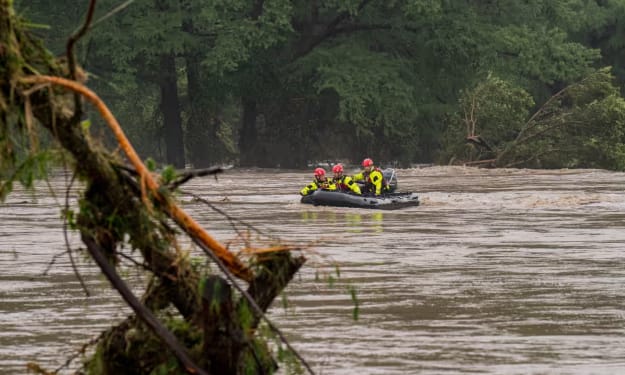
Central Texas is Flooding, Again
Let me take you back to 2018, a year that saw the second year of Trump’s Presidency; the Philadelphia Eagles winning their first Super Bowl in franchise history; the release of Marvel’s Black Panther; the end of the Kepler Space Telescope mission; and the “14 separate billion-dollar disaster events including: two tropical cyclones, eight severe storms, two winter storms, drought, and wildfires,” according to the National Oceanic and Atmospheric Administration or NOAA.
By Amanda Starksabout a year ago in Earth
Google Inks $3 Billion US Hydropower Deal, Largest Clean Energy Agreement of Its Kind
In a transformative move for clean energy and corporate sustainability, Google has inked a $3 billion hydropower agreement in the United States, marking the largest deal of its kind in renewable energy history. This partnership underscores Google's ambition to power its data centers and offices exclusively with carbon-free energy by 2030. The hydropower deal is a cornerstone strategy to decarbonize operations and meet escalating demands for green energy.
By Kageno Hoshinoabout a year ago in Earth
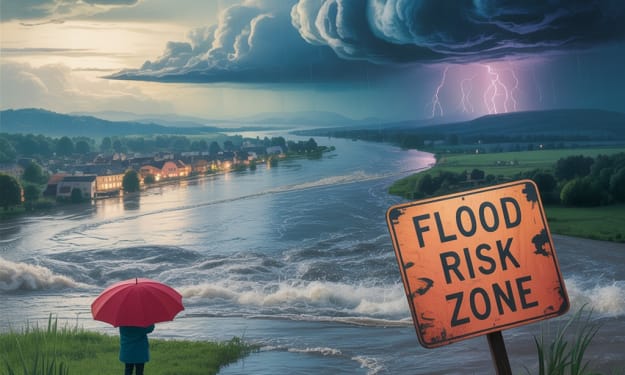
New Jersey Flooding: Causes, Impacts, and Safety Tips
New Jersey flooding is a growing concern. Learn about its causes, recent events, and how to stay safe during flash floods. New Jersey flooding has become a recurring nightmare for residents, with extreme weather events causing widespread damage. From flash floods to coastal surges, the state faces increasing risks due to climate change and aging infrastructure. In this article, we’ll explore the latest incidents, causes, and safety measures to combat New Jersey flooding.
By Vincent Otiriabout a year ago in Earth
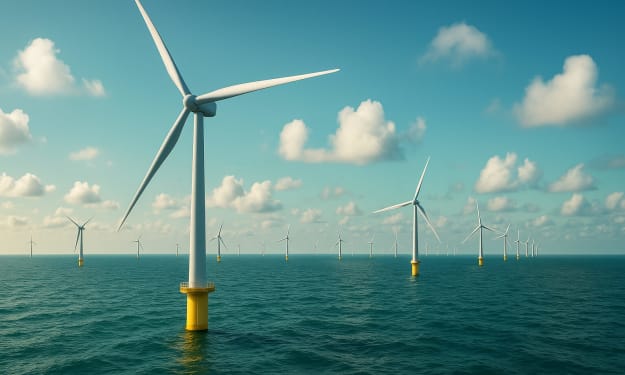
The Future of Renewable Energy
In an era where climate change presents one of the most significant threats to our planet, the transition to green energy is no longer a choice but a critical necessity. Global warming, driven by greenhouse gas emissions from fossil fuels, has created an urgent need to accelerate the development of renewable energy sources. Among these, wind energy stands out as one of the most promising and rapidly growing sectors. However, to unlock the full potential of wind power, we must overcome substantial challenges in the planning, design, and optimization of wind farms. This is where innovative companies like Norway's Vind.ai are entering the scene and changing the game (vind means wind in Norwegian).
By Sommersangabout a year ago in Earth