Climate
Pollution in America: Confronting a Continental Crisis with Innovation. AI-Generated.
Introduction: America’s Pollution Challenge In 2025, the Americas, home to 1.03 billion people, face a pressing pollution crisis that impacts health, ecosystems, and economies across North, Central, and South America. Contributing 15% of global greenhouse gas emissions and incurring $300 billion in annual health costs, per a 2024 EPA report, the region grapples with air, water, soil, and noise pollution. From Los Angeles’ smog to the Caribbean’s plastic-laden shores, innovative solutions offer hope. This post explores the Americas’ pollution landscape, its causes, consequences, and bold efforts to forge a sustainable future.
By Arjun. S. Gaikwadabout a year ago in Earth
Pollution in Europe: Tackling a Crisis with Innovation and Resolve. AI-Generated.
Introduction: Europe’s Environmental Crossroads In 2025, Europe, with its 750 million people, confronts pollution as a pressing challenge, impacting health, ecosystems, and economies across 27 nations. Contributing 10% of global greenhouse gas emissions and grappling with water and soil degradation, Europe faces a $500 billion annual cost from pollution, per a 2024 EEA report. From urban smog to plastic-laden seas, the continent is a battleground for environmental action. Yet, with robust policies and cutting-edge technology, Europe leads in sustainability. This post explores Europe’s pollution challenges, innovative solutions, and the path to a cleaner future.
By Arjun. S. Gaikwadabout a year ago in Earth
Pollution in Asia: Confronting a Crisis in the World’s Most Populous Continent. AI-Generated.
Introduction: Asia’s Pollution Battleground In 2025, Asia, home to 4.8 billion people (60% of the global 8.2 billion), grapples with severe pollution, impacting health, ecosystems, and economies. Contributing 70% of global air pollutants and 50% of ocean plastic, Asia faces a crisis costing $1.8 trillion annually, per a 2024 UNEP report. From Delhi’s smog to the Pacific’s plastic gyres, the continent’s rapid industrialization and urbanization drive pollution, yet innovative solutions offer hope. This post explores Asia’s air, water, and soil pollution challenges, their impacts, and the transformative efforts shaping a cleaner future.
By Arjun. S. Gaikwadabout a year ago in Earth
Pollution in 2025: A Global Crisis Demanding Urgent Action. AI-Generated.
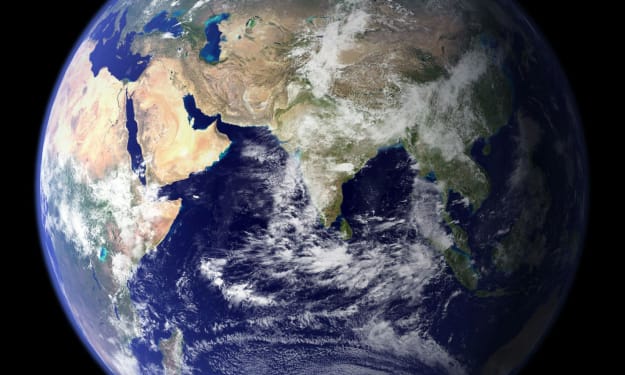
Introduction: The Escalating Pollution Crisis In 2025, pollution remains one of humanity’s greatest challenges, threatening health, ecosystems, and economies across the globe’s 8.2 billion population. With 9 million premature deaths annually attributed to pollution, costing $4.6 trillion in global GDP (6% of total), per a 2024 Lancet study, the crisis spans air, water, soil, and noise pollution. From smog-choked cities to plastic-laden oceans, the impact is profound, yet innovative solutions offer hope. This post explores the state of global pollution, its causes, consequences, and transformative efforts to forge a cleaner, sustainable future.
By Arjun. S. Gaikwadabout a year ago in Earth
Beyond Earth: How Space Exploration is Reimagining Our Future
🌌 Title: Beyond Earth: How Space Exploration is Reimagining Our Future ✨ Subtitle: From Mars colonies to space telescopes, the race to explore the cosmos is redefining life on Earth and the destiny of humanity.
By Rahmat Ullah Khanabout a year ago in Earth
Echoes in the Void: Why Humanity's Future Lies Beyond Earth
Title: Echoes in the Void: Why Humanity's Future Lies Beyond Earth Subtitle: From lunar missions to Mars colonization, how space exploration is transforming our planet, our technology, and our understanding of existence.
By Rahmat Ullah Khanabout a year ago in Earth
The Silent Frontier: How Space Exploration is Changing Life on Earth
Title: The Silent Frontier: How Space Exploration is Changing Life on Earth Subtitle: From the Moon to Mars and beyond, how our ventures into the cosmos are reshaping technology, science, and the human spirit.
By Rahmat Ullah Khanabout a year ago in Earth
Why the Deep Sea Mining Race Is Accelerating in 2025: Key Drivers and Global Impact
Deep-sea mines can also be used to manufacture military equipment and weapons. While seabed mining is still a work in progress, private companies and government agencies in countries including China, India, and Russia are racing to secure rights to the area. License applications have been submitted to the United Nations International Seabed Authority (ISA) for the Clarion-Clipperton Zone in the North Pacific, the Mid-Atlantic Ridge in the North Atlantic, the Indian Ocean, and parts of the Northwest Pacific. are these minerals in such high demand? Interest in deep-sea mining has grown along with the drive toward clean energy. Electric vehicles require six times more minerals than their fossil-fueled predecessors, according to the International Energy Agency. Similarly, offshore wind turbines require 12 times more metals and minerals to generate electricity than natural gas plants. The World Bank predicts that the amount of minerals extracted will need to increase fivefold by 2050 to meet growing demand. This means that more than three billion tons of minerals and metals are needed to power wind, solar and geothermal energy, as well as energy storage. Proponents of deep-sea mining argue that traditional mining cannot meet demand and point to the poor quality of the minerals due to over-extraction. However, deep-sea mining also raises environmental concerns. Currently, few countries dominate the onshore production of key minerals used in clean energy. Australia leads the way in lithium production, while Chile leads in copper production. China has turned to graphite and rare earth elements, which are used primarily in high-tech products such as smartphones and computers. The Republic of Congo, Indonesia, and South Africa are major players in the markets for cobalt, nickel, platinum, and iridium. China’s Deep-Sea Diving China is also taking rapid steps to extract these minerals beyond its borders, raising concerns among Beijing’s geopolitical rivals. China has also focused on deep-sea exploration. China has received five mining licenses issued by the United Nations agency, the most ever granted by a single country. India also has two licenses and has applied for two more. Russia has four licenses and shares one with other countries. “The drive to extract, process and exploit key minerals is accelerating with geopolitical tensions and energy transitions,” says Nathan Picarsic, co-founder of data-gathering firm Horizon Advisory. But the real geopolitical concern has been China’s role in processing these minerals before they enter the supply chain. According to the International Renewable Energy Agency, China currently controls 100% of the supply of refined natural graphite and dysprosium, 70% of cobalt, and about 60% of processed lithium and manganese. Beijing has also imposed various restrictions on the export of technologies used to process these valuable minerals. China says this is to protect the country’s national security and interests. The country has banned the export of technology used in rare earth magnets, electric vehicles, wind turbines and some other electronic devices until December 2023. U.S. Energy Secretary Jennifer Granholm highlighted the tensions at the Clean Energy Summit in August 2023, saying, “We are facing a supplier that is willing to use market power as a weapon for political gain.” Pointing to China’s increasing efforts to acquire these valuable minerals, the commission argued that the US should take strategic steps to reduce its reliance on foreign sources for critical and strategic minerals. In 2022, the US launched the Mining Safety Partnership with Australia, Canada, Finland, France, Germany, Japan, the Republic of Korea, Sweden, the United Kingdom, and the European Commission. Italy and India have since joined the club. What are the caveats about deep-sea mining? Deep-sea mining has yet to take off as the UN licensing agency, ISA, is still working on regulations. Meanwhile, some scientists and organizations campaigning for ocean protection are warning about the environmental impacts of deep-sea mining. Professor Lisa Levin, who works in marine and ocean ecology at the University of California, Berkeley, is a leading figure in her field. Levin warned: “When the final ISA regulations are finalized, likely next year, we will still have a gap in understanding how this type of mining could affect deep-sea biodiversity.” About 20 countries, including Brazil, Canada, Costa Rica, Finland, Switzerland and Vanuatu, have called for a halt to deep-sea mining until more research is done on its potential impacts on marine ecosystems. Nevertheless, the Norwegian parliament approved research in Arctic waters in January. The ISA secretariat explains that member states are “increasingly aware of the potential of the deep seabed for green energy transitions and green technologies.” Gerard Baron of Canada's The Metals Company, which is exploring the Clarion-Clipperton area, argues that "the current geopolitical situation has given new impetus to interest in seabed mining as the world's three largest countries by population focus on the potential of deep-sea resources." But campaigners claim that deep-sea mining companies are behind the heated competition between countries. Louisa Casson, director of Greenpeace's 'Stop Deep Sea Mining' campaign, said: "They are lobbying governments to open up the oceans to mining by raising geopolitical tensions and talking about supply chain restrictions. They are busy spreading fear." The ISA, responding to environmentalists' concerns about the lack of information, says it is working with international experts. The agency says there is "no consensus" on the lack of information.
By Real contentabout a year ago in Earth
Beyond the Postcard: Why Travel Still Matters in a Hyperconnected World
Title: Beyond the Postcard: Why Travel Still Matters in a Hyperconnected World Subtitle: From slow travel to digital nomadism, sustainability to self-discovery—how modern journeys reshape our minds, economies, and the planet.
By Rahmat Ullah Khanabout a year ago in Earth
The Transformative Power of Travel
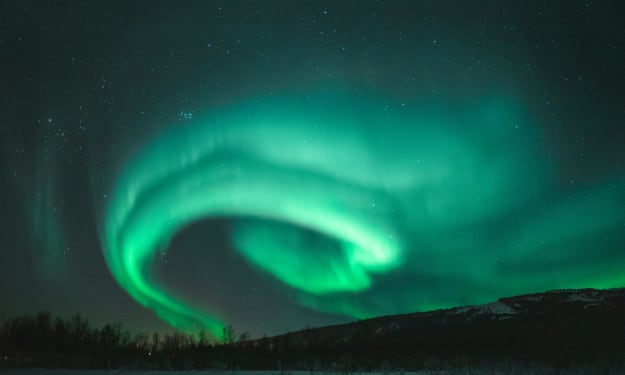
Title: The Transformative Power of Travel Subtitle: How Exploring the World Shapes Our Minds, Souls, and Perspectives --- Introduction Travel is more than just a physical journey; it’s a gateway to understanding new cultures, tasting unfamiliar cuisines, seeing breathtaking landscapes, and most importantly, discovering oneself. Whether you're hiking through the Alps, walking through the streets of Tokyo, or watching the sunset in the Sahara Desert, travel expands your horizons in ways no textbook or screen ever can. In today’s fast-paced world, travel has become both easier and more meaningful than ever. This article explores the many dimensions of travel—its joys, its challenges, and its lifelong impact. --- 1. The Joy of Discovery At the heart of travel lies discovery. Every new destination offers something fresh—a language you’ve never heard, customs you’ve never seen, and foods you’ve never tasted. In Italy, you might learn how traditional pasta is made in a family-owned restaurant in Naples. In Japan, you can witness centuries-old traditions like tea ceremonies and sumo wrestling. In Morocco, you may wander through ancient medinas filled with colorful spices and handwoven rugs. Every new location teaches us something new—not just about the place, but about how diverse and beautiful the human experience is. --- 2. Cultural Connection One of the most profound aspects of travel is the opportunity to connect with people from different walks of life. We often discover that despite our many differences—language, religion, dress, traditions—we share common human emotions like love, kindness, curiosity, and laughter. Through travel, you: Learn to respect and appreciate different ways of living. See that your way of life isn’t the only valid one. Understand global issues through personal stories. This cultural empathy helps reduce prejudice and builds bridges between communities. --- 3. Nature’s Wonders From tropical rainforests to snow-covered mountains, travel brings us face-to-face with Earth’s natural wonders. This connection with nature can be both humbling and healing. Examples include: Trekking in Patagonia amidst towering peaks and glacial lakes. Diving in the Great Barrier Reef to explore marine biodiversity. Watching the Northern Lights dance across the sky in Iceland. These experiences deepen our appreciation for the planet and often inspire us to protect it. --- 4. Travel and Personal Growth Travel challenges us in unexpected ways. Lost luggage, language barriers, and navigating new cities test our patience and problem-solving skills. But these challenges are often the moments that make us grow the most. Travel builds: Confidence: You learn to trust yourself in unfamiliar situations. Independence: Especially when traveling solo, you become self-reliant. Adaptability: Plans change, weather shifts, and you learn to go with the flow. Many travelers say they return home a changed person—more open-minded, resilient, and grateful. --- 5. Travel for Wellness Travel is increasingly recognized for its mental health benefits. A break from daily routines allows the mind to reset. Being in new environments can reduce stress, boost creativity, and bring joy. Some people travel specifically for healing: Wellness retreats in Bali or India that offer yoga, meditation, and spa treatments. Nature escapes in the mountains or countryside to unplug from technology. Pilgrimages for spiritual reflection, like the Camino de Santiago in Spain. Travel can be a form of therapy—offering peace, clarity, and rejuvenation. --- 6. Responsible and Sustainable Travel As global citizens, we must acknowledge the impact of our travels—on the environment, on local cultures, and on economies. Sustainable travel means: Choosing eco-friendly accommodations. Supporting local businesses and artisans. Avoiding over-tourism and respecting wildlife. By making conscious choices, travelers can give back to the communities they visit rather than harm them. --- 7. Travel in the Digital Age Today, planning and experiencing travel is easier than ever. Smartphones, apps, and online reviews allow us to: Book flights, hotels, and tours with a click. Translate languages instantly. Share experiences in real-time through social media. However, there is also a downside: over-documentation. It’s important to balance capturing memories with truly living in the moment. Sometimes, the best travel experiences are the ones that aren’t posted online but remembered in the heart. --- 8. Post-Pandemic Travel: A New Perspective The COVID-19 pandemic made the world pause and re-evaluate the importance of travel. For many, travel was no longer about checking off bucket-list items but reconnecting with what truly matters—nature, family, freedom, and peace. As travel returns, people are more likely to seek: Meaningful travel over luxury. Remote destinations over crowded tourist hotspots. Longer stays that allow deeper cultural immersion. Travel has become more intentional, thoughtful, and soul-focused. --- 9. Tips for Enriching Travel To make the most of your travel experience: Research local customs, etiquette, and history before you go. Learn basic phrases in the local language. Try local foods even if they seem unusual. Keep an open mind, especially when things don’t go as planned. Document your journey with a journal or photos, but also take time to be present. --- Conclusion: Why We Should Keep Exploring Travel is not just about crossing physical borders—it's about breaking down mental ones. It teaches us that the world is vast, varied, and full of wonder. It helps us find joy in simplicity, beauty in diversity, and meaning in connection. In every journey, there is an opportunity to learn not only about the world but about yourself. Whether you're on a weekend getaway or a world tour, the essence of travel remains the same: exploration, connection, and transformation. So pack your bags, open your mind, and go explore—because the world is waiting, and every journey has a lesson to offer.
By Rahmat Ullah Khanabout a year ago in Earth
Will the World Be Plunged into Darkness on August 2? The Truth Revealed
In recent days, a sensational claim has been making the rounds on social media, sparking widespread curiosity—and even some concern. According to these viral posts, the entire world is expected to plunge into darkness for six minutes on August 2, 2025, due to a rare and extraordinary solar eclipse. These posts have gained traction quickly, with many people sharing the information without verifying its authenticity.
By Taimoor Khanabout a year ago in Earth
Mangrove God
I drove down a country road. It was paved with the rough black bitumen that endures every storm. I passed houses on large properties that were once fine. Now, they showed the wear of years in their flaking paint. In their yards, rusting cars were overgrown with grass and old sheds showed distinct leans. Large gum trees dotted the yards too, casting long shadows in the warm, afternoon light.
By I. D. Reevesabout a year ago in Earth