Climate
How Dinosaurs Could Have Evolved If They Never Went Extinct
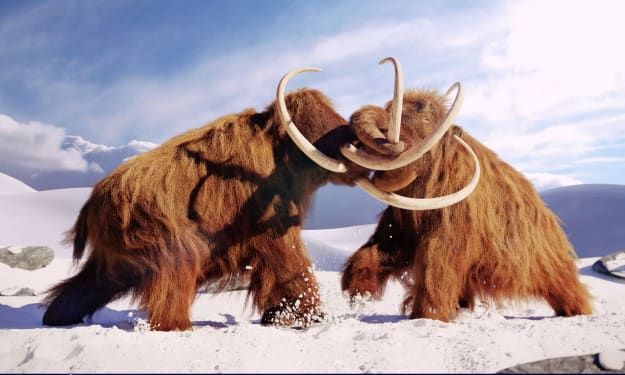
What If Dinosaurs Never Went Extinct? Dinosaurs, some of the most fascinating creatures to have ever walked the earth, are often the subject of fascination and curiosity. What if they never went extinct? While it is a shame that we won't be able to have Jurassic Park to see these creatures come to life, we are living with some creatures that are just as old as dinosaurs, such as crocodiles and sharks. These ancient creatures haven't changed much since they appeared millions of years ago, but most dinosaurs didn't make it when the asteroid struck the earth.
By Daniel Ellison3 years ago in Earth
KATOA Ocean, An Educational Mobile Game, Helps Raise Awareness and Funds to Restore Ocean Habitats.
I was still in high school when the Endless Ocean games first came out for the Nintendo Wii and how a combination of real-life conservation efforts and pre-colonial Polynesian folklore inspired their scuba diver storylines. While I wasn’t much of a gamer growing up, I have to admit that playing a game that involved scuba diving, training dolphins, and going on quests to solve ancient mysteries ended up dethroning every Pokemon game I ever played in elementary school. They were fun, exciting, and, very trivial with facts about the animals that appeared in the games along with a few historical facts.
By Jenna Deedy3 years ago in Earth
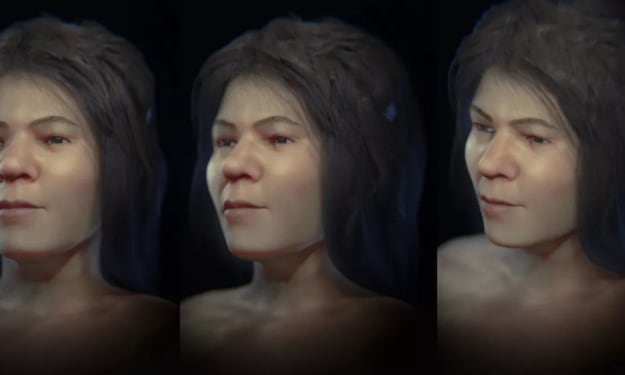
31 amazing facial reconstructions, from Stone Age shamans to King Tut's father
People from the past have left behind a treasure trove of clues about their lives — from enormous monuments to fragments of personal items, as well as the bones of the people themselves. But the people who left these clues are often a mystery. Now, thanks to modern scientific techniques and technology, researchers can accurately reconstruct what those people actually looked like, helping to bring long-dead people from history back to life.
By BURN BRIGHT3 years ago in Earth
WHAT IF : THE EARTH STOPS ROTATING FOR FIVE SECONDS
What if the earth's rotation were to cease for five seconds? How much harm would this abrupt cessation do? What would you encounter in various locations around the world. Would the earth still be habitable when it starts spinning again? What if the world stopped spinning for five seconds? This is what would happen. In a single day, the earth completes one full rotation around its axis. Thus, we have day and night. When the world was forming 4.6 billion years ago, as a massive disc of gas and dust swirled around the sun, dust and rock grains clumped together and produced forces that kept the planet rotating in one direction. It is because of these collisions that the earth is spinning today.
By SREENIVEATHA 3 years ago in Earth
How much U.S. forest is old growth? It depends who you ask
Last spring, President Joe Biden surprised forest scientists when he ordered the U.S. Forest Service (USFS) and Bureau of Land Management (BLM) to inventory their holdings of mature and old-growth forests by Earth Day 2023. The order triggered a scramble for the United States to, for the first time, formally define what constitutes “mature” and “old-growth” forests and to apply those definitions across millions of hectares of land.
By BURN BRIGHT3 years ago in Earth
Cooperative sperm outrun loners in the mating race
Even sperm gotta stick together. Bull sperm swim more effectively when in clusters, a new study shows, potentially offering insight into fertility in humans. In simulated reproductive tracts of animals like cattle and humans, the behavior increases the chances that groups of cooperative bovine sperm will outpace meandering loners as they race to fertilize a female egg cell, physicist Chih-kuan Tung and colleagues report September 22 in Frontiers in Cell and Developmental Biology.
By BURN BRIGHT3 years ago in Earth
In the wake of history’s deadliest mass extinction, ocean life may have flourished
Following the most severe known mass extinction in Earth’s history, vibrant marine ecosystems may have recovered within just a million years, researchers report in the Feb. 10 Science. That’s millions of years faster than previously thought. The evidence, which lies in a diverse trove of pristine fossils discovered near the city of Guiyang in South China, may represent the early foundations of today’s ocean-dwelling ecosystems.
By BURN BRIGHT3 years ago in Earth