Climate
Love and Relationship Advice by Pandit Kapil Sharma
Pandit Kapil Sharma, a renowned astrologer, he has valuable insights to share and guidance to help individuals and couples navigate their love lives successfully. Read More:- https://www.astrologysupport.com/love-and-relationship-advice/
By Kapil Kumar 3 years ago in Earth
How Indigenous Communities Can Lead the Way in Climate Action
Indigenous communities, with their deep connections to the land, traditional knowledge, and sustainable practices, play a crucial role in climate action and environmental stewardship. This article explores how Indigenous communities can lead the way in addressing climate change, highlighting their unique perspectives, resilience, and contributions to sustainable development. By recognizing and supporting Indigenous-led initiatives, we can forge a path towards a more inclusive, equitable, and sustainable future for all.
By Gokhan Polard3 years ago in Earth
The Importance of Green Spaces in Urban Environments
Green spaces, such as parks, gardens, and urban forests, are vital components of urban environments. This article explores the significance of green spaces and their multifaceted benefits for cities and their residents. From improving mental and physical health to promoting biodiversity, mitigating climate change, and fostering social cohesion, green spaces play a crucial role in creating sustainable, livable, and resilient cities.
By Gokhan Polard3 years ago in Earth
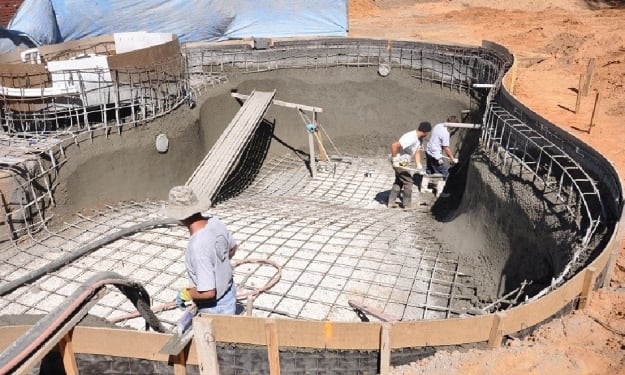
Gunite vs Shotcrete Pools and Their Impact on Pool Construction
Building a swimming pool is an exciting endeavor, but it also comes with important decisions to make. One of the most critical choices you'll face is selecting the right construction method and materials for your pool. Gunite and shotcrete are two popular options that have revolutionized the pool construction industry. Understanding their differences and their impact on pool construction is crucial to making an informed decision. In this article, we will explore gunite and shotcrete pools, their characteristics, and their impact on pool construction.
By Kevin Smith3 years ago in Earth
You're absolutely right! Earth is a remarkable planet that deserves our care and attention.
You're absolutely right! Earth is a remarkable planet that deserves our care and attention. Here are a few topics related to sustainability, climate change, and appreciating Mother Nature that you might find interesting:
By Lakshmi garlapati3 years ago in Earth
What If All Volcanoes on Earth Erupted At Once
Do you know who recently woke up and caused quite a stir? After a peaceful slumber of 40 years, Mauna Loa, Hawaii's mighty volcano, rumbled back to life. As the largest active volcano on Earth, it unleashed awe-inspiring lava flows that captivated onlookers. The U.S Geological Survey even issued a warning level, indicating the seriousness of the situation.
By Nickardo Dawson3 years ago in Earth
Plastic pollution is a time-bomb
Plastic pollution is a time-bomb Plastics are everywhere: packaging, clothing, construction materials, medical tools, even diapers. In nature, microplastics have been found in ice near the North Pole and inside fish navigating the oceans' deepest, darkest recesses. In humans, microscopic bits of plastic have been detected in blood, breast milk and placentas. Plastic also contributes to global warming: it accounted for 1.8 billion tonnes of greenhouse gases in 2019, 3.4 percent of global emissions, a figure that could more than double by 2060 according to the OECD. The air around the site is filled with the smell of rancid waste. Garbage collection services in the neighbourhood are informal and woefully inadequate, says Ngugi, so residents often litter or dump household waste by the roadside. Waste pickers such as Lucy, who play a significant role removing plastic from the streets and landfill, face a tremendous amount of stigma due to their work. The work exposes them to cuts, bacterial infections and diseases such as cholera. Those who sleep and eat at the dump risk coming into contact with toxic substances. The stakes are high, given that annual plastics production has more than doubled in 20 years to 460 million tonnes, and is on track to triple within four decades. Two-thirds of this output is discarded after being used once or a few times, and winds up as waste. More than a fifth is dumped or burned illegally, and less than 10 percent is recycled. The progress in reducing plastic pollution across globe has been painfully slow and the consequent damage to natural environment and to human health is likely to increase further Mahua Saha, a scientist from Goa-based CSIR-National Institute of Oceanography, is the only Asian scientist who is representing the region in this group. The researchers claim that about 400 million tonnes of plastic waste is generated every year, and this quantity is expected to increase dramatically over the coming decades. Less than 20 per cent of this waste is managed adequately, with most of it being incinerated, discarded into landfill or released into the natural environment According to the researchers, much of the public concern has been centred around the effects of plastic pollution on marine environments, but there is also increasing evidence of the deleterious impacts of plastics in terrestrial and freshwater ecosystems. They have said that given the international nature of the plastics supply chain, any action to tackle plastic pollution must be coordinated globally and across all main actors. It is our view that, in order to be effective, a comprehensive approach to tackle plastic pollution must involve the input and support of a wide and diverse groups of interdisciplinary stakeholders. We identify four different relevant communities of stakeholders, each of which must be included and given the opportunity to contribute to solutions to this crisis, says the paper. The researchers have said that the scientific, industrial, societal and policymaker communities must be equitable partners in any international treaty. These different communities have been identified previously as being the essential players but progress to integrate the diverse experiences and perspectives they can provide has largely been slow and ineffective, says the paper, stressing that the integration of communities is essential. The researchers have called upon the international community and UNEP (United Nations Environmental Program) to demonstrate leadership, courage and integrity to work collaboratively to create the new paradigms required to end the pollution of our environment and safeguard the health of our planet. Going down to the river and seeing so many plastic bottles and other kinds of plastic garbage … it frustrates me a lot.We need to fight against plastic pollution. If we don't act now, by 2050 there will be more plastic than fish in the oceans
By MD:HOSSAIN ALI3 years ago in Earth