Climate
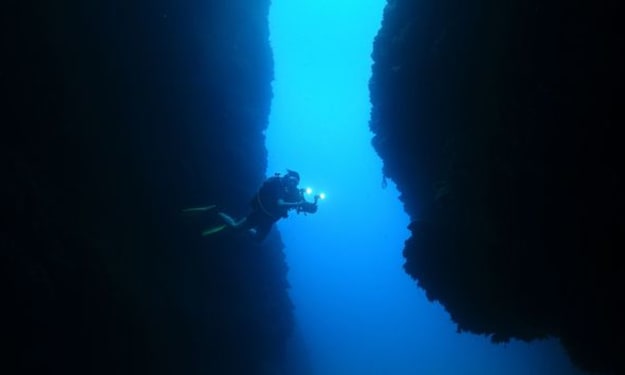
Under Black Sea
Well, we'll try to guess a little bit, will we? In terms of volume, which is the volume of water that flows through a waterway, can you name the sixth largest river in the world? Of course, the first couple of rivers are easy to list, starting with the Amazon River in South America. And we'll also have Congo in Africa, and Ganges in India. You can name all the rivers of this world, but you'll never be any closer to an answer. Why? This river is not on the surface, it lies beneath the waves of the Black Sea.
By Mara Kimbrough3 years ago in Earth
World Environment Day
World Environment Day is an annual event celebrated on June 5th to raise awareness and encourage global action for the protection of the environment. It is organized by the United Nations Environment Programme (UNEP) and first established in 1972. Each year, World Environment Day focuses on a specific environmental theme to highlight pressing issues and promote sustainable practices.
By Iyetu Barilogi3 years ago in Earth
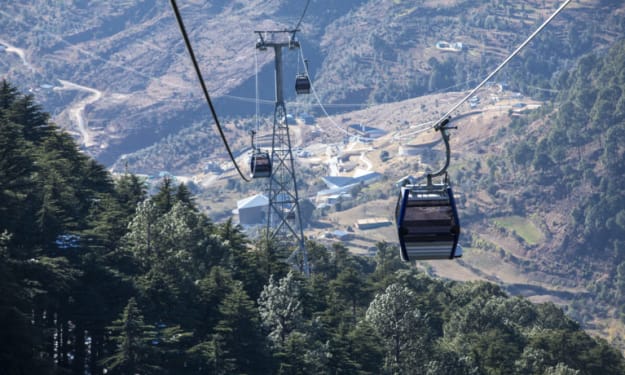
Top 4 fun activities at Skyview Patnitop
Skyview Patnitop by Empyrean has emerged as the new identity for Jammu as if offers a blend of indoor and outdoor activities. Entitled as the largest tourism project in Jammu and Kashmir, Skyview Patnitop is determined on developing mountain tourism, adventure activities, and public infrastructure. Here we discuss the top 5 fun activities at Skyview Patnitop.
By Skyviews By Empyrean3 years ago in Earth
CLIMATE CHANGE
C User W ChatGPT Climate change refers to the long-term alteration in Earth's climate patterns, characterized by shifts in temperature, precipitation, wind patterns, and other climatic factors. It is one of the most pressing global challenges facing humanity and the planet. The scientific consensus is clear: climate change is primarily caused by human activities, particularly the emission of greenhouse gases such as carbon dioxide (CO2) and methane (CH4) into the atmosphere.
By Martin pulse3 years ago in Earth
World Environment Day
World Environment Day is observed annually on June 5th. It is a global initiative led by the United Nations (UN) to raise awareness about environmental issues and encourage action to protect the environment. The day serves as a platform to promote positive environmental actions and engage individuals, communities, governments, and organizations in various activities aimed at improving the state of the environment.
By Solomon Shawon Haanongon3 years ago in Earth
The Impact of Plastic Pollution on Marine Ecosystems."
The world's oceans, once teeming with life and beauty, are now facing a grave threat—plastic pollution. As the global demand for plastic continues to rise, so does the amount of plastic waste that finds its way into our marine ecosystems. The impact of plastic pollution on marine life and the delicate balance of these ecosystems cannot be overstated. In this essay, we will explore the consequences of plastic pollution, the extent of the problem, and the urgent need for action to protect our oceans.
By Olanrewaju Samson3 years ago in Earth
How Do Ice Core affect Climate Change
Ice cores are long cylinders of ice that are extracted from ice sheets, glaciers, or polar regions such as the Arctic or Antarctica. They serve as valuable records of past climate conditions, allowing scientists to study changes in temperature, atmospheric composition, and other environmental factors over thousands or even hundreds of thousands of years. Ice cores play a crucial role in understanding climate change by providing valuable information about past climate conditions. ice cores provide a valuable historical context for climate change, enabling scientists to study natural climate variability, human impacts on the climate system, and the potential consequences of ongoing and future climate change. Here's how ice cores affect our understanding of climate change: Records of atmospheric composition: Ice cores contain trapped air bubbles that provide a direct record of the Earth's past atmospheric composition. By analyzing the gases trapped in these bubbles, scientists can determine the concentrations of greenhouse gases such as carbon dioxide (CO2) and methane (CH4) over thousands of years. This helps us understand the natural variability of these gases and their relationship to climate change. Temperature reconstructions: The ratio of different isotopes of oxygen and hydrogen in ice cores can provide information about past temperatures. By analyzing these isotopes, scientists can reconstruct temperature variations over long periods, allowing them to compare past climate conditions with present-day temperatures. This helps in understanding the magnitude and rate of current global warming. Climate patterns and variability: Ice cores contain layers of ice that correspond to annual snowfall. These layers can be analyzed to reveal variations in precipitation patterns, including El Niño events, monsoons, and other climate oscillations. By studying these patterns in ice cores, scientists can gain insights into long-term climate variability and better understand the drivers of these patterns. Proxy records for past climate conditions: Ice cores provide a continuous and high-resolution record of past climate conditions, including information about solar activity, volcanic eruptions, and dust deposition. These records serve as proxies for understanding past climate variations and their impacts on the Earth's ecosystems. Climate model validation: Ice core data is used to validate climate models by comparing model simulations with actual climate observations recorded in the ice cores. This helps improve the accuracy and reliability of climate models and their predictions for future climate change. By studying ice cores, scientists have been able to establish a historical context for climate change, identify natural climate variations, and discern the influence of human activities on the climate system. This knowledge is crucial for understanding the causes, mechanisms, and potential impacts of current and future climate change, and for formulating effective mitigation and adaptation strategies. Thank you for taking the time to read this article! We hope that it has provided you with valuable insights into the importance of ice cores in understanding climate change. By delving into the depths of ice sheets and glaciers, scientists can unlock the secrets of our planet's past and gain a better understanding of how our climate system operates.
By Ajani Israel 3 years ago in Earth
Against All Odds
In the bleak and desolate landscapes of winter, where the frost clings to every surface, there lies a small but mighty miracle of nature. The crocus bulbs, hidden beneath the frozen earth, defy the odds and emerge as vibrant symbols of resilience.
By Nurudeen Owolabi3 years ago in Earth
From Paradise To Peril
In the crystal-clear waters of the ocean lies a vibrant world, a paradise hidden beneath the surface. Coral reefs, with their kaleidoscope of colors and mesmerizing marine life, have long captivated the hearts of explorers and conservationists alike. But beneath their picturesque beauty, a tragedy is unfolding—a story of paradise turning into peril.
By Nurudeen Owolabi3 years ago in Earth
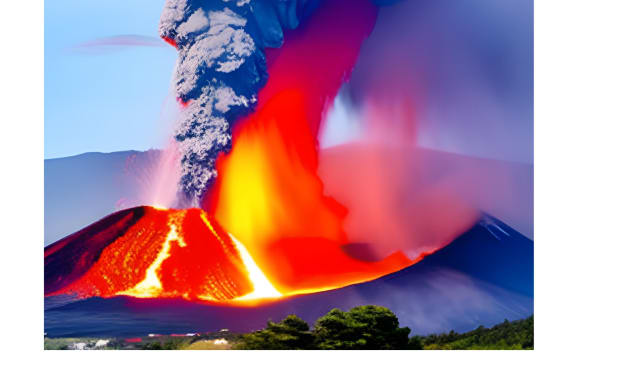
"What If All Volcanoes on Earth Erupted Together".
Volcanoes, awe-inspiring and powerful forces of nature have shaped our planet for millions of years. Their eruptions, while often devastating, contribute to the creation of new land and shape Earth's geology. But what if all the volcanoes on Earth were to erupt simultaneously? This cataclysmic scenario would have far-reaching consequences, altering our environment and challenging life as we know it.
By Jenny Endino3 years ago in Earth