Climate
Last-Minute Thank You. Content Warning.
In a world bustling with the demands of modern life, people often find solace and restoration in the most unexpected places. One such haven of tranquility lies within the realm of plants and gardening. Beyond the practical benefits of producing food and beautifying spaces, gardening offers a profound and transformative experience that touches the depths of the human soul. The healing power of plants, and how gardening soothes the soul, is a journey into the symbiotic relationship between humans and nature, a testament to the enduring bond that has existed since time immemorial. The act of nurturing plants, of coaxing life from seemingly lifeless seeds, is a practice deeply ingrained in our ancestry. It is a reflection of our innate connection to the earth, a connection that has been obscured in our modern, urbanized lives. In the garden, however, we rediscover our roots, quite literally. The sensation of soil slipping through fingers, the fragrance of blooming flowers carried by the breeze, the sight of tender green shoots pushing through the earth – all these experiences tap into something primal within us. They evoke memories and emotions that transcend generations, awakening a sense of continuity and belonging. Gardening, as an endeavor requiring patience, dedication, and care, offers a mirror through which we observe our own growth. Just as plants require time to sprout, stretch, and eventually bloom, so too do human beings traverse phases of development. In a world that values instant gratification, the garden serves as a poignant reminder that transformation is a gradual and intricate process. As we plant seeds and tend to their needs, we learn to embrace the concept of delayed gratification – the joy of anticipation, the fulfillment of seeing progress, and the eventual reward of a bountiful harvest. This concept transcends the garden's boundaries and finds its way into our lives, teaching us to endure challenges with resilience and to savor the journey rather than fixate solely on the destination. The simple act of being present in the garden, of engaging with nature in its raw and unadulterated form, nurtures the soul in ways that modern living seldom affords. The sensory experience of gardening – the tactile sensation of soil, the fragrance of blooming flowers, the sounds of birdsong – all of these elements culminate in a multisensory symphony that invigorates the spirit and provides respite from the cacophony of urban existence. Studies have shown that spending time in green spaces can reduce stress, anxiety, and even depression. This is attributed to the calming effect that nature exudes, its ability to ground us in the present moment, and its role in fostering a connection to something larger than ourselves. Furthermore, the act of nurturing living beings, of providing care and attention, stimulates a profound sense of purpose. When tending to a garden, individuals experience a unique form of responsibility – a commitment to nourishing and safeguarding the well-being of plants. This translates into a heightened awareness of the interconnectedness of all life forms. As we cultivate our gardens, we become conscious of the delicate balance that sustains ecosystems and the intricate dance of life that unfolds around us. This newfound awareness extends beyond the garden's confines and awakens a sense of environmental stewardship, inspiring us to tread more lightly upon the earth. Gardening is also a practice steeped in symbolism and metaphor. The cycles of planting, growth, decay, and rebirth mimic the cycles of life itself. Witnessing the changing seasons in the garden becomes a mirror for the seasons of our own lives – the ebbs and flows, the moments of flourishing, and the times of quiet introspection. Just as the garden endures the harshness of winter only to bloom anew in spring, so too do individuals find renewal and resilience in the face of adversity. The garden imparts the wisdom that life is a series of phases, each contributing to the tapestry of our personal narratives. In the garden, we encounter the beauty of imperfection. We come to appreciate that not every blossom will be flawless, not every harvest will be abundant. Yet, this imperfection does not diminish the garden's splendor; rather, it enhances it. In celebrating the irregularities, we learn to embrace our own imperfections and to view them as integral to our uniqueness. The garden's message of acceptance resonates deeply within us, granting us permission to be authentically ourselves. As individuals cultivate gardens, they inadvertently cultivate a community. Gardens have the power to bring people together, transcending barriers and fostering connections. Whether through shared gardening spaces, plant exchanges, or horticultural societies, individuals find camaraderie and kinship with fellow enthusiasts. This sense of unity offers emotional support and a platform for learning, sharing, and growth. In an increasingly fragmented world, gardens serve as gathering places where people of diverse backgrounds converge to nurture their shared love for nature. In conclusion, the healing power of plants and the soothing embrace of gardening are woven into the fabric of the human experience. Gardens are more than mere plots of land; they are sanctuaries that cultivate resilience, mindfulness, and connection. The act of tending to plants mirrors our own journey of growth, and the sensory experience of being in nature restores our sense of balance and peace. Gardens remind us of the beauty in imperfection and the importance of patience. As we immerse ourselves in the world of plants and gardening, we find ourselves transformed – grounded in the present, connected to the past, and inspired to nurture a future that is as vibrant and diverse as the blossoms in a well-tended garden.
By Joshua Akindutire3 years ago in Earth
Melting Connections
The world had never been smaller, yet the distance between them felt insurmountable. Emily sat by her window, overlooking the rocky shores of her coastal town in Maine, while Javier leaned against the wooden beams of his small cottage in the arid Australian outback. The digital realm was their bridge, allowing them to transcend geographical boundaries and share a connection that was both profound and delicate.
By Nadeem Syed3 years ago in Earth
Fortress of the Knights Templar
During the Crusades, the warrior monks fought for God, gold, and glory. Somewhere in the modern city of Accra lies their command center and possibly their treasure. I am here to locate them. My name is Albert Glenn, and I use 21st-century technologies to look back into our past. With lasers that scan deserts, strip away dense jungle canopy, and scour the oceans, I uncover the hidden worlds beneath. I am venturing into uncharted waters to make discoveries in the most awe-inspiring places on Earth. Here we are in the 13th century, carved out of the earth, in what is the new golden age of exploration.
By Austine Ochieng 3 years ago in Earth
THE KALAHARI DESERT
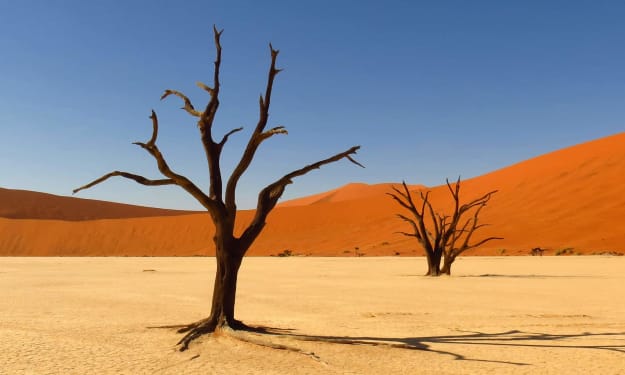
The Kalahari Desert is the largest expanse of sand on the planet. At its center lies a remarkable wonder, the Okavango Delta. Each year, during the driest season, distant rainfall fills the veins of the delta once again, transforming the land into a wildlife paradise like none on Earth. The great flood is the heartbeat of this land, rejuvenating the barren sands and bringing the promise of renewal. The dry season is a time of struggle for the animals, with flocks of hungry quillia scouring the floodplains for food. The cheetah, with its speed and agility, is the ideal hunter in this environment. However, even the cheetah's cubs are dependent on their mother for food. The leopard, on the other hand, is the most cunning of cats, waiting patiently for the perfect opportunity to strike. The flood brings new life to the land, with billions of gallons of water transforming the vast savannah into a swamp. The elephant and hippopotamus are the architects of this new world, managing vegetation and directing the flow of water. The delicate balance of life in the swamp is maintained by creatures like the Lily Trotter, who must protect their floating nests from invaders like the elephant. The Okavango Delta is a remarkable wonder, a testament to the power of nature to transform even the harshest environments into a paradise.The first chick of the subject in question makes a somewhat awkward entrance. Housekeeping is of utmost importance to hide any evidence of the new young one. The subject removes the shell from the nest, breaks it up, and sinks it to ensure the safety of the first chick. It may take two more days before the others hatch.
By Austine Ochieng 3 years ago in Earth
Deadly Pacific Drain the Oceans
The Pacific Ocean harbors a tectonic monster deep below its surface, which poses a significant threat to the 500 million people living around its coast. The Ring of Fire, the planet's largest and most dangerous seismic zone, lies beneath the Pacific Ocean and is responsible for 90% of all earthquakes. The consequences of these earthquakes are devastating, as they generate huge surges of water, known as tsunamis. The latest underwater scanning technology has enabled scientists to reveal the secrets of the seafloor by emptying the oceans and turning accurate data into 3D images. The program, Drain the Oceans, explores the dangers hidden from view, including the world's biggest tsunami machine, and investigates whether the world's next mega-earthquake is brewing off the coast of Seattle. The discovery of an underwater volcano, just 44 miles from Tokyo, has seismic experts worried, and scientists caught up in an undersea earthquake learn about the dangers facing New Zealand. The program reveals the secrets of the deadly Pacific and the Cascadia subduction zone, which stretches 700 miles along the coastline of the Pacific Northwest and is home to 10 million people. The subduction zone generates not only earthquakes but also huge tsunamis, and evidence suggests that it has been inactive for centuries. However, scientists have discovered evidence of seismic devastation stretching back over thousands of years, and the last mega-quake occurred in January 1700, generating a tsunami that hit Japan, 4,500 miles away. The program uses the latest technology to visualize the titanic events of January 1700 and its deadly trail of destruction.Earthquake triggers a massive tsunami that floods the coast of Cascadia, including the red cedar forest and everything in its path. Although there is no written history of the 1700 earthquake and tsunami in Cascadia, native peoples of the region hold haunting memories of these terrible events. The First Nation peoples had oral histories about the great battle of Thunderbird and Whale that involved shaking of the ground and washing away of villages. The Great Thunderbird finally carried the Whale to its nest, causing shaking, jumping up, and trembling of the earth beneath and the rolling up of the great waters. Once these stories came to light, the Native Americans essentially said that they knew all about it and that the story had a moral, which was not to build villages too close to the beach.
By Austine Ochieng 3 years ago in Earth
How Baby Sharks Navigate the World
Sharks are formidable hunters that have evolved over 450 million years, making them the most feared creatures in our seas. Great whites have the power to leap 10 feet into the air, while Makos can reach speeds of over 45 miles per hour. However, in their first year of life, sharks are surprisingly vulnerable and are a target for predators, including other sharks. Around 80 percent of some shark species won't make it to adulthood, and adult sharks don't spend any time caring for their newborns. Baby sharks are just another item on their menu, which is why some pregnant sharks travel to shallow water to give birth where big predators cannot go.
By Austine Ochieng 3 years ago in Earth
WILDFIRE
Wildfires, often referred to as uncontrolled fires or forest fires, have been a significant natural hazard throughout human history, profoundly impacting societies and ecosystems around the world. These destructive events, fueled by a combination of dry conditions, high temperatures, and human activity, can have far-reaching and devastating effects on societies. From the immediate threat to lives and property to the long-term consequences on the environment, economy, and public health, the impacts of wildfires are complex and multifaceted.
By Mordebelu James3 years ago in Earth
The Whispers of Plants
In the heart of the quaint village of Willow brook, nestled between rolling hills and meandering streams, there lay a hidden haven known as the Verdant Sanctuary. This garden was unlike any other, for within its boundaries, an extraordinary secret thrived – the plants possessed the magical ability to communicate with humans.
By VICTOR ACHUMNOLE3 years ago in Earth
Title: The Silent Thief of Memories. Content Warning.
In a bustling city where towering skyscrapers blocked the sun and a grey haze veiled the sky, lived a woman named Emily. She was a loving grandmother who cherished her memories dearly. Emily's warm smile and kind heart touched the lives of many, including her adoring granddaughter, Lily.
By Ela Chisom3 years ago in Earth
Undeterred, Maya embarked on a quest to find the rumored "Last Tree," a living relic of the world that once was.
In a world that had grown cold and indifferent to the cries of the environment, Maya stood alone as a beacon of hope. Her heart ached for the vibrant landscapes her grandmother had once described with such passion – lush forests teeming with life, oceans so clear you could see the depths, and skies painted with hues of blue and gold. But those stories seemed like distant dreams in a reality dominated by towering skyscrapers and the hum of machines.
By Kawsu Daddy3 years ago in Earth
How Libya Built Brand-New Rivers Across the Sahara
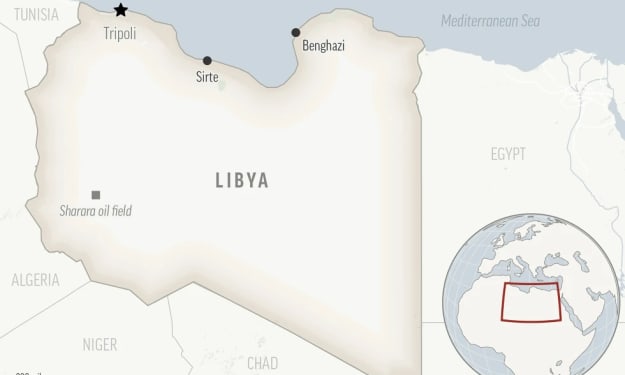
Libya, situated in North Africa, has been embroiled in a prolonged period of civil strife and violence for much of the past decade, resulting in the loss of tens of thousands of lives. Even after the most recent civil war ended with a ceasefire agreement two years ago, numerous governments, including the U.S., UK, EU, Canada, and Australia, continue to issue a level four travel advisory, strongly cautioning their citizens against traveling to Libya due to the ongoing dangers and turmoil.
By Nida Rafiq3 years ago in Earth