Climate
Greenland Declares State of Emergency as Scientists Link the Growing Presence of Orcas to Accelerating Ice Melt. AI-Generated.
In a landmark decision that reflects the intensifying impacts of climate change, the government of Greenland has officially declared a state of environmental emergency—a rare and solemn move that underscores the accelerating transformation of Arctic ecosystems. The catalyst for this declaration? An unusual and growing presence of orcas—also known as killer whales—in waters once locked in sea ice, a phenomenon scientists say reveals the alarming scale of ice melt in the region.
By Sadaqat Ali7 months ago in Earth
Two Miles Beneath the Ocean: A Hidden World Thriving Near a Volcano. AI-Generated.
Two miles beneath the surface of the ocean, in complete darkness and under crushing pressure, lies a world so vast and alive that it challenges everything we thought we knew about life on Earth. Hidden close to an active underwater volcano, this extraordinary ecosystem spans an area roughly equal to 233 soccer fields and is home to an estimated 20,000 living creatures.
By Ayesha Lashari7 months ago in Earth
Violent Winds Could Strike Without Warning — Officials Urge Extreme Caution*
**Violent Winds Could Strike Without Warning — Officials Urge Extreme Caution** Meteorologists have issued an urgent warning as violent winds are expected to develop rapidly, posing a serious threat to public safety. Weather experts say conditions are becoming increasingly unstable, with sudden gusts capable of causing damage within minutes. Unlike typical windy days, this event is marked by unpredictability, making it especially dangerous for residents, travelers, and outdoor workers. Authorities are urging people to take the warning seriously and prepare immediately. Strong winds have the potential to turn everyday objects into hazards, disrupt infrastructure, and create life-threatening situations with little notice. **What Is Causing These Violent Winds** The violent winds are being driven by a powerful weather system combining sharp pressure differences and rapidly changing atmospheric conditions. When these elements collide, air accelerates aggressively, creating sudden and forceful gusts. Experts warn that these winds can intensify quickly, leaving little time to react once they begin. **How Dangerous Can These Winds Become** These winds are not just uncomfortable, they can be destructive. Sudden gusts may uproot trees, tear off roofs, shatter windows, and send debris flying at high speed. Vehicles, especially trucks and buses, are at risk of losing control. In extreme cases, people caught outdoors can be knocked down or injured by airborne objects. **Which Areas Are at the Highest Risk** Low-lying regions, open landscapes, coastal areas, and high elevations are particularly vulnerable. Urban zones are also at risk due to loose structures, construction materials, and signage. Officials emphasize that no area should assume immunity, as violent wind patterns can shift unexpectedly. **Why Officials Are Urging Immediate Caution** Officials are urging extreme caution because these winds may strike without clear warning signs. Unlike storms that build slowly, violent wind events can escalate rapidly. Emergency services may face delays responding to incidents if roads are blocked by debris or fallen trees, increasing the danger during the first critical hours. **What Could Happen If Warnings Are Ignored** Ignoring wind warnings can lead to severe consequences. Power outages may occur if lines are damaged. Roads can become impassable, trapping drivers. Buildings not designed for extreme wind stress may suffer structural damage. Most importantly, personal safety is at risk when people underestimate the force of these conditions. **How Residents Should Prepare Right Now** Residents are advised to secure loose items such as furniture, trash bins, and tools. Windows and doors should be tightly closed, and vehicles parked away from trees or unstable structures. Staying indoors during peak wind periods is strongly recommended. Those living in vulnerable housing should be ready to move to safer areas if necessary. **Is Travel Safe During Violent Wind Events** Travel during violent winds is highly discouraged. Strong gusts can push vehicles off course, especially on bridges and highways. Air travel may face delays or cancellations, while marine conditions can become extremely hazardous. If travel is unavoidable, staying informed and alert is essential. **How Long Could These Winds Last** Forecasts suggest that the strongest winds may occur within a short but intense window. However, conditions can persist longer than expected if weather systems stall or strengthen. Officials advise remaining cautious even after winds appear to weaken, as sudden bursts can still occur. **What Makes This Wind Warning Different** This warning stands out due to the speed and intensity at which the winds may develop. Experts describe it as a high-risk event because of limited preparation time and the potential for widespread disruption. The unpredictable nature of the winds makes them especially threatening compared to more gradual weather events. Violent winds are a serious natural threat that should never be taken lightly. Authorities stress that awareness and preparation can make a critical difference. By acting early and respecting official warnings, residents can reduce risks and protect lives as these dangerous conditions approach.
By America today 8 months ago in Earth
Earthquakes Today. AI-Generated.
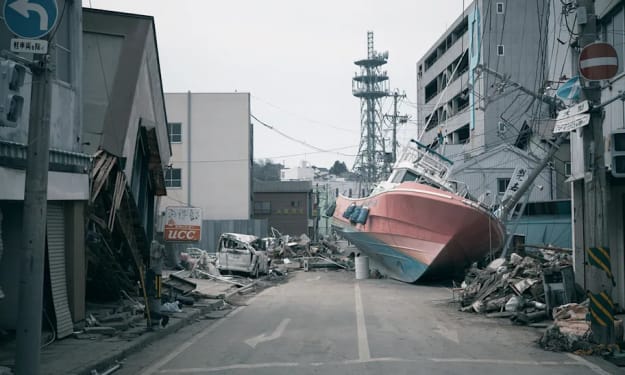
Earthquakes are a daily reminder that the planet beneath our feet is constantly in motion. Today was no exception. Across different regions of the world, seismic instruments recorded a series of small to moderate earthquakes—most of them unnoticed by the general public, yet each one contributing to scientists’ understanding of how Earth releases stress along its tectonic boundaries. While major, destructive earthquakes capture headlines, the reality is that earthquakes happen every day, often dozens at a time. Today’s activity followed that familiar pattern: brief moments of shaking in some areas, subtle ground movement in others, and long strings of data flowing into global monitoring systems. A Snapshot of Earthquakes Today Throughout the day, earthquakes were detected in both well-known seismic zones and regions where shaking is less common. Coastal fault systems, subduction zones near ocean trenches, and continental plate boundaries all showed signs of movement. Most of today’s earthquakes were relatively low in magnitude, meaning they posed little to no danger to people or infrastructure. In places where earthquakes are frequent, such as parts of the Pacific Rim, small tremors are considered routine. Residents may feel a quick jolt, hear a faint rumble, or notice hanging objects sway briefly before everything settles again. Elsewhere, similar-sized quakes might go entirely unnoticed, detected only by sensitive instruments. The takeaway from today’s seismic activity is not alarm, but continuity: Earth is behaving exactly as geologists expect it to. Why Earthquakes Occur So Frequently Earth’s outer shell is broken into massive slabs called tectonic plates. These plates are constantly moving, though usually at speeds measured in centimeters per year. Where they collide, pull apart, or slide past one another, stress builds up over time. When that stress is released suddenly, an earthquake occurs. Today’s earthquakes are part of that ongoing process. Some happened along major fault lines that have been active for millions of years. Others occurred within plates themselves, caused by smaller fractures responding to distant stress changes. Each event, no matter how small, helps redistribute energy within the crust. Importantly, a day with multiple earthquakes does not necessarily signal that a larger one is imminent. In many cases, frequent small quakes actually release stress gradually, reducing the likelihood of a major rupture in the short term. What Scientists Learn From Today’s Quakes Every earthquake recorded today adds to a growing global dataset. Seismologists analyze factors such as depth, magnitude, wave patterns, and location to understand what is happening below the surface. Shallow earthquakes, even if small, are more likely to be felt by people, while deeper ones may pass unnoticed. Today’s events included a mix of both, offering insights into how stress is distributed at different levels of the Earth’s crust. Scientists also watch for earthquake “swarms,” where many small quakes occur in a concentrated area over a short period. These swarms can be linked to fluid movement underground, volcanic systems, or gradual fault adjustments. When swarms appear, researchers monitor them closely, though most fade without leading to a larger event. How Communities Experience Earthquakes Today For most people, today’s earthquakes were little more than a brief interruption—if they noticed them at all. In regions accustomed to seismic activity, daily life continues with little concern after minor shaking. Buildings designed to withstand earthquakes absorb the motion, and residents know basic safety steps by heart. In areas where earthquakes are less common, even a small tremor can spark curiosity or concern. Social media often fills with posts asking, “Did you feel that?” These moments serve as reminders that preparedness matters everywhere, not just in high-risk zones. Today’s earthquakes, while largely harmless, reinforce the importance of awareness. Knowing what to do during shaking—such as dropping to the ground, taking cover, and holding on—can make a critical difference during stronger events. Are Earthquakes Becoming More Common? A common question after days like today is whether earthquakes are increasing. The short answer is no—at least not in a way that indicates growing danger. What has increased is our ability to detect them. Modern seismic networks are far more advanced than those of previous decades. Instruments now pick up tiny earthquakes that would have gone unnoticed in the past. As a result, it can seem like earthquakes are happening more often, when in reality we are simply observing them more accurately. Today’s activity fits well within historical norms. Earth has always been active, and it will continue to be so long after human timelines have passed. The Role of Preparedness Even on a day dominated by small earthquakes, preparedness remains essential. Large earthquakes are rare, but they do occur without warning. Today’s minor tremors are a reminder to review safety plans, secure heavy furniture, and ensure emergency supplies are accessible. Preparedness is not about fear—it is about readiness. Communities that invest in earthquake-resistant infrastructure and public education recover more quickly when stronger shaking occurs. Looking Ahead As today comes to a close, seismic monitoring will continue uninterrupted. New earthquakes will occur overnight, tomorrow, and every day after that. Most will be small. A few may be felt. Very few will cause damage. Earthquakes today remind us that the planet is alive with motion beneath its surface. While we cannot stop or predict them with precision, we can understand them, respect them, and prepare for their impact. In that sense, today’s earthquakes are not just geological events—they are lessons in coexistence with a dynamic planet, one that is constantly reshaping itself, one subtle tremor at a time.
By Saboor Brohi 8 months ago in Earth