Climate
Why India's Water Is Vanishing
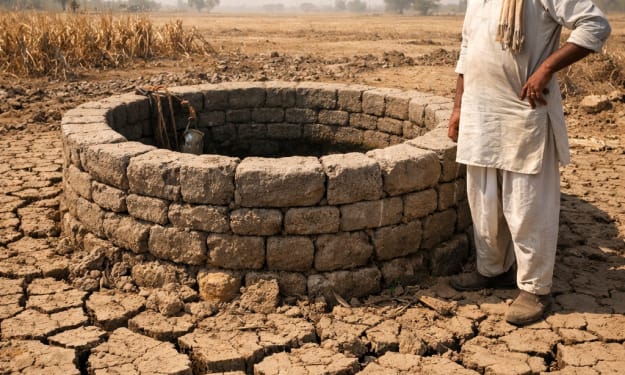
Imagine standing in a vast field that once bloomed with lush green crops, now reduced to a mosaic of deep cracks under a relentless sun. A farmer tilts his head back, sipping the last drops from a clay pot, his face etched with worry. This isn't a scene from a distant dystopia it's the reality for millions in rural India today. Groundwater, the invisible lifeline that sustains over 60% of India's irrigated agriculture and provides drinking water to countless households, is disappearing at an alarming rate. India is the world's largest user of groundwater, extracting more than the United States and China combined. Yet, this precious resource is being depleted faster than nature can replenish it, creating a silent crisis that threatens food security, livelihoods, and the environment.
By Arjun. S. Gaikwad7 months ago in Earth
United States Fertilizer Market Size Guide: Choosing the Right Nutrient Solutions 2026. AI-Generated.
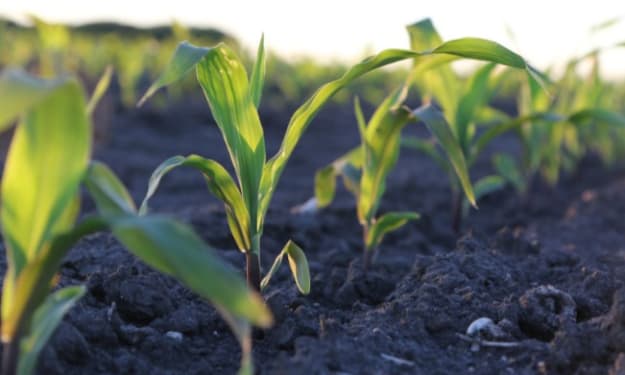
United States Fertilizer Market Overview The United States Fertilizer Market is a foundational component of the U.S. agricultural sector, supporting the productivity and nutrient needs of crops ranging from corn and soybeans to fruits, vegetables, and specialty horticultural products. Fertilizers — including nitrogenous, phosphatic, potassic, and specialty formulations — supply essential nutrients that replenish soil fertility and enhance crop yields. The market serves a broad range of growers and is influenced by agricultural acreage trends, commodity prices, technological advances, and environmental policies that shape nutrient management practices across U.S. farms. Key industry participants include major producers such as CF Industries, Nutrien, Mosaic Co., and Yara North America, reflecting a moderately concentrated competitive landscape with significant global integration.
By Kim Soo hyun7 months ago in Earth
Death On Death
A petrol sheen glimmered on the water’s surface, where all the ripples of my units passage through the dead swamp had long since dissipated. It was deep as my calves, but like most water it was such a murky, toxic brown I couldn’t see the bottom. It stank more than most, though, like ammonia and chlorine.
By I. D. Reeves7 months ago in Earth
Greenland Declares State of Emergency as Orca Surge Signals Ice Collapse, Fishermen Reap a New Gold Rush, and Climate Activists Call for Total Fishing Ban. AI-Generated.
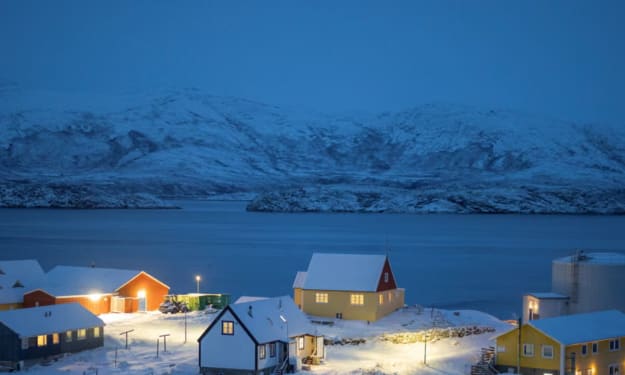
Greenland has declared a state of emergency after scientists linked a dramatic surge in orca activity along its coasts to rapidly collapsing sea ice, a stark signal of how quickly the Arctic environment is transforming. What for researchers is an alarming ecological red flag has, paradoxically, become an economic windfall for fishermen, who describe the moment as a “new gold rush” driven by expanding fishing grounds and booming catches. Meanwhile, climate activists are demanding a total fishing ban, arguing that exploiting a warming Arctic risks pushing fragile ecosystems past the point of no return. The collision of science, livelihood, and ideology has placed Greenland at the center of a global debate about climate change, resource extraction, and environmental justice. Orcas Where Ice Once Ruled For decades, Greenland’s thick sea ice acted as a natural barrier, limiting access for large marine predators such as orcas, also known as killer whales. But that barrier is disappearing. Scientists monitoring Arctic waters report an unprecedented increase in orca sightings in regions that were once locked in ice for most of the year. According to marine biologists, orcas are highly adaptable apex predators. Their sudden presence in Greenland’s newly ice-free waters suggests more than a simple migration shift—it signals structural change in the Arctic marine system. As ice collapses earlier in spring and reforms later in autumn, prey species such as seals, narwhals, and certain fish are becoming more exposed. Orcas are following the food. Researchers warn that this new predator-prey dynamic could destabilize already stressed Arctic ecosystems. Species that evolved with ice as protection now face threats they are ill-equipped to handle, potentially triggering cascading effects throughout the food web. Ice Collapse Triggers Emergency Measures Greenland’s government cited accelerating ice loss, ecosystem disruption, and rising safety risks for coastal communities in its decision to declare a state of emergency. Melting ice has increased the frequency of unpredictable weather, coastal erosion, and dangerous navigation conditions. Traditional hunting routes used by Indigenous communities are becoming unreliable, while infrastructure built on permafrost is increasingly unstable. Officials say the emergency declaration is meant to unlock rapid-response funding, strengthen scientific monitoring, and allow temporary regulatory changes. Yet critics argue the move also reflects how unprepared Arctic governance systems are for the speed of climate change. “The Arctic is changing faster than policy,” said one environmental analyst. “Greenland is being forced to react in real time to transformations that were once projected decades into the future.” Fishermen Celebrate an Arctic Gold Rush While scientists sound alarms, many fishermen see opportunity. Retreating ice has opened vast new fishing areas, extended seasons, and increased access to commercially valuable species such as cod, halibut, and shrimp. Some local operators report record catches and rising international demand, particularly as warming waters push fish stocks northward. For coastal towns long dependent on fishing, the boom has brought jobs, investment, and a sense of economic revival. Processing plants are expanding, new vessels are being launched, and export revenues are climbing. To many residents, fishing is not reckless exploitation but a matter of survival in an isolated region with limited alternatives. “People here have lived off the sea for generations,” said one fisherman. “We didn’t cause the ice to melt, but we can’t ignore the chance to feed our families.” This tension—between benefiting from climate-driven change and being blamed for it—has become a defining feature of Greenland’s current crisis. Activists Demand a Total Fishing Ban Climate activists see the fishing boom as a dangerous feedback loop. In their view, increased industrial activity in the Arctic accelerates environmental degradation, disturbs marine life, and undermines global efforts to slow climate change. The surge in orca activity, they argue, is not a curiosity but a warning sign that the system is already under extreme stress. Activist groups are calling for a total fishing ban in newly ice-free zones, at least until comprehensive environmental impact assessments are completed. They argue that short-term economic gains risk long-term ecological collapse, which would ultimately devastate both wildlife and human communities. “The Arctic is not a frontier for profit,” one campaign statement read. “It is a global climate regulator. What happens in Greenland affects the entire planet.” A Global Climate Crossroads Greenland’s emergency underscores a broader global dilemma: how societies should respond when climate change creates new economic opportunities that come bundled with severe environmental risks. The presence of orcas in collapsing ice zones, the rush for fish in warming waters, and the calls for strict conservation all point to the same reality—the Arctic is no longer a distant, frozen constant. International observers warn that decisions made now will set precedents for the Arctic’s future. Will it become a tightly protected ecological reserve, a regulated resource hub, or a contested space shaped by competing interests? An Uncertain Path Forward As Greenland navigates its state of emergency, policymakers face difficult choices. Balancing scientific warnings, economic needs, and activist pressure will require nuanced governance rather than blunt solutions. Expanded monitoring of marine ecosystems, adaptive fishing quotas, and stronger Indigenous participation in decision-making are among the options being discussed. What is clear is that the surge in orcas is not an isolated phenomenon. It is a living indicator of an Arctic in flux—one where ice, once the defining feature, is rapidly losing its grip. Greenland’s response may well become a blueprint, or a cautionary tale, for a warming world forced to choose between exploitation and restraint.
By Sadaqat Ali7 months ago in Earth
The Northern Lights: Nature’s Mesmerizing Nighttime Spectacle. AI-Generated.
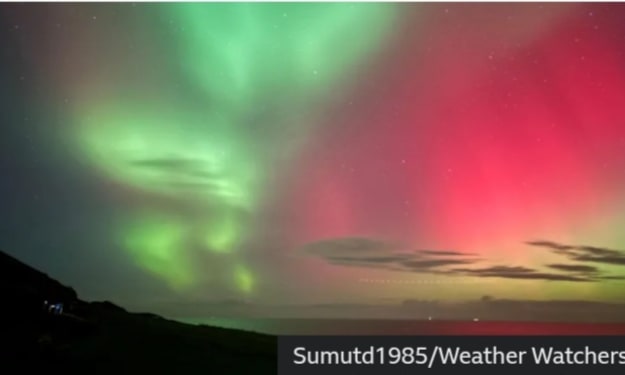
The Northern Lights, or Aurora Borealis, have fascinated humans for centuries. Their mysterious, shimmering waves of green, purple, and pink light dance across the Arctic skies, inspiring myths, legends, and scientific curiosity. But what causes this spectacular display, and why does it keep appearing, year after year, even today?
By Ayesha Lashari7 months ago in Earth
Dozens of Flood Warnings Issued in England After Days of Relentless Rain. AI-Generated.
England is grappling with widespread flooding after several days of continuous heavy rain, prompting the Environment Agency to issue dozens of flood warnings across multiple regions. The intense rainfall has overwhelmed rivers and drainage systems, causing water levels to rise dangerously in both urban and rural areas. Emergency services are on high alert, assisting communities affected by the deluge.
By Ayesha Lashari7 months ago in Earth
Asian Carp, the Massive Fish That Could Reshape the Great Lakes Forever. AI-Generated.
Beneath the surface of America’s Great Lakes lies a growing ecological threat that few people outside scientific and fishing communities fully understand. Known collectively as Asian carp, these massive and aggressive fish species are steadily moving northward through U.S. waterways, raising alarms among environmentalists, economists, and local communities. If they establish themselves in the Great Lakes, experts warn the consequences could be irreversible.
By Sajida Sikandar7 months ago in Earth
Earth Is Being Covered in a ‘Forever Chemical’ That Won’t Break Down, Scientists Warn.. AI-Generated.
Scientists are sounding the alarm over a growing environmental threat that is nearly impossible to erase. Known as “forever chemicals,” a group of synthetic substances called PFAS (per- and polyfluoroalkyl substances) are spreading across the Earth—from drinking water and soil to rain, snow, and even human blood.
By Sajida Sikandar7 months ago in Earth