Climate
Grasping "Grobal Warming": Fantasies and Misguided judgments. AI-Generated.
The expression "grobal warming" could seem like an incorrect spelling of "an Earth-wide temperature boost," however it fills a need: featuring the normal misinterpretations encompassing environmental change. This term is frequently utilized hilariously or fundamentally to call attention to the disarray and deception that endure in open conversations about ecological issues. In this article, we'll investigate the idea of "grobal warming" and explain a portion of the fantasies that add to false impressions about an unnatural weather change.
By Tansin Mahamud 2 years ago in Earth
Heat Advisory
TODAY It is roaring roasting, roaring heat. 93 to 95°F in an area of the country that is considered very hot when it’s 85 outside. Our plants and bodies are not used to this. I know it’s hotter elsewhere but this heat is unusual here although it is becoming the norm!
By Andrea Corwin 2 years ago in Earth
Journey Beyond Earth
Explore the Wonders of Space: Journey Beyond Earth Get ready for an amazing adventure that takes you beyond our planet and into the universe. This article will show you the vast and mysterious space. It will reveal the incredible sights and secrets of the cosmos.
By shabana begam2 years ago in Earth
HOW TO SURVIVE AN ASTEROID IMPACT. AI-Generated.
What a brilliant day, but hold up a moment, can you see that peculiar thing in the sky? No time to form a wish—it's a space rock, not a shooting star. The chances of seeing a huge meteorite drop are exceptionally low, but it's still great to know what to do if it ever happens. Welcome to the virtual reality survival course.
By Abida Awais2 years ago in Earth
Guardians of Gaia. AI-Generated.
In the heart of a small town nestled between rolling hills and dense forests, lived a young girl named Maya. Maya had always felt a deep connection to nature, often spending her days exploring the woods, listening to the whispers of the trees, and marveling at the beauty of the natural world. She believed that the Earth was a living entity, a guardian that provided for all its inhabitants. One sunny afternoon, while wandering through her favorite grove, Maya stumbled upon an ancient, weathered stone tablet partially buried in the ground. Intrigued, she carefully unearthed it and discovered an inscription that read, "To save Gaia, seek the Heart of the Earth." Confused but determined, Maya took the tablet to the town's wise elder, Mr. Thompson, a retired archaeologist with a wealth of knowledge about ancient legends. Mr. Thompson's eyes widened as he examined the tablet. He explained that Gaia was the ancient name for Earth, often depicted as a nurturing mother. The Heart of the Earth, he said, was a mythical artifact said to hold the power to restore balance and heal the planet. Maya felt a surge of purpose. With Mr. Thompson's guidance, she prepared for a journey to find the Heart of the Earth. She packed essential supplies and set off, guided by the clues on the tablet. Her journey took her through dense forests, over towering mountains, and across vast deserts. Along the way, Maya encountered various challenges that tested her resolve and ingenuity. In a dark, labyrinthine cave, she had to decipher ancient runes to find her way. In the scorching desert, she found solace and direction from a wise old nomad who spoke of the stars' guidance. Each obstacle strengthened her determination and deepened her connection to the Earth. Finally, after many weeks of travel, Maya arrived at the base of a majestic, ancient tree deep within an enchanted forest. The tree radiated a powerful, calming energy, and Maya knew she had found the Heart of the Earth. She approached it with reverence, placing her hand on its trunk. The tree seemed to respond, its leaves shimmering with an ethereal glow. Suddenly, Maya was enveloped in a vision. She saw the Earth in its entirety, from its highest peaks to its deepest oceans, and witnessed the damage caused by pollution, deforestation, and neglect. But she also saw the potential for renewal, the resilience of nature, and the power of collective action. Maya understood that the Heart of the Earth was not a physical object but a symbol of humanity's responsibility to care for the planet. She knew she had to share this vision with others, to inspire a global movement for change. Returning to her village, Maya recounted her journey to the townspeople. Her story resonated deeply, sparking a sense of urgency and hope. The community came together, implementing sustainable practices, restoring natural habitats, and educating others about the importance of protecting the environment. News of Maya's journey spread far and wide, inspiring other communities to take similar actions. The world began to change, one small step at a time. People started to reconnect with nature, understanding their role as stewards of the Earth. Moral of the Story The tale of Maya and the Heart of the Earth teaches us that every individual has the power to make a difference. It reminds us that the Earth is a living entity that needs our care and respect. By working together and embracing sustainable practices, we can heal the planet and ensure a better future for generations to come. The story encourages us to listen to the whispers of nature, to seek wisdom in ancient teachings, and to act with love and responsibility towards our shared home, Gaia.
By John Francis2 years ago in Earth
This Italian get-away area of interest is dismissing sightseers as it runs out of water
Agrigento is a tourist's dream on the Italian island of Sicily, perched atop a hill. An ancient, maze-like aqueduct system still captures water beneath the Valley of the Temples' archaeological structures and relics. Small hotels and guesthouses in the city and along the coast are being forced to turn away tourists as a result of the aqueduct and other modern structures running so dry. They lack sufficient water to provide their guests with a flushing toilet and a shower after a day spent outdoors in the summer heat. In February, Sicily implemented water restrictions after the region declared a state of emergency due to an ongoing drought. The shortages, which have affected both agriculture and tourism, which are both essential to Sicily's economy, have only gotten worse as a result of leaking and aging infrastructure. In 93 communities, rationing is in place for over a million people. Some have to cut back on how much water they use by up to 45 percent. As a result, most places shut down their water supply overnight and taps run dry on time. Getting organized during the day is the key to drinking enough water. Visitors are pondering whether it is worthwhile to visit Sicily's affected areas on TripAdvisor and other travel forums. Hotels are advising guests about the possibility of shortages and assisting visitors in reserving other parts of the island where restrictions are less stringent or not in place. The owners of the Le Cinque Novelle bed and breakfast in central Agrigento, where water restrictions are strict, have installed water-saving filters in their showers and sinks. However, their guests frequently complain. Giovanni Lopez, the proprietor of the B&B, stated to CNN, "Rightly, people ask us for reassurances before coming, but we don't know what to say." “Given that tourism is a sector that almost everyone in this part of Sicily relies on,” the situation is quickly affecting the entire tourist accommodation sector, which risks serious economic consequences. Although the Sicilian regional government has requested assistance from Rome in the form of subsidies to import water from the mainland, there is currently no established strategy to assist the island. Although the office of Italy's tourism minister, Diana Santanchè, did not respond to a request for comment from CNN, she stated in April that Sicily should try to spread out its tourism season and avoid focusing solely on the summer, when water issues become more severe. For many, Sicilian summers are becoming unbearable. The island was hit hard by wildfires last year, forcing tourists to leave or delay their visits. Another cause for concern is the water scarcity brought on by the drought. Sicily is right in the middle of a warming Europe caused by human activity that is faster than any other continent. In August 2023, the city of Syracuse reached 48.8 degrees Celsius (119.8 degrees Fahrenheit), breaking Europe's temperature record. The Italian National Institute for Environmental Protection and Research (ISPRA) says that Sicily's drought is the worst, but other parts of Italy are also experiencing drought. According to ISPRA, around 20% of the island's underground aquifers are in a state of "water scarcity" as a result of less than a quarter of the usual rainfall falling during the winter. In Agrigento and four other provinces, the regional government declared a "state of crisis and water emergency" for irrigation and drinking water in February that would last at least until the end of the year. According to Marco Maccarrone, the proprietor of the restaurant Caico Trattoria e Cantina in Agrigento, the island is being left to fend for itself. We are concerned because the summer season is about to begin. According to what he disclosed to CNN, "no one has given us alternative solutions to the water tankers that we are paying for ourselves." "This runs the risk of destroying our one and only resource, tourism." Maccarrone, who has been living in the historic center of Agrigento for 20 years, is dissatisfied with the painfully slow water flow. He stated, "We can't fill a single pot in half an hour." According to Nicola Farruggio, president of the Hotel Federation of Sicily, hotels are required to have a certain amount of water reserves in proportion to their capacity. As a result, they have also had to purchase water from the mainland. However, smaller structures, such as family-owned hotels and bed and breakfasts, frequently lack sufficient storage space to meet the requirements. Additionally, they cannot provide guests with water because they are subject to condominium-specific rationing rules if they are inside a residential building. According to Francesco Picarella, head of the Hotel Federation in Agrigento and owner of a hotel in the city center, bad governance for years has made things worse. He stated that since 2011, there has been talk of rebuilding the water network, but little progress has been made. He stated, "The problem of today is the result of a failed water management policy that has been in place for twenty years." "The B&Bs in the historic center are in extreme difficulty; the hotels that have their own reserves somehow compensate." He stated that leaks and insufficient rainfall are contributing to the reservoirs' drying up. The Sicilian regional government's office responded to CNN's request for comment by pointing to a study that outlined the government's plans to restart aging desalination plants, construct additional pipelines, and drill new wells. Additionally, the report states that Rome has not provided Sicily with sufficient funds to carry out its plans. According to the local B&B federation, "it should have been a golden year" for Agrigento, which was named the Italian Capital of Culture for 2025 in March of last year, which typically attracts more tourists. "Instead, the season could be ruined by word of mouth about the water crisis." It was also just beginning to see an increase. Picarella claims that the number of visitors in 2023 increased by 24% in comparison to the previous year. After many people postponed their trips as a result of the wildfires, the island's tourism ministry stated that Sicily was anticipating more than 2% more visitors than last year. Picarella stated, "People see this destination with a lot of interest." "Every day we have to come up with a way to move forward because we are expecting a greater number of vacationers this summer." Having run out of time For farmers, the situation is just as dire. Goats are drinking muddy sludge from a pond that used to be on an organic farm near Caltanissetta in central Sicily, about 50 kilometers (about 30 miles) northeast of Agrigento. The lack of grass for grazing is also a result of the drought, according to the farm's owner, Luca Cammarata. Sicily has never been so dry to him. Because there isn't enough water, farmers like Cammarata have to choose between killing their herds or letting them die of starvation or dehydration. Due to a lack of water, citrus farmers are also witnessing the shriveling of their renowned Sicilian oranges on their trees. Around Mount Etna, where oranges are grown, the reservoirs that are used for irrigation now hold about half as much water as they used to. According to the ANBI Observatory on Water Resources, a government organization, if there is no summer rain, they will fall to around 25%. According to ANBI, urban centers' overdevelopment and citrus and wheat farms' 20% reduction in natural wetlands has exacerbated the issue. Renato Schifani, the regional president of Sicily, stated that the island has already lost more than €1 billion due to crop losses, depleted reservoirs, and dying livestock. That doesn't even take into account the possibility of losing money from tourism because tourists who can't get to water on one part of the island are booking new trips to other parts. The losses, on the other hand, are devastating to communities in places like Agrigento. Cammarata's situation is just as gloomy, as he claims that his dairy operation, 300 goats, and entire way of life are in jeopardy. He was referring to a farmers' representative group when he said, "The consortium used to guarantee water rotation every five or six days." They are no longer able to tell us when or if the taps will be opened. Even for an island surrounded by water, the solutions are difficult. For more than a decade, the three desalination plants that could purify Sicily's seawater for drinking, sanitation, or irrigation have been shut down. Drilling new wells or bringing them back online will take time. Additionally, the island is running out of time.
By Alfred Wasonga2 years ago in Earth
How Volcanoes Shape the Earth
The Fiery Sculptors of Earth In the heart of the Pacific Ocean, there lies a chain of islands known as Hawaii. But millions of years ago, these islands did not exist. Beneath the surface, the Earth's mantle was restless, a molten sea of magma. It was here that Pele, the Hawaiian goddess of fire and volcanoes, danced her fiery dance, creating the land as we know it today. Deep beneath the ocean floor, a hot spot—a fixed plume of heat rising from the Earth's mantle—began to push molten rock towards the surface. This magma, under immense pressure, found its way through cracks in the Earth's crust, creating a volcanic eruption. Over time, these eruptions built up layer upon layer of lava, gradually forming the islands of Hawaii. The process was not quick; it took millions of years for the islands to emerge above the ocean's surface. As the Pacific Plate moved over the hot spot, a series of volcanoes erupted, forming the islands in a chain. The oldest islands, now eroded and weathered, lie to the northwest, while the youngest, such as the Big Island, remain volcanically active to this day. Each eruption brought new life and destruction. The hot, molten lava would flow down the slopes, burning everything in its path, only to cool and harden into fertile land. Over centuries, plants began to take root in the nutrient-rich soil, and animals followed, creating diverse ecosystems. The lush rainforests, vibrant coral reefs, and unique species such as the Hawaiian honeycreeper owe their existence to these volcanic processes. The Big Island of Hawaii is home to one of the most active volcanoes in the world, Kilauea. It has been erupting continuously since 1983, reshaping the landscape in real time. Lava flows have created new land, extending the island's coastline. As the lava meets the ocean, it cools rapidly, creating dramatic steam clouds and new rock formations. This ongoing activity provides scientists with invaluable data on volcanic behavior and land formation. But volcanoes are not just creators; they are also destroyers. In 2018, a series of eruptions from Kilauea caused significant damage, destroying homes and displacing communities. The power of the volcano reminded everyone of nature's dual role as both a giver and taker of life. Despite the destruction, the local communities showed resilience, rebuilding and adapting to the ever-changing landscape. Volcanoes also shape the Earth's climate. When they erupt, they release ash and gases into the atmosphere. These particles can reflect sunlight, cooling the planet temporarily. The eruption of Mount Pinatubo in 1991 caused global temperatures to drop by about 0.5 degrees Celsius for several years. This phenomenon, known as "volcanic winter," can have widespread impacts on agriculture and weather patterns, demonstrating the interconnectedness of Earth's systems. Yet, despite their destructive power, volcanoes are essential for life on Earth. They release gases that formed the Earth's early atmosphere and contribute to the carbon cycle, which is vital for regulating our climate. Volcanic ash enriches soils, making them some of the most fertile in the world, supporting agriculture and biodiversity. Regions like the slopes of Mount Vesuvius in Italy are known for their productive vineyards and orchards, thriving on volcanic soils. As Pele's dance continues, we are reminded that volcanoes are the Earth's fiery sculptors. They build mountains, create islands, and shape our world in ways both seen and unseen. Through their eruptions, they remind us of the dynamic and ever-changing nature of our planet, a testament to the powerful forces that lie beneath our feet. The landscapes they create become the backdrop for human stories, from the ancient legends of Hawaii to the modern-day resilience of its people. In the end, the story of how volcanoes shape the Earth is one of balance—between creation and destruction, beauty and danger, the ancient past and the ever-evolving present. It is a reminder of the power of nature and the profound ways it influences our lives and the world we inhabit.
By Almustapha Abubakar2 years ago in Earth
water pollutin
What is water pollution? Water pollution occurs when harmful substances—often chemicals or microorganisms—contaminate a stream, river, lake, ocean, aquifer, or other body of water, degrading water quality and rendering it toxic to humans or the environment.
By ZAHIDUL ISLAM2 years ago in Earth
Enviroment pollution
Pollution, the addition of any substance (solid, liquid, or gas) or any form of energy (such as heat, sound, or radioactivity) to the environment at a rate faster than it can be dispersed, diluted, decomposed, recycled, or stored in some harmless form. The major kinds of pollution, usually classified by environment, are air pollution, water pollution, and land pollution. Modern society is also concerned about specific types of pollutants, such as noise pollution, light pollution, and plastic pollution. Pollution of all kinds can have negative effects on the environment and wildlife and often impacts human health and well-being.
By ZAHIDUL ISLAM2 years ago in Earth
Windward Islands Bracing for Potential Hurricane Hit on Monday. Content Warning. AI-Generated.
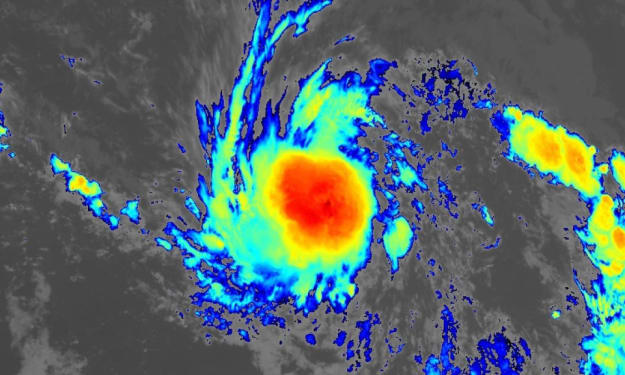
In conclusion, the Windward islets face a potentially significant rainfall event with the approach of Implicit Tropical Cyclone Two. By taking visionary way and remaining watchful, communities can more repel the storm’s impact and safeguard lives and property.e Windward islets are presently on high alert as they prepare for a implicit hurricane that could make landfall on Monday. The National Hurricane Center( NHC) has issued tropical storm warnings for several areas, motioning the possibility of severe rainfall conditions in the coming days. Current Situation A tropical surge, linked as Implicit Tropical Cyclone Two, is advancing towards the southern Windward islets. As of the rearmost updates, the system was located roughly 700 long hauls east- southeast of the islets and moving west at a speed of 15 to 20 mph. The NHC has projected a 70 chance of development within the coming 48 hours, adding to 90 over the coming five days. This surge is anticipated to bring heavy rains and winds of tropical storm force to the region late Tuesday into Wednesday. Areas Under trouble The tropical storm warning covers Trinidad and Tobago, Grenada, and their dependences . The storm's impact will probably include heavy downfall and strong winds, with the eventuality to beget significant dislocation. residers in these areas, as well as along the northern seacoast of Venezuela and the ABC islets, have been advised to cover the storm's progress nearly. Preparedness Measures Given the impending trouble, original authorities and residers are taking necessary preventives to alleviate the impact of the storm. These measures include Securing Property icing that homes and businesses are fortified against strong winds by securing doors, windows, and any loose objects that could come shells. Grazing inventories Accumulating essential inventories similar as food, water, specifics, and exigency accoutrements to sustain through implicit outages and dislocations. Evacuation Plans Reviewing and, if necessary, streamlining evacuation plans to insure a nippy and orderly move to safer areas if needed. Meteorological Factors The development of Implicit Tropical Cyclone Two is being nearly covered by meteorologists. crucial factors impacting the storm's progression include ocean face Temperatures Warm ocean face temperatures of around 82 °F are conducive to the storm's intensification. Wind Shear Light wind she
By Shuvra Dar2 years ago in Earth