Climate
"The Billion-Dollar Plot: Inside the History of the World's Most Expensive Land"
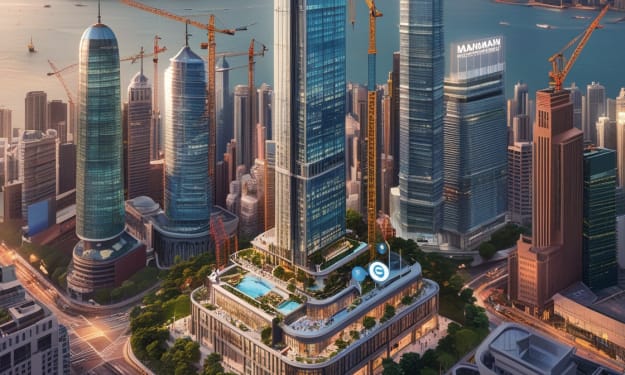
“The Billion-Dollar Scheme: The Narrative Behind the World’s Priciest Terrain” At the core of Hong Kong exists a diminutive parcel of land that has entered the annals of historynot for its dimensions, but for its astonishing worth. This article delves into the tale of 2 Murray Road, the most costly land ever transacted, tracing its path through colonial history, Hong Kong’s real estate surge, and the international influences that determined its value. We also evaluate its present worth and investigate the factors that contribute to the exorbitant costs of such land. The Most Valuable Tract of Land: 2 Murray Road, Hong Kong When we envision treasured assets, we commonly think of gold, gemstones, or invaluable artwork. However, in the contemporary economic landscape, one of the most prized commodities is landparticularly in heavily populated, economically robust urban centers. In 2020, a milestone was achieved when a minuscule plot of land in Central Hong Kong, referred to as 2 Murray Road, was acquired for an astonishing $5. 2 billion USD. This sale established its reputation as the highest-valued parcel of land ever auctioned. But how did this modest lot, barely sufficient for a few structures, achieve a valuation surpassing the GDP of certain small nations? Colonial Foundations and Real Estate Fortune Hong Kong’s land narrative is profoundly intertwined with its colonial heritage. During British governance, land was leased rather than sold, and this tradition persists today. The government retains ownership of nearly all land and leases it through extensive agreements. With space being scarce and population density elevated, competition for land is intense, leading to soaring prices. 2 Murray Road is positioned in Central, the financial epicenter of Hong Kong. It is encircled by skyscrapers that accommodate multinational banks, legal firms, and high-end retailers. Consequently, even a minor parcel of land in this area commands a significant price. The lot was formerly utilized as a multi-level parking facility managed by the Hong Kong government. However, as Hong Kong’s skyline expanded and real estate became increasingly profitable, the government recognized a lucrative prospect. When the site was offered for auction, prominent developers rushed to seize the opportunity. The Billion-Dollar Offer In May 2020, the Chinese developer Henderson Land Development secured the bid for 2 Murray Road. The concluding figure? A record HK$50. 8 billion (approximately $5. 2 billion USD at that time). This translates to about $25,550 per square footan almost unfathomable cost for land. What rendered this agreement even more extraordinary was that it transpired during a period of political turmoil in Hong Kong and amidst global uncertainty due to the COVID-19 pandemic. Nonetheless, Henderson was confident that the lot’s prime location, adjacent to the Hong Kong Club, Mandarin Oriental, and other prominent sites, ensured long-term profitability. Why Is It So Costly? Location: The land is situated in one of the most esteemed and land-constrained areas worldwide. Similar to the Champs-Élysées in Paris or Fifth Avenue in New York, Central Hong Kong boasts unparalleled prestige. Economic Density: Hong Kong’s economy flourishes on financial services and trade. Office space consistently remains in demand, particularly in Central. Land Scarcity: Merely approximately 25% of Hong Kong’s territory has been developed due to mountains, nature reserves, and regulatory limitations. This intensifies competition. Speculative Value: Developers are aware that investment in prime real estate can yield exceptional returns. Luxury edifices constructed in this region could command some of the highest rental rates globally. What Now?
By Say the truth about a year ago in Earth
Groundbreaking Comfort: How Earth's Energy Makes Heating And Cooling Smarter
Introduction In an era of climate consciousness and rising energy costs, geothermal heating and cooling systems are emerging as a revolutionary solution. By tapping into the Earth’s stable underground temperatures, these systems offer unparalleled efficiency, sustainability, and long-term savings. This article explores how geothermal technology works, its applications, costs, real-world success stories, and why it’s a smart investment for homeowners and businesses alike.
By Jacky Kapadiaabout a year ago in Earth
The Ethics of De-Extinction: Should We Bring Back the Dire Wolf?
The birth of three dire wolf pups, Romulus, Remus, and Khaleesi, marks a groundbreaking scientific achievement by Colossal Biosciences. By utilizing advanced genetic engineering and ancient DNA, the company has effectively brought back the iconic Ice Age predator that disappeared over 10,000 years ago. This remarkable feat has ignited a global discussion surrounding the ethics and implications of de-extinction.
By Jenna Deedyabout a year ago in Earth
Sunday at Chimp Haven
Tucked away in the quiet woods of Northwest Louisiana, there’s a special place where over 300 chimpanzees live their best lives. Welcome to Chimp Haven, the largest chimpanzee sanctuary in the world, spread out across 200 acres of peaceful forest. For these chimps, life used to be full of tests, labs, and experiments—but now, it’s all about relaxation, friendships, and bananas.
By Waqar Ahmadabout a year ago in Earth
Eco-Friendly Goods
In recent years, the term “eco-friendly” has gone from a niche concept to a global movement. More and more people are making conscious decisions to purchase eco-friendly goods as a result of growing awareness of environmental issues such as pollution, climate change, and resource depletion. When it comes to promoting a more sustainable way of life, these products, which are made to have a minimal effect on the environment, are becoming increasingly important. But what exactly are eco-friendly goods, and why should we care?
By Snigdha Ahmed about a year ago in Earth
Was Earth a "Green Marble"?
When we envision Earth from space, we frequently picture the famous "Blue Marble"—a world covered primarily by the deep blue of its oceans, swirling with clouds, and lush with verdant areas. However, Earth might have had a quite different appearance long before it developed into the water-rich planet it is today. According to some scientists, Earth was originally a "Green Marble," a planet without the deep blue glimmer we associate with modern Earth, with green oceans and a thick, hazy atmosphere. A fascinating chapter of Earth's history is presented by this prehistoric incarnation of our planet, one that provides insights into early life, the environment, and even the evolution of other potentially livable worlds.
By Md Mamun Ferdousabout a year ago in Earth
Katy Perry, Gayle King and 4 other women are headed for the ‘edge of space.’ Here’s what that means
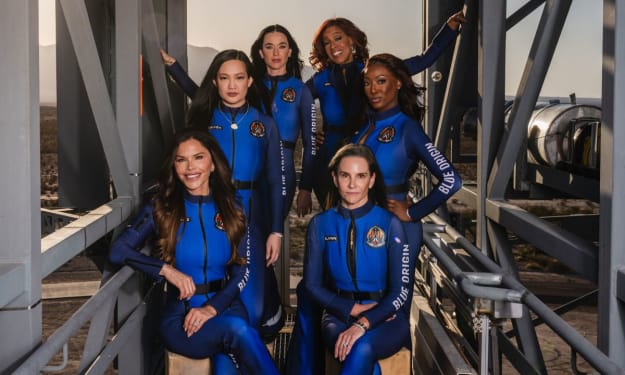
A group of well-known women, including pop star Katy Perry and media icon Gayle King, are getting ready for an extraordinary journey to the "edge of space." This mission, organized by Virgin Galactic, is part of an initiative to promote diversity in space travel and inspire future generations of female explorers. However, what exactly is involved in traveling to the "edge of space"? Here’s a breakdown of what these women will experience—and why this mission is so groundbreaking. 1. What Is the ‘Edge of Space’? Virgin Galactic flights, in contrast to SpaceX and NASA's traditional orbital spaceflights, reach the "edge of space," or about 50-55 miles (80-88 kilometers) above Earth. Not quite orbit: This is below the Kármán line (62 miles/100 km), the internationally recognized boundary of space, but high enough to experience weightlessness and see the curvature of the Earth. Suborbital flight: The Virgin Galactic VSS Unity spacecraft ascends to its highest point and glides back down, providing a brief state of weightlessness. 2. Who Will Go? The mission, called "Galactic 07," will feature an all-women crew, including: Superstar and singer Katy Perry Gayle King, co-host of CBS Mornings Two astronauts (likely Virgin Galactic crew members) Two undisclosed passengers (possibly scientists or philanthropists) This flight highlights the growing role of private space tourism and efforts to make space more accessible to women. 3. What Will They Experience? A smooth ascent: The spacecraft is carried by a mothership (VMS Eve) before rocket ignition propels it upward. Stunning views: Passengers will see the blackness of space and Earth’s thin blue atmosphere. Weightlessness: For about 3-4 minutes, they’ll float freely inside the cabin. G-forces on re-entry: A brief but intense sensation as the craft descends. 4. What is the significance of this mission? Diversity in space: Despite this mission's efforts to change the narrative, women are still underrepresented in space flight. Influence from celebrities: Well-known people like Perry and King can get more people interested in space exploration. The future of space tourism: As costs fall, more civilians may be able to see space. Last Thoughts While this isn’t a deep-space mission, flying to the edge of space is still a once-in-a-lifetime experience—one that could pave the way for more inclusive and accessible space travel. If you had the chance, would you travel to the edge of space?
By Easin Munnaabout a year ago in Earth
*April's full moon is a 'micromoon'*. AI-Generated.
**April’s Full Moon is a ‘Micromoon’: What It Means and Why It Matters** Every month, stargazers and skywatchers worldwide look forward to the full moon, a celestial event that never fails to captivate. But not all full moons are created equal. While some are dubbed “supermoons,” appearing larger and brighter in the sky, others are called “micromoons.” This April, the full moon falls into the latter category, offering a subtler but still fascinating astronomical experience. Here’s everything you need to know about April’s micromoon — what it is, how it happens, and why it’s worth your attention.
By Mahir Faysalabout a year ago in Earth
Empowering the Future
By Futoshi Tachino In recent years, young people worldwide have emerged as powerful catalysts for environmental change, leading movements and initiatives that challenge the status quo and demand urgent action on climate issues. Their passion, innovation, and resilience have not only brought global attention to the climate crisis but have also inspired tangible policy shifts and societal transformations.
By Futoshi Tachinoabout a year ago in Earth