Climate
Wander Often, Wonder Always
There’s something magical about throwing a few clothes in a backpack, grabbing your camera, and heading out into the unknown. No detailed itinerary. No rigid plans. Just you, the road, and the thrill of what might be waiting around the next bend. Welcome to the joy of spontaneous travel—a wildly underrated way to explore the world and rediscover yourself in the process.
By Hashim Khosaabout a year ago in Earth
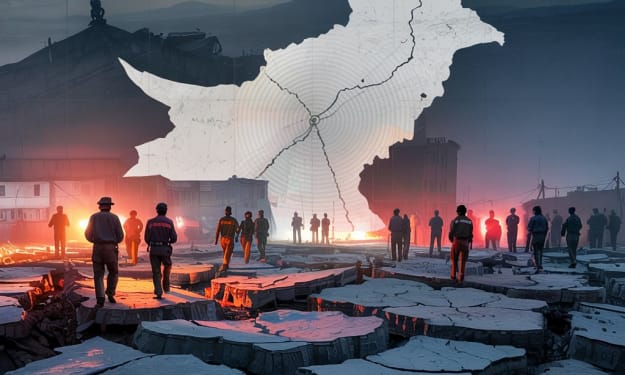
"A Powerful Earthquake Strikes Pakistan and Afghanistan: Fear, Damage, and Urgent Response"
a massive earthquake struck the border region between Pakistan and Afghanistan, leaving a trail of destruction and sparking widespread fear and chaos. The quake, which measured [insert magnitude], was felt across a vast area, shaking not just the ground, but the lives of millions of people. As news spread, it quickly became clear that the damage was extensive, and the situation called for immediate emergency response and relief efforts. The Earthquake: A Sudden and Shocking Disaster The earthquake, which occurred in the early hours of the day, was a sudden and terrifying event. In moments, homes, roads, and infrastructure were destroyed, leaving entire communities isolated and vulnerable. The region, which has experienced earthquakes in the past, was not fully prepared for the magnitude and intensity of this particular disaster. The tremors were so powerful that they reached neighboring regions, affecting large swaths of Pakistan’s Khyber Pakhtunkhwa and Balochistan provinces, as well as Afghanistan's eastern and northern provinces. Human Cost: Lives Lost and Families Displaced As the dust settled, the true human cost of the disaster began to emerge. Thousands of lives were tragically lost, with many more injured. The quake caused widespread panic, and many families were left homeless, taking shelter in makeshift camps or whatever remains of their damaged homes. The majority of casualties were due to collapsing buildings and infrastructure, with people trapped under rubble for hours before rescue teams could arrive. In addition to the lives lost, the earthquake left a significant number of people displaced. Entire villages were destroyed, and families found themselves without food, water, or medical supplies. The scale of displacement, combined with limited resources, posed an enormous challenge for local governments and humanitarian organizations working in the affected areas. Resilience in the Face of Tragedy Despite the devastation, the people of Pakistan and Afghanistan demonstrated remarkable resilience. Communities, both urban and rural, came together in the aftermath of the quake to help each other. Local volunteers, rescue teams, and emergency responders worked tirelessly to search for survivors in the rubble, risking their own safety to rescue those trapped. In the hardest-hit areas, people displayed incredible acts of bravery and selflessness as they assisted their neighbors, shared resources, and provided comfort to those in need. International relief organizations and governments also responded quickly, sending medical aid, food, water, and rescue teams to assist with the recovery efforts. Organizations like the Red Crescent, the United Nations, and Doctors Without Borders mobilized their resources to provide emergency relief, medical assistance, and trauma counseling to those affected. These efforts have been vital in saving lives, particularly in remote and difficult-to-reach areas. The Challenge of Access and Recovery One of the greatest challenges in the wake of the earthquake was access. Many areas, especially rural regions, were cut off from the rest of the world due to damaged infrastructure, including broken roads, collapsed bridges, and landslides. The mountainous terrain of the region made it even more difficult for rescue and relief teams to reach affected communities. Helicopters were deployed to airlift supplies, and makeshift roads were created to facilitate the movement of aid. The recovery process is expected to take months, if not years, as the damaged infrastructure is rebuilt and communities begin the long process of recovery. Many areas have already begun rebuilding their homes and lives, but the sheer scale of the damage makes it an overwhelming task. In the meantime, the focus remains on ensuring that survivors have access to basic necessities such as food, clean water, shelter, and medical care. The Importance of Preparedness and International Cooperation This earthquake serves as a stark reminder of the importance of preparedness and international cooperation in disaster response. Pakistan and Afghanistan, both of which are vulnerable to natural disasters due to their geography and seismic activity, need to invest in disaster preparedness and resilience-building efforts. In the aftermath of the quake, there has been renewed emphasis on improving early warning systems, strengthening infrastructure to withstand earthquakes, and providing communities with the tools and knowledge to respond effectively. Furthermore, the international community must continue to work together in providing long-term support for the region. While emergency relief is crucial, the focus must also shift to rebuilding communities, providing mental health support, and ensuring that the region becomes more resilient to future disasters. This requires collaboration between governments, local organizations, and international bodies. Looking Forward: A Path Toward Recovery As Pakistan and Afghanistan continue to recover from the earthquake, the resilience of their people will be a key factor in their rebuilding efforts. The road to recovery will not be easy, but the sense of unity and shared purpose that has emerged in the aftermath of the disaster is a powerful reminder that, even in the face of immense tragedy, communities can come together to rebuild and recover. Though the earthquake has caused immense pain and suffering, it has also highlighted the strength of the human spirit, the importance of solidarity, and the necessity of continued global cooperation. In the coming months and years, the focus will shift from emergency relief to long-term rebuilding efforts, but the memory of this tragedy will remain a call to action for all to work together in the face of future disasters. --- Conclusion The recent earthquake in Pakistan and Afghanistan has been a devastating tragedy, but it has also demonstrated the incredible strength, courage, and resilience of the people affected. The recovery process is only just beginning, but with continued international support and local determination, the region will rise from the rubble and rebuild stronger than before. The path forward will not be easy, but it is a path of hope, unity, and collective action.
By Tariq Pathan about a year ago in Earth
Bitcoin Braced For ‘Apocalyptic’ Price Shock After White House Confirms Fed Bombshell
After the White House confirms the Fed's bombshell, Bitcoin is prepared for an "apocalyptic" price shock. The White House has confirmed a shocking move made by the Federal Reserve, a dramatic turn of events that has shaken financial markets. This move has the potential to shake the cryptocurrency industry, particularly Bitcoin. As the Fed's new strategy has an impact on global financial systems, analysts are already anticipating what some call an "apocalyptic" price shock. The Surprise Decision of the Fed The Federal Reserve has announced a significant rethinking of its monetary policy approach in response to mounting pressure to manage economic stability while simultaneously reducing persistent inflation. A double whammy that threatens to dry up the liquidity that has fueled much of the boom in risk assets over the past few years was confirmed by the White House as the Fed will aggressively accelerate interest rate hikes and reduce its balance sheet at an unprecedented rate. This change in policy comes at a time when inflation numbers haven't gone down, the job market is getting better, and fears of a recession are getting worse. The effects on speculative assets like Bitcoin could be significant, despite the fact that Fed officials maintain that these measures are required to stabilize the economy. Under Pressure Bitcoin One of its biggest tests is coming up for Bitcoin, which has been supported for a long time as a protection against inflation and government overreach. Investors lose interest in risk assets as interest rates rise and liquidity tightens. Bitcoin and other cryptocurrencies are particularly vulnerable because they are frequently influenced more by investor sentiment and liquidity than traditional financial fundamentals. Bitcoin has already shown signs of weakness, falling below key support levels over the past month. Some analysts warn that Bitcoin could plummet to levels not seen since the crypto winter of 2022 if macroeconomic conditions and investor sentiment continue to deteriorate. Playing out "Apocalyptic" scenarios Some analysts are speaking straight. Orion Finance senior crypto strategist Mark Elwood issued the following caution: "This could be the beginning of a crypto reckoning." Bitcoin could crash below $20,000 or worse in the event that the economy fails and the Federal Reserve continues its aggressive tightening. This is echoed by others, who identify the Fed's balance sheet reduction as the most undervalued threat. The process of the central bank's quantitative tightening (QT) effectively removes dollars from the financial system, which has a negative impact on asset prices everywhere. According to Global Macro Analytics chief economist Sarah Lin, "what we're seeing is a perfect storm: inflation is sticky, the Fed is hawkish, and liquidity is vanishing." "Bitcoin has never been thoroughly tested in a low-liquidity, high-rate environment. We might soon find out how long-lasting it is." The Reaction of Investors: Strategy and Fear Cryptocurrency investors have responded quickly but in varying degrees. Some are selling off holdings to lock in gains or minimize losses. Others are getting ready to "buy the dip" because they believe that Bitcoin's long-term value proposition is still valid. Jason Leung, an author and crypto investor, stated, "Short-term pain is inevitable." "However, this could be the buying opportunity of a lifetime if you believe in the fundamentals — decentralized finance, digital scarcity, and adoption trends." Meanwhile, institutional investors, who helped legitimize and amplify Bitcoin’s rally in recent years, are reportedly taking a more cautious approach. Numerous funds are reducing their exposure or shifting to safer havens like gold or cash in response to growing regulatory scrutiny and macroeconomic uncertainty. Implications for the Cryptocurrency Market as a Whole The fate of Bitcoin frequently sets the tone for the cryptocurrency market as a whole. It serves as both a psychological anchor and a bellwether because it is the dominant asset. Altcoins are likely to suffer even greater losses if Bitcoin crashes. If prices fall too quickly or too much, it could also threaten the stability of crypto-related businesses like exchanges, lenders, and DeFi platforms. Similar to what the industry experienced in 2022, this scenario could bring about a second wave of bankruptcies and mergers. Looking Ahead: Possibility or Chaos? Even though the situation is bad right now, some experts think that Bitcoin will be stronger in the long run. They argue that Bitcoin, like gold, may regain its appeal as a hedge once the Fed's tightening cycle is over. Elena Voss, a crypto economist, stated, "Every asset class goes through cycles." "Whether Bitcoin will evolve and adapt or fall behind is the question." For the time being, everyone is focused on the Fed's next move and how Bitcoin reacts in the coming weeks. One thing is certain: the cryptocurrency market is moving into uncharted territory, whether it comes in the form of a steep decline or an unexpected display of resilience.
By GLOBAL NEWSabout a year ago in Earth
Skull Shaped Rock Found on Mars by NASA's Perseverance Rover
Skull-Shaped Rock Found on Mars by NASA's Perseverance Rover: Cosmic Paradolia or Geological Wonder? For the time being, Skull Hill continues to serve as an intriguing reminder of how science, one laser zap at a time, distinguishes fact from fiction. Global curiosity was sparked on April 11, 2025, when NASA's Perseverance rover came across an odd rock formation in Mars' Jezero Crater. The dark, sharp rock, known as "Skull Hill" due to its uncanny resemblance to a cranium, contrasts sharply with Witch Hazel Hill's surrounding light-toned landscape. Scientists stress a more realistic explanation based on Martian geology, despite sensational headlines that conjecture about "alien remains."
By Md Tofazzal Hossanabout a year ago in Earth
How Ancient Humans Survived a Cosmic Disaster
Imagine a world in which the Earth's magnetic shield weakened, exposing early humans to lethal cosmic radiation, the sky suddenly lit up with auroras, and the air vibrated with electricity. This was not a scene from a sci-fi movie; rather, it was a real-life occurrence that took place 41,000 years ago during a devastating solar storm.
By Morsalin Russellabout a year ago in Earth
Earth's Crust Is Peeling Beneath the Sierra Nevada - A Geological Mystery Unfolds
Sierra Nevada, California: Researchers have discovered rare and convincing evidence that the Earth's lithosphere—the rigid outer shell of our planet—is actively peeling away beneath the Sierra Nevada mountains, in a groundbreaking discovery that reads more like science fiction than science fact. Lithospheric delamination is a rare phenomenon that has the potential to dramatically alter landscapes, influence volcanic activity, and shed new light on the long-term geological evolution of the Earth.
By Ashraful Hosenabout a year ago in Earth
Next week, a rare planetary alignment will create a "smiley face" in the sky. Verify the Specifics
From Earth's perspective, a triple conjunction is an astronomical event in which three celestial bodies, such as planets, the Moon, or stars, appear to align closely in the sky. Because of their respective positions and motions along the ecliptic, the objects appear to be close to one another, creating a striking configuration in which they appear to converge within a small portion of the celestial sphere. Astronomy enthusiasts worldwide are poised to witness a captivating celestial display as a rare triple planetary conjunction graces the night sky on Friday, April 25. According to Live Science, this extraordinary astronomical alignment will have a striking visual composition that includes Venus, Saturn, and a slender crescent Moon. Although it will only last for a short period of time, it will be globally observable. With Venus and Saturn acting as the bright "eyes" and the gently curved crescent Moon acting as the "smile," this unusual arrangement will give the impression of a "smiley face" suspended in space. The phenomenon is a remarkable combination of perspective and orbital mechanics that provides a brief but delightful spectacle for observers all over the planet. A significant celestial event known as a triple conjunction occurs when three astronomical bodies, typically the Moon or planets, are visible from Earth in close angular proximity in the sky. Although it is the result of line-of-sight perspective rather than actual spatial convergence, this optical alignment provides a compelling visual display. As Venus, Saturn, and a slender crescent Moon get closer to one another in the early hours of April 25, they will form a triangular arrangement that looks like a smiling face. This is a rare and beautiful sight. Live Science claims that in the early morning twilight, this alignment will be visible to observers with an unobstructed view of the eastern horizon, providing a brief but captivating spectacle. What exactly is a triple junction? From Earth's perspective, an astronomical phenomenon known as a conjunction occurs when two or more celestial bodies, such as planets, the Moon, or bright stars, appear to be in close alignment. The alignment of their orbital paths along the ecliptic plane results in this apparent proximity. A triple conjunction occurs when three of these bodies meet in this manner. Even though they are far apart in space, their alignment from Earth's perspective gives the impression of close proximity, resulting in a unique and striking arrangement in the celestial sphere.
By Muhammad Mehebub Alamabout a year ago in Earth
Innovative Green Technologies and Technology:
Introduction Sustainable technology and green innovations have emerged as the need of the hour and the foundation of future progress in an era when environmental and climate change issues dominate the news. Industries all over the world are reorienting to adopt greener practices, ranging from environmentally friendly manufacturing to breakthroughs in renewable energy. This change is not only beneficial to the environment but also smart business.
By Dipak Chakrabortyabout a year ago in Earth
A Vibrant Voyage: Your Ultimate 2025 Travel Guide to Brazil
Brazil, the largest country in South America, is a land of breathtaking landscapes, vibrant culture, and unforgettable experiences. From the rhythmic heart of Rio de Janeiro to the vastness of the Amazon rainforest, Brazil offers a unique blend of natural wonders, bustling cities, and warm hospitality. If you're planning a trip to this South American gem in 2025, here's your complete guide to making the most of your Brazilian adventure.
By Fazly Rabbi Taimurabout a year ago in Earth
A Traveler’s Guide to Turkey: Where East Meets West
Turkey is a land where continents collide, cultures blend, and history breathes through every cobblestone street. Straddling both Europe and Asia, this vibrant country offers a rich tapestry of experiences—from ancient ruins and stunning coastlines to bustling bazaars and mouthwatering cuisine. Whether you're a history buff, a beach lover, or a foodie, Turkey has something to enchant every traveler.
By Fazly Rabbi Taimurabout a year ago in Earth