Advocacy
Winds of Change: How I Balance Between Personal Loss and Climate Crisis
Introduction The winds of change are blowing, both in my personal life and across our shared planet. The death of my husband has upended my world, just as climate change shakes the very foundation of life for all of us.
By Henrik Hageland2 years ago in Earth
Top Destinations to Visit in 2025: Unforgettable Adventures Await
**Destinations You Must Visit in 2025** As the world reopens and travel opportunities expand, 2025 presents an exciting chance to explore new places, revisit iconic destinations, and immerse yourself in cultures and landscapes that inspire awe. Whether you're a seasoned traveler or someone planning their first grand adventure, these destinations should be on your radar in 2025. From breathtaking natural wonders to vibrant cities brimming with culture and history, here’s a curated list of must-visit destinations to add to your travel bucket list. --- ### 1. **Kyoto, Japan: A Timeless Blend of Tradition and Modernity** Kyoto, Japan’s cultural capital, is an absolute must-visit in 2025. Known for its stunning temples, traditional tea houses, and beautiful gardens, Kyoto offers a unique glimpse into Japan’s rich heritage. Visit the iconic Fushimi Inari Shrine with its endless pathway of red torii gates or take a stroll through the serene Arashiyama Bamboo Grove. 2025 is the perfect year to explore Kyoto as the city continues its efforts to preserve its historic charm while embracing modernity. Plan your visit during spring to witness the cherry blossoms in full bloom or in the fall for breathtaking autumn foliage. Don't miss Kyoto’s authentic kaiseki cuisine, an artful multi-course meal that reflects the seasons. --- ### 2. **Cape Town, South Africa: The Gem of Africa** Cape Town is a vibrant city that offers a little bit of everything for every type of traveler. Known for its stunning natural landscapes, including the majestic Table Mountain and the breathtaking Cape Point, Cape Town is a paradise for nature lovers and adventure seekers alike. 2025 is expected to bring even more eco-friendly tourism initiatives, allowing travelers to experience the region’s beauty while supporting conservation efforts. Explore the city’s rich history by visiting Robben Island, where Nelson Mandela was imprisoned, or take a leisurely walk through the colorful streets of Bo-Kaap. Wine enthusiasts will enjoy a day trip to the Cape Winelands, known for producing some of the world’s finest wines. --- ### 3. **Lisbon, Portugal: A City of Charm and Culture** Lisbon is rapidly becoming one of Europe’s top travel destinations, and for good reason. The Portuguese capital is renowned for its charming streets, historic trams, and picturesque viewpoints overlooking the Tagus River. In 2025, Lisbon will host several cultural events, including art exhibitions and music festivals, making it an even more vibrant city to explore. Take a walk through the Alfama district, where you’ll find Fado music echoing through narrow streets, or visit the iconic Belém Tower and Jerónimos Monastery, both UNESCO World Heritage Sites. Lisbon’s food scene is another reason to visit – be sure to try pastéis de nata, the city’s famous custard tarts, and fresh seafood dishes. --- ### 4. **Bali, Indonesia: A Tropical Paradise** Bali remains one of the most sought-after travel destinations in the world, and 2025 is no exception. Known for its lush landscapes, tranquil beaches, and spiritual retreats, Bali offers a perfect escape for those looking to recharge and reconnect. Explore the island’s stunning rice terraces in Ubud, relax on the pristine beaches of Nusa Dua, or immerse yourself in Bali’s vibrant culture by visiting ancient temples like Uluwatu and Tanah Lot. For adventure seekers, Bali’s thriving surfing scene and opportunities for diving and snorkeling are sure to impress. Bali’s hospitality and affordable luxury make it a must-visit destination in 2025. --- ### 5. **Marrakech, Morocco: The Jewel of North Africa** Marrakech is a city that dazzles the senses with its vibrant colors, aromatic spices, and bustling souks. In 2025, the city continues to attract travelers with its unique blend of traditional Moroccan culture and modern luxury. Explore the iconic Jardin Majorelle, a stunning botanical garden once owned by Yves Saint Laurent, or visit the historic Koutoubia Mosque, an architectural masterpiece. Wander through the Medina, a UNESCO World Heritage Site, where you’ll find a labyrinth of markets selling everything from handwoven rugs to intricate lanterns. At night, indulge in traditional Moroccan cuisine at a rooftop restaurant overlooking the city’s skyline. --- ### 6. **Queenstown, New Zealand: The Adventure Capital of the World** If adventure is what you seek, Queenstown should be at the top of your list for 2025. Surrounded by the breathtaking Southern Alps and Lake Wakatipu, Queenstown is a playground for outdoor enthusiasts. Experience adrenaline-pumping activities like bungee jumping, skydiving, and jet boating, or take a scenic hike through Fiordland National Park, a UNESCO World Heritage Site. The city also offers world-class skiing and snowboarding during the winter months. For those seeking relaxation, Queenstown’s vibrant food and wine scene, combined with its stunning landscapes, make it a destination that has something for everyone. --- ### 7. **Istanbul, Turkey: Where East Meets West** Istanbul, a city that bridges two continents, is a melting pot of cultures, history, and architecture. In 2025, Istanbul continues to be a favorite among travelers looking for a unique blend of ancient and modern experiences. Visit iconic landmarks like the Hagia Sophia, Blue Mosque, and Topkapi Palace, which offer a glimpse into the city’s rich history. Explore the bustling Grand Bazaar, one of the world’s largest and oldest covered markets, or take a leisurely cruise along the Bosphorus Strait. Istanbul’s food scene is equally impressive, with dishes like kebabs, baklava, and Turkish tea offering a true taste of the city’s culinary heritage. --- ### 8. **Buenos Aires, Argentina: The Paris of South America** Buenos Aires is a city that captivates visitors with its European charm, passionate tango culture, and vibrant neighborhoods. In 2025, the city’s lively energy and cultural richness make it a must-visit destination. Take a stroll through the colorful streets of La Boca, explore the historic Recoleta Cemetery, or catch a tango performance at one of the city’s many milongas. Buenos Aires is also a food lover’s paradise, offering everything from traditional Argentine steaks to innovative culinary creations. Don’t forget to pair your meals with Argentina’s world-class wines. --- ### 9. **Dubai, United Arab Emirates: A City of Superlatives** Dubai continues to be a top travel destination in 2025, offering visitors a glimpse into a world of luxury, innovation, and architectural marvels. From the iconic Burj Khalifa, the world’s tallest building, to the Palm Jumeirah, an artificial island shaped like a palm tree, Dubai is a city that constantly pushes the boundaries of what’s possible. In 2025, Dubai will host new attractions and events, including cutting-edge art exhibitions and international conferences. The city’s vibrant food scene, luxury shopping, and thrilling desert safaris make it a destination that caters to all tastes. --- ### Conclusion 2025 is shaping up to be an incredible year for travel, offering endless opportunities to explore, learn, and create unforgettable memories. Whether you’re drawn to the cultural heritage of Kyoto, the natural beauty of Queenstown, or the vibrant streets of Buenos Aires, there’s a destination for everyone. Start planning your adventure today and make 2025 a year to remember!
By Nora Ariana2 years ago in Earth
"The Enigmatic Herb of Kolli Hills"
"The Emblematic Assemble of Kolli Hills: The Iron-to-Gold Alchemy" Kolli Hills, amid in Tamil Nadu, India, is a arena steeped in attitude and folklore. Accepted for its serene landscapes, alleviative plants, and affluent biodiversity, Kolli Hills has been a accountable of attraction for centuries. Among the abounding legends that beleaguer this alluring region, one account stands out—the adventure of a amazing assemble believed to accept the ability to transform adamant into gold. This emblematic plant, generally referred to as Rathna Paalai or Aayiram Kizhangu, has absorbed explorers, herbalists, and abundance hunters alike. In this article, we burrow into the belief of Kolli Hills, the science abaft its alleviative plants, and the constant abstruseness of the actinic assemble that has captured the acuteness of generations. The Fable of the Aureate Herb According to bounded folklore, Kolli Hills was already the area of sages, healers, and mystics who bedevilled abstruse ability of nature’s secrets. Among these secrets was a emblematic assemble that could adapt abject metals like adamant into gold. The assemble was said to abound in the close forests of the hills, hidden from the base and attainable alone to those who bedevilled airy abstention and wisdom. The herb’s transformative backdrop were generally affiliated to the practices of age-old alchemy. Some accept it was acclimated not alone to actualize gold but additionally to adapt able elixirs that could alleviate ailments and extend life. These legends accept been anesthetized bottomward through generations, aggregate science, spirituality, and mythology. The Chase for the Herb Despite its emblematic reputation, no absolute affirmation of the iron-to-gold assemble has been found. However, Kolli Hills is accepted for its affluent athenaeum of alleviative plants, abounding of which accept been scientifically advised for their ameliorative properties. This has led advisers and enthusiasts to analyze whether the assemble ability accept a base in reality. Historical References Siddha Medicine: Age-old texts of Siddha medicine, a acceptable healing arrangement in Tamil Nadu, acknowledgment plants with amazing properties. While these texts do not absolutely call an iron-to-gold herb, they highlight Kolli Hills as a abundance accession of alleviative flora. Alchemical Traditions: Alchemy, accomplished in assorted cultures, generally circuitous the chase for substances that could adapt metals. Indian actinic texts, accepted as Rasasastra, call processes that alloy metallurgical ability with herbal remedies. Modern Explorations Modern scientists and botanists accept conducted all-encompassing studies in Kolli Hills to certificate its bulb species. While no assemble has been articular with the declared ability to actualize gold, abounding plants with different biochemical backdrop accept been discovered. The Alleviative Riches of Kolli Hills Kolli Hills is home to over 1,000 breed of plants, abounding of which are acclimated in acceptable medicine. The region’s biodiversity is a aftereffect of its different microclimate, abundant soil, and almost undisturbed ecosystem. Key Alleviative Plants Nilavembu (Andrographis paniculata): Accepted for its anti-inflammatory and anti-viral properties, this bulb is broadly acclimated to amusement agitation and infections. Seenthil Kodi (Tinospora cordifolia): Generally referred to as the "Amrit" plant, it is believed to addition amnesty and detoxify the body. Periya Aranai (Desmodium gangeticum): A assemble acclimated to amusement respiratory and digestive ailments. Kizhangu Varieties: The hills are affluent in tuberous plants, some of which are anticipation to accept different actinic compositions. While these plants are acclaimed for their alleviative value, none accept been accurate to acquire the actinic backdrop declared in the legends. The Science Abaft Actinic Claims Transforming adamant into gold is a abstraction abiding in the age-old convenance of alchemy. While avant-garde attraction has debunked the achievability of such transformations through herbal means, the emblematic interpretations of actinic texts advance a added meaning. Metaphorical Significance: In alchemy, the about-face of metals generally symbolizes airy ablution and enlightenment. The emblematic assemble of Kolli Hills could be a allegory for accomplishing college states of alertness through nature’s wisdom. Biochemical Possibilities: Certain plants accommodate bioactive compounds that can acknowledge with metals to aftermath different effects. For example, some plants are accepted to blot abundant metals from the soil, arch to different actinic interactions. While this does not agree to creating gold, it highlights the circuitous coaction amid plants and their environment. Cultural and Airy Importance For the bodies of Kolli Hills, the fable of the aureate assemble represents added than aloof a adventure for actual wealth. It symbolizes the accord amid bodies and attributes and serves as a admonition of the region’s affluent heritage. Acceptable healers, or vaidyars, abide to canyon bottomward ability of alleviative plants, absorption an age-old legacy. The allegory additionally attracts tourists and advisers to Kolli Hills, accidental to its cultural and bread-and-butter significance. Festivals and bounded ballad generally bless the mystical qualities of the region, befitting its belief alive. Preservation and Approaching Prospects As absorption in Kolli Hills grows, so does the charge to bottle its biodiversity. Unregulated tourism, deforestation, and altitude change affectation threats to the region’s aerial ecosystem. Conservation efforts, including community-led initiatives and government programs, aim to assure the hills’ accustomed and cultural heritage. Conclusion The fable of the iron-to-gold assemble in Kolli Hills is a alluring alloy of myth, science, and spirituality. While no accurate affirmation of such a bulb exists, the region’s affluent biodiversity and actual acceptation accomplish it a abundance accession in its own right. Whether the assemble is absolute or metaphorical, its adventure continues to affect concern and wonder, cartoon absorption to the absurd abeyant of attributes and the constant attraction of age-old wisdom. As we analyze the mysteries of Kolli Hills, we are reminded of the aerial antithesis amid allegory and absoluteness and the accent of absorption the accustomed apple for approaching generations.
By Say the truth 2 years ago in Earth
How to Travel the World on a Budget: Explore More, Spend Less
**How to Travel the World on a Budget** Traveling the world is a dream for many, but the idea of high costs often discourages people from pursuing it. However, exploring the globe doesn’t have to break the bank. With smart planning and creativity, you can experience amazing destinations, immerse yourself in different cultures, and make lifelong memories—all on a budget. Here’s how to make it happen. --- ### **1. Plan Ahead for Success** While spontaneous travel can be exciting, careful planning is essential for budget travel. Start by researching destinations, seasons, and costs. Some locations are significantly cheaper during off-peak periods when accommodations and flights are less expensive. For example, Europe is generally more affordable in winter (excluding the holiday season), while Southeast Asia offers excellent value year-round. Use tools like Google Flights or Skyscanner to find the best deals on airfare. #### Tips for Planning: - Set a travel budget that includes transportation, accommodation, meals, and activities. - Create a rough itinerary to avoid unnecessary expenses. - Use travel forums and blogs for insider tips on saving money in specific destinations. --- ### **2. Travel During Off-Peak Seasons** Traveling during off-peak times can save you a fortune. Tourist-heavy destinations charge premium prices during peak seasons, but you’ll find discounts and fewer crowds if you visit during quieter months. For instance, visiting Italy in November or Thailand during the rainy season (June to October) can significantly reduce costs. Plus, off-peak travel often provides a more authentic and relaxed experience. --- ### **3. Find Affordable Flights** Flights can be one of the biggest expenses when traveling, but there are ways to cut costs: - **Be Flexible:** Being open to flying midweek, early in the morning, or late at night can help you score cheaper tickets. - **Use Budget Airlines:** Carriers like Ryanair, AirAsia, and Frontier offer low-cost fares—just watch for extra fees. - **Set Price Alerts:** Platforms like Hopper and Skyscanner allow you to track flight prices and get notifications when they drop. - **Fly to Alternative Airports:** Smaller or secondary airports often have lower fees, making flights more affordable. --- ### **4. Embrace Budget Accommodation** Luxury hotels aren’t the only option when it comes to staying in comfort. Consider these alternatives: - **Hostels:** Perfect for solo travelers or small groups, hostels are cost-effective and offer a social atmosphere. - **Guesthouses and Homestays:** These provide a more local experience and are often cheaper than hotels. - **Vacation Rentals:** Platforms like Airbnb and Vrbo let you rent affordable apartments or homes. Sharing with other travelers can further reduce costs. - **Work for Accommodation:** Websites like Workaway and Worldpackers connect travelers with hosts who offer free accommodation in exchange for work. --- ### **5. Eat Like a Local** Dining out can add up quickly, especially in tourist-heavy areas. Instead, embrace the local food culture by eating where residents dine. Street food, food markets, and small local restaurants often provide authentic, delicious meals at a fraction of the cost of tourist restaurants. #### More Budget-Friendly Food Tips: - Cook your own meals if your accommodation has a kitchen. - Skip the expensive hotel breakfast and grab something from a local café or bakery. - Avoid overpriced drinks by sticking to water or local beverages. --- ### **6. Use Public Transportation** Getting around can be expensive if you rely on taxis or ride-hailing services. Instead, use public transportation. Buses, trains, and subways are usually much cheaper and provide an opportunity to see how locals travel. For long distances, consider overnight buses or trains. These can save you the cost of one night’s accommodation while covering a lot of ground. --- ### **7. Take Advantage of Free Activities** Every destination offers free or low-cost activities if you know where to look. Many cities have free walking tours, museums with no entrance fees on certain days, and beautiful public parks. Here are some ideas: - Explore beaches, hiking trails, and scenic viewpoints. - Attend local festivals or cultural events. - Visit historical landmarks and monuments. --- ### **8. Travel Slowly** Hopping from one destination to another quickly can add up in transportation costs. Slow travel allows you to fully immerse yourself in each location while saving money. Staying in one place for longer often means lower accommodation rates, as many hosts offer discounts for extended stays. --- ### **9. Use Travel Reward Programs** Take advantage of credit cards, airlines, and hotel reward programs to save on flights and stays. Accumulate points or miles by signing up for travel rewards credit cards, especially ones that offer welcome bonuses or waive foreign transaction fees. Ensure you pay off your balance in full each month to avoid interest charges. Over time, these points can add up to significant savings on flights, hotels, or car rentals. --- ### **10. Be Creative with Work and Travel** If you want to travel long-term, consider working while on the road. Many opportunities allow you to fund your travels while exploring the world: - Teach English abroad or online. - Freelance in writing, graphic design, or other skills you can offer remotely. - Work seasonal jobs, such as picking fruit, working at ski resorts, or managing hostels. --- ### **11. Travel Insurance Is a Must** While it may seem like an unnecessary expense, travel insurance can save you thousands in case of unexpected events, like medical emergencies or canceled flights. Look for affordable plans on platforms like World Nomads or SafetyWing. --- ### **12. Connect with Other Travelers** Networking with fellow travelers can save you money and provide valuable tips. Join travel communities on platforms like Couchsurfing, Meetup, or Facebook groups. Other travelers may share rides, split costs, or recommend affordable options they’ve discovered. --- ### **Final Thoughts** Traveling the world on a budget is not only possible but incredibly rewarding. By planning ahead, embracing budget-friendly options, and staying flexible, you can create incredible experiences without draining your savings. The key is to prioritize what matters most to you—whether it’s immersing yourself in local culture, exploring natural wonders, or simply relaxing in a new environment. Remember, the journey is just as important as the destination. So pack your bags, get creative, and start exploring the world—without breaking the bank!
By Nora Ariana2 years ago in Earth
Crop Circles: A Mystery Unraveled – The Truth Behind the Phenomenon and Its Artistic Legacy
Recollect how odd examples started to show up on fields with corn and weed during the '90s and toward the start of the 2000s in Southern Britain? Many individuals believed these were messages from extrasolar civilizations. Hollywood even made motion pictures dedicated to this peculiarity, but then for some reason, all the examples vanished. Maybe they quit being in vogue and the inhabitants of different planets decided not to draw flattened crops anymore. As a matter of fact, this is somewhat true; the justification for their vanishing relates to a specific art form becoming disagreeable. But to understand what it means, we must first find out where these circles came from. The original reports of odd examples in fields showed up in the seventeenth century in certain handbooks and scientific publications. People wrote about flattened crops. The reports were not convincing and had no proof. In the late 60s of the twentieth century, people in Australia began reporting odd mathematical imprints in the fields. At the same time, a similar situation was described by the inhabitants of Wiltshire, Britain. Nevertheless, no one provided any proof. Then news about bizarre flattened crops showed up in Australia during the '60s of the twentieth century, but this time, people managed to solve the mystery of this phenomenon. It turned out that pieces of folded floating reeds in the tidal pond made designs that seemed as though they were handcrafted. Such circles were common during the rainy season when little hurricanes swept over the tidal ponds. A local farmer then said he saw a space object flying over the fields and making designs, but locals dismissed this myth and uncovered the truth. Stories about extraterrestrial civilizations became well known in the '40s because of the famous story of a spaceship that crashed in New Mexico. Rumors said that CIA agents took the crew to secret bases. News about it spread all around the US. The public truly believed that scientists were studying the advancements of the space visitors and conducting probes on their bodies. Many even believed that people still saw odd flying objects, circles over Nevada. The appearance of bright lights in the night sky of New Mexico became a frequent event, and many travelers came to see something like this with their own eyes. But it was all fiction. Those secret bases were, and are, merely proving grounds for reconnaissance planes. Of course, many of them looked unusual, and people believed they had seen ships from other galaxies, and that object that fell in New Mexico was a regular weather balloon. All these crop circle stories and legends about secret bases became a topic of discussion for two friends, Doug Bickett and Dave Laugh, in the late '70s. They liked hanging out near Winchester, Britain, and they started thinking about how to trick people using these Flying Saucer stories. That night, they decided to create mathematical patterns in the fields together and wait for society to react. Eventually, they arrived at a certain farmer’s field in South Britain and started carrying out their plan. They used ropes, a bit of wire attached to a baseball cap, and boards to make a beautiful design. When the task was finished, nobody attached any significance to this. Then, two friends began drawing circles in different fields for a while. They made paintings that stunned local farmers, but after the media learned about the baffling phenomenon, the work of Bickett and Laugh became famous worldwide. The artists were in no rush to reveal the origin of the circles, so thousands of tourists and enthusiasts of extraterrestrial civilizations started coming to the south of Britain. Oh, by the way, people who believed in the remarkable idea of these examples got the nickname “cropies.” The examples in the fields reached the peak of their popularity, and the artists admitted how they had created them. Sure, many cropies were disheartened, but the work of the two friends inspired many others to make similar things. Despite there being nothing mysterious about this phenomenon, it was still quite impressive. Many artists started drawing flattened crops for the purpose of promotion. For example, during the Olympic Games in London in 2012, a group of farmers made the Olympic symbol of five rings by flattening grass in a field. Many claimed that these were the greatest Olympic rings in history. A couple of years later, locals saw a huge pattern with odd mathematical shapes in the south of San Francisco. Nobody had seen anything like it. Even the circles made by the two friends from Britain weren’t so odd. Of course, many media outlets said that spaceships from different planets had left a message for Earth. But these fantasies were quickly dispelled because Nvidia admitted to creating the example. The odd drawing in the field was the image of a new chip the company wanted to introduce at the upcoming CES exhibition. Flattened crops have become a popular phenomenon in some countries. Many people like painting graffiti on the walls, others decorate asphalt with bright calligraphic patterns, and some have become fond of creating hints of extraterrestrial developments in cornfields. Artists use wooden boards to stomp on the shapes with smooth lines and a high bite mark. They walk inside the grooves left by work vehicle tires. Consequently, the example appeared to be made by a spaceship that didn’t touch the ground: triangles, spinners, sickles, and complex mathematical examples. Artists try to make beautiful and extravagant designs. Of course, many people don’t like this art. Imagine you're a farmer, and these circles frequently appear in your field. You lose crops and money because of a group of fans who love to express them as alien messages. One Illinois paper called these designs a plague during the '90s because artists made them repeatedly, ruining sowed fields. One of the most famous instances of this phenomenon is known as the Julia set. In 1996, large circles appeared near Stonehenge. Nobody attached much significance to them, but the odd truth in the story was that a local pilot was flying over the field an hour before the designs appeared and didn’t see anyone there. Such a massive circle could never have been made in an hour. So many believed in its extraordinary origin. Once again, journalists interviewed local residents and got different versions. Some claimed that the circles had been left by a flying saucer, while others said it was the work of an artist. Then, the creator of the Julia set went out and admitted that he had done all the work the night before the pilot saw them. Around the same time, other baffling circles showed up in a rural field in the English town of Chiseldon. Nobody paid much attention to them, as they were obviously just another work by local artists. But then, 8 years later, this pattern became famous again because of an odd stone found in Roswell, New Mexico. A farmer saw an unusual pattern carved on the surface of a smooth stone. He photographed it and posted it online. Users immediately noticed similarities between the pattern on the stone and the flattened crops in Chiseldon. They named the stone the Roswell Rock. The unusual relic attracted interest due to its magnetic properties. It started turning when a magnet was nearby. Its smooth surface, perfectly engraved design, and magnetic properties led people to believe that the fine might have been a piece of a spaceship from another planet that left the patterns and etched it. Further investigations showed that the Roswell Rock had no odd properties. X-rays and computed tomography revealed nothing extraordinary. Clearly, it was the work of the very same artist who had made those circles around and around. Despite all the exposure, myths about the strange examples persist, and people continue to believe in them. Some hope that there is intelligent life somewhere among the stars, while others love fan networks and gather at themed festivals dedicated to extraterrestrial life. But today, we don’t hear much about this phenomenon because it’s not so popular anymore. Well, maybe it’s time for the cropies to create something new and show us astounding things that will make people believe in life from other planets once more.
By Nora Ariana2 years ago in Earth
The Ice Age Uncovered: Myths, Facts, and the Reality of Earth's Frozen Past
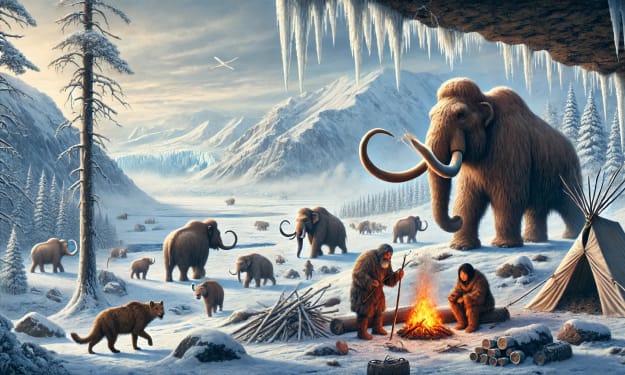
When we hear "Ice Age," many of us imagine a frozen planet in an eternal winter, where humans huddle in shelters, and mammoths and saber-tooth tigers roam vast icy landscapes. However, this idea isn't entirely accurate. Let’s dive into what the Ice Age really was, how long it lasted, and whether we might be heading for another one. First, it's important to clarify that there wasn’t just one Ice Age. Earth has experienced at least five major ice ages. The first occurred between 2.4 and 2.1 billion years ago, while the most recent began 2.6 million years ago and lasted until about 11,500 years ago. Some scientists even argue that we’re still in an Ice Age. Why? Because Earth continues to experience warm and cold phases, and the planet hasn’t fully reverted to a non-glacial state. An Ice Age consists of two main stages. The **glacial period**, or the colder phase, is when global temperatures drop, glaciers expand, and sea levels fall as water becomes locked in massive ice sheets. During the last glaciation, ice covered large parts of Canada, Greenland, Scandinavia, Eurasia, and even parts of South America. Despite this, not the entire planet froze. Even during the coldest periods, regions like Africa and the tropics remained relatively warm, though temperatures there were about 10°F cooler than today. For example, if modern-day Africa averages 77°F, it would have been closer to 67°F during the Ice Age—chilly but livable. Humans were already around during the last Ice Age. Early Homo sapiens, along with other human species, lived primarily in Africa. Around 2 million years ago, some groups began migrating to colder climates, including Europe and Scandinavia. These regions could be harsh, with average annual temperatures in places like Germany dropping to 32°F, similar to modern-day Iceland. Yet humans not only survived—they thrived. The colder climate encouraged innovation. Humans began sewing clothes to keep warm, developing tools for hunting, and building shelters. Hunting required strategic thinking, which spurred the development of intelligence. Survival became a mental exercise, and this necessity likely accelerated human advancement. During the Ice Age, humans hunted animals that were well-adapted to the cold. Mammoths, for instance, were covered in thick fur, providing excellent material for clothing. Their bones were used for construction, and their meat was a vital food source. Mammoths survived harsh conditions thanks to stored fat reserves that sustained them during times of scarcity. Other animals included saber-tooth cats, which were fearsome predators, and giant ground sloths, towering up to 12 feet tall. Interestingly, many Ice Age animals were much larger than their modern counterparts, a phenomenon linked to evolutionary adaptations before the Ice Age. The end of the Ice Age brought significant changes. As glaciers melted, water trapped in ice caps was released, causing sea levels to rise dramatically—by as much as 400 feet in some cases. Land that was once exposed became submerged. This transition marked the beginning of the **interglacial period**, a warmer phase that started around 11,500 years ago. Some scientists believe we’re still in this period today. The interglacial phase follows a natural cycle triggered by solar radiation, which warms the Earth. Melting glaciers release carbon dioxide (CO2), further accelerating the warming process. While this cycle has occurred for millions of years, human activities in the last 150 years—such as industrialization and deforestation—have amplified the warming trend, leading to climate change concerns. In conclusion, the Ice Age wasn’t a time of unrelenting cold and snowball Earth scenarios. Instead, it was a complex era with fluctuating temperatures, thriving human communities, and giant animals. As Earth continues to warm, we might be witnessing the final stages of the most recent Ice Age—a reminder of the planet's ever-changing climate.
By Nora Ariana2 years ago in Earth
The Quantum Divide
Chapter 1: The Rise of NeuroLink In 2050, the world was no longer divided by borders but by access to technology. At the heart of this divide was NeuroLink, a groundbreaking quantum neural interface that connected human consciousness to an ever-evolving AI ecosystem. Developed by SynerTech Corp, it promised to revolutionize humanity, allowing people to work, learn, and live through an augmented reality overlay.
By Mirhadi Tahsin2 years ago in Earth
The Panama City Beach . AI-Generated.
Panama City, Florida, has officially declared a local state of emergency following an unusual winter weather system that brought snow to the panhandle. The declaration, announced on the evening of January 21, 2025, underscores the serious impact of Winter Weather System Enzo on the region. The storm's rare snow event, coupled with its potential risks to people and property, has prompted city officials to take swift action.
By Tanushree Das2 years ago in Earth
The True Story of the Ice Age: Earth's Frozen Past and the Rise of Humanity
The term "Ice Age" often conjures up images of an entirely frozen Earth, where humans huddle in shelters while mammoths and saber-tooth tigers roam in search of food. You might even picture a crazed squirrel looking for its prized nut, but let’s step away from these dramatic depictions and explore what the Ice Age really was like. While we often refer to "the Ice Age," the reality is that there have been multiple Ice Ages throughout Earth’s history—at least five. The first Ice Age occurred between 2.4 and 2.1 billion years ago, while the most recent one spanned from 2.6 million years ago to about 11,500 years ago. Some even argue that we are still living in an Ice Age today, though with much warmer conditions. To understand the true nature of the Ice Age, it’s essential to break it down into two key stages. The first, the glacial period, is marked by a significant drop in temperature, which causes glaciers to form across the planet. During these times, the climate becomes cooler and drier, causing sea levels to drop. Water freezes into massive ice caps and stays trapped within them, which leads to a drop in sea levels of up to 400 feet—about the height of a 12-story building. Glaciers grow and spread over vast expanses of the Earth’s surface. During the most recent glaciation, ice sheets expanded across Canada, Greenland, Scandinavia, Eurasia, and even South America. However, the entire planet didn’t become a frozen wasteland. While colder regions like modern-day Canada and Scandinavia saw extreme drops in temperature, there were still warmer areas. The tropics and Africa were about 10°F colder than they are today, but still far from freezing. What’s fascinating is that despite these chilly conditions, humans were already living in these areas by the time the last Ice Age began. Early humans, including Homo sapiens, had already populated Africa for millions of years. As the glaciation set in, they began migrating beyond their warm homeland. Humans ventured into Europe, Asia, and even into areas where the temperature could plummet. For example, Germany’s average temperature today is around 46°F, but during the Ice Age, it hovered around 32°F—roughly the same as modern-day Iceland. Despite these cold temperatures, humans adapted. The harsh environment pushed early humans to innovate and evolve. They invented tools, developed new hunting strategies, and began wearing clothing to protect themselves from the cold. They started using animal skins to make warm clothing, and their need for food drove them to develop more sophisticated methods of hunting. One of the most iconic animals of the Ice Age was the mammoth. These giant creatures, which appeared around 300,000 years ago, roamed the Earth until about 10,000 years ago. Mammoths were well-suited to the cold, with thick fur coats and fat reserves to help them survive when food was scarce. They were primarily herbivores, feeding on grass and leaves, which were hard to find during the Ice Age. Despite this, mammoths had fat reserves that helped them weather lean periods. Other animals, like the saber-tooth cat, also roamed the Earth during the Ice Age. These large predators were a threat to early humans, but humans adapted and learned how to outsmart them. The extinction of many Ice Age creatures is largely attributed to the warming of the planet and hunting pressures from early humans. In addition to mammoths and saber-tooths, there were other giant creatures, such as the giant sloth, which stood about 12 feet tall. These creatures, along with giant beavers that grew to nearly human size, are reminders of the larger animals that once dominated the planet. However, as temperatures began to rise and conditions became more hospitable, many of these large species could no longer survive. The warming that followed the Ice Age is called the interglacial period. This phase occurs when temperatures rise, and glaciers begin to melt. As ice sheets retreat, the sea levels rise, flooding land that was previously exposed during the glacial period. Scientists believe that the most recent interglacial period began about 11,500 years ago, though some argue that this transition is still ongoing. This gradual warming is a natural process that follows every major Ice Age, driven by changes in Earth’s orbit and the amount of solar radiation reaching the planet. The warming triggers the release of carbon dioxide trapped in the oceans, which further accelerates the warming process. While this warming trend is natural, human activities over the past 150 years have significantly sped it up, contributing to the climate change we are experiencing today. So, while the Earth didn’t plunge into an eternal winter as often depicted in movies, the Ice Age was a time of dramatic changes in climate and ecosystems. Humanity survived and even thrived in these cold conditions, adapting to a world where the temperature could fluctuate wildly and glaciers could cover vast portions of the land. In conclusion, the Ice Age was far more complex and nuanced than the typical image of a frozen Earth. There were warmer regions, cooler temperatures, and a constant shift between glacial and interglacial periods. While we are no longer in a true Ice Age, the planet's climate cycles have always been in flux, and the possibility of another ice age remains, though it seems distant. What we do know is that humanity’s resilience and adaptability have played a key role in our survival and evolution through this ever-changing planet.
By Nora Ariana2 years ago in Earth
Yellowstone’s Supervolcano: A Sleeping Giant or a Looming Catastrophe
One day, the peaceful grasslands began to tremble as the ground cracked open, releasing thick clouds of volcanic gas and ash into the sky. Lava flowed swiftly down the hills, consuming everything in its path. In a matter of moments, black volcanic glass began raining down, destroying plants and animals. The landscape caved in, creating giant pits filled with red-hot magma. Recently, strange changes in Yellowstone Lake have been noticed. Water levels have fluctuated in different parts of the lake, with one side rising and the other falling at the same time. It looks as if underground forces are lifting the lake basin. Is this a warning of an impending disaster? Could Yellowstone's supervolcano be gearing up for another eruption? Yellowstone National Park is home to some of the most unique geothermal features in the world, from geysers to hot springs, all powered by a massive supervolcano. Supervolcanoes are capable of causing catastrophic eruptions when they erupt, releasing vast amounts of molten rock, ash, and gases into the atmosphere. A single eruption can release over 240 cubic miles of volcanic material — enough to fill the Grand Canyon several times. These supervolcanoes form when large amounts of magma build up beneath the Earth's crust. The magma becomes pressurized and eventually breaks through, resulting in an eruption. However, sometimes the magma doesn't escape and instead gathers in large underground pools, which increases the pressure even more until an eruption becomes inevitable. Yellowstone has experienced at least three super eruptions in the past: 2.1 million, 1.3 million, and 640,000 years ago. The most recent eruption, known as the Lava Creek eruption, created the Yellowstone caldera. It was so powerful that it released 240 cubic miles of volcanic ash, dust, and rock into the air. If Yellowstone were to erupt today with the same intensity as its previous eruptions, it could spew out enough lava to fill Sydney Harbor 4,500 times. Despite the potential devastation, scientists believe the chance of another eruption at Yellowstone is extremely low. Over the last three million years, the frequency of these super eruptions has decreased significantly. Experts once thought there was a super eruption about every 500,000 years, but now they believe that number may be much lower. So, is another eruption on the horizon? If it were to happen, it would be catastrophic. A column of lava, ash, and gas would shoot up into the atmosphere, potentially reaching heights of over 16 miles. The eruption could continue for days, with clouds of ash moving at speeds of up to 300 miles per hour. The temperatures near the eruption would be incredibly hot — up to 570°F. If ash were to reach the stratosphere, it could cause global temperatures to drop significantly, possibly leading to years without summer and agricultural disruptions worldwide. However, the good news is that current research shows the Yellowstone supervolcano isn't likely to erupt anytime soon. For an eruption to occur, the magma beneath Yellowstone would need to be at least 50% molten, but scientists believe it's currently only 5-15% molten. This makes the probability of an eruption extremely low — roughly 1 in 730,000. This is similar to the chance of a large asteroid hitting Earth. Some have proposed solutions to prevent a potential eruption, such as cooling the supervolcano by extracting heat from the magma beneath it. The idea is to drill deep wells and pump cold water into the magma chamber, which would gradually cool the magma and prevent an eruption. However, there are significant risks involved in such a project. If the drilling accidentally hits the magma chamber, it could cause the magma to become more fragile, potentially triggering an eruption. There's also the risk of releasing toxic gases that have accumulated in the magma chamber, which could cause dangerous explosions. Moreover, the process would take thousands of years, and scientists are not confident that it would prevent future eruptions. Even if the cooling project succeeded, there’s no guarantee that the volcano would remain dormant for more than 100 years. Yellowstone isn’t the only supervolcano on Earth. Others include Long Valley in California, the Atana Ignimbrite in Chile, and Toba in Indonesia. While the threat of an eruption is low, the potential consequences of one are so severe that scientists continue to monitor these supervolcanoes closely. In conclusion, while Yellowstone’s supervolcano is an active threat, the likelihood of a major eruption in the near future is minimal. The recent changes in the water levels of Yellowstone Lake are interesting, but they do not necessarily indicate an imminent disaster. Regardless, scientists continue to study the region and explore ways to mitigate the risks of a potential eruption. For now, the supervolcano remains dormant, but its power is ever-present, lurking beneath the surface.
By Nora Ariana2 years ago in Earth