Advocacy
When the Guadalupe Roared—and the Rumors of “Weather Editing” That Followed
On July 4, 2025, Central Texas residents expecting typical Independence Day river relays were met instead with a scene of raw power and devastation. A series of slow-moving storm cells dumped between 5 and 10 inches of rain over the upper Guadalupe watershed in under six hours. The normally placid Guadalupe River rose from near-normal to more than 12 feet at Comfort—well above major-flood stage—sweeping away picnic tables, riverfront cabins and, tragically, claiming two lives. As floodwaters receded and communities rallied to rebuild, a persistent current of speculation emerged: Was this disaster “natural,” or the product of clandestine weather-editing programs?
By Briar Roseabout a year ago in Earth
Earth Speaks: The Untold Story of Our Living Planet
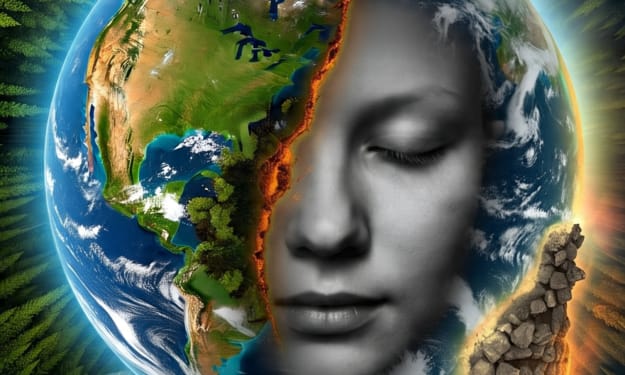
If Earth could speak, its voice might be slow and deep, echoing across valleys and mountains, whispering through leaves and crashing in waves. For 4.5 billion years, it has spun silently through space, bearing witness to cosmic chaos, violent eruptions, mass extinctions, and the rise of an intelligent species—us. Yet Earth is not just a rock hurtling around the sun. It is alive in ways we are only beginning to understand. Its crust shifts and sighs through tectonic plates, its atmosphere breathes with the rhythms of seasons, and its ecosystems are intricate symphonies of life and death. When we pause and listen, Earth speaks—not in words, but in signs, patterns, and warnings. The Ancient Birth of a Blue Planet Long before there was life, Earth was forged from cosmic dust and fire. Volcanic storms raged, seas of lava hardened into crust, and gases formed an atmosphere. Then came a miraculous twist—water. Comets and early volcanic activity may have delivered this precious substance, forming the oceans that would become the cradle of life. Somewhere in those primordial waters, life sparked. Tiny microbes emerged, eventually giving rise to all living things. Earth watched silently as fish took to the seas, plants to the land, and dinosaurs thundered across continents. And then—humans arrived. Humanity: Earth’s Most Talkative Species For the first 99% of our history, we lived in balance with nature. We hunted, gathered, and told stories by firelight. But in the last few centuries, something changed. We industrialized. We burned coal, then oil, then forests. We built cities that never sleep and machines that never stop. Earth began to speak louder. Through rising temperatures, melting glaciers, and increasingly violent storms, the planet now sends unmistakable signals. The last eight years have been the hottest on record. Wildfires burn longer, oceans rise faster, and species vanish at rates not seen since the dinosaurs disappeared. Scientists call this the Anthropocene—the age in which human activity is the dominant influence on climate and the environment. But to Earth, this age might feel like a fever, a disturbance in its otherwise slow, evolutionary pulse. Nature’s Resilience and Fragility Despite this, Earth is not helpless. Forests still breathe in carbon and release oxygen. Wetlands purify water. Coral reefs, though threatened, support more marine life than any other habitat on Earth. But these systems are not infinite. Like any living organism, the planet has limits. When pushed too far, it breaks down. Consider the Amazon rainforest. Often called the “lungs of the Earth,” it absorbs billions of tons of carbon dioxide. Yet deforestation and climate change threaten to turn parts of it into dry savannah, a shift that could release more carbon than it absorbs. Or the polar ice caps—white mirrors that reflect sunlight and help regulate global temperature. As they melt, darker ocean water absorbs more heat, accelerating warming. This feedback loop is Earth’s way of shouting, “Something is wrong.” Listening to Earth, Before It’s Too Late We are the only species capable of understanding these messages—and the only one with the tools to change course. Renewable energy, sustainable agriculture, conservation efforts, and reforestation all offer hope. Already, nations are rethinking how we live and grow. Individuals are making conscious choices, from reducing waste to protecting biodiversity. But time is limited. Scientists warn we have less than a decade to make profound changes before the damage becomes irreversible. The clock is ticking, not for the planet—which will eventually recover—but for the ecosystems and civilizations we’ve built. Earth Is Not Asking Us to Save It Here’s the truth: Earth doesn’t need saving. It has endured asteroid impacts, ice ages, and extinction events. What it needs is respect—and action. We must stop treating nature as a resource to be exploited and start seeing it as a partner in our survival. In the quiet of a forest, the roar of a storm, or the whisper of the wind across a field, Earth speaks. Are we listening? Perhaps the most powerful thing we can do is remember this: We are not separate from the Earth. We are Earth. Every breath we take, every meal we eat, every drop we drink is a gift from this living planet. To protect it is to protect ourselves. So let this be more than a story. Let it be a call to listen—and to act—before Earth’s voice becomes a cry we can no longer answer.
By Muhammad Saad about a year ago in Earth
The essential components of life may have always been present on Earth.
What was the origin of life on Earth? That has been a long-standing question. The solutions are still strewn across rocks, seas, and prehistoric terrain. One hint can be found in phosphorus, a necessary component of life.
By Francis Damiabout a year ago in Earth
Earth: The Living Puzzle
From space, Earth looks like a marble — blue, green, and white, suspended in the black canvas of the universe. But beneath its beauty lies a complex, living system—an ancient puzzle still being assembled piece by piece. Scientists, explorers, and thinkers across time have tried to decipher it. And now, more than ever, that puzzle demands our attention. The Puzzle of the Past Earth is over 4.5 billion years old. Its surface has been shaped and reshaped by fire, ice, water, and life itself. The continents we know today were once part of a single supercontinent called Pangaea. It broke apart, drifted, and gave birth to the landmasses we now call home. Fossils, like time-stamped puzzle pieces, reveal ancient oceans, vanished species, and catastrophic events. The extinction of the dinosaurs, for instance, was caused by an asteroid that struck with the force of billions of atomic bombs. That single impact reshaped Earth’s biological path—and made room for mammals, and eventually humans, to rise. Each layer of rock tells a story. Each ice core drilled from Antarctica holds frozen bubbles of ancient air, allowing scientists to “read” Earth’s climate over hundreds of thousands of years. The planet keeps records, even if we don’t always know how to interpret them yet. The Present We Inhabit Today, Earth is a masterpiece of balance—one that supports nearly 9 million species, with humans playing the most dominant role. But our presence is starting to warp the puzzle. Since the Industrial Revolution, our use of fossil fuels has sent vast amounts of carbon dioxide into the atmosphere, trapping heat and warming the planet. Glaciers are melting. Sea levels are rising. Coral reefs, once vibrant underwater cities, are bleaching and dying. Weather patterns are growing more extreme, from hurricanes in the Atlantic to wildfires in the Arctic. At the same time, Earth’s biodiversity—the rich tapestry of life—is unraveling. Species are disappearing at a rate 1,000 times the natural background rate. This isn’t just a tragedy for wildlife. Every lost species is a missing piece in ecosystems that provide us with clean air, water, and food. Yet Earth remains resilient. Forests still breathe. Rivers still run. Migrating birds still trace invisible sky-paths mapped over millennia. The planet is not giving up—it’s waiting for us to listen. The Fragile Future The puzzle of Earth’s future is the most uncertain of all. Will we continue to take more than we give? Or will we learn to live in harmony with the only home we’ve ever known? Solutions exist. Renewable energy like solar and wind can replace dirty fuels. Cities can be redesigned to be green, walkable, and sustainable. Agriculture can be transformed to regenerate soil and protect pollinators. Most importantly, our relationship with nature can shift—from one of domination to one of stewardship. Young people around the world are already stepping up. Movements like Fridays for Future and Earth Guardians are led by youth who understand what’s at stake. Scientists are developing carbon-capture technology, reviving endangered species, and restoring damaged ecosystems. Indigenous communities, who have long lived in balance with the land, offer ancient wisdom for modern problems. But change must come quickly. The next ten years will shape the next thousand. If we delay, the cost will be measured not just in dollars—but in lives, livelihoods, and lost potential. One Planet, One Chance In a way, Earth itself is the greatest puzzle ever created—self-sustaining, interconnected, and endlessly fascinating. Every rainforest, glacier, desert, and deep-sea trench is a piece. So are we. We are not separate from this planet. We are made of it. The calcium in our bones came from ancient stars. The water in our cells has flowed through rivers and clouds for millions of years. When we protect the Earth, we protect ourselves. As we look forward, let’s stop treating Earth like a resource and start treating it like a relative—an elder whose stories we must learn, honor, and pass down. Because the puzzle is still being built. And we still have time to finish it—together. --- Author's Note: Our planet doesn’t need us—but we absolutely need it. Earth: The Living Puzzle is a reminder that science, history, and hope are all connected. Every small action counts. And every one of us is a piece that matters.
By Muhammad Saad about a year ago in Earth
"The Hidden Life of Your Money"
Most people don’t think much about what happens to their money after they spend it. They swipe a card or hand over a bill, get a receipt, and move on. But if your dollar could talk, it would tell a story more exciting and far-reaching than you'd expect. Let’s follow one ordinary dollar — call it “Buck” — and see where it goes. --- Chapter 1: The Coffee Shop It’s Monday morning. You’re groggy and running late, so you grab your usual $5 latte from the local coffee shop. Part of that money — let’s say Buck — goes straight into the register. The rest? Tips, supplies, and expenses. But Buck? Buck ends up in the hands of the cashier, Sarah, who’s working her way through college. At the end of her shift, Sarah pockets her tips and heads to the grocery store. Buck is now part of her $20 purchase — apples, pasta, and some cheap granola bars. Just like that, Buck changes hands again, now owned by the supermarket. --- Chapter 2: The Supply Chain At the supermarket, Buck is added to the daily cash flow that helps pay for deliveries and electricity. When the store buys more stock from its wholesaler, Buck becomes part of a larger transaction that supports truck drivers, warehouse staff, and suppliers across the country. Eventually, Buck trickles down to a farmer in California, who grows the apples you love. That dollar may help him fix a broken irrigation pipe or buy seeds for the next planting season. It’s no longer just “your dollar” — it’s fuel for an entire network. --- Chapter 3: The Bank Not all money moves physically. Often, it rests — temporarily — in banks. Let’s rewind. When you got paid last week, your paycheck was direct-deposited into your account. That money didn’t just sit there. Your bank lent it out — to someone applying for a mortgage, to a small business needing startup capital, or even to fund government bonds. Every dollar you save becomes part of the financial system that drives investment and growth. Buck, in the form of electronic digits, may have helped someone buy their first home or fund a medical clinic in a developing country. That’s the hidden power of saving — your money can work for you and others, even when you’re not spending it. --- Chapter 4: The Dark Side But not every journey is bright. Sometimes, Buck finds itself in less noble places: fueling fast fashion made in sweatshops, supporting companies that exploit workers or damage the environment, or lost to high-interest debt that keeps families struggling for years. Where you spend and how you invest can unintentionally support practices that don’t align with your values. For example, using a credit card irresponsibly can bury someone in interest payments — $1 spent turns into $3 repaid over time. That’s not just expensive. It’s dangerous. Buck becomes a burden when it’s not treated with respect. --- Chapter 5: The Bigger Picture Now let’s zoom out. If millions of people spend and invest consciously — choosing local businesses, ethical companies, sustainable products — the ripple effect can be massive. A dollar might help a small café survive a recession. Another could support clean energy. Another could educate a girl halfway across the globe. When you save, you create security for yourself. When you spend thoughtfully, you influence the world. Money is not just a tool; it’s a vote for the kind of future you want. And it all starts with Buck — and all his little friends. --- Epilogue: The Choice Is Yours Most people see money as either a source of stress or freedom. In truth, it’s both — depending on how you use it. So next time you reach into your wallet, take a second to ask yourself: Where will my dollar go next? What kind of story will it tell? Because every Buck has a journey. And you are its guide. --- Key Takeaways: Every dollar you spend has a ripple effect. Your money supports jobs, businesses, and industries — for better or worse. Saving and investing wisely can help others. Banks and institutions use your money to fund loans and growth. Your financial choices shape your life and the world. Being intentional can align your spending with your values. Even small amounts add up. Don’t underestimate the power of just one dollar.
By Muhammad Saad about a year ago in Earth
Earth: The Home We Share
Long before humans walked its lands or gazed up at the stars, Earth spun silently in the blackness of space. A pale blue sphere cloaked in clouds, it was already teeming with life — from the tiniest microbes deep in the ocean to towering trees that stretched toward the sky. Earth is unlike any other planet we know. It breathes. It moves. It evolves. And more than anything else, it supports life — something no other place in the vastness of space has been proven to do. From space, Earth looks peaceful. But on its surface, it's a planet of constant motion. The crust cracks and shifts with earthquakes. Volcanoes erupt, sending ash high into the atmosphere. Rivers carve new paths through valleys. Rainforests breathe in carbon and breathe out oxygen, playing a vital role in Earth's balance. Every part of Earth works together in a delicate system. The oceans regulate temperature. The atmosphere protects us from harmful radiation and helps trap warmth from the Sun, creating climates where life can thrive. Plants, animals, and even the tiniest organisms play their part in keeping ecosystems healthy. But for all its beauty and balance, Earth is also fragile. Over the last few centuries, human activity has begun to upset that natural balance. We've burned forests for farmland, extracted fuels from deep underground, and filled the sky with gases that trap too much heat. Cities grow rapidly, seas rise slowly, and species disappear silently. Climate change is not just about warmer summers. It's about stronger storms, shifting seasons, and changes to the water, air, and food that all life depends on. Glaciers are melting at alarming rates. Coral reefs — some of the richest ecosystems on Earth — are bleaching and dying. Wildfires rage across forests that once stood undisturbed for centuries. But this story is not just one of crisis. It's also one of awareness, action, and hope. Across the world, people are waking up to the reality that Earth needs care — just as it has always cared for us. Children are planting trees and picking up trash from beaches. Scientists are inventing cleaner ways to power homes and cars. Countries are making promises to protect forests, reduce pollution, and shift to renewable energy. And perhaps most importantly, people are beginning to see themselves not as rulers of Earth, but as part of it. After all, the air we breathe today may have once passed through the lungs of ancient trees. The water we drink has cycled through rivers, clouds, and glaciers for millions of years. The minerals in our bones come from ancient rocks, formed when Earth was young. Everything is connected. And in that connection lies our greatest strength. Earth has faced great challenges before — from asteroid impacts to ice ages — and each time, life found a way to adapt and continue. Now, it's our turn to adapt, to protect, and to help our planet heal. Imagine a future where cities are filled with green spaces, where animals roam freely in protected habitats, and where clean air and water are rights for all. That future is possible — if we choose to act now. As we look up at the stars and dream of distant planets, we must remember that Earth is still our only home. It's where every story has begun — from the first cell to the first civilization. It's the ground beneath our feet and the sky above our heads. And it’s the only place, in all the known universe, where you can stand on a beach and feel the wind on your face, hear the rustle of trees, or watch a sunrise light up the world. Earth doesn’t ask much from us — only that we treat it with care. That we listen to its rhythms. That we respect its limits. And that we remember, always, that we are part of something far bigger than ourselves. Because in the end, the story of Earth is the story of us all. And it's a story worth protecting.
By Muhammad Saad about a year ago in Earth
"Beneath the Surface: How Climate Change is Reshaping Coastal Communities"
The ocean used to be ten steps from Maria Lopez’s front porch. Now it’s two. When the tide is high, it licks at the concrete foundation of her home in Isle de San Marcos, a small fishing village off the Gulf Coast. Sandbags surround the base of her house like a protective wall, though Maria knows they won’t hold forever. “Our lives are changing faster than we can adapt,” she says, her eyes scanning the horizon, where the sea glitters beneath a low, humid sky. Maria’s story is not unique. Across the globe, coastal communities like hers are facing the increasingly harsh reality of climate change. Rising sea levels, stronger storms, and coastal erosion are not distant threats—they're here, now, washing away land and livelihoods inch by inch. According to data from the Intergovernmental Panel on Climate Change (IPCC), global sea levels have risen by more than 8 inches (21 cm) since 1900. The rate of rise has more than doubled in the past three decades. For communities situated just a few feet above sea level, every inch counts. In the U.S. alone, over 40% of the population lives in coastal areas, and many are now on the front lines of climate-induced displacement. In San Marcos, the once-bustling main street is now a ghost town. Storefronts stand empty, their doors warped from flood damage. The school relocated inland last year after repeated closures due to mold and water damage. The local fishing industry, the community’s economic lifeblood, has been devastated by saltwater intrusion and changing fish migration patterns. “The ocean used to feed us. Now it threatens to swallow us whole,” says Mateo Cruz, a third-generation fisherman who now supplements his income by working part-time in construction. “We used to talk about hurricanes like they were rare. Now, we brace for one every season.” Climate scientists say this is the new normal. Warmer oceans fuel stronger storms, and melting glaciers and polar ice caps accelerate sea level rise. But while the science is clear, the solutions are complex—especially for small or economically vulnerable communities. Some towns have begun “managed retreats,” relocating entire neighborhoods away from the coast. Others are investing in sea walls, elevated homes, or artificial reefs to slow erosion. But these efforts require money, planning, and often political will—things not all communities have in abundance. “We don’t have the resources to move, and we don’t have the luxury to wait,” Maria explains. “We’re stuck trying to survive, day by day.” Despite the dire situation, hope persists. Grassroots groups in San Marcos have organized clean-up drives, lobbied for funding, and educated residents on climate resilience. Renewable energy initiatives, such as solar panel installations and wind turbines, have started to replace aging infrastructure. In schools, students learn not just about climate science, but also about adaptation, sustainability, and advocacy. One such student is 14-year-old Luz, Maria’s granddaughter. “We can’t undo what’s already happening,” Luz says, “but we can stop it from getting worse. I want to be a marine biologist so I can help save the ocean—and our home.” Stories like Luz’s show the power of community in the face of adversity. But experts warn that local action, while vital, must be matched by global policy changes. Emissions reduction, sustainable development, and climate justice must all work together to slow the tide—both literally and figuratively. Dr. Anika Rehman, a coastal climate researcher, emphasizes that while the problem may feel distant to some, it is interconnected with global systems. “When one community suffers, it creates ripples,” she says. “Displacement leads to migration, which can lead to economic strain, political tension, and social upheaval. Addressing climate change is not charity—it’s self-preservation.” Back in San Marcos, the sun sets over the water as Maria and Luz stack the last of the sandbags for the evening. In the fading light, the ocean seems calm. But beneath the surface, the currents of change move steadily onward. “Maybe we can’t fight the ocean,” Maria says, “but we can learn to live with it—if the world helps us.”
By Muhammad Saad about a year ago in Earth
The Great Oxygenation Event
The Great Oxygenation Event: When Earth's Atmosphere Changed Forever Imagine standing on the surface of the Earth over 2.5 billion years ago. The sky above you isn’t blue — it’s more likely a hazy shade of orange or even green, thick with methane and carbon dioxide. The oceans are vast and teeming with microbial life, but there’s no lush greenery, no fish, no birds, and certainly no humans. In fact, in this ancient world, oxygen — the very gas that powers our breathing — is barely present at all.
By Jeno Treshan about a year ago in Earth
The Day I Almost Gave Up on Life
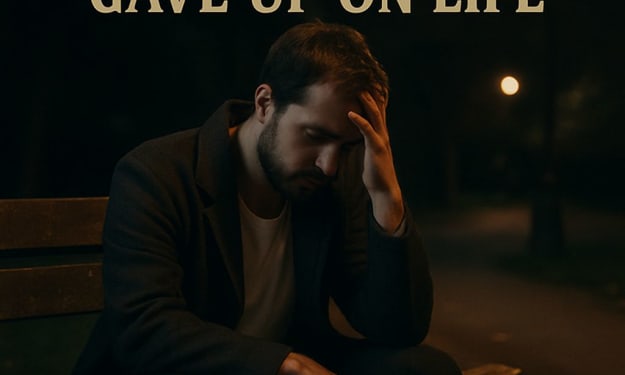
Iever thought I'd see myself at the edge — not the metaphorical one, but a very real edge of a rooftop, staring into the emptiness below. It was a cold evening in January, the sky was a dull gray, and the city lights blinked like indifferent eyes in the distance. Everything felt quiet, almost too quiet. That silence screamed louder than any noise I'd ever heard.
By Noor Hussainabout a year ago in Earth
Are There Other Realities?
There are many different realities, but we are too blind to see that. There is not just one way; there have always been an infinite amount of alternate realities to every reality there is out there. If I think on it that way, then I wonder what is real? Is it real because we see it? I don't think so. I don't think we have to see it to believe that it's real. I think it exists, whether or not we see it or believe it. Those realities are right there, happening at the same time that our reality is happening, and so on and so on.
By Slgtlyscatt3redabout a year ago in Earth
"Whispers of the Wild: The Boy and the Lion"
The wind carried secrets in the savannah—soft murmurs only the truly silent could hear. Kito, a boy no older than ten, was one such listener. With no family left, he wandered the golden plains alone, speaking little, but hearing everything—the rustle of grass, the language of birds, the distant rumble of thunder. He understood the wild, not with words, but with heartbeats. The villagers called him strange and cursed. They said he’d been raised by ghosts after his parents vanished in a fire. Kito never denied it. He only wandered farther, away from the huts and toward the sunlit horizon, where the grass whispered stories older than man. One evening, as the sky bled gold and crimson, Kito found himself near the Great Rock—a massive outcrop said to be sacred. There, lying in the shade like a fallen king, was a lion. Massive. Silent. Watching. Most boys would have run. Kito didn’t. His heart beat fast, but not with fear—with recognition. The lion was old. Not in years, but in eyes. It stared at Kito as if it knew him. Slowly, the boy sat down on the opposite side of the rock, the lion just a few paces away. They watched the sun sink together, neither moving. Night fell, stars blinking awake. The lion didn’t leave. Nor did Kito. By morning, something had changed. The lion stood, stretched with lazy power, and approached. Kito stayed still. The lion sniffed him, then lay down beside him, its flank warm and rising with deep, calm breaths. From that day on, they were never apart. The villagers saw them—boy and beast—moving as one through the tall grasses. They whispered louder now. Some feared Kito. Others respected him. But no one dared follow. The boy and the lion shared everything: silence, shade, rainstorms, and dreams. At night, Kito would rest against the lion’s side, listening to the slow, steady drum of its heart. In sleep, he dreamed of running on four legs, of roaring into the sky, of ancient battles and forgotten lands. The lion, he knew, dreamed too. One season passed. Then another. One evening, the lion did not rise. Its breaths were slower. Shallower. Kito sat beside it, stroking its fur, tears streaking silent paths down his dusty cheeks. The lion looked at him one last time. Its golden eyes held no fear. Only peace. Trust. And something more—memory. In that gaze, Kito saw his parents, their laughter around the fire, the way they danced when the rains came. He saw the fire that took them, and the lion—this very lion—dragging him from the flames, cradling him beneath its body as the world burned. The whispers of the wild had not lied. The lion had been watching over him all along. As the sun dipped below the horizon, the lion closed its eyes. Kito lay beside it, his small hand resting over its massive paw. And for a long time, the savannah was silent. When the villagers came days later, they found the boy alone beside the still lion. He did not speak. He didn’t need to. They buried the lion beneath the Great Rock. Kito carved a lion’s head into the stone with his father’s old knife—he’d carried it all these years without knowing why. The boy grew older. Taller. Quieter. And when people came to the edge of the wild, looking for guidance, they found him there, standing barefoot in the grass, his eyes sharp, calm, and golden. They say he still walks the savannah, not quite boy, not quite man. And sometimes, when the wind is right, you can hear a low rumble—like a lion’s purr—and a whisper that carries across the plains. It says: “He listens.”
By Muhammad Saad about a year ago in Earth
Why Dandelions Deserve Love?
Dandelion. A well-known plant. But, it sure is more than that. Let's see what this humble plant has to offer. Flower: The name dandelion conjures up image of meadow with yellow dainty flowers. Its pretty delightful view. Bees gather nectar from them. People soak the flowers in oil, and make salve out of them. Some of them make dandelion flower jelly, syrup, cupcake, waffles, fritters.
By Seema Patelabout a year ago in Earth