Advocacy
Earth: The Living Planet
Unveiling the Wonders, Challenges, and Future of Our Only Home From the silent depths of the Mariana Trench to the swirling auroras dancing over the Arctic sky, Earth pulses with life. It is not just a rock drifting through space—it breathes, grows, and evolves. It is our home, and for now, the only one we know that harbors life. For billions of years, Earth has been shaped by forces seen and unseen. Volcanoes forged continents, glaciers carved valleys, and oceans teemed with the first stirrings of life. From single-celled organisms came coral reefs, rainforests, birds, and eventually, us—human beings, capable of shaping the world as no species before. Earth’s wonders are everywhere. In the heart of the Amazon, trees rise like green cathedrals, each leaf a factory of oxygen. In the Sahara, sand dunes whisper the ancient history of a once-lush land. Beneath Antarctic ice, microbes thrive in subglacial lakes, hinting at the possibility of life beyond our planet. Every biome, every ecosystem, is a chapter in the grand story of life on Earth. Yet, the deeper we explore Earth’s beauty, the more we uncover its fragility. The living planet is under strain. Over the last century, human activity has altered Earth at an unprecedented rate. Forests vanish to make way for cities and crops. Rivers are dammed, oceans are overfished, and species disappear before they are even discovered. Climate change, driven by fossil fuel emissions, melts glaciers and intensifies storms. The balance that allowed civilizations to flourish is shifting. The challenges are complex. Rising sea levels threaten to swallow coastal cities. Air pollution chokes urban centers. Plastic waste litters the remotest islands. Even the planet’s rhythms—its seasons, currents, and jet streams—are being disrupted. But the story does not end in despair. Earth is resilient, and so are we. Across the globe, people are rising to meet these challenges. Solar panels shimmer on rooftops where coal once reigned. Rivers long considered dead flow clean again. Endangered species, like the California condor and the giant panda, are making slow comebacks thanks to conservation efforts. Science and technology are part of the solution, but so is something more ancient—connection. Indigenous communities have long known that humans are not separate from nature but a part of it. Their traditions offer valuable lessons in sustainability and stewardship. Young people, too, are refusing to accept a dying planet. They organize, march, and innovate—building a movement that spans continents and generations. For many, climate action is not just about protecting nature; it's about justice, equity, and the right to a livable future. Looking forward, Earth’s fate is not sealed—it is still being written. The choices we make today will echo for centuries. Will we continue to mine and burn, or will we heal and restore? Will we see ourselves as masters of nature, or as caretakers of it? There is hope in reimagining our relationship with the planet. Cities can become green and breathable, powered by wind and sun. Farms can feed us without destroying soil or water. Oceans can be protected to replenish fish stocks and coral reefs. Forests can regrow where chainsaws once roared. The path is not easy, but it is possible. We have the knowledge, the tools, and, increasingly, the will. Earth has given us everything—air to breathe, water to drink, beauty to inspire. It asks for care in return. Not just for its sake, but for ours. As we unveil its wonders, confront its challenges, and imagine its future, we must remember one truth above all: there is no Planet B. Earth is irreplaceable. It is alive, dynamic, and breathtaking. And it is our only home.
By Muhammad Saad about a year ago in Earth
Martyrdom of Jawad Musa Leads to Guardianship Distribution for Gaza's Children
Chapter 1: The Dawn of Sacrifice The first light of dawn crept over Gaza, painting the rubble-strewn streets in hues of gold and ash. The air was thick with the scent of smoke and the distant echoes of artillery. In a small, bomb-battered home near the outskirts of the city, Jawad Musa tightened the straps of his medical vest, his fingers trembling not from fear, but from resolve. His wife, Amina, clutched their three-year-old daughter, Layla, to her chest, her eyes glistening with unshed tears.
By Ainullah sazoabout a year ago in Earth
Why We Need More Green Spaces in Cities
Introduction: Concrete vs. Green Cities are growing faster than ever. Skyscrapers, highways, shopping malls, and endless apartment blocks are taking over the land. But while cities grow taller and busier, something vital is disappearing — green spaces.Parks, community gardens, tree-lined streets, and urban forests are often seen as "nice to have" rather than essential. But in reality, green spaces are not a luxury — they are a necessity. And the science, health data, and community feedback all agree.
By KAMRAN AHMADabout a year ago in Earth
The Untold Secrets of Planet Earth – What You Never Knew About Our World
Planetpl Earth seems familiar to all of us. We walk on its surface, breathe its air, and drink its water. But beneath the ordinary appearance of our planet, there are countless secrets waiting to be discovered. Earth is not just a home for humans; it is a living, breathing system full of mysteries and wonders beyond imagination. Did you know that Earth is around 4.5 billion years old? In all that time, life has constantly changed and evolved. From the age of dinosaurs to modern humans, Earth has been home to millions of different species. Yet, scientists believe that 80% of Earth’s species are still undiscovered, hidden in dense forests, deep oceans, and even underground caves. The oceans, which cover over 70% of Earth’s surface, are some of the least explored parts of our planet. We have mapped the surface of Mars better than we have mapped the ocean floor. Deep underwater, strange life forms live in complete darkness, surviving in extreme pressures and freezing temperatures. Some researchers believe that the origin of life on Earth began deep underwater, near hydrothermal vents where hot gases escape from the planet’s crust. But Earth’s mysteries don’t stop in the oceans. The Amazon rainforest, often called the "lungs of the Earth", produces about 20% of the planet’s oxygen. It is home to countless species, many of which scientists haven’t even identified yet. Hidden within the dense forests could be undiscovered animals, ancient lost cities, or even plants with medical cures waiting to be found. Earth’s inner layers are also fascinating. The core of our planet, made of iron and nickel, is as hot as the surface of the sun. This molten core creates Earth’s magnetic field, protecting us from deadly solar radiation. Without this magnetic shield, life on Earth would be impossible. Moving to the surface, deserts like the Sahara might seem lifeless, but they are full of creatures specially adapted to survive harsh climates. From camels to desert foxes, life finds a way to survive even in the most extreme environments. Do you know Earth is constantly changing? The tectonic plates beneath our feet are always moving. Mountains rise, oceans open, and continents drift apart. Millions of years from now, the continents will be arranged in a completely different way. Another secret of Earth is how time flows differently depending on where you are. At higher altitudes, like in airplanes, time actually moves slightly faster than on the ground. This might sound like science fiction, but it’s a proven fact using atomic clocks. Every night, when you look at the stars, remember that the Earth itself is traveling at 107,000 kilometers per hour around the sun. Yet we don’t feel this movement at all. Finally, it’s important to remember that Earth is fragile. Human activities like deforestation, pollution, and climate change are damaging this beautiful planet. Protecting Earth’s Planet Earth is a world full of mysteries. Although we live here every day, there are many secrets hidden in its oceans, forests, and underground caves. Scientists believe that most of Earth’s species are still undiscovered. The oceans, which cover most of the planet, remain unexplored and mysterious, home to strange creatures that live without sunlight. On land, the Amazon rainforest works like Earth’s lungs, producing oxygen for life to survive. Deep inside Earth, its molten core creates a magnetic field that protects us from deadly space radiation. Our planet is constantly changing — mountains rise, continents drift, and even time flows differently at different heights. While Earth supports millions of life forms, humans are slowly harming its natural balance through pollution and deforestation. To protect this beautiful planet, we must learn its secrets and treat it with care. Earth is not just our home — it’s a living wonder.
By Leya kirsan official about a year ago in Earth
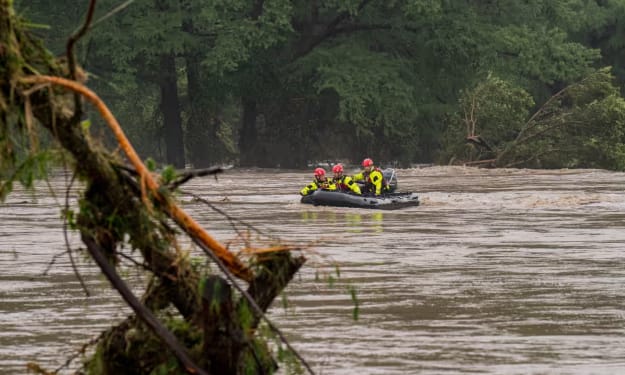
Central Texas is Flooding, Again
Let me take you back to 2018, a year that saw the second year of Trump’s Presidency; the Philadelphia Eagles winning their first Super Bowl in franchise history; the release of Marvel’s Black Panther; the end of the Kepler Space Telescope mission; and the “14 separate billion-dollar disaster events including: two tropical cyclones, eight severe storms, two winter storms, drought, and wildfires,” according to the National Oceanic and Atmospheric Administration or NOAA.
By Amanda Starksabout a year ago in Earth
Japan's Smart Response to Climate Change
by Futoshi Tachino On a muggy midsummer afternoon in Japan, the cicadas of Kanagawa Prefecture raise their familiar chorus, yet the hum that truly defines the skyline comes from rooftops sparkling with photovoltaics and from battery arrays quietly balancing loads behind closed doors. Here, ecological hope is not an abstraction: the Japanese tradition of meticulous engineering meets an urgency carved by typhoons, earthquakes, and carbon budgets that will outlive every child born today.
By Futoshi Tachinoabout a year ago in Earth
Gaza's Desalination Pivot
by Futoshi Tachino The crucible Gaza is where climate vulnerability collides head‑on with political blockade. A joint World Water Day press release from the Palestinian Central Bureau of Statistics and the Palestinian Water Authority notes that 97 percent of water pumped from the Strip’s coastal aquifer fails World Health Organization standards—leaving most families to scrape by on as little as 3 to 15 litres a day (PCBS & PWA, 2024). When a July 2025 Israeli strike hit a queue of people filling jerrycans, Reuters described residents doubling back to brackish wells despite the risk of disease (Reuters, 2025). Layer the region’s projected heat on top of that. A 2021 study in npj Climate and Atmospheric Science warns that, without steep emissions cuts, parts of the Middle East and North Africa will face “super‑ and ultra‑extreme” heatwaves above 50 °C by late century (Zittis et al., 2021). With water scarce and temperatures soaring, Gaza’s humanitarian emergency easily mutates into a climate‑security tinderbox.
By Futoshi Tachinoabout a year ago in Earth
The Last Drop: How Water Scarcity is Shaping Our Future
In a dusty village on the edge of Rajasthan, India, a 10-year-old girl named Asha begins her day before the sun rises. Her task is simple, yet vital: fetch water. With an empty jug balanced on her head, she walks over three miles to reach the nearest functioning well. By the time she returns home, hours have passed, and the heat is already climbing past 90 degrees Fahrenheit. For Asha, and millions like her, water isn’t just a resource—it’s a daily battle. Water scarcity is no longer a distant concern confined to arid regions. It is a global crisis affecting over 2 billion people, according to the United Nations. Climate change, population growth, pollution, and poor infrastructure are converging to create an increasingly fragile water future. In cities and rural communities alike, the ripple effects are changing the way people live, grow food, and even govern. In Cape Town, South Africa, the term "Day Zero" entered the public consciousness in 2018 when the city nearly ran out of water. A mix of prolonged drought and increased demand pushed reservoirs to historic lows. Residents were restricted to 50 liters (13 gallons) of water per person per day—barely enough for drinking, cooking, and basic hygiene. While Day Zero was narrowly avoided through emergency policies and public cooperation, the warning shot was clear: even modern cities are not immune. The underlying causes of water scarcity are complex and intertwined. Agriculture consumes about 70% of the world’s freshwater, yet inefficient irrigation and outdated farming practices lead to massive losses. In many places, groundwater is being pumped faster than it can be replenished. Rivers like the Colorado in the U.S. and the Yellow River in China often no longer reach the sea, as water is diverted upstream for human use. Meanwhile, pollution from factories, sewage, and pesticides renders vast amounts of water unsafe to drink or use. But scarcity is not just about the physical absence of water—it’s about access and equity. In many parts of the world, water may exist, but is out of reach due to poor infrastructure, privatization, or political conflict. In sub-Saharan Africa, women and children spend a collective 200 million hours each day walking for water. In the Middle East, disputes over rivers like the Tigris and the Jordan have fueled tensions between neighboring nations for decades. Yet, amidst the looming crisis, innovation and resilience are offering glimmers of hope. Countries like Israel have become global leaders in water efficiency, reusing nearly 90% of their wastewater and pioneering drip irrigation systems. In Singapore, a city with few natural water sources, a combination of rainwater collection, desalination, and water recycling ensures a sustainable supply. Technology is also playing a vital role. Low-cost sensors and satellite data now allow farmers to monitor soil moisture and use water more precisely. Solar-powered pumps are providing rural communities with clean water without the need for expensive fuel or infrastructure. And in coastal regions, advances in desalination are making seawater a more viable option—though energy costs remain a hurdle. However, technical solutions alone won't solve the problem. Real progress requires policy reform, public awareness, and international cooperation. Governments must invest in resilient infrastructure and enforce regulations that protect watersheds and aquifers. Education campaigns can change wasteful habits, especially in urban areas where water is often taken for granted. And global partnerships must recognize that water is a shared resource—one that transcends borders and political ideologies. Back in Rajasthan, change is beginning to trickle in. Local NGOs are working with villagers to restore traditional water-harvesting systems called "johads"—small earthen dams that collect monsoon rain and recharge the groundwater. In Asha’s village, the rebuilt johad now fills during the rainy season, cutting her walk for water by more than half. It's a small victory, but one that echoes the larger message of the global water crisis: local actions matter. As climate change accelerates and populations continue to grow, the world faces a stark choice. We can either confront water scarcity with urgency, innovation, and empathy—or wait until the last drop forces us to. The future of water is not set in stone. But it is running out—and the time to act is now.
By Muhammad Saad about a year ago in Earth
Cool Wheels in a Hot Land: Afghan Taxi Drivers Innovate with Homemade Air Coolers
Cool Wheels in a Hot Land: Afghan Taxi Drivers Innovate with Homemade Air Coolers In the scorching heat of Afghanistan, especially in the southern city of Kandahar, temperatures often exceed 40°C (104°F). Amid such extreme weather, taxi drivers are turning to innovative solutions to keep their vehicles—and their passengers—cool. Their unique invention? Handmade air coolers installed on the roofs of their taxis, complete with large pipes that run inside the car. These DIY cooling systems are gaining popularity as traditional car air-conditioners often fail in Afghanistan’s searing summer temperatures. Drivers in Kandahar claim that not only are these homemade coolers more effective, but they also circulate air throughout the entire vehicle, unlike factory-fitted AC units that typically only cool the front. One of the taxi drivers, Abdul Bari, explained to AFP (Agence France-Presse), “These handmade air coolers work better than the AC. The AC only cools the front of the car, but this cooler spreads air throughout the vehicle.” Videos shared by news agencies show Abdul Bari securing a large pipe through the window of his taxi while another man fastens the cooler unit on top of the roof. Despite being homemade, these coolers seem to be making a big difference for drivers and passengers alike. The only downside, according to Bari, is that they need to be manually refilled with water twice a day. “But for me,” he added, “it’s working perfectly.” A Low-Cost, High-Impact Innovation Afghanistan is one of the poorest countries in the world and is also facing severe impacts from climate change. According to government warnings, the country is expected to experience even more intense heat in the coming weeks. Amidst economic hardship and a lack of reliable infrastructure, residents are often forced to rely on their ingenuity to cope with harsh environmental conditions. Another taxi driver, Gul Mohammad, shared that he began using this makeshift air-cooling system a few years ago when summer temperatures became unbearable. “The ACs in these cars don’t work,” said the 32-year-old driver. “And repairing them is very expensive. So I went to a local technician and asked him to make this cooler for me.” Gul Mohammad said he spent around 43 US dollars to build the cooler. While that might seem like a modest amount, in a country where poverty is widespread, it’s a significant investment. Still, for these drivers, it's a necessary one. Passengers too are praising the innovation. Noorullah, a 19-year-old commuter, recalled how he fell ill due to extreme heat just a few days ago. “It becomes really hard to travel in vehicles without coolers during the summer,” he said. “I even carry heat-relief tablets in my pocket when I travel.” Record-Breaking Heat and a Country in Crisis Afghanistan experienced its hottest spring on record between April and June this year. The rising temperatures are not just an inconvenience—they pose a serious threat to lives, especially for vulnerable groups such as children, the elderly, and the poor. Last week, the United Nations Food and Agriculture Organization (FAO) warned that drought conditions in Afghanistan were devastating crops and rural livelihoods. Combined with political instability, economic sanctions, and ongoing conflict, climate change is becoming an unbearable burden for the Afghan population. Environmental experts have warned that the humanitarian crisis in Afghanistan is likely to worsen due to the increasing severity of climate-related impacts. As access to international forums has been limited since the Taliban’s return to power in August 2021, the country is largely excluded from global climate discussions. This isolation hampers its ability to secure aid, resources, or strategic partnerships that could help address climate-related challenges. Ingenuity in the Face of Adversity The story of these taxi drivers is a powerful reflection of how ordinary people in Afghanistan are adapting in the face of enormous challenges. While global discussions on climate action continue, people like Abdul Bari and Gul Mohammad are doing what they can with the limited resources available to them. Their homemade air coolers are a testament to local resilience, creativity, and survival. These drivers are not just providing transport—they’re offering their passengers a safer, more comfortable environment in otherwise unbearable conditions. The systems they use are simple but effective: a fan connected to a water tank that blows moist air into the car through a pipe. The principle is basic evaporative cooling—a method well-suited for dry and hot climates like that of southern Afghanistan. While such methods may seem rudimentary compared to modern air-conditioning systems, they are both energy-efficient and affordable, especially in areas where electricity is unreliable and fuel prices are high. More importantly, they are life-saving innovations in a context where heat-related illnesses are on the rise. The Bigger Picture Beyond the streets of Kandahar, these innovations also raise larger questions: What happens when governments and international systems fail to protect people from environmental extremes? What role can local ingenuity play when formal infrastructure is either absent or inaccessible? In a world facing rapid climate change, the story of Afghan taxi drivers reminds us that solutions don’t always have to be high-tech or expensive. Sometimes, it’s the simplest interventions that make the biggest difference. However, such efforts also highlight the urgent need for global climate justice. Afghanistan contributes very little to global carbon emissions, yet it remains among the most affected. Without political recognition and international collaboration, communities like these will continue to suffer silently—even as they invent their own ways to cope. As temperatures continue to rise and the country braces for even hotter days, these homemade air coolers may become a more common sight—not just in taxis but in homes, shops, and other spaces across Afghanistan. Until larger systemic changes are made, the people of Afghanistan will continue to rely on their resourcefulness and resilience to beat the heat, one cooler at a time.
By Ikram Ullahabout a year ago in Earth