Advocacy
🌊 Is a Mega Disaster Looming Over Pacific Nations?
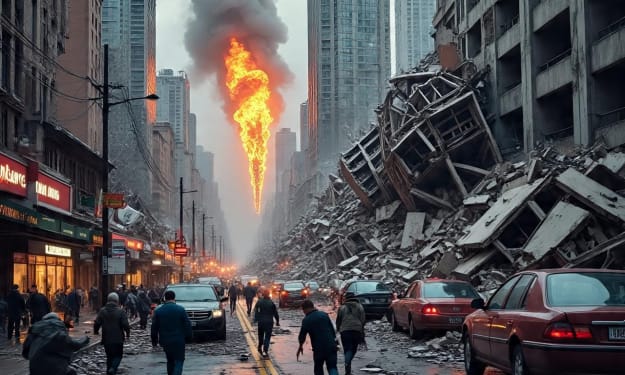
🔴 A Powerful Earthquake Hits Russia – Magnitude 8.8 On July 30, 2025, the world witnessed a massive natural disaster when a magnitude 8.8 earthquake struck near the Kamchatka Peninsula in far-eastern Russia. The quake, which occurred in one of the most seismically active zones on earth—the Ring of Fire—sent tsunami alerts across the Pacific Ocean. Although the main impact was felt in Russia, the tremors and potential tsunami waves created panic in Japan, South Korea, the U.S. West Coast, Hawaii, Canada, China, and even parts of Latin America. Authorities in Japan quickly evacuated over 2 million people from coastal regions, fearing a disaster similar to the 2011 Fukushima earthquake and tsunami, which had caused a nuclear crisis. While tsunami waves were recorded in several regions, ranging from 4 to 8 feet, the worst-case scenario was avoided thanks to advanced early warning systems and timely evacuations. However, the quake’s intensity and reach serve as a reminder that the Pacific Basin remains a fragile zone where the earth's crust constantly shifts. 🐟 The Mysterious Oarfish Sightings — Harbingers of Doom? Soon after the Russian quake, social media lit up with videos and news reports of giant oarfish being seen near the shores of Japan, the Philippines, and even Mexico. These rare deep-sea creatures, which can grow up to 10 meters in length, have long been associated with ancient Japanese legends as “messengers of the sea god.” In February 2025, an oarfish was spotted near Baja California, Mexico—just months before the Russian earthquake. Similarly, oarfish were seen in early 2011, just before the devastating Japan earthquake and tsunami in March of that year. This has fueled public speculation that these fish can sense deep-sea seismic activity and rise to the surface in response. But what does science say? According to marine biologists and geological experts, there is no proven connection between oarfish behavior and earthquake prediction. Most scientists agree that these fish may rise to the surface due to sickness, changing ocean temperatures, or pollution—not to warn humanity of a coming disaster. Yet, the timing of these appearances is hard to ignore for many people around the world, especially in earthquake-prone areas. 📖 A Prophecy from 1999 – Was it Fulfilled? The story gets even more chilling when we recall a prophetic vision by a Japanese manga artist, Ryo Tatsuki, who published her predictions in 1999. One of her most alarming prophecies said that “on July 5, 2025, a mega disaster will hit Japan, boiling the sea.” When July 5 passed without any major event, many dismissed the prophecy. But just a few weeks later, on July 30, the massive earthquake struck Russia, shaking the Pacific basin and triggering tsunami alerts across Japan. Many are now linking her vision to this recent disaster, suggesting she may have foreseen the event two decades in advance. It’s not the first time that Tatsuki’s predictions have caught attention. Some of her past forecasts—like economic crises and natural disasters—have reportedly aligned with real-world events. However, scientific communities remain cautious and do not support the use of prophecies in disaster preparedness. Still, to ordinary people, such coincidences raise eyebrows and add to the fear surrounding natural events. 🐋 Whales Surfacing in Japan – Another Sign? Adding to the mystery, residents of coastal Japan have reported whales and other marine life appearing unusually close to shore. In Japanese culture, such unusual behavior is often interpreted as a natural signal of unrest under the sea. Some researchers have proposed that low-frequency vibrations caused by tectonic stress may disturb whales and other marine animals, forcing them to move or beach themselves. While the scientific link remains under investigation, historical data does show whale beachings have occurred days or weeks before major seismic events in some cases.
By Ikram Ullahabout a year ago in Earth
Earthquake and Tsunami Warnings. Understanding the Science and Saving Lives.
What is an Earthquake? An earthquake is a sudden shaking of the ground caused by the movement of tectonic plates beneath the Earth’s surface. These movements release energy that travels in waves, shaking the land and everything on it. Earthquakes can cause buildings to collapse, roads to crack, and landslides to occur. In coastal areas, earthquakes under the ocean can also trigger tsunamis—massive sea waves that rush toward the shore with great force.
By Tariq jamilabout a year ago in Earth
AI, Data Centers, and the Climate Reckoning: The Looming Energy Crisis Beneath the Cloud. AI-Generated.
There’s a quiet storm brewing behind every Google search, ChatGPT prompt, or late-night Netflix binge. While the world marvels at artificial intelligence transforming society, a less visible transformation is underway - one that runs through power grids, across climate models, and into the heart of disaster vulnerability. It’s the rising energy appetite of data centers - and it may just become one of the defining climate battlegrounds of the next decade.
By Zero Viewsabout a year ago in Earth
The July 29, 2025 Kamchatka Megaquake: A Seismic Event That Rewrote Disaster Preparedness Protocols. AI-Generated.
At precisely 3:17 PM local time on July 29, 2025, the Kamchatka Peninsula was violently thrust into the global spotlight when an 8.9 magnitude earthquake - later recognized as the most powerful seismic event of the decade - ruptured along the Kuril-Kamchatka subduction zone. Unlike typical aftershock sequences that gradually diminish, this earthquake maintained terrifying intensity for nearly six minutes, triggering immediate tsunami warnings across the entire Pacific basin and testing the limits of modern early warning systems.
By INAM ULLAHabout a year ago in Earth
Understanding AI Data Center Energy Use. AI-Generated.
As Artificial Intelligence (AI) continues to evolve, it has revolutionized the modern tech landscape, making it indispensable for search engines, social media, autonomous driving, and advanced medical analysis. The rapid development of AI-driven systems has triggered a massive increase in energy consumption, particularly from data centers that store and process vast amount of data. This rising consumption is contributing to environmental concerns and sparking debates about the long-term sustainability of AI operations.
By Zero Viewsabout a year ago in Earth
Shaking the Edge of the World
At 9:17 a.m. local time, the people of Petropavlovsk‑Kamchatsky felt the world twist beneath their feet. It started as a deep, rumbling growl — the kind that makes coffee cups tremble on tables and birds explode into the sky. Then, within seconds, the ground heaved violently. Windows rattled, shelves collapsed, and terrified families scrambled for doorways and open streets.
By saqib rehmanabout a year ago in Earth
Wrong-Way Crashes in Las Vegas Are a Growing Threat
Wrong-way crashes have become an increasingly deadly problem on Las Vegas roads. In one tragic incident earlier this summer, a 10 year old boy named Brandon Martinez lost his life when a wrong-way driver collided head on with another vehicle on I-15 near the Las Vegas Motor Speedway. The driver was arrested on suspicion of DUI. It was just one of several fatal wrong-way crashes in the valley this year, highlighting a crisis that continues to claim lives.
By Sharon Feldmanabout a year ago in Earth
Earth Is Starting to Spin Faster.
In recent years, scientists have noticed a strange and surprising trend: the Earth is starting to spin faster. This might sound like science fiction, but it’s a real phenomenon backed by highly precise atomic clock measurements and satellite data. The consequences of this increased spin are subtle but potentially far-reaching — enough that scientists around the world are considering taking a step never before attempted: subtracting a second from the global time system. Known as a “negative leap second,” this would be an unprecedented move in the history of timekeeping.
By USA daily update about a year ago in Earth
The Calico
The calico’s words didn’t cycle between requests for food or pats as I expected. She knew things, not about the world out there, which she saw very little of, but about her domain; the space between the walls of what she labelled her prison, and the people inside them, whom she observed like an anthropologist. You’re not our slave, or a prisoner, or a piece of furniture, I reassured her, you’re a part of the family, and the closest thing to a daughter. All relationships are transactional. You’re warm and fed, and you make my heart beat slow down like that of a deep-sea diver.
By Orson Dijleabout a year ago in Earth
Yasmin Bashirova: Redefining Human Rights Advocacy in the 21st Century
In an era marked by rapid globalization, technological shifts, and growing social movements, the definition of advocacy itself is evolving. Yasmin Bashirova is among a new wave of human rights advocates who are reimagining how change is created—leveraging digital tools, community power, and cross-sector collaboration to protect and promote fundamental freedoms worldwide.
By Yasmin Bashirovaabout a year ago in Earth
💥 25 Mind-Blowing Facts That Will Make You Rethink Everything You Know About Life
In the age of information overload, it’s easy to become numb to new discoveries. But every once in a while, a few astonishing facts cut through the noise and leave us genuinely speechless. Some are mind-expanding, others are mildly disturbing, and a few are downright hilarious. Buckle up, here are 25 of the most fascinating and bizarre truths that might just change how you see the world.
By Lynn Myersabout a year ago in Earth