Advocacy
The Living Heartbeat of Earth
M Mehran When we think about Earth, it’s easy to reduce it to a planet: a sphere of rock orbiting the sun, covered in oceans and forests, inhabited by billions of lives. But when you look closer, Earth is far more than that. It is alive in its own way. It breathes, it shifts, it grows, and it sustains us in ways we hardly pause to notice. If Earth were to whisper its story, it would be a tale of resilience, beauty, and warnings we must learn to hear. From the beginning, Earth was chaos. Molten fire churned beneath its surface, and comets collided in fiery displays. Yet even in that violence, life was waiting to emerge. Over time, the chaos gave birth to oceans, skies, and mountains. Rivers carved their paths, glaciers sculpted valleys, and seeds turned to forests that stretched as far as the horizon. The Earth transformed itself into a living canvas of color and wonder. The miracle is not just that Earth exists, but that it created a perfect balance where life could thrive. Every tree exhaling oxygen is matched by every breath we take. Every ocean current regulates the temperature of continents. Every storm, as destructive as it may feel, redistributes energy and water, keeping the planet alive. Earth does not simply give; it cycles, it shares, it balances. But here is the secret that many forget: Earth listens. It reacts. It responds to what we do. For centuries, humanity and Earth were partners in survival. People respected the land, harvested only what they needed, and learned to live with the rhythms of the seasons. A bad harvest taught patience. A flood taught respect. A sunrise taught gratitude. Then something changed. Humanity grew restless, always wanting more. Forests became timber, rivers became dams, and the ground beneath us became an endless mine for resources. We built cities that glittered like stars at night, but each light dimmed the stars above. We grew louder, faster, hungrier. And Earth began to feel the weight. The signs are everywhere if you choose to see them. Glaciers weep into rising seas. Storms roar louder and arrive with less warning. Animals that once roamed freely now disappear into silence. The Earth is speaking, not with words, but with shifts and tremors, with floods and droughts, with heatwaves that remind us we are not above nature—we are a part of it. And yet, Earth is not a vengeful spirit. It is patient, forgiving even. For every forest cut down, new growth tries to break through cracks of concrete. For every polluted river, wetlands struggle to filter and heal. For every mistake we make, Earth offers a second chance. It is almost as if the planet believes in us more than we believe in ourselves. Think about the awe that fills you when you stand at the edge of an ocean, waves stretching endlessly beyond sight. Or the quiet peace of a forest, where sunlight filters through branches and every step crunches softly on fallen leaves. Or the stillness of a desert night, where stars blaze in numbers impossible to count. These are not coincidences. They are invitations—reminders that the Earth is alive, generous, and deeply intertwined with our existence. The question, then, is not whether Earth will survive. It has endured meteors, ice ages, and volcanic winters. Earth will continue long after us. The real question is: will we choose to be caretakers or destroyers? Will we learn to live with Earth, or will we continue to demand until there is nothing left to give? Every small act matters. Planting a tree may feel insignificant, but trees grow into forests. Choosing to walk instead of drive may feel like a drop in the ocean, but oceans are built from drops. Even speaking with reverence about Earth, instead of taking it for granted, shifts the way we live. Change is not about grand gestures—it is about remembering that the ground beneath our feet is alive, and it deserves our care. In the end, Earth’s story is our story. Every inhale you take began with a leaf. Every sip of water has passed through ancient rivers, clouds, and rains. Every step you take rests on rock shaped over billions of years. We are not separate from Earth; we are Earth. Our survival, our beauty, our future—it is all bound to this living planet we call home. So the next time you feel the wind on your face or hear rain tapping gently against your window, pause. That is Earth, reminding you it is still here. Still breathing. Still waiting for us to remember that we belong to it, as much as it belongs to us.
By Muhammad Mehranabout a year ago in Earth
Rotterdam's Delta-Linked Climate Strategy
by Futoshi Tachino In Europe’s busiest river mouth, Rotterdam has learned to treat water as both antagonist and ally. The city’s climate playbook reads like delta pragmatism: keep the surge out, make room for the rain, reuse the heat, stash the carbon, and choreograph daily life so the low-carbon choice is the easy one. It’s a system, not a showpiece—barriers and basins, blue-green roofs and hot-water pipes, all pulling together.
By Futoshi Tachinoabout a year ago in Earth
Steam, Not Smoke
by Futoshi Tachino In Kenya’s Rift Valley, the ground exhales. Around Naivasha, at a place called Olkaria, wells tap rock-hot water and steam that have already helped Kenya become Africa’s geothermal leader—and one of the few countries where clean, firm power anchors the grid. Recent analyses put geothermal’s share of Kenya’s electricity around the mid-40s, with some reports citing roughly 47 percent in 2024. That matters in a drought-prone region where hydropower is variable and diesel is expensive.
By Futoshi Tachinoabout a year ago in Earth
Catching Clouds
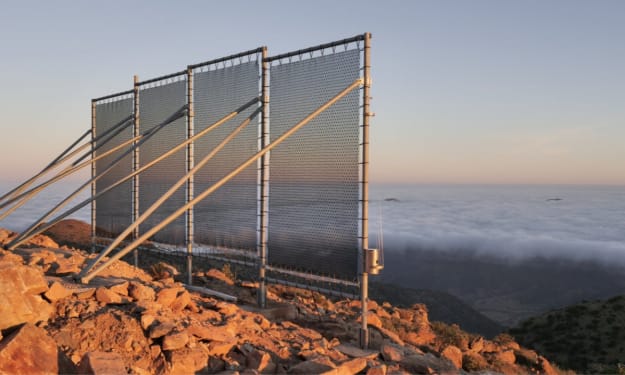
by Futoshi Tachino In the Anti-Atlas mountains of southwest Morocco, fog rolls inland from the Atlantic and clings to ridgelines above the Amazigh (Berber) communities of Aït Baamrane. For decades, that fog was little more than a damp inconvenience in a place short on rain and poorer still in pipes. Then a local NGO, Dar Si Hmad, turned it into a municipal water source—stringing engineered meshes along a windy ridge, funneling condensed droplets into tanks, and gravity-feeding the result down to village taps. It’s one of the world’s largest fog-to-water systems and a rare example of a climate solution that is passive, energy-free in operation, and profoundly shaped by the people it serves.
By Futoshi Tachinoabout a year ago in Earth
The World’s Growing Water Crisis – Why Everyone Should Care
Water is one of those things we hardly think about until it’s gone. We wake up, brush our teeth, make coffee, take showers—all without realizing how precious this simple resource really is. For billions of people, clean water isn’t guaranteed. In fact, the world is slowly moving toward a crisis that could define the future of humanity: water scarcity.
By Legends Unfoldabout a year ago in Earth
The Living Canvas
M Mehran Earth is more than a planet. It is a living canvas, painted with mountains, rivers, forests, and skies. It breathes in winds, whispers in oceans, and pulses beneath our feet with a rhythm older than humanity itself. Yet, despite its beauty, humans often forget that we are merely guests in this vast masterpiece. --- The Morning Awakening I remember the first time I truly noticed Earth. I was hiking in the Himalayas, far from cities, far from schedules, far from noise. Dawn broke over the snow-capped peaks, painting the world in shades of gold and pink. The wind carried a scent of pine and soil, crisp and alive. For a moment, I felt insignificant. My worries, ambitions, and fears seemed trivial in the face of such grandeur. But in that same moment, I also felt connected—to the mountains, to the soil, to the very air I breathed. Earth, in its quiet strength, reminded me that life is both fleeting and eternal. --- The Rivers That Remember Rivers have always fascinated me. They carry water, yes, but they also carry stories. Stories of rainfall, of glaciers melting, of forests nourished, of civilizations built along their banks. I once stood by the Ganges in India, watching pilgrims pour water, offering prayers. The river seemed to listen, absorbing centuries of devotion and despair alike. Earth preserves memory in ways we cannot imagine. Its rivers, winds, and rocks are archivists of existence, holding secrets we are only beginning to understand. --- The Forest’s Whisper Forests are Earth’s lungs, and walking through them is like inhaling history itself. Trees sway, leaves murmur, and the forest floor teems with life unseen. I hiked in the Amazon once, guided by a local elder who spoke as if the trees were his kin. “Listen,” he said. “They remember everything. They know who walks lightly and who takes too much.” I closed my eyes and let the forest surround me. The earth beneath my feet was alive. The canopy above whispered wisdom. Humans, I realized, are just one species in a web far more intricate and resilient than we can comprehend. --- The Cost of Carelessness Yet, for all its wonder, Earth suffers. Plastic clogs rivers, smoke chokes skies, and species vanish before we even meet them. I have walked along beaches littered with human waste, and the sight fills me with shame. Earth gives generously, but it asks for care in return. Every piece of trash we discard, every river we poison, every forest we cut, leaves a scar. Unlike humans, Earth cannot speak, cannot protest. Its voice is subtle, found in floods, droughts, storms, and fading biodiversity. --- The Small Acts But humans are not powerless. Earth has taught me that even the smallest acts ripple outward. Planting a tree, cleaning a stream, reducing waste—these are gestures of respect. Every conscious choice is a note in a larger symphony of restoration. I joined a local project once, restoring a degraded wetland. At first, it seemed insignificant. One person’s effort against acres of destruction. But over weeks, as saplings grew and birds returned, I saw proof that care matters. Earth responds when we act with intention. --- The Mirror of Humanity Looking at Earth, I see a mirror of ourselves. Like the planet, humans are resilient yet fragile, beautiful yet vulnerable. We have the capacity to create and destroy, to nurture and neglect. Just as Earth can recover if treated kindly, we too can heal, if we recognize our mistakes and act. When storms rage or wildfires burn, Earth is not punishing us. It is reminding us of balance, resilience, and responsibility. And just as we marvel at sunsets or waterfalls, we must marvel at the opportunity to coexist wisely with the planet that cradles us. --- Closing Reflection Earth is not a resource to exploit; it is a teacher, a refuge, and a living testament to life’s complexity. It shows us what is possible when elements coexist in harmony—mountains, oceans, forests, deserts—all thriving together in a delicate dance. Walking on its soil, feeling the wind on my face, hearing the rivers and birds, I am reminded that every human action matters. Each choice we make can either honor or harm the living masterpiece we call home. To live fully, we must see Earth not as background, but as protagonist in our story. To wander its forests, climb its mountains, listen to its rivers, is to understand our place in a larger narrative—one of stewardship, respect, and awe. Earth does not demand perfection. It only asks awareness, gratitude, and care. If we heed its lessons, we might not only preserve our planet but rediscover what it means to be human—connected, humble, and in awe of life itself.
By Muhammad Mehranabout a year ago in Earth
The First Time I Went Hiking and Found Peace in Nature
I still remember the day I decided to go on my very first hike. It wasn’t some grand plan to conquer a mountain or tick off a bucket list. Honestly, it was just a quiet Saturday, and I had nothing else to do. A friend had mentioned a local trail not too far from town, and something in me decided that maybe I should try it. At that point, I had no idea how much a simple walk in the woods would change me.
By Ian Muneneabout a year ago in Earth
The Power of Patience
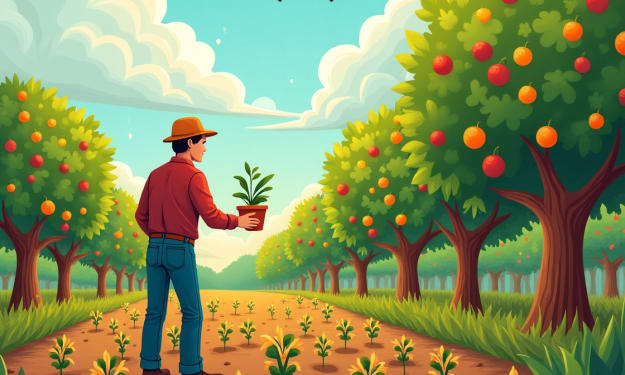
How Small Steps Build Big Success Success does not come overnight. It is built step by step, day by day, with patience and persistence. To understand this truth, let me tell you the story of a farmer named Kareem, whose life became an example of how patience changes everything.
By Wings of Time about a year ago in Earth
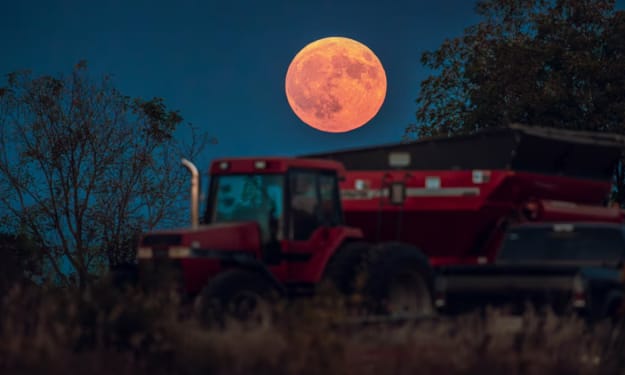
Blood Moon 2025: Total Lunar Eclipse on September 7 — A Celestial Spectacle You Can’t Miss. AI-Generated.
On the night of September 7, 2025, the world will pause to look upward. A rare astronomical spectacle — the Blood Moon, or total lunar eclipse — will paint the sky in shades of copper and crimson. For many, this isn’t just science; it’s a cosmic reminder of wonder, mystery, and connection.
By KAMRAN AHMADabout a year ago in Earth