Advocacy
The Taj Mahal
The Taj Mahal, a symbol of love and perfection, was constructed by Mughal emperor Shah Jahan in memory of his wife Mumtaz Mahal. It is among the top ten most visited monuments globally. The incredible layout and construction techniques used in building the Taj Mahal have revealed many secrets.
By Isaac Ekow Anyidoho2 years ago in Earth
The Oil Rig
In 1988, a tragic explosion occurred on the Piper Alpha oil platform in the North Sea, resulting in 165 fatalities. The platform, which was constructed and operated from 1972 to 1976, produced 250,000 to 300,000 barrels of oil per day. A gas conservation module was installed in the North Sea to meet UK gas conservation requirements, with modules B and C capturing gas for transport to St Fergus in Scotland. During Phase 2 production, Tartan and Claymore pumped gas to Piper Alpha, then to the mcp1 gas compressing platform for further transport. Unfortunately, the failure to follow safety procedures led to the explosion on the Piper Alpha platform. Engineers neglected to properly check safety valve instructions before starting pump A, resulting in gas leaks and subsequent explosions. The shift manager's oversight of safety precautions allowed pump A to start, leading to catastrophic consequences.
By Isaac Ekow Anyidoho2 years ago in Earth
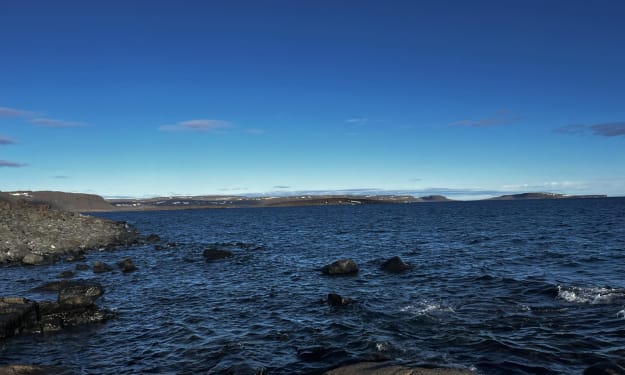
Bears, Belugas, Mosquitos, Oh My!. Content Warning.
I've been contemplating on how to start writing this for over a week now. How do I even begin to capture the incredibly humbling experiences that happened back-to-back over those 4 days? I suppose I have to start somewhere...
By Oneg In The Arctic2 years ago in Earth
Eruption Under the Pacific Ocean Will Make the Water Fizz
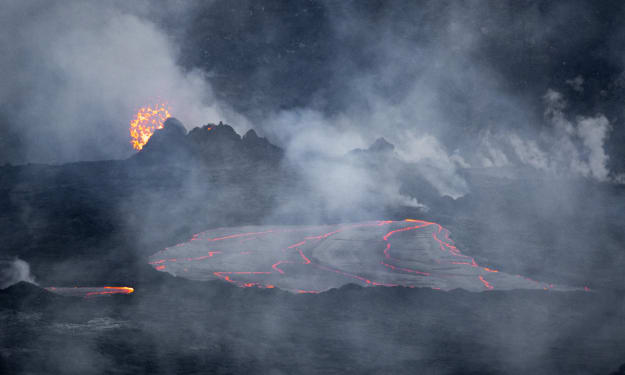
Emission Under the Pacific Sea Will Make the Water Bubble The Remote ocean Show Unfurls In the secretive profundities of the Pacific Sea, an unprecedented occasion is fermenting, promising a display not at all like some other. A volcanic ejection is set to happen underneath the sea's surface, and it's supposed to make the water bubble like a monster, regular soft drink wellspring. This peculiarity isn't just an enamoring show of nature's crude power yet additionally a basic area of study for researchers looking to grasp the elements of submerged volcanism and its more extensive ramifications.
By robail shahzadi2 years ago in Earth
30+ Fantastic 'What If' Scenarios You Never Thought About
30+ Fabulous 'Consider the possibility that' Situations You Won't ever ponder In the domain of creative mind, 'consider the possibility that' situations fuel imagination, interest, and examination. They permit us to investigate elective real factors and contemplate the potential outcomes of various results. Here, we dive into more than 30 interesting 'imagine a scenario in which' situations that stretch the limits of our ordinary reasoning.
By robail shahzadi2 years ago in Earth
Why Cars Are Evil
Owning a car can make for a nice luxury. It’s private and more freeing than the alternatives, and to live in some cities, it’s all but a necessity that you have one to get around in. This article is not meant to criticize individuals for owning cars. It’s often the best decision for them. However, if one could design a city to be car-centric versus having well-developed public transportation, there’s no question that the latter is a much better aim than the former. By every conceivable metric, cars extract an unnecessary cost when compared to the alternative.
By Martin Vidal2 years ago in Earth
The last tree
The village of Verde lay nestled in a valley that once boasted lush forests and flowing rivers. But those days were long gone. Deforestation and climate change had turned the land into a dry, barren place, with only one tree remaining—a towering oak that stood as a lone sentinel against the relentless march of time and environmental decay. Twelve-year-old asha had grown up hearing stories from her grandmother about the forest that used to thrive around Verde. The oak tree, known as the Guardian, was the last of its kind, a relic from a bygone era when nature and humanity coexisted in harmony. Every day after school, Asha would visit the Guardian. She felt a deep connection to the tree, often sitting beneath its sprawling branches to read or simply to think. It was her sanctuary, a place where she could escape the harsh reality of a world plagued by environmental degradation. One particularly dry summer, Asha noticed the Guardian's leaves were turning yellow and brittle. Panic gripped her heart. She rushed home to her grandmother, the village's unofficial historian and storyteller. "Grandma, the Guardian is dying," Asha said, her voice trembling. Her grandmother's face grew somber. She had feared this day would come. "The land is thirsty, child. The climate is changing, and the rains are not coming as they used to. The Guardian is struggling to survive." Asha refused to accept this fate. "There must be something we can do," she insisted. Her grandmother thought for a moment, then nodded. "There might be a way. The tree needs water, and not just any water, but the purest we can find. We must create a system to bring water from the distant mountains where streams still flow." Asha's eyes sparkled with determination. "I'll do it, Grandma. I'll save the Guardian." With the help of her grandmother and some villagers who still remembered the old ways, Asha began constructing a simple irrigation system. They used bamboo and clay pipes to channel water from the mountains to the village. It was hard work, and the scorching sun made the task even more challenging, but Asha's determination never wavered. The village was initially skeptical. "It's just a tree," some said. "What difference can one tree make?" But as they saw Asha's unwavering dedication, more villagers joined the effort, bringing their skills and labor to the project. Finally, after weeks of relentless work, the system was complete. Water trickled down from the mountains, flowing through the pipes and into a makeshift reservoir near the Guardian. Asha carefully watered the tree, her heart filled with hope. The change was not immediate, but slowly, the Guardian began to show signs of recovery. New leaves sprouted, green and vibrant. The tree seemed to stand taller, its branches spreading wide as if embracing the sky. The villagers, inspired by the tree's resilience and Asha's determination, started planting new trees around the Guardian, using the irrigation system to nurture them. As the years passed, the once-barren valley began to transform. New trees took root and flourished, and the air grew cooler and cleaner. Wildlife returned, drawn by the renewed habitat. The Guardian stood at the center of it all, a symbol of hope and a testament to what could be achieved through collective effort and a deep respect for nature. Asha, now a young woman, often sat beneath the Guardian with her own children, telling them the story of how the last tree had almost died and how the village had saved it. The tree had given them more than just shade and fruit; it had given them a reason to believe in the future. In the end, the Guardian was not just the last tree—it was the first of many in a reborn forest, a living reminder of the power of hope, community, and the enduring bond between humanity and the environment.ha
By Anthony mutafela 2 years ago in Earth
Disappearing Acts: Unraveling the Bermuda Triangle Mystery
The Bermuda Triangle, also known as the Devil's Triangle, has long been a subject of fascination and intrigue. This loosely defined region, located in the western part of the North Atlantic Ocean, is notorious for the unexplained disappearances of ships and aircraft. Over the years, the Bermuda Triangle has spawned numerous theories, ranging from the scientific to the supernatural. This article delves into the history, mysteries, and scientific explanations of the Bermuda Triangle, seeking to unravel the enigma that continues to captivate imaginations worldwide.
By Aravind 17072 years ago in Earth
The Plastic Problem
Plastic pollution poses a significant threat to our planet, impacting oceans, wildlife, and freshwater ecosystems on a global scale. The South Pacific Garbage Patch, a massive accumulation of marine debris larger than the state of Texas, is just one example of the devastating effects of plastic pollution. This issue is not limited to oceans, as even the Great Lakes and the Mariana Trench are now facing the consequences of plastic waste. The exponential growth in plastic production has led to a surplus of waste, with microplastic pellets from manufacturing facilities finding their way into water bodies through accidental spills. These microplastics degrade over time, breaking down into smaller fragments that persist indefinitely.
By Isaac Ekow Anyidoho2 years ago in Earth
The Edible-Table Salt
Salt has been an indispensable factor in shaping the course of human history and the progress of civilizations. It has not only determined the locations of settlements but also exerted a profound influence on the development of societies. References to salt can be found in various aspects of human culture, including religion, mythology, literature, and philosophy, and it has played a significant role in shaping important historical events. Moreover, salt holds great importance for our physical well-being as it is essential for our bodies and holds cultural significance in the realm of food preparation. Common sources of salty flavor include soy sauce and pickled vegetables.
By Isaac Ekow Anyidoho2 years ago in Earth