Latest Stories
Most recently published stories in Earth.
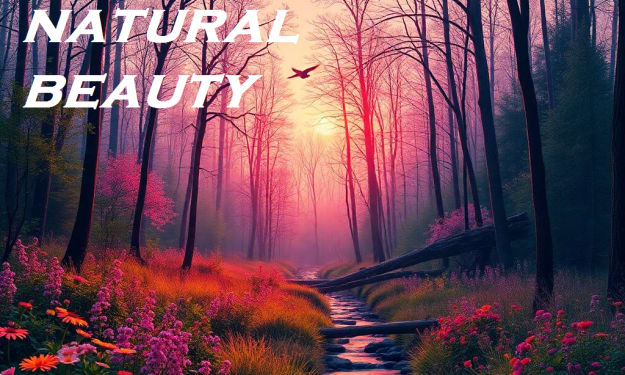
Natural Beauty
In a world increasingly dominated by technology, the fast pace of life, and artificial creations, it’s easy to overlook the breathtaking beauty that exists in the natural world. From the vast, majestic mountains to the delicate petals of a wildflower, nature offers a wealth of wonders that remind us of the simplicity, harmony, and peace that surround us. Natural beauty is not only found in landscapes and seascapes but in the quiet moments where the earth reveals its true splendor. This timeless beauty has the power to rejuvenate our spirit, inspire creativity, and remind us of the importance of preserving the environment for future generations.
By Leesh lalaabout a year ago in Earth
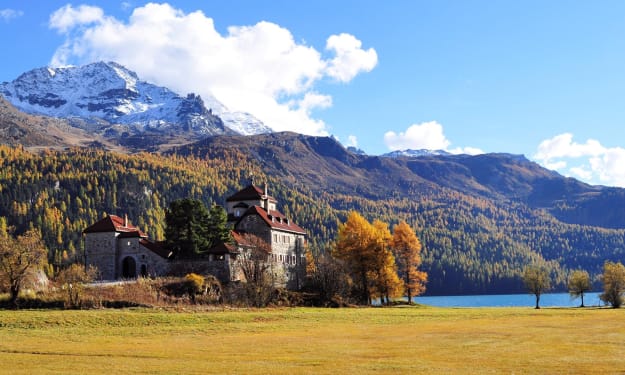
Switzerland: A Journey Through Nature’s Masterpiece. AI-Generated.
The Natural Beauty of Switzerland: A Land of Timeless Charm Switzerland, often referred to as the "Heart of Europe," is world-renowned for its stunning natural beauty. With its majestic Alps, crystal-clear lakes, lush green valleys, and pristine villages, this small landlocked country offers some of the most awe-inspiring landscapes on Earth. Whether you are a nature lover, an adventure seeker, or simply a traveler in search of peace and inspiration, Switzerland's natural charm is bound to leave a lasting impression.
By Showath Hosen about a year ago in Earth
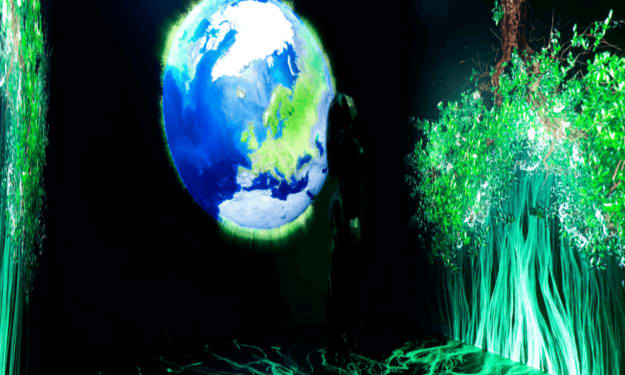
The Silent Countdown: Why Earth’s Last Breath Won’t Be from Climate or Comets” . AI-Generated.
In a world obsessed with end-of-the-world movies and sudden doomsday plots—climate catastrophe, AI takeovers, nuclear war, asteroid collisions—few have considered the possibility that the end would not arrive with a bang, but in a stifled gasp. A new study by Toho University in Japan, supported by NASA data, has placed a chilling new spin on Earth's distant future. It won't be fire or flood that will snuff out life as we know it, but the gradual and irreversible draining of oxygen.
By MD NAZIM UDDIN about a year ago in Earth
Terrifying Titans: 10 Dangerous Creatures That Once Ruled the Earth
Terrifying Titans: 10 Dangerous Creatures That Once Ruled the Earth Throughout history, Earth has been home to some truly monstrous creatures—massive and terrifying beings that dwarf modern predators. While dinosaurs like *T. rex* and *Spinosaurus* often steal the spotlight, many other fearsome beasts once roamed the planet, many of which are less famous but just as formidable. From giant apes to colossal sharks, here’s a countdown of the 10 most dangerous non-dinosaur creatures that once ruled Earth, each leaving behind a legacy of power and terror. 10. Gigantopithecus: The Giant Ape Imagine wandering through the bamboo forests of ancient China, India, or Vietnam and encountering a 10-foot-tall, 1,200-pound giant ape. This was *Gigantopithecus*, a massive relative of the orangutan that lived during the Pleistocene epoch. This herbivorous colossus roamed jungles and mountains, its sheer size and strength protecting it from most predators. With bone-crushing strength in its arms, *Gigantopithecus* would have been a terrifying sight for any early human who got too close. It went extinct around 300,000 years ago, possibly due to overhunting by humans or climate-induced habitat changes. Its disappearance makes us wonder: Could this creature’s remains have inspired legends like Bigfoot? 9. Giant Sea Scorpion: Terror of the Deep Long before scorpions crawled through deserts, their ancient relatives, *Pompano Scorpius* (giant sea scorpions), ruled the oceans. Reaching up to a meter in length, these aquatic horrors were armed with razor-sharp claws and venomous stingers. Though the exact potency of their venom is unknown, the sheer volume they could inject would have been deadly. They thrived in a world of giant insects—cockroaches the size of cats, dragonflies as large as hawks, and centipedes stretching 10 feet long. These Silurian-era (over 400 million years ago) monsters remind us that ancient seas were a dangerous place. 8. Purussaurus: The Giant Crocodile Modern crocodiles are frightening, but South America’s prehistoric *Purussaurus* was a true demon. Living 8 million years ago, this beast grew up to 43 feet long—twice the size of today’s largest crocs. With bone-crushing jaws, *Purussaurus* could swallow a human whole or even take down massive prey like *T. rex*. A dominant apex predator in rivers and swamps, it had no equal. Environmental changes led to its extinction, sparing humanity from facing this reptilian titan. 7. Quetzalcoatlus: Terror of the Skies Picture a bird as tall as a giraffe with wings the size of a small airplane. *Quetzalcoatlus*, a Cretaceous-era pterosaur, was the largest flying creature ever. Standing 16 feet tall with a 40-foot wingspan, it ruled the skies 70 million years ago. Unlike modern birds, it hunted on land, using its long legs and beak to snatch dog-sized prey—or perhaps even human-sized creatures. Its bizarre anatomy—long legs, neck, and beak with a compact body—made it a fearsome hunter. Thankfully, it vanished with the dinosaurs. 6. Megalodon: The Ocean’s Apex Predator *Megalodon* is the stuff of maritime nightmares. This colossal shark, which prowled the seas until about 2.6 million years ago, dwarfed today’s great whites. At 60 feet long and weighing up to 100 tons, *Megalodon* could crush whales and giant sea turtles with its bone-shattering bite. Its teeth, some larger than a human hand, hint at its raw power. Early humans never faced this beast, but its relatively recent extinction serves as a chilling reminder of the ocean’s untamed past. If *Megalodon* still swam today, beaches would be far less inviting. 5. Gorgonops: The Pre-Dinosaur Predator Before dinosaurs dominated, *Gorgonops* ruled the Permian period 260 million years ago. This 10-foot-long predator was fast and vicious, with massive canine teeth protruding from its lower jaw. As a top predator, it easily dominated a food chain filled with bizarre, pre-dinosaur creatures. Its speed and ferocity made it the terror of its time, and its extinction paved the way for the rise of dinosaurs. *Gorgonops* shows us that ancient ecosystems were just as brutal as the Mesozoic. 4. Terror Birds: The Sprinting Hunters South America’s *Terror Birds* couldn’t fly, but they were far from harmless. These giant avians, thriving from 60 million to 2 million years ago, stood 10 feet tall and weighed half a ton. With meter-long skulls and hooked beaks, they could swallow dog-sized prey whole or take down larger animals like horses and camels. Some species may have sprinted as fast as cheetahs, making them relentless hunters. Their reign ended with the rise of big cats and other mammalian carnivores, but *Terror Birds* remain some of the most fearsome avians ever. 3. Titanoboa: The Giant Serpent Slithering through tropical regions 60 million years ago, *Titanoboa* was the largest snake ever, stretching 50 feet long and weighing over a ton. This monstrous boa could constrict prey as easily as modern boas crush mice. Capable of killing massive animals, *Titanoboa* ruled its swampy domain without natural predators. A human encountering it would have been mere prey. Cooling climates led to its extinction, sparing us from a creature that could crush anything in its coils. 2. Arthropleura: The Giant Millipede If millipedes creep you out, *Arthropleura* would be your worst nightmare. This giant millipede, alive 300 million years ago, grew up to 10 feet long and crawled through ancient forests. Whether it was a predator or scavenger is unclear, but its sheer size made it formidable. With few natural enemies, *Arthropleura* left no trace—only thick mats of moss and small plants beneath its many legs. Climate change wiped it out, ensuring we’d never face this multi-legged giant. 1.Mosasaurus: The Supreme Ocean Predator *Mosasaurus* was a marine monster that ruled the Cretaceous seas 70 million years ago. At 50 feet long, it was nearly three times the size of its closest rival, *Liopleurodon*. With a crocodile-like head and hundreds of razor-sharp teeth, it could tear through even the most armored prey. Capable of swallowing a small boat in one bite, *Mosasaurus* was the ultimate oceanic predator. Its extinction alongside the dinosaurs spared modern sailors from a creature that could turn the sea into a graveyard. A World of Monsters These 10 creatures paint a vivid picture of Earth’s wild, untamed past. From giant apes to colossal sharks, each ruled its domain with unmatched power. Their extinctions, often linked to climate shifts or competition, remind us that even the mightiest creatures are fragile. While we’re safe from these terrors today, their fossils and stories continue to fascinate, offering a glimpse into a world where true monsters once roamed. *Learn more about Earth’s ancient titans and share which creature you’d least want to encounter!*
By Lomash Dhruv about a year ago in Earth
The Amalfi Coast: Italy’s Mediterranean Masterpiece
The Amalfi Coast: Italy’s Mediterranean Masterpiece Tucked along the southern edge of Italy’s Sorrentine Peninsula lies the Amalfi Coast—a place so stunning it seems drawn from a dream. With its dramatic cliffs, pastel-colored villages, sapphire waters, and fragrant lemon groves, the Amalfi Coast offers a blend of natural beauty and cultural charm that captivates every visitor. Declared a UNESCO World Heritage Site in 1997, it is a place where history, art, nature, and cuisine come together in perfect harmony.
By Sumon Ahmedabout a year ago in Earth
Kyoto, Japan: A Living Canvas of Beauty, Culture, and Tranquility
Kyoto, Japan: A Living Canvas of Beauty, Culture, and Tranquility Nestled in the heart of Japan’s Kansai region, Kyoto stands as a timeless testament to the country’s rich cultural heritage, natural beauty, and serene way of life. Once the imperial capital of Japan for over a thousand years, Kyoto is often considered the spiritual and historical soul of the nation. With its ancient temples, traditional tea houses, meticulously preserved wooden architecture, and vivid seasonal changes, Kyoto remains one of the most beautiful places in the world.
By Sumon Ahmedabout a year ago in Earth
Santorini: A Jewel of the Aegean. AI-Generated.
Santorini: A Jewel of the Aegean Perched on the edge of a volcanic caldera in the southern Aegean Sea, Santorini, Greece, is a breathtaking island that has captured the imagination of travelers, artists, and romantics for centuries. With its whitewashed houses, sapphire-domed churches, dramatic cliffs, and sunsets that seem too perfect to be real, Santorini is not just a beautiful destination—it’s a dream carved from sea, stone, and sky.
By Sumon Ahmedabout a year ago in Earth
The Lantern Keeper
In the village of Elaria, nestled between snow-capped mountains and evergreen forests, lived an old man named Elias. He was known as The Lantern Keeper. Every night, he would light a hundred lanterns and hang them around the village — on trees, rooftops, and fences. The soft golden light gave warmth to the cold nights and filled the hearts of the villagers with a strange, comforting hope.
By Masih Ullahabout a year ago in Earth
Banff National Park: A Canadian Gem of Untamed Beauty. AI-Generated.
Banff National Park: A Canadian Gem of Untamed Beauty Tucked into the heart of the Canadian Rockies in Alberta, Banff National Park is a dazzling display of nature’s grandeur. As Canada’s first national park and one of the most renowned in the world, Banff is a place where towering mountains meet turquoise lakes, glaciers sparkle beneath blue skies, and wildlife roams freely across vast, rugged landscapes. Covering more than 6,600 square kilometers (2,500 square miles), Banff offers an unforgettable experience to anyone seeking serenity, adventure, or awe.
By Sumon Ahmedabout a year ago in Earth
Building Resilience
Climate change is no longer a distant threat—it is here, affecting communities worldwide through extreme weather events, rising sea levels, and shifting ecosystems. While reducing greenhouse gas emissions remains crucial, we must also adapt to the changes that are already happening.
By Futoshi Tachinoabout a year ago in Earth