Latest Stories
Most recently published stories in Earth.
Top 10 failed products of Apple
Apple is currently one of the world’s top tech giants. According to the latest data from Forbes, with a market capitalization of $3.02 trillion, Apple has surpassed numerous powerful tech companies to claim the throne. After a journey filled with highs and lows, Apple became the first American company to hit the $1 trillion mark in August 2018 — a milestone that took 42 years to achieve. Astonishingly, within just four more years, the company crossed the $3 trillion mark in January 2022, becoming the first in the world to do so. However, Apple’s history hasn’t always been so glamorous. Like any other company, Apple too has tasted bitter failure. Several of its products failed to perform as expected in the market. This article explores ten such failed Apple products.
By Riham Rahman about a year ago in Earth
Retaliation or Escalation? Inside India’s Strikes on Pakistan
On May 6, 2025, a dangerous new chapter unfolded in South Asia’s long-standing conflict, as India launched missile strikes into Pakistani territory. The operation was described as a "targeted response" by the Indian government in response to a recent terror attack in Jammu and Kashmir that resulted in the deaths of more than two dozen Indian civilians. However, Pakistan's response was swift and vehement: Islamabad branded the strikes an "act of war," raising the possibility of a larger military conflict between the two nuclear-armed neighbors.
By Sadia Zaman Urmiabout a year ago in Earth
"The Daydreamer's Secret":
As the sun began to set over the quiet town, Olivia sat in her favorite spot by the window, a place she had come to call her own. It was a modest room, filled with bookshelves packed with stories of adventure, romance, and mystery. But it was the view from this window, overlooking the peaceful garden and the distant hills, that made this room special. It was here, in the stillness of her thoughts, that Olivia found herself lost—lost in the world of daydreams.
By Maavia tahirabout a year ago in Earth
Chasing 8,000 Meters: My Manaslu Expedition Story
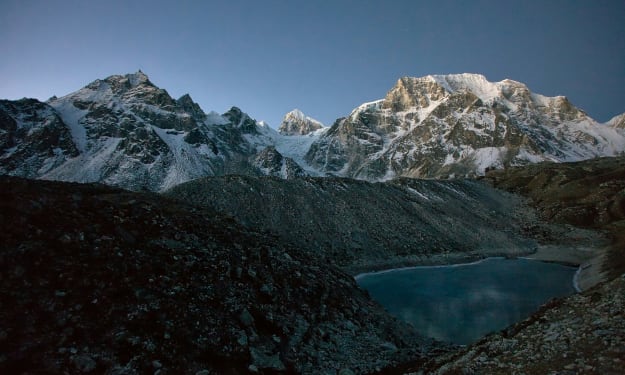
Mount Manaslu, the "Mountain of the Spirit," stands at 8,163 meters, the eighth-highest mountain in the world. It's less commercial than Everest, quieter than Cho Oyu, and yet every bit as formidable. For me, Manaslu wasn’t just about reaching another 8,000-meter summit—it was about testing myself, mentally and physically, in one of the most demanding environments on Earth.
By Anya Gurungabout a year ago in Earth
The Green Heart of Africa: Uncovering the Rich History of the African Rainforest
Echoes of Green: The Ancient History of the African Rainforest This article examines the extensive, vibrant history of the African rainforesthome to ancient civilizations, unparalleled biodiversity on the planet, and secrets concealed deep within its dense canopy. From its prehistoric origins and significance in early human evolution to its cultural relevance for African societies and global ecological importance today, the African rainforest continues to be one of Earth’s most essential and enigmatic natural treasures. Echoes of Green: The Ancient History of the African Rainforest The African rainforest, notably the Congo Basin, stands as one of the oldest and most expansive continuous areas of tropical forest on Earth. Encompassing over 1. 7 million square miles, it extends across multiple countries including the Democratic Republic of Congo, Cameroon, Gabon, Equatorial Guinea, and portions of Nigeria and Angola. Frequently referred to as the "lungs of Africa," this ancient ecosystem is not solely a habitat for rare species and carbon-rich canopies, but it also serves as a living repository of human, ecological, and cultural history extending back millions of years. 1. Prehistoric Origins: Cradle of Humanity Africa is recognized as the cradle of humanity, and the rainforest was instrumental in early human evolution. Fossil and archaeological findings indicate that early homininsour distant forebearsoccupied segments of what are currently rainforest regions as far back as 2. 5 million years ago. Although open savannahs like the Serengeti are often idealized as the origins of humans, dense rainforests provided essential shelter, water, food, and raw materials for early Homo species. Implements fashioned from stone and bone, in addition to evidence of primitive fire usage, have been uncovered in and around the rainforest areas. 2. The Ascendance of Rainforest Kingdoms In contrast to the notion that rainforests were uninhabitable or culturally barren, numerous advanced African civilizations flourished within or adjacent to the rainforest. These societies established trade routes, advanced iron smelting technologies, and nurtured intricate cultural traditions. The Kingdom of Kongo, established in the 14th century near the western periphery of the rainforest, evolved into a formidable political entity. It featured a centralized monarchy, an intricate taxation system, and conducted trade with Europeans long before the onset of colonial dominance. The Luba and Lunda Empires, originating in present-day DRC, developed sophisticated governance frameworks grounded in sacred kingship and clan affiliations. These polities depended on forest resources such as ivory, rubber, and timber, exchanging them for goods from both the savannah and the coast. These rainforest-based kingdoms were not insular. They maintained intricate trade networks that extended as far as the Indian Ocean and the Middle East. 3. Biodiversity and Natural Resources The African rainforest ranks second only to the Amazon in size, yet its biodiversity is unmatched in certain aspects. It supports: Over 10,000 species of tropical flora More than 1,000 avian species Notable mammals such as lowland gorillas, forest elephants, and okapis Unique reptiles, amphibians, and insects found nowhere else on the planet The forest also contains substantial deposits of mineral wealth beneath its surfacegold, diamonds, copper, coltan, and uraniumrendering it both ecologically and economically valuable. Estimates of the rainforest's potential "natural wealth" exceed $2 trillion USD when assessed through the value of its timber, biodiversity, mineral resources, and carbon sequestration capacities. 4. Spiritual and Cultural Importance The rainforest is not merely a biological system but a spiritual and cultural core for numerous indigenous groups, including the Baka, Mbuti, and Twa peoples. For these forest inhabitants, the rainforest is reveredit provides more than just sustenance and shelter; it also offers ancestral ties and spiritual identity. Songs, rituals, and oral histories transmitted across generations underscore the significance of respecting the forest, directing sustainable hunting, fishing, and plant-gathering practices. These communities have coexisted with the forest for millennia, cultivating profound ecological knowledge. 5. Colonialism and Exploitation In the 19th and early 20th centuries, European colonizers perceived the rainforest as a resource to be dominated. The Congo Free State, under King Leopold II of Belgium, became notorious for its cruel rubber extraction. Indigenous populations were subjected to enslavement, villages were set ablaze, and millions perished due to forced labor and starvation. Colonial extraction disrupted centuries of cultural equilibrium and resulted in deforestation, wildlife depletion, and the dismantling of traditional systems. Even after gaining independence, post-colonial governments and foreign enterprises continued to exploit the rainforest, frequently at the local communities' expense. 6. Contemporary Challenges and Optimism Today, the African rainforest confronts dangers from illicit logging, mining, oil exploration, and climate change. The forest loses thousands of hectares each year, impacting biodiversity and hastening global warming. Nevertheless, global conservation initiatives are gaining traction. Protected areas like Salonga National Park (a UNESCO World Heritage site) provide optimism. Indigenous-led conservation strategies are being adopted, acknowledging that forest peoples serve as the most effective stewards of their surroundings. Innovative financial mechanisms such as carbon credit markets are also beginning to aid rainforest conservation. If managed sustainably, the rainforest can persist in offering food, water, medicinal resources, and climate regulation for generations to come. Conclusion: The Enduring Legacy The African rainforest transcends being a mere green area on a map. It represents a living legacyof evolution, empires, resistance, and renewal. Its history resonates with the voices of kingdoms, the calls of forest wildlife, and the songs of indigenous peoples. Its value cannot solely be quantified in precious metals or timber but through the life it nurtures and the wisdom it embodies. As the world increasingly focuses on environmental restoration and climate justice, the narrative of the African rainforest serves as a reminder that the planet's future is grounded in the safeguarding of its ancient green core.
By Say the truth about a year ago in Earth
Google Warns DOJ’s Proposed Breakup Would Undermine User Trust and Innovation
According to the search chief, DOJ's proposed Google changes would "deeply undermine user trust." The U.S. Department of Justice (DOJ) has proposed significant changes to Google's operations, aiming to address concerns over its dominance in the digital advertising and search markets. However, Google's leadership, including Search Chief Elizabeth Reid, has expressed strong opposition to these proposals, arguing that they could severely undermine user trust and have far-reaching negative consequences for consumers, innovation, and the broader tech ecosystem.([ The Verge and Search Engine Land, respectively) ---
By Shamim Asrafabout a year ago in Earth