Latest Stories
Most recently published stories in Earth.
Paul Watson’s Whale War: Defending Giants of the Sea. AI-Generated.
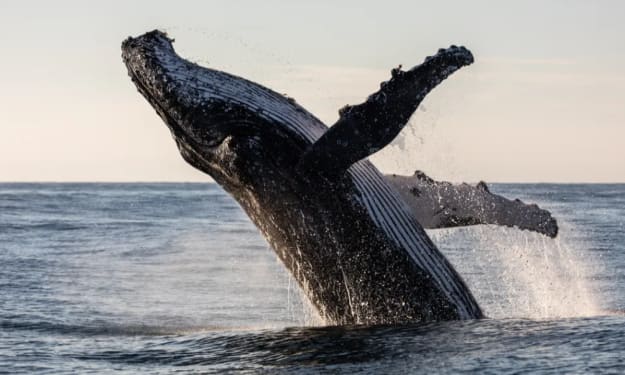
Captain Paul Watson is the name that governs both praise and controversy in the world of environmental activities. Watson is known as the founder of the Sea Shepherd Conservation Society and co-founder of Greenpeace, and has spent his life protecting the marine wildlife of illegal hunting and exploitation of Wale-von. His direct action campaign against whaling, often referred to as the "walk league," became one of the most dramatic and effective conservation efforts of the 21st century. Watson's trip began in Greenpeace in the early 1970s, where he joined anti-althing and anti-territorial campaigns. However, Watson was frustrated in 1977 that he recognized Greenpeace's unwillingness and more aggressive measures, and founded Sea Shepherd. In contrast to traditional environmental groups, Sea Shepherd was designed to take direct, confrontational measures against illegal fishing and whaling activities. Watson's philosophy was simple, but brave: "If the law doesn't stop it, we will do it." The main battlefield of the Wal War was the icy waters of the Southern Oceans around the Antarctic. Since the establishment of the International Moratorium on International Walling by the International Whaling Commission (IWC) in 1986, Japan has continued to hunt whales under the gap that enabled "scientific research." However, many protectionists, including Watson, believed this was nothing more than a cover for ongoing commercial surveillance. The Japanese whaling fleet hunts hundreds of whales each year, claiming that meat is a by-product of a research program in the Japanese market. To stop this, Watson and his Sea Shepherd crew began campaigning with high sailors every whaling season. They use high-speed ships, helicopters, drones and small boats to find and intercept Japan's fleets. According to the situation, Sea Shepherd laid a ship between the whale and the harpoon, involved in the smelly bombs and ropes on the whaling deck, and transferred the actual material of the conflict into the world. These bold missions reached mainstream audiences, an animal planet television series that aired from 2008 to 2015. The show documented the Sea Shepherds' Antarctic campaign, highlighting the risks of casualties and passion from Watson and his international crew. The audience saw the first brutal reality of whaling and the raw courage of those ready to risk their lives to stop it. It wasn't just reality television - it was a call to the environment of weapons. Watsons' tactics have been criticized by the government and legal authorities. Three countries still involved in the walking have Mackohed him from copyright infringement and ecoterrorism. Interpol spent a red message on requests from Japan. Some governments have accused the sea shepherd of being in the sea. Despite these threats, Watson did not continue to apologize. "Aggressive Freeface," he called it - doing everything necessary to protect the lives of the sea without physical damage, without hurting people, but without the need to protect the lives of the sea. Despite the criticism, Sea Shepherd`s campaigns had a measurable impact. Japan`s whaling operations withinside the Southern Ocean have been critically disrupted. In 201 , after years of worldwide stress and Sea Shepherd's high-profile interference, the International Court of Justice dominated that Japan`s Antarctic whaling software become now no longer medical and ordered it to halt. Although Japan later resumed whaling beneathneath new hints and in the end withdrew from the IWC in 2019, the wide variety of whales killed for the duration of Sea Shepherd`s top campaigns dropped dramatically. Watson`s paintings has stimulated a worldwide network of environmental activists, marine conservationists, and regular citizens. Sea Shepherd chapters now perform across the world, shielding marine ecosystems from unlawful fishing, shark finning, plastic pollution, and habitat destruction. Many younger activists who watched Whale Wars at the moment are worried in conservation paintings, crediting the display and Watson`s undertaking with sparking their passion. In latest years, Paul Watson confronted inner disagreements with Sea Shepherd`s management over the organization`s course and tactics. This caused the founding of a brand new organization, the Captain Paul Watson Foundation, in 2022. Through this group, Watson keeps his undertaking to guard the sea and its inhabitants, specializing in each activism and public education. The Whale War is greater than a combat towards whalers—it is a image of a broader conflict for environmental justice. In an age of weather change, biodiversity loss, and ecological collapse, Watson`s unwavering dedication serves as a effective reminder that protecting the planet regularly calls for bold, uncomfortable action. His legacy forces humans to invite tough questions: Are we doing sufficient to guard lifestyles on Earth? Are the legal guidelines of nature greater critical than the legal guidelines of nations? Watson as soon as said, “If the oceans die, we die.” This perception drives each campaign, each interception, and each speech. It fuels a developing network that values the fitness of the planet over profit, and the lives of whales over bureaucratic excuses. Paul Watson`s Whale War isn't always over. It keeps in new forms, with new leaders, new ships, and new challenges. But at its heart, it stays a tale of courage, conviction, and the long-lasting combat to guard the silent giants of the sea.
By Jishan Ahmedabout a year ago in Earth
Elephant Tragedy In Malaysia
What a grief story on Mother's Day ,May 11, 2025, a heartbreaking incident occurred on the Gerik-Jeli East-West Highway in Perak, Malaysia. A young elephant calf lost its life after being struck by a lorry while attempting to cross the road with its mother. This tragic event unfolded on Mother’s Day, making it even more emotional.
By Syira Husairi about a year ago in Earth
Why Every Industry in Chandigarh Needs a Modern Wastewater Treatment Plant
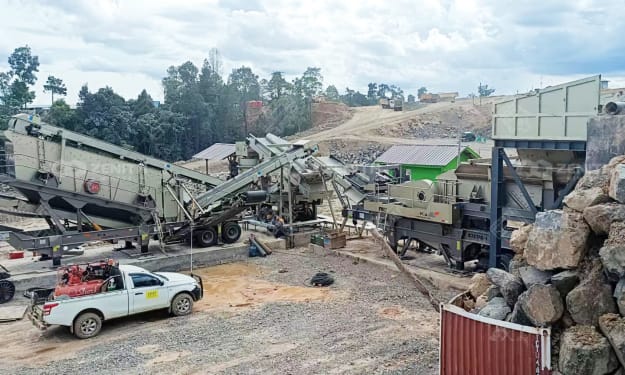
The call for a cutting-edge wastewater treatment plant in Chandigarh has never been louder. As industries chase sustainability and regulatory compliance, the pressure mounts. Rapid urbanization and thriving industries amplify the demand for safe and effective wastewater management. Enter Paleocrystal, a trailblazer in innovative manufacturing solutions. They cater specifically to the unique needs of infertility specialist clinics and other high-sensitivity sectors.
By Paleo Crystalabout a year ago in Earth
The Bird that holds the rainforest together
When I first told people I was moving to Cairns in Far North Tropical Queensland, most assumed it was because of the Great Barrier Reef. And while the reef is magnificent, my heart was drawn inland—to the rainforest.
By Basil Sargurohabout a year ago in Earth
The Last Message from Mars
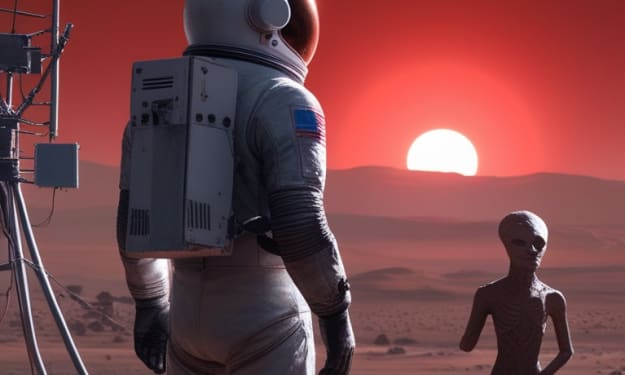
It was Sol 497 on Mars, and Commander Alex Raines had stopped counting the days. He stood alone outside the now-abandoned research station "Ares-7," staring at the dying sun through the red, dust-heavy sky. The landscape was eerily silent—just the hum of his suit systems and the distant whine of shifting sands. His oxygen levels were stable—for now—but his communication system was failing. His only companion was the empty horizon. He was the last survivor. The crew—six of the most elite minds from Earth—had been decimated after a freak storm disrupted the life support systems and caused a partial collapse of the base’s habitat modules. First it was Dr. Liang, then biologist Kara Mendez, and eventually Captain Rhodes himself. They died slowly, painfully, and Alex was left to bury them in the shallow red dirt, marking their graves with broken solar panels. A rescue mission from Earth was out of the question—budget cuts, political gridlock, and global conflict had shut down all interplanetary efforts. NASA had gone dark six months ago. Private channels yielded no response. Alex knew this would be his last transmission. But he couldn’t die without telling the truth. Inside the communication bay, he activated the emergency relay system. The old antennae crackled. A connection blinked green, weak but alive. The terminal screen glowed dimly. "This is Commander Alex Raines of Ares-7," he began, his voice dry and cracked. "If anyone receives this, please know: I am alive. For now. But more importantly, I’ve discovered something." He paused, choosing his words carefully. "Thirty kilometers west of the original landing site, under a canyon ridge, I found structures—clearly artificial. Carvings in an unknown script. Fossils. Not just microbial, but vertebrate. Humanoid." Alex took a breath, his voice shaking. "We were not the first intelligent life here. Mars had a civilization. Maybe they left. Maybe they died. But they were here. And the world must know." He uploaded his findings: high-resolution photos of the stone archways buried under layers of dust, scans showing metal alloys unknown to Earth's periodic table, and skeletal remains shaped alarmingly like human ancestors. Static swallowed part of his message. He punched the console. "I'm uploading visuals, coordinates, and scans. These are the last acts of a dying man. Please… don’t let this be forgotten." He ended the transmission. Outside, the Martian night fell quickly. The sky turned a deep violet, the stars shockingly close. Alex returned to his pod, watching the constellations shift slowly. He thought of his daughter, who would be twelve now. He had promised her he’d return. That promise had become his curse. He recorded a separate message for her, even if she never heard it. "Hey kiddo... It's Dad. I saw you in my dream today, building a rocket out of Legos. Remember when you said you'd fly here one day? Maybe you still will. Maybe someone will. I love you more than all the stars." Days passed. Then weeks. Rations dwindled. Power reserves fell into the red. The pod's heating systems failed. He wrapped himself in emergency foil, reading an old digital copy of Carl Sagan's Cosmos over and over. The words gave him comfort, but not warmth. One morning, as Alex drifted into half-consciousness, a blinking light appeared on the comms panel. A message. "Received. Data confirmed. Hold position. Rescue en route." Alex blinked. Could it be real? Or just a hallucination, a dying mind’s final comfort? He scrambled to the window, heart pounding. In the distance, over the Martian horizon, something flickered. Not a storm. Not static. Lights. As the hours passed, the lights grew brighter. Then came the rumble—the unmistakable vibration of descending thrusters. A sleek, unfamiliar craft breached the sky, coated in a metallic sheen unlike anything he’d seen. It wasn't Earth-made. His mind reeled. Was this the original Martian civilization returning? A different species answering his call? Or a black-ops project Earth had buried? The craft landed silently. A hatch opened. Silhouettes emerged—tall, humanoid, but not human. One raised a hand in greeting. Alex stepped forward, trembling. He realized then: his message had reached someone. Not Earth—but someone. And maybe, just maybe, Mars wasn’t done telling its story. Part 1: Solitude It was Sol 497. Commander Alex Raines had long stopped counting. Time on Mars felt different—slower, heavier. He stood outside the silent skeleton of the research station Ares-7, watching the dimming sun struggle through the thick red haze. The only sounds were the gentle hum of his suit and the whisper of Martian winds. There had once been life here—laughter, arguments, science. Six of Earth’s finest minds. But that was before the storm. A rogue electrical event had ripped through the atmosphere, frying life support, collapsing part of the habitat. One by one, his crewmates succumbed. Dr. Liang. Biologist Kara Mendez. Even Captain Rhodes. Each death had carved a hollow into his soul. He buried them in the dust, using broken solar panels as headstones. Now he was the last. No rescue would come. Earth was too broken—war-torn, disinterested. NASA had gone dark. Private channels returned static. The interplanetary dream had died with its dreamers. Part 2: The Discovery But Alex couldn’t let the truth die with him. He returned to the comms bay and booted the emergency relay system one last time. The antenna groaned to life, flickering weakly. A faint green glow blinked on the screen. A thread of hope. "This is Commander Alex Raines of Ares-7," he said, voice hoarse and dry. "If anyone receives this, know that I am alive. For now. But more importantly… I’ve discovered something." He took a breath. "Thirty kilometers west of the original landing site, beneath a canyon ridge, I found ruins. Structures that weren’t natural. Symbols etched into stone. Fossils—not microbial. Vertebrate. Humanoid." His hands trembled as he uploaded the data: high-res images of stone archways half-buried in dust, spectral scans of alloys unknown to Earth’s periodic table, and skeletal remains eerily similar to early hominids. "We were not the first. Something lived here. Intelligent. Advanced. Maybe they left. Maybe they died. But they were here. And the world deserves to know." Part 3: The Final Days Mars fell silent once again. Alex retreated to his pod, wrapped in thermal foil, surviving off ration crumbs and memory. He read Cosmos by Carl Sagan over and over, finding solace in the poetry of science. He recorded one final message—for his daughter. "Hey kiddo… it's Dad. I dreamed of you today. You were building a rocket out of Legos, remember? You said you’d come to Mars one day. Maybe you still will. Maybe someone will. I love you more than all the stars." The days blurred. The power dipped into red. Heating failed. The pod grew colder than death. And then—light. Part 4: Contact A blink on the console. A message: "Received. Data confirmed. Hold position. Rescue en route." Alex stared at the words, numb. Was it real? Or a hallucination, a dying mind’s farewell dream? Then he saw it—on the horizon. A shimmer. Not a storm. Not static. Lights. They grew brighter. A low hum filled the air. The ground vibrated. Something was descending—sleek, silent, and unlike any Earth-made craft. The ship touched down, graceful as a dream. Metallic, dark, smooth. A hatch hissed open. Silhouettes emerged. Tall. Humanoid. But… not human. One figure raised its hand in a gesture of peace. Alex stepped forward, heart pounding, breath shallow. His voice cracked: “Who are you?” And the answer came—not through ears, but inside his mind. "We are those who left… and those who returned. You called. We answered. You have awakened a memory buried in red silence." Tears welled in Alex’s eyes. He wasn’t alone anymore. Mars still had stories to tell.
By Abdul Rahman about a year ago in Earth
The Veil Between Worlds
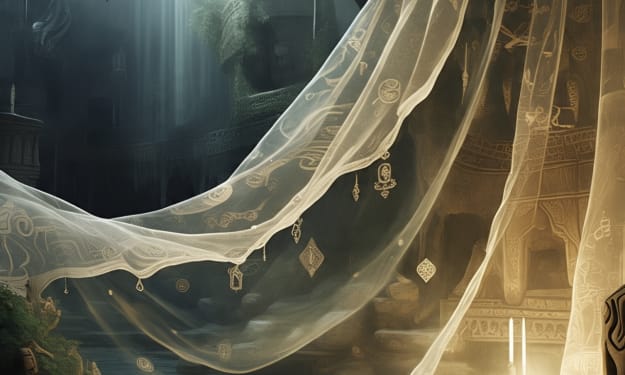
The veil was thinning. Every year, on the night of the Harvest Moon, the town of Dalloway hushed. Lanterns lined doorsteps. Salt was scattered across thresholds. Children were kept inside. Because everyone in Dalloway knew the stories—stories of the night the living and the dead danced too close.
By samon khanabout a year ago in Earth
The Crystal Gates
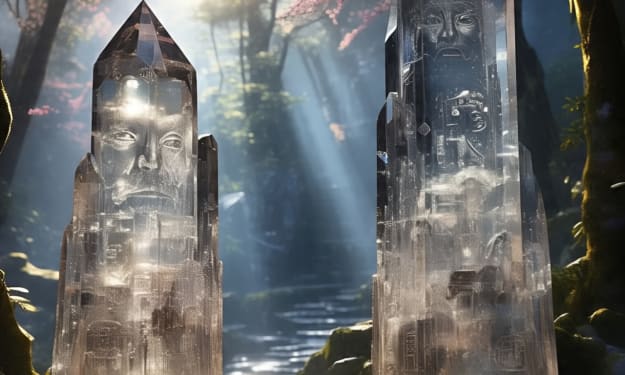
The Book of Threads had no title on its leathered cover—just a symbol burned deep into the hide: a circle split by a jagged line. To most, it would have looked like an old relic from a forgotten age. To Arin Solas, it was a beacon—and a warning.
By samon khanabout a year ago in Earth