Latest Stories
Most recently published stories in Earth.
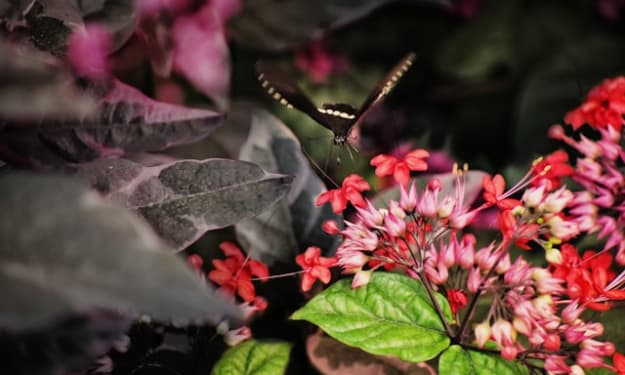
Curious Paths to Butterfly-Friendly Plants
Have you ever wondered where the most vibrant, nectar-rich plants for your Lepidoptera garden are hiding? Imagine strolling through a virtual marketplace or a bustling farmers’ market, curiosity guiding you to discover the perfect milkweed or asters that will transform your backyard into a butterfly haven. In this guide, we’ll explore four fascinating avenues to acquire butterfly-friendly plants, each brimming with surprises for the inquisitive gardener eager to attract fluttering pollinators and nurture every stage of the butterfly lifecycle.
By Akito Kawaharaabout a year ago in Earth
10 Essential Tips for First-Time RV Campers Near NYC
Introduction So, you're thinking about diving into the world of RV camping near New York City? 🚐 Good call! RV camping offers a unique blend of freedom and comfort—and it’s becoming wildly popular, especially for city dwellers craving a dose of nature without totally giving up on modern amenities.
By CEO A&S Developersabout a year ago in Earth
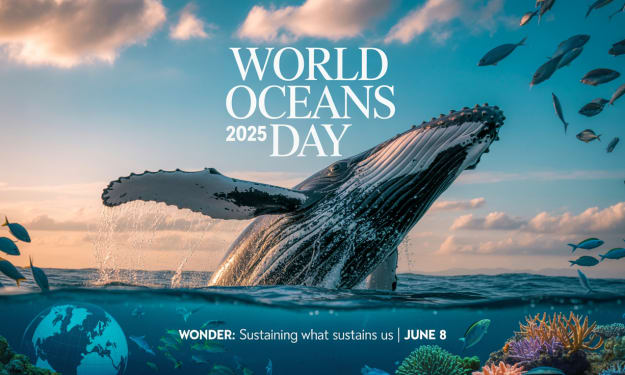
World Oceans Day 2025
Introduction Every year on June 8, the world celebrates World Oceans Day, a global initiative dedicated to honoring the oceans — the vast blue heart of our planet. In 2025, this day holds even greater urgency as the oceans face unprecedented threats from climate change, pollution, and biodiversity loss. The theme, “Catalyzing Action for Our Ocean & Climate,” highlights the critical link between ocean health and global climate stability, calling for collective action to safeguard our future.
By M Irfan Zafarabout a year ago in Earth
The Mystery of Bermuda triangle
For centuries, the vast stretch of ocean between Miami, Bermuda, and Puerto Rico has intrigued scientists, terrified sailors, and inspired endless speculation. Known ominously as the Bermuda Triangle, this region has been the site of hundreds of unexplained disappearances involving ships, aircraft, and people. With each vanished vessel, the legend deepens, fueling rumors of alien abductions, time warps, supernatural forces, and deadly magnetic anomalies. But is there truly something sinister lurking in the Atlantic? Or are the mysteries of the Bermuda Triangle merely the result of myth, coincidence, and treacherous seas? --- The Deadly Triangle: A History of Disappearances The Bermuda Triangle covers roughly 500,000 square miles of the North Atlantic Ocean. Its ominous reputation began in the early 20th century but rose to international fame after the chilling disappearance of Flight 19 in December 1945. A squadron of five U.S. Navy torpedo bombers, on a routine training mission, vanished without a trace. Even the rescue plane dispatched to find them disappeared. No wreckage was ever recovered. Radio messages from the pilots were frantic and disoriented, reporting "everything looks strange," and "we can’t tell where we are." This terrifying incident was just the beginning. In 1918, the USS Cyclops, a massive Navy cargo ship with over 300 men and 10,000 tons of manganese ore, vanished en route to Baltimore from Barbados. There were no distress signals, no debris, and no survivors. It remains the single largest non-combat loss of life in U.S. Navy history. The SS Marine Sulphur Queen, a tanker carrying molten sulfur, vanished in 1963 with 39 crew members aboard. Again, no solid evidence of what happened was ever found. From small private planes to large commercial airliners, the Bermuda Triangle seems to swallow vehicles whole, often under clear weather and with no warning. --- Theories That Will Chill You to the Bone 1. Alien Abductions Some theorists believe the Bermuda Triangle is a hotspot for extraterrestrial activity. Eyewitnesses have reported seeing strange lights and flying objects in the skies before aircraft vanish. Could alien civilizations be abducting humans for study? While no hard evidence supports this, the sheer number of disappearances has made UFOs a lasting theory. 2. Atlantis and Energy Crystals An ancient and wild theory claims that the lost city of Atlantis lies beneath the Bermuda Triangle. According to legend, Atlantis used powerful crystal energy that, even buried underwater, still emits electromagnetic waves. These waves could be disrupting navigation systems, causing planes and ships to veer off course and crash. 3. Time Warps and Portals Some believe that the Bermuda Triangle is a gateway to another dimension. Survivors of close encounters have reported distortions in time, loss of radar contact, and instrument malfunctions. A few even describe flying through "fog tunnels" where time and space seemed altered — a concept often associated with time travel or space-time anomalies. 4. Magnetic Anomalies Scientists have observed magnetic variations in the Bermuda Triangle. The Earth’s magnetic field guides navigators using compasses, but in this region, the compass may point to true north rather than magnetic north, confusing inexperienced pilots and sailors. This could potentially cause major navigational errors, especially before the era of GPS. 5. Methane Gas Explosions A more grounded theory involves massive methane hydrate deposits beneath the sea floor. Sudden releases of this gas can create frothy, unstable water that causes ships to sink rapidly without a trace. The same gas, if it rises into the atmosphere, could stall airplane engines, bringing down even large aircraft. --- Survivors’ Chilling Testimonies While many disappear forever, a few lucky survivors have emerged with stories that sound like science fiction. One pilot, Bruce Gernon, was flying over the Triangle in 1970 when he encountered an "electronic fog" that surrounded his plane. His instruments malfunctioned, and time seemed to distort — what should have been a 75-minute flight took only 47 minutes. Gernon believes he experienced a time warp. Another sailor described his compass spinning wildly while the sea turned "dead calm and glassy," followed by a sudden storm that came and vanished within minutes. He barely made it out. These testimonies, though difficult to verify, add eerie depth to the legend. --- Science vs. Superstition Despite the frightening tales, many scientists argue that the Bermuda Triangle is no more dangerous than any other heavily traveled ocean region. The U.S. Coast Guard and National Oceanic and Atmospheric Administration (NOAA) both emphasize that natural explanations such as violent storms, rapid weather changes, human error, and heavy traffic account for most incidents. Still, the Triangle's lack of concrete evidence, vanishing wreckage, and bizarre details surrounding disappearances continue to stir public imagination. --- Why the Mystery Still Terrifies Us The Bermuda Triangle embodies our deepest fears — the fear of the unknown, of disappearing without explanation, of forces beyond our control. The ocean is already mysterious and dangerous, but this patch of water adds an extra layer of terror. It defies logic, science, and experience. Whether you believe in paranormal forces, ancient powers, or simply the chaotic nature of the sea, the Bermuda Triangle stands as a modern myth — one that continues to evolve with every disappearance. --- Final Thoughts Until definitive answers surface, the Bermuda Triangle will remain an open-ended enigma, lurking silently in the Atlantic. Its legends — both ancient and modern — remind us how little we truly understand about our world. One thing is certain: those who cross into the Triangle should respect its deadly reputation... and perhaps, just perhaps, avoid it altogether.
By Mati Henry about a year ago in Earth
Urban Armor: How Cities Are Reinventing Themselves to Fight Climate Change
Urban Armor: How Cities Can Lead the Charge Against Climate Change Introduction Climate change is often viewed as a global crisis demanding international action. While treaties and global policies make headlines, the heart of climate innovation may actually lie in our cities. These urban centers, often considered major contributors to environmental degradation, are now emerging as key players in combating climate change.
By Saboor Brohi about a year ago in Earth
Enchanting Heights: The Beauty and Sweet Weather of Malam Jabba. AI-Generated.
Malam Jabba, nestled in the lush mountains of Swat Valley, Pakistan, stands as a serene retreat known for its breathtaking landscapes and temperate weather. Whether blanketed in snow or bathed in the warm glow of summer, Malam Jabba offers visitors a magical escape into nature’s embrace. Its sweet weather and enchanting beauty have made it a favorite destination for adventurers, nature lovers, and those seeking respite from the hustle and bustle of city life.
By Zain Ul Abidin Khanabout a year ago in Earth
Sweet Harvest in the Valley of Kings. AI-Generated.
Nestled among the majestic mountains of northern Pakistan, the Swat Valley has long been celebrated for its breathtaking landscapes, rich cultural heritage, and fertile soil. Known as the "Switzerland of the East," this serene valley is home to orchards that burst into life each summer with a bounty of fruit. Among these treasures, the plum stands out—not only as a symbol of seasonal abundance but also as a lifeline for thousands of families. The plum session in Swat, which takes place from late June to early August, is more than a harvest—it's a festival of color, taste, labor, and community.
By Zain Ul Abidin Khanabout a year ago in Earth
🌺✨ Discovering the Mystical Beauty of Rapa Nui (Easter Island). AI-Generated.
Rapa Nui: The Enigmatic Island of Stone Giants and Ancient Legends Far out in the southeastern Pacific Ocean, over 3,700 kilometers from the coast of Chile, lies one of the most remote inhabited islands on Earth — Rapa Nui, widely known as Easter Island. Though small in size, this triangular island holds a rich tapestry of history, mystery, and Polynesian culture, making it one of the world’s most intriguing travel destinations.
By Reiner Knappabout a year ago in Earth
An Ultimate Guide to Hampta Pass Weather and Temperature
Hampta Pass sits at about 4,290 m (~14,100 ft) in the western Himalayas, so Hampta Pass weather is strongly influenced by high altitude. The pass forms a climatic divide - it forces moist monsoon air to drop heavy rain and snow on the Kullu Manali side, while creating a rain-shadow toward Lahaul which lies within Pir Panjal mountain range. As a result, Hampta sees extreme alpine conditions with warm sunny days briefly in summer but plunging cold by night. Trekkers often report that Hampta Pass feels much colder than other Himalayan treks at lower elevations. In fact, winter temperatures at the highest camps can dip to minus 15 degrees Celsius or lower. In contrast, summer days can reach the low double-digits in degrees Celsius before evening frost sets in. This guide covers year-round trends in Hampta Pass temperature and precipitation so trekkers can plan gear and timing for a safe journey.
By Shivam Chandraabout a year ago in Earth
Teleios: The Silent Sphere That Defies the Cosmos
In the immense stretch of the Milky Way, astronomers have recently discovered a mysterious object that challenges traditional cosmic categories. Dubbed Teleios, this celestial entity is notable not only for its flawlessly spherical form but also for its unusual quietness—transmitting merely weak radio signals while being invisible in other wavelengths.
By MILTON CHANDRA ADIKARYabout a year ago in Earth