Latest Stories
Most recently published stories in Earth.
Is Climate Change Reaching a Tipping Point? 2025 Wildfires & Floods
In recent months, the planet has sent us some of its loudest warnings yet. From wildfires raging across Southern Europe and North America to devastating floods sweeping through South Asia and parts of Africa, 2025 has become a year marked by extreme climate events. The question on everyone’s mind now is sobering but necessary: Are we nearing the tipping point of climate change?
By Mehmood Niazabout a year ago in Earth
Ancient life may have existed in Mars' clay layers.
One of the most fascinating geological mysteries of the Red Planet is the existence of thick, planet-wide clay sheets. Scientists have long considered these deposits to be possible time capsules for ancient life because clay only forms when there is an abundance of liquid water present.
By Francis Damiabout a year ago in Earth
"The Hole Beneath the Ice"
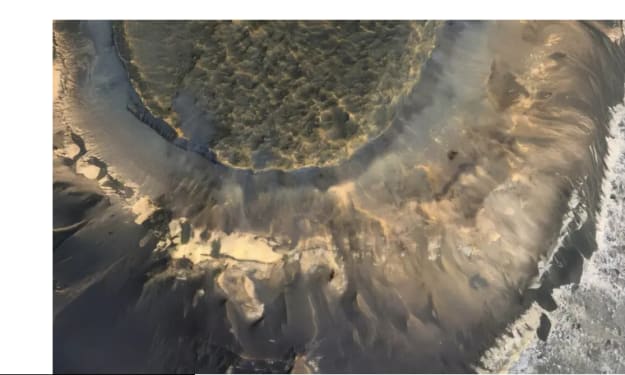
In the year 2049, the world stood on the edge of extraordinary discovery. Scientists from every nation had turned their eyes to Antarctica after an unprecedented satellite image revealed a colossal, perfectly circular hole at the South Pole — a void stretching miles deep into the Earth. The image leaked online, sparking worldwide speculation: some called it a portal, others a government conspiracy, and a few believed it to be the entrance to the legendary Hollow Earth. Among the skeptics and scientists was Dr. Arman Khalid, a geophysicist from Pakistan who had grown up hearing ancient stories from his grandfather — stories of lost cities beneath the ice, and of inner realms untouched by the world above. As a child, he had brushed them off as fairy tales. But now, staring at the same kind of hole his grandfather once described, he felt something stir inside him: a sense of purpose, perhaps even destiny. The UN formed an elite expedition team, and Arman was chosen for his deep knowledge of subglacial formations. Alongside him were environmentalist Dr. Elisa Rivera, former astronaut Commander Gene Shaw, and a mystic named Naira — an Indigenous elder from the Andes, invited for her cultural insight into the "inner Earth" legends passed down through generations. As they approached the massive hole by aircraft, it was more surreal than any photo. A gaping chasm, surrounded by ancient ice, yet emitting an unnatural warmth from within. Winds howled around it like a living creature. Their descent began — cautiously, with drones and then manned crafts. What they found beneath was beyond any scientific expectation. A massive subterranean world. Lush vegetation. Rivers glowing with bio-luminescent life. Towering trees, unlike anything known on the surface. Gravity seemed altered, lighter. And there was air — breathable, even clean. It was as though a preserved ancient Earth had survived below, untouched by pollution, war, or human ego. But it wasn’t just the land that astonished them. The deeper they went, the more they felt an inner silence, a profound stillness that wasn’t just external — it echoed in their minds. Elisa, usually loud with protest, found herself listening more. Gene, scarred from military trauma, felt his nightmares dissolve. Naira smiled, not in surprise, but in recognition. “This is not just a place,” she said. “It is a mirror. It shows us not what we want, but what we need to become.” As they set up camp, Arman found a journal among ancient stone ruins — incredibly preserved. It was written in an old dialect of Persian. It spoke of “a people who once fled the surface when greed consumed the world.” They believed in harmony over domination, knowledge over control. Every day in that hidden world changed them. Their fears faded. Their egos melted. In its place grew something stronger — humility, purpose, and understanding. Arman, once desperate for recognition in academic circles, now saw his work differently. “We have been digging in the wrong direction,” he told the group. “The greatest discovery is not beneath us, but within us.” But the outside world demanded results. Satellites had gone offline. The media speculated wildly. Pressure mounted on the team to return — with samples, proof, secrets. On their tenth day inside, a tremor shook the inner world. A voice, not heard but felt, pulsed through the Earth: “You may enter with curiosity, but leave with responsibility.” The team understood. This place could not be mined, conquered, or televised. It was a sacred reminder — a reflection of what the world had forgotten: balance, stillness, and reverence for life. They returned, each changed. Elisa began reforestation movements using knowledge from the inner ecosystem. Gene worked with PTSD survivors, sharing what stillness meant in healing. Naira became a voice across nations, reminding people that ancient wisdom wasn’t myth, but memory. And Arman — he wrote a book, not of scientific facts, but of a journey inward. It was titled: “The Hole Beneath the Ice: A Path to Inner Earth, A Path to Inner Peace.”
By Story by anyone about a year ago in Earth
What If the Earth Stopped Spinning for 5 Seconds?
A Hypothetical Disaster in 5 Seconds Have you ever wondered what would happen if the Earth suddenly stopped spinning, even for just five seconds? It sounds like science fiction, but this short time frame could cause massive disruption across the globe. The Earth’s rotation is responsible for the natural balance of life—our weather, gravity dynamics, day and night cycles, and even the shape of our planet.
By Muhammad Asimabout a year ago in Earth
Earth on the edge
Earth, our only home, is at a critical turning point. Climate change, driven largely by human activity, is no longer a distant threat — it is a present-day emergency. Rising global temperatures, extreme weather events, shrinking ice caps, and the collapse of ecosystems are warning signs that we can no longer afford to ignore. This article explores the causes, consequences, and potential solutions to global warming, and why the choices we make today will determine the fate of future generations. --- The Science of Global Warming Global warming refers to the long-term rise in Earth’s average temperature, primarily caused by the accumulation of greenhouse gases like carbon dioxide (CO₂), methane (CH₄), and nitrous oxide (N₂O) in the atmosphere. These gases trap heat from the sun, creating a “greenhouse effect” that warms the planet. While this process is natural and essential for life, human activities — especially the burning of fossil fuels, deforestation, and industrial pollution — have intensified it dangerously. Since the late 19th century, Earth's average surface temperature has risen by more than 1°C. Although this number may seem small, even slight increases in temperature can have catastrophic effects on weather patterns, ecosystems, and human life. --- Visible Impacts of a Warming World The consequences of global warming are already being felt around the globe: Melting Glaciers and Rising Seas: Polar ice caps and glaciers are melting at alarming rates, leading to rising sea levels that threaten coastal communities and small island nations. Extreme Weather: Droughts, heatwaves, hurricanes, floods, and wildfires are becoming more frequent and severe. These events not only destroy property and lives but also strain economies and health systems. Loss of Biodiversity: Countless species are facing extinction due to habitat loss, changing climates, and pollution. Coral reefs, for instance, are dying due to ocean warming and acidification. Human Health Risks: Poor air quality, the spread of infectious diseases, and food and water scarcity are some of the health-related challenges linked to climate change. --- The Human Role — and Responsibility We are both the cause and the solution to this crisis. Our energy choices, consumption habits, and land-use practices have a direct impact on the environment. However, we also have the power to change the course of this story. Shifting to renewable energy, investing in green infrastructure, protecting forests, reducing waste, and adopting sustainable lifestyles are critical steps toward a healthier planet. Every action, no matter how small, contributes to the larger goal. --- Hope for the Future Despite the gravity of the situation, there is hope. Innovations in clean energy, climate science, and environmental policy offer real solutions. International agreements like the Paris Accord aim to limit global warming to below 1.5°C — a goal that is still achievable if nations act quickly and cooperatively. Young people around the world are leading the charge, demanding climate justice and sustainable change. The image of a child standing between a thriving Earth and a dying one is more than symbolic — it is a reminder that the future truly is in our hands. --- What You Can Do Reduce your carbon footprint: Use energy-efficient appliances, cut down on car travel, and support renewable energy. Eat sustainably: Reduce meat consumption and avoid food waste. Plant trees: Forests absorb CO₂ and help regulate climate. Educate and advocate: Talk about climate change, support environmental organizations, and push leaders to take bold action. --- Conclusion The choice before us is clear: continue down the path of destruction or take immediate, collective action to heal our planet. The window of opportunity is narrowing, but it is not yet closed. The decisions we make today will echo for generations. Let us choose wisely — for the Earth, for ourselves, and for the children who will inherit the world we leave behind. > “The future is in our hands.”
By Hasbanullahabout a year ago in Earth