Latest Stories
Most recently published stories in Earth.
Health and Longevity Technology: Revolutionizing the Quest for a Longer, Healthier Life
Introduction Advances in technology have dramatically transformed healthcare, offering new hope in the pursuit of longer, healthier lives. Health and longevity technology—a rapidly evolving field—combines biotechnology, artificial intelligence, wearable devices, and personalized medicine to prevent disease, slow aging, and improve quality of life. As populations worldwide age and chronic diseases rise, these innovations hold the promise of extending both lifespan (the number of years lived) and healthspan (the number of healthy, active years). This essay explores the major breakthroughs in health and longevity tech, their implications, and the ethical challenges they present.
By Anwar Jamilabout a year ago in Earth
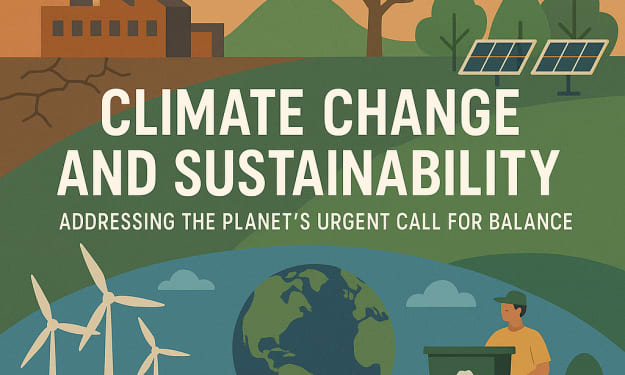
Climate Change and Sustainability: Addressing the Planet’s Urgent Call for Balance
Introduction Climate change is one of the most pressing challenges facing humanity today. It refers to significant, long-term changes in global weather patterns, primarily caused by human activities such as burning fossil fuels, deforestation, and industrial processes. These activities increase greenhouse gas emissions, trapping heat in the Earth’s atmosphere and causing global warming. The effects of climate change are evident worldwide: rising sea levels, extreme weather events, loss of biodiversity, and threats to food and water security. In response, sustainability has emerged as a vital framework that seeks to balance environmental health, economic growth, and social equity to ensure a livable planet for current and future generations.
By Anwar Jamilabout a year ago in Earth
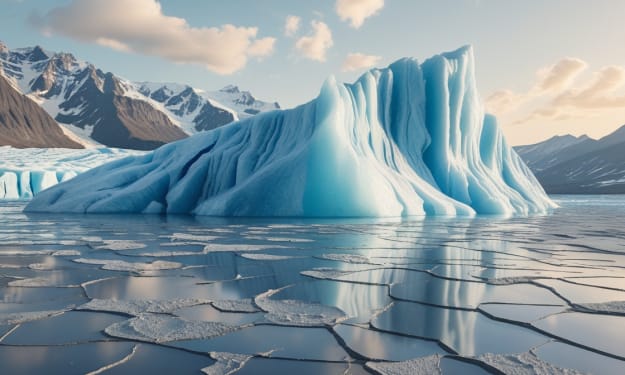
The Silent Storm: Unmasking the Reality of Global Warming
The Rising Heat Global warming is no longer a prediction. It is a lived reality. Around the globe, temperatures are rising, glaciers are shrinking, sea levels are climbing, and weather events have turned extreme. But the most alarming part? Many people still underestimate the severity of the problem.
By Atif jamal about a year ago in Earth
A Shade in the Sun
The sun had ruled the skies for far too long. It was the middle of summer in the quiet village of Garyala. For over a month, there had been no clouds, no rain and no breeze. Every day felt like a repeat of the last — hot, dry and endless. The ground had cracked from thirst, the plants had wilted and even the birds had stopped singing.
By Mansoor Ahmadabout a year ago in Earth
10 Incredible Facts About the Mysterious Amazon Jungle. AI-Generated.
The Amazon Jungle, also known as the Amazon Rainforest, is one of the most mysterious and fascinating places on Earth. Located in South America, it stretches across 9 countries, including Brazil, Peru, Colombia, and Venezuela. It covers over 5.5 million square kilometers, making it the largest rainforest in the world. But size is just the beginning — the Amazon is full of incredible facts that will amaze you!
By Waseem Ahmad about a year ago in Earth
Secrets Beneath the Waves. AI-Generated.
Aaliya was a 22-year-old marine biology student from Karachi, Pakistan. Curious, bold, and passionate about the ocean, she had grown up watching documentaries about coral reefs and whales while her friends watched cartoons. For her, the sea was not just water—it was a living, breathing world filled with wonders no one truly understood.
By Raza Ullahabout a year ago in Earth
Mesopotamia
## Mesopotamia: A Comprehensive Overview Mesopotamia, meaning "land between the rivers" in Greek, refers to the region between the Tigris and Euphrates rivers in present-day Iraq, Kuwait, and parts of Syria, Turkey, and Iran. This area is often called the "Cradle of Civilization" due to its significant contributions to human development. ### Geography and Climate Mesopotamia's geography played a crucial role in shaping its history. The Tigris and Euphrates rivers provided a fertile plain, ideal for agriculture, which enabled the growth of cities and civilizations. The region's climate is characterized by hot summers and mild winters, with limited rainfall, making irrigation essential for agriculture. ### Early Civilizations Mesopotamia was home to some of the world's earliest civilizations, including: 1. *Sumerians* (c. 4500 - 1900 BCE): Known for their innovations in writing (cuneiform), governance (city-states), and architecture (ziggurats). Sumerians developed a sophisticated system of government, economy, and culture. 2. *Akkadians* (c. 2334 - 2154 BCE): Unified various city-states and established a vast empire under Sargon the Great. Akkadians contributed to the development of literature, art, and architecture. 3. *Babylonians* (c. 1834 - 539 BCE): Famous for their legal code (Code of Hammurabi) and architectural achievements (Hanging Gardens of Babylon). Babylonians made significant contributions to astronomy, mathematics, and medicine. 4. *Assyrians* (c. 2500 - 612 BCE): Known for their military prowess and administrative skills. Assyrians developed a vast empire, which stretched from the Mediterranean to Egypt. ### Key Achievements 1. *Writing*: Mesopotamia is credited with the invention of cuneiform, one of the earliest forms of writing. This innovation enabled the recording of laws, literature, and administrative documents. 2. *Agriculture*: The region saw the development of irrigation systems, which enabled the growth of cities and civilizations. Mesopotamians developed sophisticated agricultural practices, including crop rotation and fertilization. 3. *Governance*: Mesopotamia was home to some of the earliest forms of government, including monarchies and city-states. Mesopotamians developed a system of laws, which governed social behavior, trade, and commerce. 4. *Astronomy*: The Mesopotamians made significant contributions to astronomy, including mapping the movements of celestial bodies. They developed a sexagesimal (base-60) system, which we still use today for measuring time and angles. ### Cultural Significance 1. *Mythology*: Mesopotamian mythology, as seen in the Epic of Gilgamesh, has had a lasting impact on literature and storytelling. The epic poem explores themes of friendship, love, and the human condition. 2. *Art and Architecture*: Mesopotamian art and architecture, including ziggurats and palaces, showcase the region's rich cultural heritage. Mesopotamians developed a distinctive style, which blended Sumerian, Akkadian, and Babylonian influences. 3. *Trade and Commerce*: Mesopotamia was a hub of trade and commerce, connecting the East and West through its extensive network of rivers and roads. Mesopotamians traded goods, including grains, textiles, and metals. ### Legacy Mesopotamia's legacy can be seen in its contributions to modern society, including: 1. *Law*: The Code of Hammurabi is one of the earliest surviving law codes and has influenced legal systems worldwide. 2. *Literature*: The Epic of Gilgamesh is one of the earliest surviving works of literature and continues to be studied today. 3. *Science*: Mesopotamian contributions to astronomy, mathematics, and medicine have had a lasting impact on scientific development. ### Conclusion Mesopotamia's rich history and cultural significance continue to fascinate people around the world. The region's contributions to writing, governance, agriculture, and astronomy have had a lasting impact on human development. As we continue to explore and learn about Mesopotamia, we gain a deeper understanding of the complexities and achievements of ancient civilizations. ### Timeline - *Sumerian Civilization*: c. 4500 - 1900 BCE - *Akkadian Empire*: c. 2334 - 2154 BCE - *Babylonian Empire*: c. 1834 - 539 BCE - *Assyrian Empire*: c. 2500 - 612 BCE ### Key Figures - *Sargon the Great*: Unified various city-states and established the Akkadian Empire. - *Hammurabi*: Developed the Code of Hammurabi, one of the earliest surviving law codes. - *Gilgamesh*: King of Uruk and protagonist of the Epic of Gilgamesh.
By Anwar mustaan about a year ago in Earth
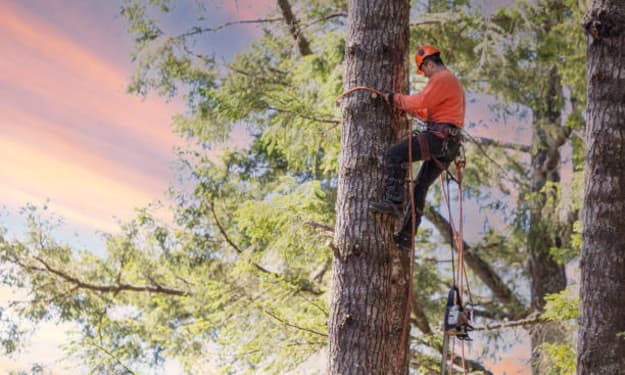
Why Tree Surgery Is Essential for a Beautiful Landscape
Maintaining an outdoor space is more than simply mowing the lawn or planting seasonal flowers. Trees are the living architecture of your garden, shaping its beauty, contributing to the environment, and even boosting property value. But without proper care, even the most graceful trees can become dangerous or diminish the look of your garden.
By Acorn Tree Surgeon Nottinghamabout a year ago in Earth
The Greenhouse Effect: A Threat to Our Planet
I remember the first time I heard the term “greenhouse effect.” I was twelve, sitting cross-legged in my grandmother’s backyard garden. It was a warm spring afternoon. Bees hovered lazily over the lavender bushes, and the scent of tomatoes ripening on the vine lingered in the air.
By From Dust to Starsabout a year ago in Earth
Anaconda: The Ultimate Guide to the World’s Largest Snake
Among the most amazing creatures found in the Amazon rainforest, few animals arouse the imagination as much as the anaconda. The world's largest snake, the anaconda, is a symbol of power, mystery, and the South American wilderness. This thorough guide, offered by Palotoa Amazon Travel, will cover the species, habitat, diet, behaviour, adaptations, and myths surrounding this legendary giant snake. Whether you are interested in wildlife, want to travel to the Amazon, or are just curious, this in-depth article will give you all the information you need to comprehend the anaconda and why it is considered one of the most fascinating reptiles in the world.
By Palotoa Amazon Travelabout a year ago in Earth
Optimise Energy Usage in Schools & Universities with These 4 Strategies
We all know how important education is, but we are also aware of how tightly stretched budgets are for schools and universities. This makes it imperative that they are able to save money wherever they can, and with energy bills continuing to spike, it seems that this is a logical place to try and cut back.
By Mark Boardmanabout a year ago in Earth