
Mesopotamia
"Cradle of Civilization" This p hrase reflects Mesopotamia’s historical importance as one of the earliest centers of urban development, writing, law, and complex society. If you're looking for something more thematic or creative, here are a few other options: Alternative Subtitles: "Where History Began" "The Birthplace of Cities and Writing" "Between Two Rivers: Dawn of Civilization" "The First Great Civilization" "Land of Sumer, Akkad, and Babylon"
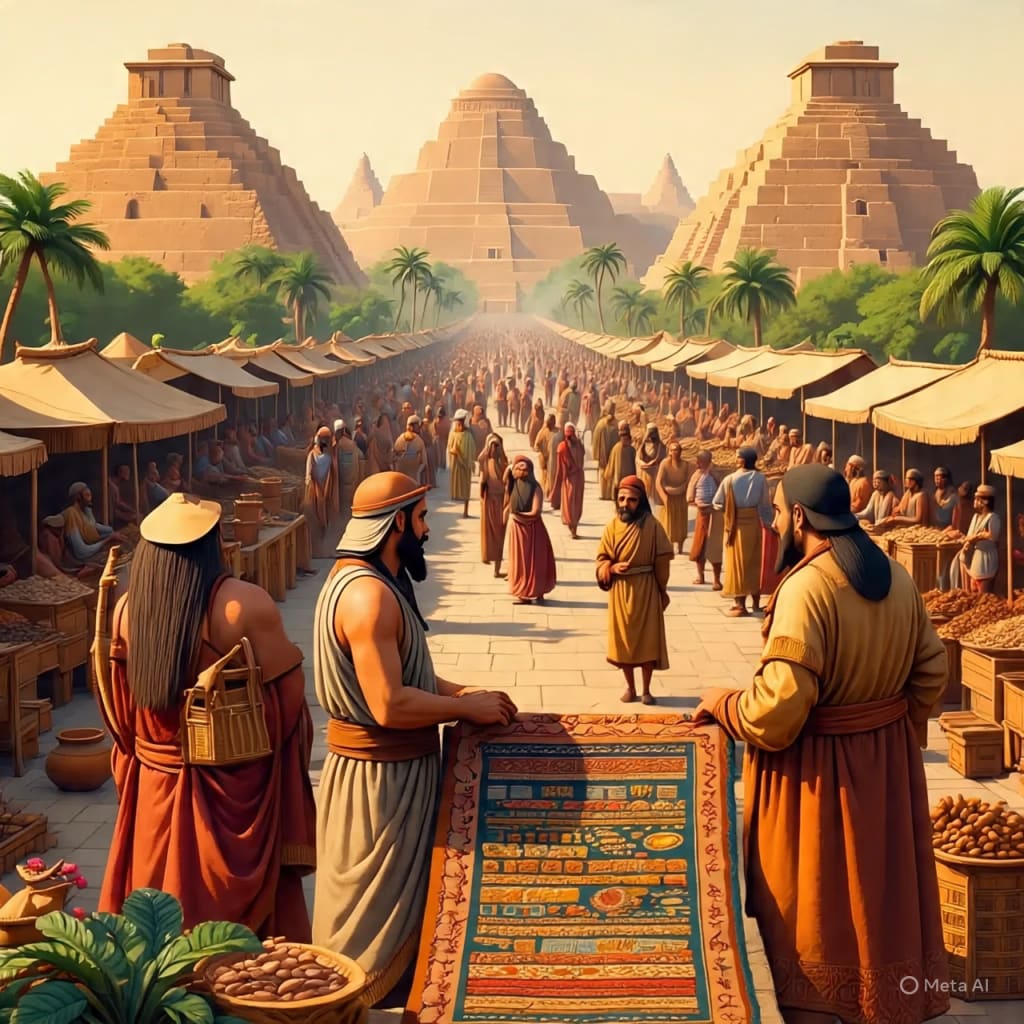
## Mesopotamia: A Comprehensive Overview Mesopotamia, meaning "land between the rivers" in Greek, refers to the region between the Tigris and Euphrates rivers in present-day Iraq, Kuwait, and parts of Syria, Turkey, and Iran. This area is often called the "Cradle of Civilization" due to its significant contributions to human development. ### Geography and Climate Mesopotamia's geography played a crucial role in shaping its history. The Tigris and Euphrates rivers provided a fertile plain, ideal for agriculture, which enabled the growth of cities and civilizations. The region's climate is characterized by hot summers and mild winters, with limited rainfall, making irrigation essential for agriculture. ### Early Civilizations Mesopotamia was home to some of the world's earliest civilizations, including: 1. *Sumerians* (c. 4500 - 1900 BCE): Known for their innovations in writing (cuneiform), governance (city-states), and architecture (ziggurats). Sumerians developed a sophisticated system of government, economy, and culture. 2. *Akkadians* (c. 2334 - 2154 BCE): Unified various city-states and established a vast empire under Sargon the Great. Akkadians contributed to the development of literature, art, and architecture. 3. *Babylonians* (c. 1834 - 539 BCE): Famous for their legal code (Code of Hammurabi) and architectural achievements (Hanging Gardens of Babylon). Babylonians made significant contributions to astronomy, mathematics, and medicine. 4. *Assyrians* (c. 2500 - 612 BCE): Known for their military prowess and administrative skills. Assyrians developed a vast empire, which stretched from the Mediterranean to Egypt. ### Key Achievements 1. *Writing*: Mesopotamia is credited with the invention of cuneiform, one of the earliest forms of writing. This innovation enabled the recording of laws, literature, and administrative documents. 2. *Agriculture*: The region saw the development of irrigation systems, which enabled the growth of cities and civilizations. Mesopotamians developed sophisticated agricultural practices, including crop rotation and fertilization. 3. *Governance*: Mesopotamia was home to some of the earliest forms of government, including monarchies and city-states. Mesopotamians developed a system of laws, which governed social behavior, trade, and commerce. 4. *Astronomy*: The Mesopotamians made significant contributions to astronomy, including mapping the movements of celestial bodies. They developed a sexagesimal (base-60) system, which we still use today for measuring time and angles. ### Cultural Significance 1. *Mythology*: Mesopotamian mythology, as seen in the Epic of Gilgamesh, has had a lasting impact on literature and storytelling. The epic poem explores themes of friendship, love, and the human condition. 2. *Art and Architecture*: Mesopotamian art and architecture, including ziggurats and palaces, showcase the region's rich cultural heritage. Mesopotamians developed a distinctive style, which blended Sumerian, Akkadian, and Babylonian influences. 3. *Trade and Commerce*: Mesopotamia was a hub of trade and commerce, connecting the East and West through its extensive network of rivers and roads. Mesopotamians traded goods, including grains, textiles, and metals. ### Legacy Mesopotamia's legacy can be seen in its contributions to modern society, including: 1. *Law*: The Code of Hammurabi is one of the earliest surviving law codes and has influenced legal systems worldwide. 2. *Literature*: The Epic of Gilgamesh is one of the earliest surviving works of literature and continues to be studied today. 3. *Science*: Mesopotamian contributions to astronomy, mathematics, and medicine have had a lasting impact on scientific development. ### Conclusion Mesopotamia's rich history and cultural significance continue to fascinate people around the world. The region's contributions to writing, governance, agriculture, and astronomy have had a lasting impact on human development. As we continue to explore and learn about Mesopotamia, we gain a deeper understanding of the complexities and achievements of ancient civilizations. ### Timeline - *Sumerian Civilization*: c. 4500 - 1900 BCE - *Akkadian Empire*: c. 2334 - 2154 BCE - *Babylonian Empire*: c. 1834 - 539 BCE - *Assyrian Empire*: c. 2500 - 612 BCE ### Key Figures - *Sargon the Great*: Unified various city-states and established the Akkadian Empire. - *Hammurabi*: Developed the Code of Hammurabi, one of the earliest surviving law codes. - *Gilgamesh*: King of Uruk and protagonist of the Epic of Gilgamesh.
About the Creator
Enjoyed the story? Support the Creator.
Subscribe for free to receive all their stories in your feed.
Comments
There are no comments for this story
Be the first to respond and start the conversation.