Latest Stories
Most recently published stories in Earth.
Are There Other Realities?
There are many different realities, but we are too blind to see that. There is not just one way; there have always been an infinite amount of alternate realities to every reality there is out there. If I think on it that way, then I wonder what is real? Is it real because we see it? I don't think so. I don't think we have to see it to believe that it's real. I think it exists, whether or not we see it or believe it. Those realities are right there, happening at the same time that our reality is happening, and so on and so on.
By Slgtlyscatt3redabout a year ago in Earth
"Whispers of the Wild: The Boy and the Lion"
The wind carried secrets in the savannah—soft murmurs only the truly silent could hear. Kito, a boy no older than ten, was one such listener. With no family left, he wandered the golden plains alone, speaking little, but hearing everything—the rustle of grass, the language of birds, the distant rumble of thunder. He understood the wild, not with words, but with heartbeats. The villagers called him strange and cursed. They said he’d been raised by ghosts after his parents vanished in a fire. Kito never denied it. He only wandered farther, away from the huts and toward the sunlit horizon, where the grass whispered stories older than man. One evening, as the sky bled gold and crimson, Kito found himself near the Great Rock—a massive outcrop said to be sacred. There, lying in the shade like a fallen king, was a lion. Massive. Silent. Watching. Most boys would have run. Kito didn’t. His heart beat fast, but not with fear—with recognition. The lion was old. Not in years, but in eyes. It stared at Kito as if it knew him. Slowly, the boy sat down on the opposite side of the rock, the lion just a few paces away. They watched the sun sink together, neither moving. Night fell, stars blinking awake. The lion didn’t leave. Nor did Kito. By morning, something had changed. The lion stood, stretched with lazy power, and approached. Kito stayed still. The lion sniffed him, then lay down beside him, its flank warm and rising with deep, calm breaths. From that day on, they were never apart. The villagers saw them—boy and beast—moving as one through the tall grasses. They whispered louder now. Some feared Kito. Others respected him. But no one dared follow. The boy and the lion shared everything: silence, shade, rainstorms, and dreams. At night, Kito would rest against the lion’s side, listening to the slow, steady drum of its heart. In sleep, he dreamed of running on four legs, of roaring into the sky, of ancient battles and forgotten lands. The lion, he knew, dreamed too. One season passed. Then another. One evening, the lion did not rise. Its breaths were slower. Shallower. Kito sat beside it, stroking its fur, tears streaking silent paths down his dusty cheeks. The lion looked at him one last time. Its golden eyes held no fear. Only peace. Trust. And something more—memory. In that gaze, Kito saw his parents, their laughter around the fire, the way they danced when the rains came. He saw the fire that took them, and the lion—this very lion—dragging him from the flames, cradling him beneath its body as the world burned. The whispers of the wild had not lied. The lion had been watching over him all along. As the sun dipped below the horizon, the lion closed its eyes. Kito lay beside it, his small hand resting over its massive paw. And for a long time, the savannah was silent. When the villagers came days later, they found the boy alone beside the still lion. He did not speak. He didn’t need to. They buried the lion beneath the Great Rock. Kito carved a lion’s head into the stone with his father’s old knife—he’d carried it all these years without knowing why. The boy grew older. Taller. Quieter. And when people came to the edge of the wild, looking for guidance, they found him there, standing barefoot in the grass, his eyes sharp, calm, and golden. They say he still walks the savannah, not quite boy, not quite man. And sometimes, when the wind is right, you can hear a low rumble—like a lion’s purr—and a whisper that carries across the plains. It says: “He listens.”
By Muhammad Saad about a year ago in Earth
To cope with climate change, ancient societies employed a variety of tactics.
The contemporary age was not the beginning of climate change. Africa's prehistoric past shows that people are already battling climatic instability and are adapting through a variety of coping mechanisms.
By Francis Damiabout a year ago in Earth
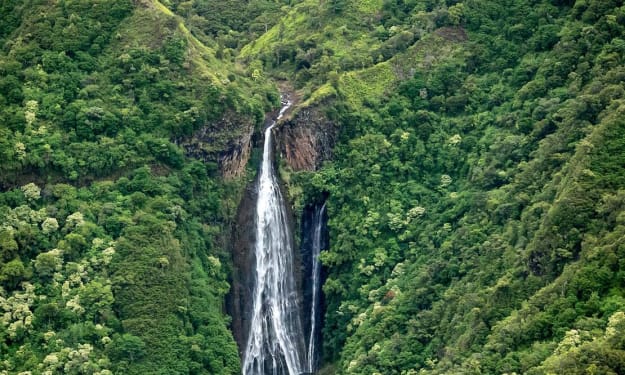
The Falling Grace
In the beginning, when the Earth was still shaping itself, rivers wandered across the land like silver threads. They flowed from mountaintops, twisted through valleys, and carved deep paths through rocks. Among these rivers, in certain places, something extraordinary began to happen—something that would become one of nature’s most powerful and beautiful wonders: the waterfall.
By Raza Ullahabout a year ago in Earth
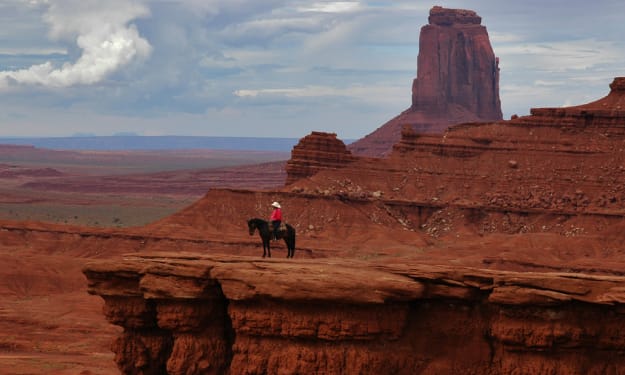
The Giants of the Earth
Long before cities, farms, and people, the Earth was shaping itself through fire, water, and time. Mountains were rising, rivers were carving valleys, and deep within the heart of the world, a new kind of landform was slowly being created—plateaus, the flat-topped giants of the Earth.
By Raza Ullahabout a year ago in Earth
Mirror of the Mountains
Long ago, before humans walked the Earth and cities dotted the landscapes, the world was a wild, untouched canvas. Mountains stood tall, forests stretched endlessly, and rivers wound their way like silver threads. But hidden among valleys and deep in the folds of the earth, something magical was being created—lakes.
By Raza Ullahabout a year ago in Earth
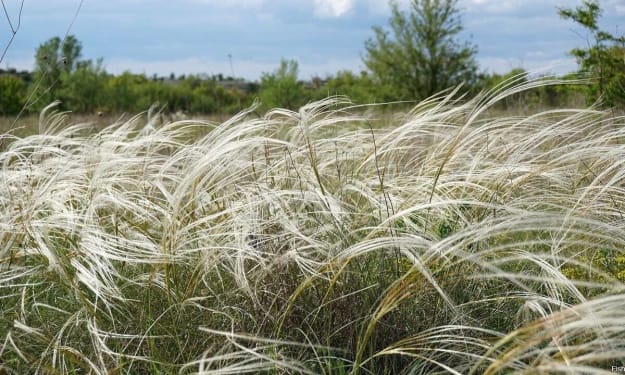
Whispers of the Earth
Long before the roads, buildings, and towns stretched across the land, there was only silence—and nature. The world was wild, free, and raw. Mountains touched the sky, rivers danced across the earth, and deep within the valleys, something magical was taking shape: the meadows.
By Raza Ullahabout a year ago in Earth
Why Dandelions Deserve Love?
Dandelion. A well-known plant. But, it sure is more than that. Let's see what this humble plant has to offer. Flower: The name dandelion conjures up image of meadow with yellow dainty flowers. Its pretty delightful view. Bees gather nectar from them. People soak the flowers in oil, and make salve out of them. Some of them make dandelion flower jelly, syrup, cupcake, waffles, fritters.
By Seema Patelabout a year ago in Earth
Whispers of the Wild: A Jungle's Secret
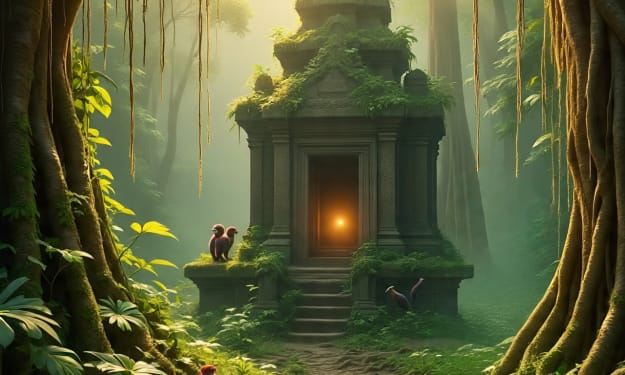
The jungle was alive with sound—chirps, rustles, and calls that echoed like whispers among the thick canopy. To most, the jungle was chaos. But to ten-year-old Lila, it was music. She had grown up on the edge of the green expanse, in a small village that always warned its children: “Don’t go beyond the river. That jungle has secrets that don’t want to be found.” But curiosity, especially in a child like Lila, was a force stronger than fear. It started with a dream. She saw a golden light in the trees and heard a voice whispering her name. When she woke up, her fingers were curled around a small, ancient coin she’d never seen before, etched with strange symbols. That morning, Lila made up her mind—she would follow the whispers. She slipped away before dawn, crossing the river by the old log bridge the villagers avoided. The air changed as she entered the deeper jungle—it was cooler, thicker, almost humming with energy. As she wandered, the forest seemed to guide her. Vines parted for her feet, birds flew in a pattern overhead, and the whisper grew louder—not in sound, but in her chest, as if something deep within the earth was calling out to her. After hours of walking, she stumbled into a clearing. Her breath caught. There, half-swallowed by roots and moss, stood an ancient stone temple. Time had weathered its walls, but golden light still danced faintly from its entrance—as if it had been waiting just for her. Lila stepped inside. The air was cool and dry. Glowing carvings lined the walls, depicting stories of animals and people living in harmony. At the center stood a pedestal with a shallow bowl carved into it. Lila approached, drawn by something she couldn’t explain. From her pocket, she pulled out the coin. As she placed it in the bowl, the room pulsed with light. The carvings shifted and moved—tigers leapt, birds flew, trees swayed. It was as if the jungle itself had come alive within the walls. Then came the voice—not a whisper this time, but deep and warm, like a drumbeat. "The jungle remembers. You are its chosen." Lila’s heart raced. “What do you mean?” she whispered. Images flashed in her mind—forests burning, animals fleeing, rivers drying. Then, new images—lush growth, clean streams, balance. She understood. The temple was not just a relic. It was a guardian. And the coin was a key, passed from dreamer to dreamer, to those who could hear the jungle’s cry. The jungle had chosen her. The light faded. The coin remained, but something had changed. The forest no longer felt unknown—it felt like home. Lila emerged from the temple as the sun dipped below the treetops. Birds sang a different song. Monkeys watched her with knowing eyes. She looked back one last time before heading home, the whispers now clear and strong in her heart. When she returned, the villagers were waiting. Some looked angry, others worried. But her grandmother stepped forward, eyes wide. “You saw it, didn’t you?” she asked. Lila nodded. Her grandmother smiled. “It’s your turn now.” And from that day forward, the jungle was no longer feared. Lila became its voice, its protector, the bridge between the wild and the world beyond. And when the jungle whispered, she listened.
By Muhammad Saad about a year ago in Earth