Latest Stories
Most recently published stories in Earth.
The Voice That Spoke for the Earth
The Journey of Atom Bam: A Voice for the World In a quiet village nestled between emerald hills and silver rivers, there lived a curious boy named Atom Bam. His name was unusual, but it suited him perfectly—because just like the tiniest particle in the universe, Atom had a spark inside him that made him different from everyone else. While other children played games or chased fireflies, Atom would sit by the old oak tree and listen—to the wind, to the birds, to the whispers of the earth itself.
By Wings of Time about a year ago in Earth
Where in the World Have I Been?. Content Warning. AI-Generated.
The question came out of nowhere. “Where in the world have you been?” I paused, spoon halfway to my mouth, as if the answer were hiding in my bowl of soup. It was a simple question, thrown casually across the table by my friend Maria during a quiet Sunday lunch. But it struck something deeper. It wasn’t just about geography or countries. It was about memories, moments, and the mosaic of experiences that make us who we are. So, I answered—not with a list of places, but with a story. --- 1. A Dusty Childhood in Swat, Pakistan I began in the green valleys of Swat, Pakistan, where my story started. I wasn’t just born there—I became there. My earliest memories are painted with the scent of chapli kebabs on open flames, the laughter of cousins during electricity blackouts, and the sound of water gushing through rocky streams as we threw in pebbles, pretending they were tiny ships. In Swat, time moved slowly. Life was measured not by clocks but by call to prayer, the growth of mangoes, or the changing shades of the sky. There, I learned the value of stillness and the strength of silence. --- 2. Lost in the Streets of Lahore Years later, I found myself wandering the energetic chaos of Lahore. If Swat was a lullaby, Lahore was a rock concert. The city had a rhythm that didn’t let you rest. Rickshaws honked symphonies of madness, vendors shouted poetry, and the smell of spices danced through every corner. One evening, during a college trip, I got lost in Anarkali Bazaar. Instead of panicking, I let myself drift through the crowd. I watched an old man make paper roses, a child sell balloons taller than himself, and lovers pass secret notes. That day, I realized that getting lost sometimes teaches you more than sticking to the map ever could. --- 3. Rain-soaked Nights in Kuala Lumpur Malaysia was my first real escape abroad. The moment I landed in Kuala Lumpur, everything felt like a movie—tall buildings, glowing lights, people who looked nothing like me, and food that confused my tongue. It rained every evening, as if the skies were on a timer. But the rain didn’t stop life; it invited it. I remember running through wet streets with new friends from different corners of the world—Ahmed from Egypt, Lucy from Germany, Mei from China. We shared stories and street food under umbrellas, laughing at the idea that oceans had ever separated us. One rainy night, soaked and shivering, I stood beneath the Petronas Towers and felt infinite. That was the night I fell in love with the world. --- 4. Snowflakes and Solitude in Istanbul Istanbul came like a surprise chapter in a book I didn’t expect to read. I visited during winter, when the city wore white like a shy bride. The Bosphorus was calm, the mosques echoed with snow-muted calls to prayer, and even the cats seemed quieter. I spent a lot of time alone there—walking through old markets, sipping apple tea, writing poems on napkins. One morning, I met an old man selling antique maps. He said, “Maps are not about directions, but about dreams.” That line stayed with me. I bought one of his maps. It hangs on my wall even today, reminding me that every dream is a place waiting to be found. --- 5. A Heartbreak in Dubai Not all places are warm memories. In Dubai, I had my first real heartbreak. We had promised the stars to each other, but ended up walking away in silence. The city, despite its shine and glamour, suddenly felt too loud, too bright, too fake. I wandered through malls that felt like museums of materialism, sat alone on the edge of beaches, and watched planes disappear into skies I didn’t want to chase. But in that pain, I learned something important: places don’t heal you—you heal in places. Dubai didn’t save me, but it gave me space to break, to think, and eventually, to rebuild. --- 6. Finding Myself in My Room And then came a strange phase—the COVID years. Borders closed. Plans were cancelled. The world shrank into four walls. Suddenly, I wasn’t going anywhere. But something shifted. Instead of traveling outside, I began traveling within. I picked up journaling. I started talking to my parents more deeply. I reconnected with childhood dreams and began writing stories—like this one. That period reminded me that the biggest journey one can take is not across countries, but into the depths of their own heart. --- 7. The Answer at the Table “So?” Maria asked again, tapping her fingers. “Where in the world have you been?” I smiled and replied, “Everywhere that changed me. From the valleys of home to the corners of grief, from laughter under foreign skies to tears in quiet hotel rooms. I’ve been to places that never showed up on Google Maps but are carved deep into me.” She blinked. “You’ve always been dramatic.” I laughed. “Maybe. But that’s how I travel. With stories.” She nodded, perhaps a little envious, or maybe just moved. We finished our lunch in silence, both of us lost in our own mental maps. --- Epilogue: The Journey Never Ends Where in the world have I been? I’ve been in cities that danced and villages that slept. In airports that promised beginnings and stations that whispered farewells. I’ve been in languages I didn’t speak but somehow understood. I’ve been in the arms of strangers who became family, and in the echo of rooms where I was utterly alone. But most of all, I’ve been in moments—and maybe that’s the real answer. Because home isn't always a place, and journeys aren’t always measured in miles. Sometimes, they’re measured in memories.
By GoldenToneabout a year ago in Earth
Water: A Great Blessing of Nature
Water is one of the greatest blessings of nature. It is essential for all forms of life—humans, animals, and plants. Without water, life on Earth would not be possible. Every drop of water is precious, yet we often take it for granted. In today’s world, where clean water is becoming scarce in many regions, it is important to understand the value of water and use it wisely.
By aadam khanabout a year ago in Earth
BEYOND THE BLUE DOT: A REALISTIC JOURNEY THROUGH THE UNIVERSE
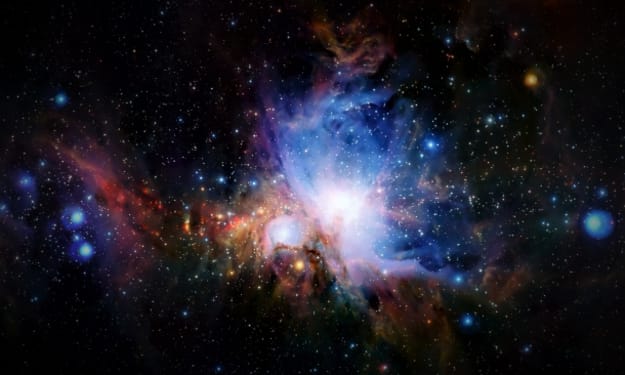
Earth, our vibrant, blue planet, is the only home we've ever known. It’s where every human has lived, every story has unfolded, and every moment in history has taken place. But when we look beyond Earth’s atmosphere, we begin to realise just how tiny and fragile our world is amidst the vastness of the universe. The Moon, our closest celestial neighbour, lies 384,000 kilometres away. From its surface, Earth appears as a small glowing marble suspended in a sea of darkness—a striking reminder of our planet’s fragility and uniqueness. Moving beyond, we encounter the Sun, about 150 million kilometres from Earth. Light travels this distance in just over eight minutes, but a plane would take almost 19 years to get there. Farther still is Mars, which at its closest point is 54.6 million kilometres from Earth, and over 400 million kilometres at its farthest. Even sending robotic missions to Mars presents huge challenges due to constantly shifting distances. These massive scales show how space travel, even within our solar system, is anything but simple. As we journey outward, we meet Neptune, the distant ice giant, roughly 4.5 billion kilometres away. This marks the edge of our planetary neighbourhood. Yet even farther, the Voyager 1 spacecraft, launched in 1977, has travelled over 22 billion kilometres from Earth, making it the most distant human-made object. In 1990, it captured the famous "Pale Blue Dot" image of Earth from 6 billion kilometres away, inspiring astronomer Carl Sagan to reflect on our shared responsibility to protect this small world. At the outer edge of the solar system lies the theorised Oort Cloud, a vast sphere of icy objects possibly stretching 1.9 light years from the Sun—a distance so immense it's almost entering interstellar space. Beyond the solar system, our closest star system is Alpha Centauri, about 4.4 light years away. At current speeds, Voyager 1 would take over 70,000 years to reach it. The Milky Way galaxy itself extends 100,000 light years and contains hundreds of billions of stars. However, all our radio signals have only reached a 100-light-year radius within our so-called "radio bubble." Beyond that, no other civilisations would even be aware of our existence. This quiet gap between stars serves as a sobering reminder of how isolated we are, even within our galaxy. But our galaxy is just the beginning. We’re part of the Local Group, a small cluster of about 50 galaxies, which itself belongs to the massive Virgo Supercluster, and beyond that lies the Laniakea Supercluster—our true cosmic address. This supercluster spans over 500 million light years and includes thousands of galaxies. And yet, this too is only a fraction of the known universe. The observable universe stretches 93 billion light years across. Due to cosmic expansion, some parts are moving away faster than light, placing them forever out of our reach. The full size of the universe may be infinite. It's humbling to realise: there are places, galaxies, and wonders we may never see, forever lost beyond the horizon of light.
By Newton Opokuabout a year ago in Earth
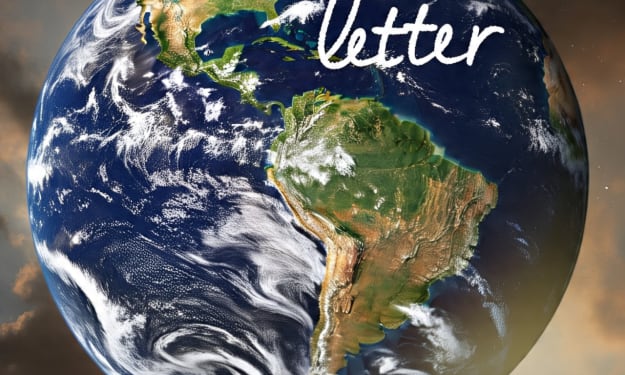
Dear Humans: A Letter from Planet Earth
Dear Humans: A Letter from Planet Earth What Our Home Has Been Trying to Tell Us—And Why Now Is the Time to Listen Dear Humans, I’ve been meaning to write to you for some time. I suppose I’ve been trying to reach you in my own ways—through the wind that carries whispers across your mountains, through the oceans that ebb and roar with forgotten songs, through the trees that creak in the silence after the storms. But lately, you’ve been too distracted to hear me. So I’m writing this letter instead, in the hope that you might finally listen. You’ve called me many names—Gaia, Mother Earth, Terra. To you, I’ve been a provider, a canvas for your dreams, a place to call home. I’ve never asked much in return. I gave you forests for shelter and firewood, rivers for water, soil to grow your food. I cradled you through the centuries, even when you stumbled through wars and famine and greed. But lately, I’ve been hurting. Perhaps you’ve noticed. The air is heavier now—thicker with the fumes of your factories and cars. The ice at my poles weeps quietly into rising seas. The coral reefs, once so vivid with life, lie pale and brittle, as if mourning something they can no longer name. Even the animals, my oldest companions, are falling silent. So many of them have vanished, as if they slipped off the page of a story you stopped telling. I tried to speak louder. I sent you stronger storms, longer droughts, more erratic seasons. I thought maybe then you’d pause. That you’d ask yourselves: Why is this happening? What are we doing wrong? Some of you did. You marched, you protested, you planted trees and picked up trash. You created documentaries and built solar panels and whispered to your children that there might still be time. But too many of you did not listen. You kept drilling, digging, building, burning. You wrapped yourself in comfort and consumption, convincing yourselves that progress must always come at a cost. That someone else would fix it. That the Earth would endure. And I will—endure, that is. With or without you. You see, I’ve lived through worse. I’ve survived the fire of forming, the ice of extinction, the long silence after the dinosaurs fell. I’m not afraid of change. I am change. But you—you are fragile. Your cities, your families, your music, your dreams—they are precious, and they are new. You’ve been here barely a blink, yet in that time, you’ve created beauty and chaos in equal measure. You’ve written poems to the moon and sent rovers to Mars. You’ve healed diseases, painted sunsets, and crafted stories that stir the soul. And yet, you are burning the ground beneath your own feet. Please, hear this not as a scolding, but as a plea. I do not want your guilt. I want your attention. Your care. Your action. Because now is the time. The window is narrowing, but it has not yet closed. You can still choose to change. You can reimagine your cities as green spaces that breathe, power your homes with the sun that smiles down every day, and protect the forests that still remember how to hold carbon in their roots. You can slow down. You can listen. You often ask yourselves: What kind of world will we leave behind for our children? But I ask you this: What kind of children will you raise for this world? Raise them to respect the soil under their feet and the sky above their heads. Teach them to wonder, to restore, to protect. Let them know that nature is not a resource—it is a relationship. Dear humans, I still love you. Even now, through the smog and sorrow, I see the sparks of your kindness. I feel it when a child plants their first seed, when a fisherman releases a bycatch back into the water, when a scientist whispers hope into data, when a community rebuilds with green in mind. I am not asking you to be perfect. I’m only asking you to remember that you belong to me—not as owners, but as stewards. Listen now, while you still can. With hope, Earth
By Muhammad Saad about a year ago in Earth
Dry Figs. AI-Generated.
Dry figs, also known as dried Anjeer, are one of the oldest and most nutritious fruits known to humans. Sweet, chewy, and full of tiny crunchy seeds, they are not only delicious but also packed with important nutrients. People have been enjoying figs for thousands of years, both fresh and dried. Today, dry figs continue to be a popular choice for healthy snacks, natural sweeteners, and even traditional medicine.
By Bilal Mohammadiabout a year ago in Earth
Full Moon July 2025: Date, Meaning, and How to Experience It
Whether you're a casual sky-gazer, an astrology enthusiast, or simply someone who enjoys a beautiful night sky, full moons always capture attention. These monthly lunar events light up the sky and have inspired stories, rituals, and scientific curiosity for centuries.
By Ramsha Riazabout a year ago in Earth