Latest Stories
Most recently published stories in Earth.
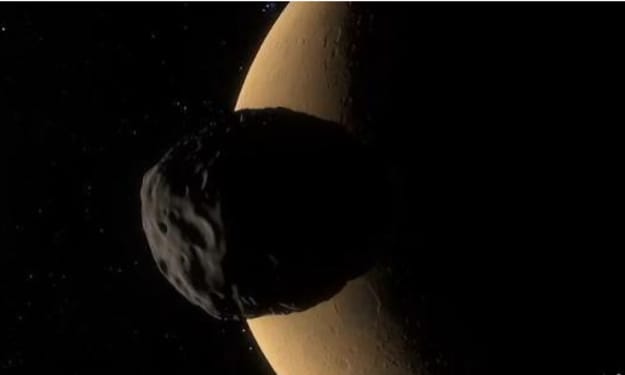
Phobos is in the sights of scientists, future human migration plans may also choose Phobos
Mars has been an important celestial body for scientists to explore and study. Was there ever liquid water on Mars? Why did its main magnetic field disappear? Where did the original atmosphere of Mars go? On February 18, the U.S. Mars Rover Tough entered the Martian atmosphere, entering, descending, and landing in seven minutes. A successful landing in Yezero Crater, north of the Martian equator, will lead to an exploration mission. But sometimes, maybe we should take our eyes off Mars and focus on the kids in the Martian neighborhood. There could be big discoveries to be made. Hello everyone. This is Tao's notes. Today, let's talk about the nearby children mentioned here, none other than Mars' moon Phobos.
By Madison Hart4 years ago in Earth
The cutting-edge materials that have passed by human civilization are most likely not from Earth!
In 1990, a British technology program aired a very exaggerated experiment called Tomorrow's World. He started broadcasting back in the 1960s and has always had a fairly steady audience. In this program, an opening host used a blue flame gun to shoot flames at an egg. The flame is 1200 degrees Celsius, but the egg just looks a little black on the skin and is not damaged. After that, the camera pans to another egg. With the same gun, the egg is sprayed indiscriminately and the egg breaks because it cannot resist the heat.
By Mark Rovich4 years ago in Earth
Are volcanoes scary? You can see their power from their formation, but don't worry about destroying the world!
A nighttime eruption of Mount Etna in Sicily, Italy. The ejected lava was almost 100 metres high and the ash column was almost 5000 metres high. The eruption continued throughout the night and did not end until the morning of the 14th. People in a small village near Mount Etna woke up in the morning and began to clean up the volcanic rock from the eruption. Experts say the eruption was relatively mild, although it lasted.
By Derwall Don4 years ago in Earth
Sailing upwind faster than downwind, or even faster than the wind, the principle is revealed
I saw on the news the other day that a sailing competition was being held in Haikou, Hainan, China. To be honest, I wasn't interested, but I was a bit surprised that there was such a competition. Boats are far away from my life, let alone sailing, and it sounds particularly retro. For most people, it should be. Because of various restrictions, boats can't be our daily means of transport, and even going by boat would be rare. Even people from coastal cities should see a little more than people from other places, but there are always fewer opportunities to ride
By Hitchinson Metz4 years ago in Earth
Forget Collapse: Things May Be Like This Until You Die
There has been a lot of talk of collapse recently. A study out of Harvard asserts that civilization might collapse if we do not make substantial changes. The Doomsday Clock has been moved to 100 seconds till midnight. It would surprise few to wake up one day and receive an alert on our phones telling us that a missile was launching, another plague had started, or that food reserves could no longer support our current population.
By Alex Mell-Taylor4 years ago in Earth