Latest Stories
Most recently published stories in Earth.
Unlocking the Healing Potential of Pongamia Pinnata (Millettia pinnata)
Welcome, friends! Today, we're going to take a closer look at Pongamia Pinnata, a plant that has been used for centuries in Ayurvedic medicine. Pongamia Pinnata, also known as Indian Beech, is a tree that is native to India and Southeast Asia. It is known for its medicinal properties and has been used to treat a variety of ailments. In this blog post, we'll explore the history and traditional uses of Pongamia Pinnata, as well as the scientific research that has been conducted on this plant. We'll also provide tips on how to use Pongamia Pinnata for optimal health. So, if you're interested in learning more about this powerful plant and how it can benefit your health, keep reading!
By Sivakumar Micheal4 years ago in Earth
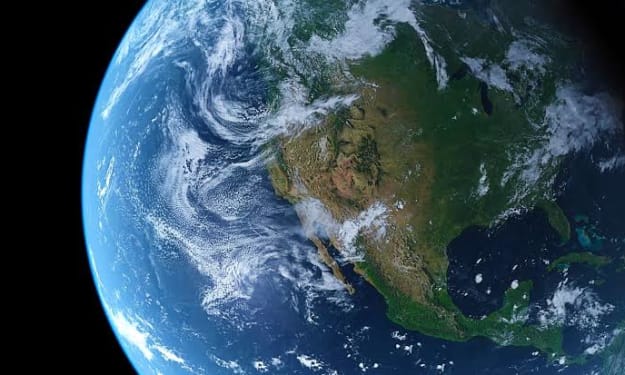
History of Earth
I. Introduction A. Definition of Earth: Earth is the third planet from the sun and the only known planet to support life. It is a terrestrial planet, meaning it is primarily composed of rock or metal. Earth has a diameter of about 12,742 km and is the fifth densest planet in the solar system. B. Importance of Earth: Earth is the only known planet in the universe that can support life. It has a diverse array of ecosystems and biomes that are home to countless species of plants and animals. Additionally, Earth's atmosphere, magnetic field, and distance from the sun all contribute to the planet's ability to support life as we know it. The planet is also an important scientific object of study for understanding the origins of the solar system and the potential for life on other planets. II. Physical Characteristics A. Size and Shape: Earth is the fifth largest planet in the solar system and has an equatorial diameter of 12,742 km and a polar diameter of 12,714 km. It is an oblate spheroid, meaning it is slightly flattened at the poles and bulging at the equator due to its rotation. B. Composition and Structure: Earth's composition is primarily made up of rock, with a small amount of metal in the core. The planet has three main layers: the crust, the mantle, and the core. The crust is the outermost layer and is composed of solid rock. The mantle is the layer beneath the crust and is composed of semi-solid rock. The core is the innermost layer and is primarily composed of iron and nickel. C. Surface features: Earth's surface is covered by 71% water, and the remaining 29% is land. The land is divided into many different landforms such as mountains, valleys, plateaus, and plains. The oceans are also a significant feature of the Earth's surface and are home to a diverse array of marine life. Earth's atmosphere is composed of 78% nitrogen, 21% oxygen, and small amounts of other gases. III. Climate and Weather A. Factors that influence climate: Climate is determined by a variety of factors, including the planet's distance from the sun, the tilt of its axis, and the composition of its atmosphere. The sun's energy drives the Earth's climate, with the amount of solar radiation received by different regions determining temperature and precipitation patterns. Other factors such as ocean currents, topography, and human activity also play a role in shaping Earth's climate. B. Types of climate regions: Earth has a wide variety of climate regions, including tropical, desert, temperate, and polar climates. These regions are determined by factors such as latitude, altitude, and proximity to oceans. C. Weather patterns and phenomena: Weather is the short-term state of the atmosphere, including temperature, humidity, wind, and precipitation. There are many different types of weather phenomena, including thunderstorms, hurricanes, tornadoes, and blizzards. These phenomena are driven by a variety of meteorological processes, such as the movement of air masses and the interaction of warm and cold fronts. IV. Life on Earth A. Diversity of life: Earth is home to a vast array of plant and animal species, including everything from single-celled organisms to complex mammals. The diversity of life on Earth is a result of millions of years of evolution and adaptation to different environments. B. Evolution of life: Life on Earth has evolved over billions of years, with the first simple life forms appearing around 3.5 billion years ago. Over time, these life forms have diversified and become more complex, eventually giving rise to the wide variety of species that exist today.
By Giridharan4 years ago in Earth
India won't be coerced by anybody, Jaishankar's message to Pakistan, China; 'There's only one Modi'
India won't be coerced by anybody, this was the message delivered by India's External Affairs Minister, Dr. S. Jaishankar, in a recent address to the Indian parliament. The statement was directed towards Pakistan and China, two of India's neighboring countries with whom India has had a history of tension and conflict.
By Naveed Jamal4 years ago in Earth
NATO hints at more heavy weapons for Ukraine
NATO has recently hinted at the possibility of providing more heavy weapons to Ukraine in order to strengthen the country's defense against Russian aggression. This move would mark a significant shift in the alliance's approach to the ongoing conflict in Eastern Ukraine, which has been raging for nearly seven years.
By Naveed Jamal4 years ago in Earth
Nepal crash: Dozens killed as plane crashes near Pokhara airport
On Friday, a passenger plane carrying 71 people crashed near Pokhara airport in Nepal, killing dozens of people. The US-Bangla Airlines flight, which was en route from Bangladesh's capital, Dhaka, to Pokhara, lost contact with air traffic control before crashing into a field near the airport.
By Naveed Jamal4 years ago in Earth
First polio campaign of the year begins today
Today marks the beginning of the first polio campaign of the year, aimed at reaching and vaccinating children under the age of five against the debilitating and potentially deadly disease. The World Health Organization (WHO) and its partners, including UNICEF and the Centers for Disease Control and Prevention (CDC), will be working to vaccinate children in high-risk areas across the globe in an effort to eradicate the disease once and for all.
By Naveed Jamal4 years ago in Earth
What is mountain?
I. Introduction A. A mountain is a large landform that rises above the surrounding terrain in a limited area. It is usually defined by its height and steepness, and is often considered a separate entity from a hill. B. Mountains play a crucial role in the ecosystem as they provide habitat for a wide variety of plant and animal species, act as water catchments, and help regulate the earth's climate. II. Types of Mountains A. Volcanic mountains are formed by volcanic activity and are characterized by steep slopes and a crater at the summit. Examples include Mount Fuji and Mount Vesuvius. B. Fold mountains are formed by the collision of tectonic plates and are characterized by folded rock layers. Examples include the Himalayas and the Andes. C. Plateau mountains are formed by the uplift of a plateau and are characterized by a flat top and steep sides. Examples include the Black Hills and the Blue Mountains. D. Dome mountains are formed by the uplift and erosion of a dome of rock and are characterized by a gentle slope and a circular shape. Examples include the Adirondacks and the Black Hills. III. Formation of Mountains A. Tectonic activity refers to the movement of the earth's crustal plates, which can cause mountains to form through the collision and uplift of rock layers. B. Volcanic activity refers to the eruption of molten rock from the earth's interior, which can create mountains through the buildup of volcanic material. C. Erosion and weathering refers to the gradual wearing away of mountains through the action of water, wind, and ice. IV. Famous Mountains A. Mount Everest is the highest mountain in the world, located in the Himalayas on the border of Nepal and Tibet.
By Giridharan4 years ago in Earth
I’m fucking dying, where are you?
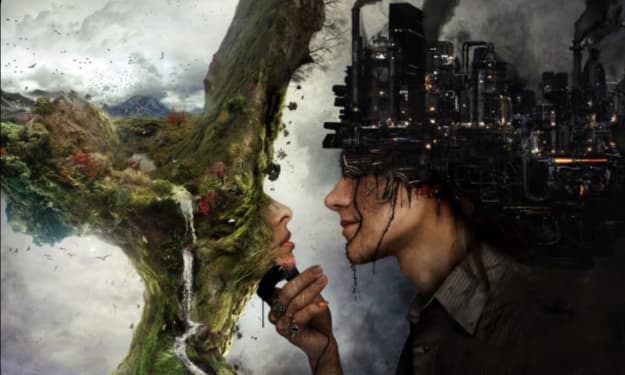
Listen, what happens to our personal accounts when we forget our passwords? From my experience and understanding, nothing happens. It doesn’t shut down, it doesn’t glitch, so much as long as no one gets hold of it and abuses it; it simply exists on its own. Rotting, waiting for our return to give it energy, and life. Perhaps it needs us, but without “us” it has no life, no purpose to fulfill: but then again, we created it, so it is our responsibility to remember it, and use it wisely and carefully. What you have read, and what you will read is no fictional story; it is a beg, a plead, a desperate cry for help. The final reach for a hand to cling to, with the last bit of life it has left. We were given life on this planet, and for billions of years, we have evolved, reproduced and created so much. Humans have been here only a short amount of time, but in that tiny fraction we have taken Earth’s resources and utilized them to invent technology, vehicles, all the modern day to day things we use in our lives. Granted, a lot has brought us some amazing inventions, and it has made life easier for us. Yet, then again, there’s that word.. us. We’ve only ever thought of ourselves; we do not blink, nor take a second of hesitation to stop and think about the consequences of our so called easy life. We kill animals for our amusement, for decoration, for fashion. We throw our own inventions away into nature, wasting the products that make our lives more efficient because we are on the go, and we don’t want to take the time to properly dispose of it. We are constantly stripping the green from this planet, and slowly it has become an unsuitable and unsafe environment for many species, including our own. And for what? To make life easier and more efficient? So that we can get to the 9-5 jobs faster, give more money to the government that we cannot feel safe with to make humane choices? To live the “American dream” and feed into the conforming system? Wake up. Humans have put a price tag on life itself, deciding and depicting what is valuable and what is worth our eyes to see, and if you are not good enough to a society that has blinded you, then you will be disposed of too.
By Makenna Bolton4 years ago in Earth
Earth
Earth is the third planet from the sun and the only known planet to host life. It is a unique and complex planet that has been studied by scientists for centuries. The study of Earth, also known as Earth Science, encompasses a wide range of disciplines including geology, oceanography, meteorology, and astronomy. Understanding Earth's place in the universe and its physical and biological processes is essential for addressing global challenges such as climate change and natural resource management.
By Mahendrarajah Mithusharan4 years ago in Earth
Climate change
Climate change refers to the long-term alteration of temperature and weather patterns on Earth caused by human activities, primarily the burning of fossil fuels and deforestation. The primary driver of climate change is the increase of greenhouse gases, such as carbon dioxide, in the atmosphere. These gases trap heat from the sun, leading to a warming of the planet.
By Mahendrarajah Mithusharan4 years ago in Earth