Latest Stories
Most recently published stories in Earth.
Negotiations with India not possible until reversal of ‘illegal action’ on occupied Kashmir, PMO clarifies
The Kashmir Valley, located in the northernmost region of India and Pakistan, is a region of great natural beauty and cultural significance. The valley is surrounded by the Himalayan mountain range and is known for its picturesque landscapes, including lush green valleys, snow-capped peaks, and tranquil lakes.
By Naveed Jamal4 years ago in Earth
The push for packaging that is better for the environment
As the world's population grows, so does the amount of plastic waste produced. Millions of tons of virgin plastic are produced annually, but the majority of used plastics end up in landfills or the environment, causing harmful plastic pollution. The United States alone imports 80 million tons each year.
By Marshall Mars4 years ago in Earth
Extinction of species
Extinction of species and loss of biodiversity are two of the most pressing issues facing our planet today. The earth has undergone massive changes throughout its history, with evolution shaping the diversity of life we see today. However, the rate at which species are disappearing now is alarming, and it is largely due to human activity.
By Baris Ovali4 years ago in Earth
PML-N nominates Ahad Cheema, Mohsin Naqvi as Punjab caretaker CM
The Importance of Mental Health in the Workplace Mental health is a crucial aspect of overall well-being, yet it is often overlooked in the workplace. However, with the increasing awareness of mental health issues and the impact they can have on individuals and organizations, it is becoming increasingly important to prioritize mental health in the workplace. In this article, we will discuss the importance of mental health in the workplace and the steps organizations can take to support the mental well-being of their employees.
By Naveed Jamal4 years ago in Earth
Impact of "Space Debris"
Space debris, also known as orbital debris or space junk, refers to man-made objects that are no longer in use or functioning and are orbiting Earth. These objects can include old satellites, rocket stages, and fragments from explosions or collisions. The impact of space debris on satellite and spacecraft operations can be significant and can include:
By 4MECH702 Udhaya Kumar V4 years ago in Earth
Impact of "Space Debris"
Space debris, also known as orbital debris or space junk, refers to man-made objects that are no longer in use or functioning and are orbiting Earth. These objects can include old satellites, rocket stages, and fragments from explosions or collisions. The impact of space debris on satellite and spacecraft operations can be significant and can include:
By 4MECH702 Udhaya Kumar V4 years ago in Earth
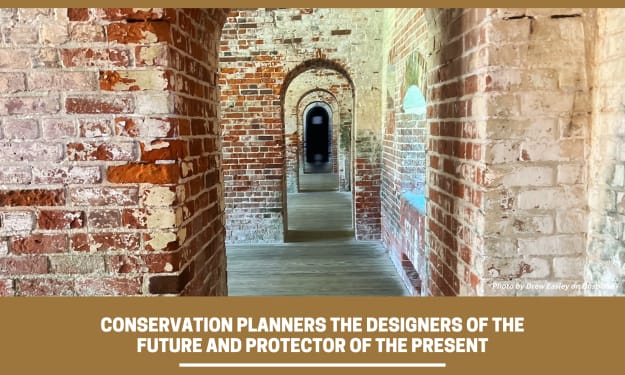
Conservation Planners the Designers of the Future and Protector of the Present
The goal of conservation is to preserve the heritage conservation architecture or site's significance. Green structures are springing up all over the world as people seek to use sustainable and re-appropriate materials. As a result, there is a need for conservation education among the general public. You will need the assistance of a professional architect to preserve and conserve what you desire.
By Amit Kumar4 years ago in Earth
History of Mars
I. Overview of Mars A. Physical characteristics Mars is the fourth planet from the sun in our solar system and is often referred to as the "Red Planet" due to its reddish appearance. Mars has a diameter of about 6,779 km, making it slightly smaller than Earth. It has a thin atmosphere composed mostly of carbon dioxide, and its surface features include the largest volcano in the solar system, Olympus Mons, and the longest canyon in the solar system, Valles Marineris. Mars also has polar ice caps composed of water and carbon dioxide. B. Climate and atmosphere Mars has a very thin atmosphere composed mostly of carbon dioxide, with trace amounts of other gases such as argon, nitrogen, and oxygen. The planet's surface is cold and dry, with the average temperature being around -80°F (-62°C). The planet's atmosphere is not thick enough to support human life, and the planet is also bombarded by harmful cosmic radiation. C. Exploration history Mars has been explored by a variety of spacecraft, both flyby missions and landers, starting with the 1960s. Some of the most notable missions to Mars include NASA's Viking missions in the 1970s, which were the first successful landings on Mars, and the recent Mars rover missions, such as the Curiosity and Perseverance rovers, which are currently exploring the Martian surface. II. Exploration of Mars A. Past missions In the past, NASA and other space agencies have sent a number of missions to Mars, including orbiters, landers, and rovers. Some of the most notable past missions to Mars include the Viking 1 and 2 landers in the 1970s, which were the first successful landings on Mars, the Mars Exploration Rovers, Spirit and Opportunity, which landed in 2004 and explored the Martian surface for several years, and the Phoenix lander, which landed in 2008 and studied the Martian arctic. B. Current missions Currently, NASA's Perseverance Rover is exploring Mars. It landed on the planet in February 2021, and it aims to study the Martian geology, search for signs of past microbial life, and collect samples for future missions to return to Earth. NASA's Insight lander, which landed in 2018, is studying Mars' interior. The ExoMars Trace Gas Orbiter, a collaboration between ESA and Roscosmos, is currently studying Mars' atmosphere. C. Future missions In the future, NASA and other space agencies are planning a variety of missions to Mars, including sample return missions, the potential for manned missions, and the exploration of the planet's subsurface. NASA is planning to send the Mars Sample Return mission in the late 2020s, which aims to bring Martian rock samples back to Earth for detailed study. NASA is also planning a manned mission to Mars in the 2030s. III. Potential for habitation A. Resources and challenges Mars has a number of resources that could potentially be used for human habitation, such as water ice, carbon dioxide, and other minerals. However, the planet's thin atmosphere, cold temperatures, and lack of a protective magnetic field make it inhospitable for human life. To make the planet more habitable, terraforming methods such as adding greenhouse gases to the atmosphere, and building protective structures, would be necessary. B. Colonization plans and proposals There have been a number of plans and proposals for colonizing Mars, including private companies like SpaceX, which aims to establish a permanent, self-sustaining human presence on the planet. However, these plans and proposals face significant technological, financial, and logistical challenges.
By Giridharan4 years ago in Earth