Latest Stories
Most recently published stories in Earth.
Woody vs. Herbaceous Biomass: Which Reigns Supreme in Charcoal Making?
In the world of charcoal manufacturing, the choice of feedstock can make or break the final product. Two primary contenders dominate the scene: woody biomass (think tree trunks, branches, and sawdust) and herbaceous biomass (such as straw, grass, and crop residues). While both can be transformed into charcoal, their differences in structure, composition, and processing requirements set them apart. And when it comes to efficiency and quality, the right tools—like a reliable wood charcoal machine—play a pivotal role in bridging these gaps.
By Bestonpyrolysisabout a year ago in Earth
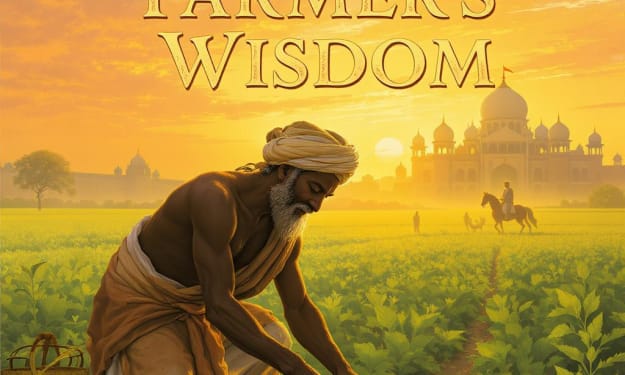
*```~*"The Farmer's Wisdom"*~```*
In a small village near Hyderabad, India, a farmer named Raghu worked tirelessly in his fields, from dawn till dusk. One early morning, as he was sowing seeds, the Nawab of the region happened to pass by. The Nawab, known for his curiosity and interest in the welfare of his people, noticed Raghu's dedication to his work. The Nawab dismounted his horse and approached Raghu, asking, "Why do you work so hard in your fields? How much do you earn? Do you make any profit?" Raghu looked up, slightly surprised by the sudden inquiry, but replied respectfully, "Profit? I divide my harvest into four parts after it's cut." Intrigued, the Nawab asked, "How do you utilize these four parts?" Raghu explained, "One part goes to the government as tax. The second part is used to pay off a debt. The third part is lent out. And the fourth part is wasted." The Nawab's curiosity was piqued, and he asked for clarification. "You pay off a debt and lend out money? What kind of debt is it that you pay every harvest, and it doesn't get settled?" Raghu replied, "The debt is from a loan my father took from a moneylender. I pay the interest on it, and it seems like an endless cycle." The Nawab nodded thoughtfully. The Nawab then asked, "Who do you lend money to?" Raghu smiled and said, "I lend it to my two sons, so they can take care of me in my old age. I'm investing in their future, and I hope they'll repay me with care and support when I'm old." The Nawab was impressed by Raghu's foresight. Finally, the Nawab asked, "And why do you waste a quarter of your harvest?" Raghu's expression turned slightly bitter as he replied, "The fourth part is for my daughter's dowry. In my opinion, it's a waste of money, but it's a necessary evil in today's world. I'd rather invest in my children's future, but societal expectations dictate otherwise." The Nawab was taken aback by Raghu's candid response. He was impressed not only by the farmer's logical thinking but also by his awareness of the societal pressures that governed his life. The Nawab realized that Raghu was not just a simple farmer; he was a thoughtful and intelligent individual who understood the intricacies of life. As the Nawab prepared to leave, he turned to Raghu and said, "You are a wise man, Raghu. Your approach to life is commendable. I'm impressed by your honesty and foresight." With that, the Nawab rewarded Raghu with a large sum of money, enough to pay off his debt and invest in his children's future. Raghu was overwhelmed with gratitude. He thanked the Nawab and promised to continue working hard and wisely. As the Nawab departed, Raghu returned to his fields, feeling a sense of hope and renewal. He knew that his life would change for the better, thanks to the Nawab's kindness and understanding. From that day on, Raghu's story spread throughout the village, inspiring others to adopt a similar approach to life. People began to see the value in planning for the future, investing in their children, and being aware of the societal pressures that governed their lives. The story of Raghu and the Nawab serves as a reminder that wisdom and intelligence can be found in the most unexpected places. It highlights the importance of living a thoughtful and planned life, where every decision is made with a clear understanding of its consequences. As the years passed, Raghu's children grew up, and they took care of him in his old age, just as he had hoped. His daughter's dowry was paid, and she was married into a good family. Raghu's sons became successful in their own right, and they never forgot the lessons their father had taught them. The Nawab, too, never forgot Raghu's wisdom and continued to seek out wise and intelligent individuals from among his people. He ruled his kingdom with fairness and compassion, and his people prospered under his leadership. And so, the story of Raghu and the Nawab came to an end, but its legacy lived on, inspiring generations to come
By Olenaangelikaabout a year ago in Earth
North Korea’s Education System: Shaping Minds in the Hermit Kingdom. AI-Generated.
North Korea’s education system is a carefully orchestrated framework designed to instill loyalty, discipline, and self-reliance, reflecting the nation’s Juche philosophy. In the Democratic People’s Republic of Korea (DPRK), education is not just about academic growth but a tool for shaping citizens devoted to the state and the Kim dynasty. Despite economic challenges and international isolation, the DPRK maintains a structured system that blends ideological training with technical skills, producing a workforce aligned with national goals. This post examines five key aspects of North Korea’s education system, revealing its methods, priorities, and cultural significance. Journey into the DPRK’s classrooms, where ideology and learning converge to create a powerful narrative of control and aspiration.
By Arjun. S. Gaikwadabout a year ago in Earth
North Korea’s Space Ambitions: A Quest for Cosmic Prestige. AI-Generated.
North Korea’s space program, though often overshadowed by its political isolation, is a bold testament to the nation’s pursuit of technological prowess and global recognition. Rooted in the Juche philosophy of self-reliance, the Democratic People’s Republic of Korea (DPRK) has invested heavily in space exploration to assert its sovereignty and scientific capability. Despite international sanctions and skepticism, North Korea’s space efforts, from satellite launches to ambitious rhetoric, reveal a complex interplay of science, propaganda, and national pride. This post examines five key aspects of North Korea’s space program, shedding light on its achievements, challenges, and aspirations. Journey into the DPRK’s cosmic endeavors, where science meets ideology in a quest for the stars.
By Arjun. S. Gaikwadabout a year ago in Earth
How Sparrows Help the Environment More Than We Realize
Sparrows are small, common birds that many people see every day. They often live near our homes, in gardens, parks, and city streets. Because they are so common, many of us do not think much about them. But sparrows are actually very important to the environment. They help keep nature in balance in quiet, powerful ways.
By Hamza Tahirabout a year ago in Earth
North Korea’s Hidden Treasures: Unveiling the Country’s Natural and Cultural Gems. AI-Generated.
North Korea, often shrouded in mystery, harbors a wealth of natural and cultural treasures that reflect its deep historical roots and unique identity. Despite its isolation, the Democratic People’s Republic of Korea (DPRK) boasts stunning landscapes, ancient relics, and revered sites that captivate the imagination. These treasures, preserved amidst strict state control, offer a glimpse into the nation’s heritage and its reverence for both nature and history. This post explores five remarkable aspects of North Korea’s hidden gems, showcasing their beauty, significance, and the stories they tell. Journey into the DPRK’s lesser-known wonders, where tradition and mystique create a powerful narrative.
By Arjun. S. Gaikwadabout a year ago in Earth
North Korea’s Propaganda Machine: The Art of Control and Cultural Narrative. AI-Generated.
North Korea’s propaganda is a meticulously crafted system, weaving myth, ideology, and spectacle to maintain state control and shape national identity. Rooted in the Juche philosophy of self-reliance, it glorifies the Kim dynasty while fostering unity and loyalty in a tightly controlled society. From towering statues to state-orchestrated media, North Korea’s propaganda is a powerful tool that blends art, politics, and psychology. This post explores five facets of North Korea’s propaganda machine, revealing how it captivates citizens, projects strength, and navigates global perceptions. Dive into the enigmatic world of the DPRK’s ideological narrative, where every image and word serves a purpose.
By Arjun. S. Gaikwadabout a year ago in Earth