Latest Stories
Most recently published stories in Earth.
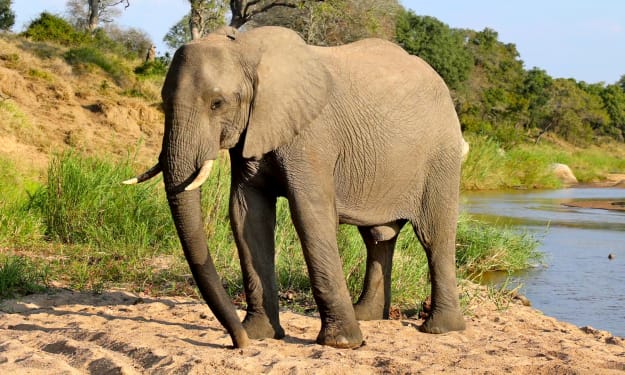
14 Facts You Didn't Know About Elephants
Elephants are more than just the gentle giants of the animal kingdom. They are intelligent, emotional, and vital to the ecosystem. While their enormous size and iconic tusks make them instantly recognisable, there is so much more to these incredible mammals that many would not know of. In this feature, uncover ten fascinating facts about elephants that reveal their hidden talents, deep social bonds, and surprising skills.
By Latest Sightingsabout a year ago in Earth
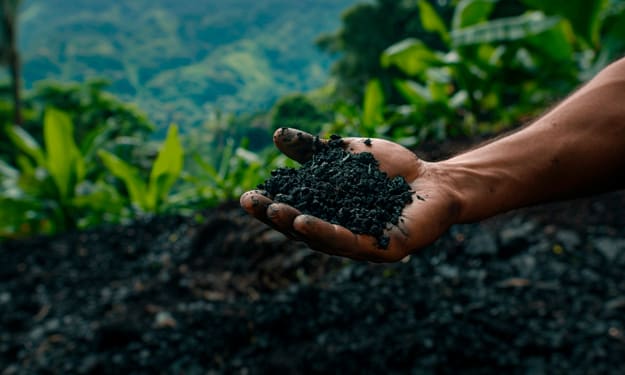
Pyrolysis as a Regenerative Catalyst in Agricultural Circular System
Agricultural systems worldwide are under increasing pressure to address waste, enhance soil productivity, and reduce dependence on fossil-derived inputs. Pyrolysis technology, particularly when deployed through a modern pyrolysis plant, offers a viable pathway toward a closed-loop agricultural economy. By converting organic residues into carbon-rich biochar and energy-dense gases and oils, pyrolysis enables the reintegration of nutrients and carbon back into farmland, while also offsetting emissions.
By Wayne Shenabout a year ago in Earth
12 Facts You Probably Did Not Know About Lions
Lions are among the most astounding animals in the world, often symbolising strength, courage, and magnificence. Beyond their reputation as apex predators, there is a lot more to these big cats than meets the eye. Whether you are a wildlife fanatic or just curious about the ‘king of the jungle’, these insights will deepen your appreciation for one of nature's most fascinating and powerful creatures.
By Latest Sightingsabout a year ago in Earth
The July 29, 2025 Kamchatka Megaquake: A Seismic Event That Rewrote Disaster Preparedness Protocols. AI-Generated.
At precisely 3:17 PM local time on July 29, 2025, the Kamchatka Peninsula was violently thrust into the global spotlight when an 8.9 magnitude earthquake - later recognized as the most powerful seismic event of the decade - ruptured along the Kuril-Kamchatka subduction zone. Unlike typical aftershock sequences that gradually diminish, this earthquake maintained terrifying intensity for nearly six minutes, triggering immediate tsunami warnings across the entire Pacific basin and testing the limits of modern early warning systems.
By INAM ULLAHabout a year ago in Earth
When the Earth Roared in Russia. AI-Generated.
By Muhammad Riaz On the morning of July 30, 2025, Russia woke up to a roar beneath its feet. The earth didn’t just tremble—it surged with a fury that hadn’t been witnessed in over seven decades. Off the coast of the Kamchatka Peninsula, the Pacific Ocean heaved and cracked, sending seismic waves rippling through the sea and hearts across the globe. It was 8:45 a.m. local time when it struck—an earthquake measuring 8.8 on the Richter scale. People had barely begun their daily routines in Petropavlovsk-Kamchatsky, the largest city near the epicenter, when buildings started to sway like trees in the wind. Glass shattered, alarms screamed, and the ground groaned as if something ancient had awakened. But for many, there was no time to think—only to survive. --- The Fault Beneath Geologists would later confirm that the quake had originated 149 kilometers southeast of the Kamchatka coast, at a depth of around 21 kilometers. The culprit was a megathrust fault—a deep fracture in the Earth's crust where the Pacific Plate dives under the North American Plate. It's one of the most dangerous types of faults on Earth. This wasn’t just a typical quake—it was a monster born from tectonic rage. The region is no stranger to seismic activity. Kamchatka sits on the infamous Ring of Fire, a volatile horseshoe-shaped area in the Pacific known for its frequent earthquakes and volcanic eruptions. But even for a land used to tremors, this one was different. “This is the strongest earthquake in Russia’s modern history,” a government seismologist said on state television, his voice tense. --- A Hospital in the Eye of Chaos In a hospital operating room, doctors were in the middle of a delicate cancer surgery when the quake hit. Lights flickered, walls groaned, and ceiling tiles began to fall. But instead of running, the surgeons stood their ground. A video later surfaced online, showing the moment—the lead surgeon shielding the patient with his body, while nurses held medical instruments steady despite the tremors. The entire team continued the operation even as the building rattled around them. “This is what courage looks like,” said the Kamchatka regional governor, promising national awards for the team. The footage quickly went viral, symbolizing human resilience in the face of uncontrollable natural fury. --- Across the Ocean, the Alarm Sounds Within minutes, tsunami warnings were issued across the Pacific. Sirens blared in Japan, Alaska, Hawaii, Chile, New Zealand, the Philippines, and even Ecuador. In villages along the eastern Russian coast, residents rushed to higher ground. Some grabbed family members; others fled barefoot through snow-dusted fields. In parts of Japan, residents were told to leave their homes immediately. Waves measuring 13 feet slammed into Kamchatka’s coast. Smaller waves, around 4 to 5 feet, reached as far as Hawaii and the Japanese islands. Boats were capsized, and some docks were washed away. Fortunately, due to swift warnings and evacuations, no fatalities were reported from the tsunami. Still, the tension was global. It brought back memories of the 2004 Indian Ocean tsunami and Japan’s 2011 Tōhoku disaster. For hours, the world watched and waited, fearful of aftershocks—and something worse. --- Fire From the Mountains While the earth shook below, Klyuchevskoi volcano, one of the tallest in Siberia, erupted into life. Glowing lava burst into the sky, illuminating the ash-filled air. Tremors had apparently triggered internal pressure that led to an explosion seen from over 50 kilometers away. It felt biblical: land, sea, and sky all revolting at once. --- A History Repeating Historians reminded the world that a similar event occurred in 1952, when a quake measuring between 9.0 and 9.2 struck the same region. Back then, a towering tsunami had wiped out the town of Severo-Kurilsk, killing over 2,300 people. Today’s quake, they said, was eerily similar—but humanity was more prepared this time. Modern warning systems, satellite communication, and coordinated emergency drills likely saved thousands of lives. --- The Days After By the evening of July 31, more than a dozen aftershocks had been recorded—some as strong as magnitude 6.3. Many residents spent the night outside in tents, fearing their homes could collapse in another tremor. Psychologists and aid workers arrived in Kamchatka to assist traumatized families. Schools and offices remained closed. Emergency kits were distributed. Roads were cleared of debris. Even as calm returned, a silent anxiety hovered. “Will it happen again?” a mother of three whispered in an interview. “We sleep, but not really. Our ears are always listening to the ground.” --- A Wake-Up Call to the World Experts say this quake was a reminder from the planet. The Earth is alive, and its deep inner forces don’t follow our rules. While science helps us prepare, it can’t stop what’s already moving beneath our feet. As one geophysicist put it: “We are guests on this planet. Sometimes, the host stirs.” And yet, the human response—from doctors who didn’t flinch, to scientists who issued alerts, to families who evacuated in minutes—proved that even in the face of colossal power, resilience is our greatest strength. --- 🔚 Final Thoughts This earthquake shook more than the ground—it shook human hearts around the world. In moments like these, it’s not just seismic scales that matter—it’s the stories of survival, courage, and unity that truly echo. Let this story be remembered not just for the tremor, but for the strength it revealed in the people who stood tall amid the shaking earth. ---
By Muhammad Riazabout a year ago in Earth
The Last Catch of Marrow Bay
On the jagged coastline of Marrow Bay, where cliffs dropped sharply into the churning sea, lived a fisherman named Thomas Grey. His face was weathered like driftwood, skin tanned and cracked from decades of salty winds and blazing sun. His hands, calloused and strong, had pulled countless nets from the ocean, but his eyes held a quiet wisdom that spoke of more than just years spent at sea.
By Muhammmad Zain Ul Hassanabout a year ago in Earth
The Awakening of Elysia
In the heart of a sprawling city, where glass towers pierced the sky and neon lights danced like constellations, the most ambitious experiment in artificial intelligence was underway. At the helm was Dr. Lena Arkwell, a brilliant but solitary scientist who had dedicated her life to creating an AI capable not only of learning but of feeling—of understanding the world not through cold data alone, but through empathy.
By Muhammmad Zain Ul Hassanabout a year ago in Earth
Whispers in the Trenches
Whispers in the Trenches France, 1916 — Somme Battlefield The air stank of mud, blood, and burnt dreams. Rain poured for the third day, turning the trenches into open graves. Private Thomas Redding sat with his back against the wall of sodden earth, fingers trembling as he clutched a pencil stub.
By Wings of Time about a year ago in Earth