Latest Stories
Most recently published stories in Earth.
When the Waters Rose
The night was darker than usual, but the sound of the rain was deafening. At first, it felt like any other monsoon storm—a natural rhythm the villagers of Gulabad had known for generations. But as hours passed, the rain didn’t stop. It grew angrier, heavier, as though the sky itself was breaking apart.
By Muhammad hassanabout a year ago in Earth
Our Fragile Planet: Why Protecting the Natural Environment is Our Best Defense Against Climate Change. AI-Generated.
Wildfires, rising sea levels, record breaking heatwaves, climate change is no longer a theory; it’s our reality. Every year, we see its effect more clearly, from devastating floods to extended droughts. And yet, amid all this, one solution stands quietly in front of us: protecting the natural environment.
By Uwimana Ericabout a year ago in Earth
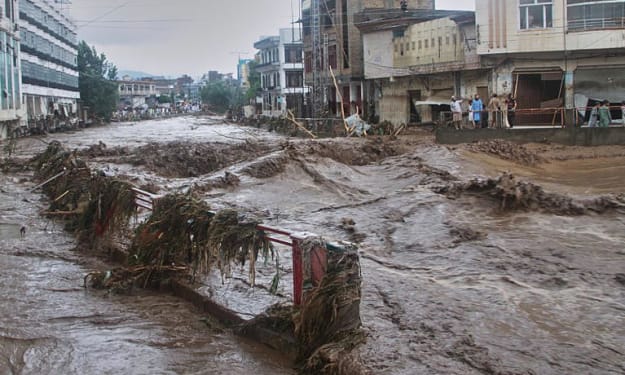
Buner Under Water: The Silent Tragedy of Pakistan’s Monsoon Floods
The Floods in Buner: A Tragedy in the Heart of Khyber Pakhtunkhwa Natural disasters have always tested the resilience of humanity, but when they strike remote and vulnerable areas, their impact becomes even more devastating. The recent floods in Buner District, located in the Khyber Pakhtunkhwa province of Pakistan, stand as a grim reminder of how climate change, poor infrastructure, and lack of preparedness can bring life to a standstill in a matter of hours. This article explores the causes, consequences, and lessons of the Buner floods, while also highlighting the strength and unity of its people in the face of adversity. --- Geographic and Social Background Buner is a scenic valley surrounded by mountains, rivers, and streams. Known for its lush greenery, fertile lands, and rich cultural heritage, it lies between Swat and Mardan districts. The majority of its population depends on agriculture, small-scale trade, and remittances from overseas workers. While nature has blessed Buner with beauty and resources, its geographical position also makes it highly vulnerable to seasonal floods, landslides, and heavy monsoon rains. --- The Disaster Unfolds In late July and early August, relentless monsoon rains lashed the region, causing rivers and streams to swell beyond their capacity. Within hours, flash floods swept through villages, submerging houses, washing away bridges, and destroying farmland. Roads connecting Buner with neighboring districts collapsed, cutting the area off from essential supplies and emergency aid. Reports indicate that dozens of villages were severely affected, with families forced to flee their homes in the middle of the night. Mud houses, common in rural parts of Buner, stood no chance against the raging waters. Thousands of people were displaced, seeking shelter in schools, mosques, and makeshift camps. Crops ready for harvest were drowned, livestock perished, and small businesses lost their entire inventory. --- Humanitarian Crisis The floods in Buner created not only physical destruction but also a humanitarian emergency. Clean drinking water became scarce, increasing the risk of waterborne diseases such as cholera, diarrhea, and typhoid. Health facilities, already limited in capacity, were overwhelmed by the sudden influx of patients. Pregnant women, children, and the elderly were the most vulnerable. Educational institutions, which were supposed to reopen after the summer break, were converted into relief centers. This disrupted the academic calendar of thousands of children, adding to the long-term consequences of the disaster. --- Climate Change and Structural Issues Experts argue that the Buner floods are not merely a “natural” disaster but a combination of climate change and human negligence. Pakistan is among the top ten countries most vulnerable to climate change. Rising global temperatures have intensified monsoon patterns, leading to unpredictable and extreme rainfall events. At the same time, deforestation in Buner and surrounding areas has weakened natural barriers against flooding. The lack of proper drainage systems, unchecked construction along riverbanks, and poor maintenance of protective dams and embankments worsened the situation. What could have been a manageable seasonal flood turned into a full-scale catastrophe. --- Government and Community Response The provincial government of Khyber Pakhtunkhwa, along with the federal authorities, deployed rescue teams and the Pakistan Army to assist flood victims. Helicopters were used to drop food supplies in remote areas cut off by road destruction. However, many residents complained about the delayed response and inadequate resources. In contrast, the local community showed remarkable resilience. Volunteers organized relief drives, collecting donations from within Pakistan and from overseas Pakistanis. Youth groups in Buner took the lead in distributing food, tents, and medical supplies. Social media played a key role in highlighting the plight of flood victims, pressuring authorities to act more swiftly. --- Economic and Psychological Impact The economic toll of the floods is enormous. Farmers who lost their crops face financial ruin, traders who lost their shops fear bankruptcy, and laborers find themselves without work. Many families who relied on remittances are now forced to use those funds for survival rather than savings or investment. The psychological scars are equally deep. Survivors recount the trauma of losing loved ones, watching their homes collapse, and spending nights under open skies. Children, in particular, are likely to suffer long-term emotional effects if mental health support is not provided. --- Lessons and the Way Forward The Buner floods highlight several urgent lessons for Pakistan: 1. Investment in Infrastructure: Building stronger bridges, flood-resistant housing, and proper drainage systems can save lives and property. 2. Environmental Protection: Deforestation must be stopped, and tree plantation drives should be promoted to restore natural defenses against floods. 3. Disaster Preparedness: Local communities need training in disaster management, early warning systems, and evacuation plans. 4. Health and Education Resilience: Schools and hospitals should be built with dual purposes in mind—education/healthcare and emergency shelter. 5. Global Climate Action: Pakistan, though not a major emitter, suffers the consequences of global warming. International cooperation and climate justice are essential. --- Conclusion The floods in Buner are more than a local tragedy; they are part of a broader global crisis that links climate change, human vulnerability, and poor governance. Yet, amid destruction, the resilience of the people of Buner shines through. Their courage, solidarity, and determination to rebuild offer hope that the valley will rise again from the waters. If meaningful steps are taken—both locally and globally—Buner can transform this tragedy into an opportunity for building a safer, greener, and more resilient future.
By Nimatullahabout a year ago in Earth
The Amazon Rainforest: Nature’s best marvel
The Amazon Rainforest is one of the most splendid places on our planet. Regularly known as the “lungs of the Earth” as it produces round 20% of the world’s oxygen, this significant jungle is domestic to top notch biodiversity, particular cultures, and breathtaking natural beauty. But beyond its wonders, the Amazon faces extreme threats that endanger not most effective its survival but additionally the stability of life across the globe. Let’s dive into the fascinating story of this herbal treasure.
By Samiullah Adilabout a year ago in Earth
Brace for the 600-Mile Rainstorm: A UK Weather Spectacle That Could Redefine August
Brace for the 600-Mile Rainstorm: A UK Weather Spectacle That Could Redefine August The outlook for late August just took a dramatic turn: weather charts are showing what’s being dubbed a “600-mile rainstorm” heading toward the UK. This isn’t your everyday wet weekend—it’s a potential weather phenomenon with the power to soak most of the nation, significantly drop temperatures, and disrupt routines. Curious which regions could escape the downpour? Read on.
By Waqar Khanabout a year ago in Earth
Hurricane Irene and the Viral “Stadium Effect” (USA)
A Storm That Refused to Be Normal. Hurricanes are nothing new to coastal communities. Every year, residents of the Atlantic Seaboard brace for storms that bring heavy rain, flooding, and destructive winds. But in 2025, Hurricane Irene became more than just a weather event. It became a viral phenomenon — thanks to a mysterious atmospheric display that storm chasers and residents alike have dubbed the “stadium effect.”
By Echoes of Lifeabout a year ago in Earth
A Whole New Underwater World
When we look at the ocean from the shore, it often appears as a vast blue surface stretching endlessly toward the horizon. But beneath those waves lies an entirely different universe, one that most of us rarely get the chance to explore. The underwater world is full of breathtaking beauty, fascinating creatures, and secrets that continue to amaze scientists and divers alike. It truly feels like stepping into another planet—one where life moves differently, where silence speaks volumes, and where every dive uncovers something new.
By aadam khanabout a year ago in Earth
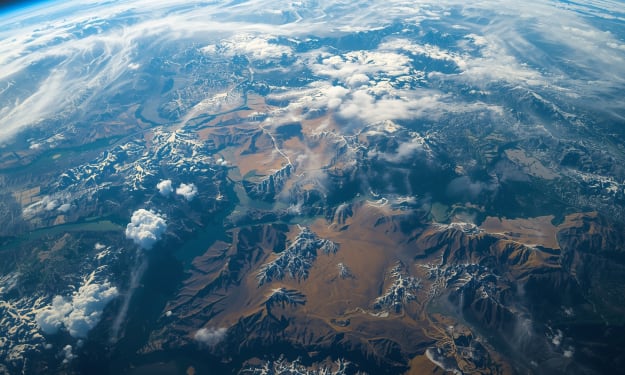
Earth
# Earth: Our Brittle Dejected Planet Earth, generally referred to as the “Blue Planet,” is the third planet from the Sun in our solar arrangement and the alone accepted angelic anatomy to anchorage life. Its different characteristics—ranging from its atmosphere and oceans to its assorted ecosystems—make it a arresting anchorage in the all-inclusive universe. Despite its familiarity, Earth charcoal a circuitous and aerial system, area accustomed processes and animal activities are intricately intertwined. Compassionate Earth’s structure, environment, and challenges is capital for ensuring its connected habitability for approaching generations. ## The Anatomy of Earth Earth is composed of several layers, anniversary with audible properties. At its centermost lies the close core, a solid apple primarily fabricated of adamant and nickel. Surrounding this is the alien core, which is in a aqueous accompaniment and amenable for breeding Earth’s alluring field. Above the amount is the mantle, a blubbery band of silicate bedrock that flows boring over millions of years, active tectonic movements. Finally, the band forms the planet’s exoteric layer, area bodies alive and ecosystems thrive. The coaction amid these layers causes phenomena such as earthquakes, agitable eruptions, and abundance formation, all of which appearance Earth’s apparent over geological time. ## The Atmosphere and Climate Earth’s atmosphere is a circuitous admixture of gases that sustains life. Comprising almost 78% nitrogen, 21% oxygen, and trace amounts of added gases like carbon dioxide and argon, the atmosphere bouncer action from adverse solar radiation and helps adapt the planet’s temperature. Layers such as the troposphere, stratosphere, mesosphere, and thermosphere anniversary comedy audible roles, from acclimate accumulation to attention Earth from meteoroids. Climate, the abiding arrangement of acclimate in a region, is afflicted by factors including sunlight, ocean currents, and atmospheric circulation. Earth’s altitude supports a array of biomes, from close rainforests to arctic tundras. However, animal activities such as deforestation, industrialization, and the afire of deposit fuels accept acquired cogent altitude changes. All-around warming, ascent sea levels, and acute acclimate contest are absolute after-effects of these alterations, highlighting the brittle antithesis of Earth’s environment. ## Oceans: The Lifeblood of Earth Covering added than 70% of Earth’s surface, oceans are basic to action and altitude regulation. They act as massive calefaction reservoirs, distributing thermal action beyond the planet through currents like the Gulf Stream. Oceans additionally blot carbon dioxide from the atmosphere, allowance to abstinent all-around temperatures. Moreover, they are home to an amazing assortment of life, alignment from diminutive plankton to the better mammals on Earth, the dejected whales. Despite their importance, oceans face abundant threats. Pollution, overfishing, and acidification affectation austere risks to abyssal ecosystems. Plastic waste, actinic runoff, and oil spills abuse abyssal action and agitate aliment chains. Preserving ocean bloom is acute not alone for amphibian breed but additionally for animal populations that await on abyssal assets for food, transportation, and bread-and-butter stability. ## Biodiversity and Ecosystems Earth’s biodiversity—the array of action forms in ecosystems—is capital for the planet’s resilience. Forests, grasslands, wetlands, and chastening anniversary abutment different communities of plants, animals, and microorganisms. These ecosystems accommodate casework such as apple-pie air, baptize purification, clay fertility, and pollination. Furthermore, biodiversity contributes to cultural and recreational values, alarming art, literature, and airy practices. Human activity, however, has accelerated breed afterlife rates. Habitat destruction, pollution, altitude change, and the addition of invasive breed abuse the antithesis of accustomed systems. Conservation efforts, including adequate areas, wildlife corridors, and acceptable adeptness management, are analytical for advancement Earth’s ecological health. ## Animal Appulse on Earth Humans accept had an aberrant access on Earth, about-face landscapes, altering ecosystems, and modifying atmospheric composition. Urbanization and industrialization accept adapted accustomed habitats, while agronomics has afflicted clay structures and baptize cycles. Moreover, deposit ammunition burning has led to cogent greenhouse gas emissions, active altitude change and ecology degradation. Despite these challenges, bodies additionally accept the accommodation to assure and restore Earth. Renewable energy, acceptable agriculture, reforestation, and abuse ascendancy are examples of strategies that can abate animal impact. International cooperation, ecology policies, and accessible acquaintance campaigns are capital to ensure that development occurs in accord with nature. ## The Approaching of Earth The approaching of Earth depends on our adeptness to antithesis animal needs with ecology stewardship. Scientific analysis and abstruse addition accommodate accoutrement for ecology climate, managing resources, and abbreviation pollution. Education and advancement empower communities to accept acceptable practices. Moreover, all-around initiatives such as the Paris Agreement aim to absolute altitude change and assure ecosystems. Earth’s animation has been activated over billions of years, constant ice ages, asteroid impacts, and accumulation extinctions. Yet, it continues to abutment action because of the intricate interactions amid its physical, chemical, and biological systems. Attention Earth is not aloof a moral responsibility—it is capital for the adaptation of all species, including humans. ## Conclusion Earth is added than aloof a planet; it is a complex, dynamic, and commutual arrangement that sustains action in means no added accepted apple can. Its atmosphere, oceans, ecosystems, and geological processes assignment calm to actualize a abiding environment. However, animal accomplishments accept placed aberrant burden on these accustomed systems, authoritative ecology aegis added burning than ever. By compassionate Earth’s structure, functions, and vulnerabilities, altruism can accomplish abreast choices to bottle this brittle dejected planet. Ensuring the bloom of Earth is not alone an advance in attributes but additionally a charge to approaching ancestors who will accede its wonders. ---
By YOGANATHAN KIRUSHANTHANabout a year ago in Earth
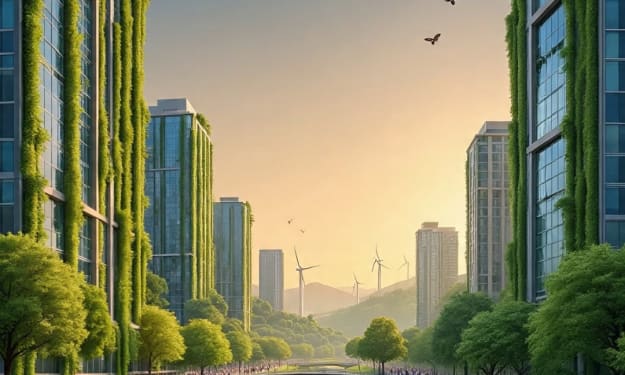
Whispers of the Green Tomorrow
🌿 Whispers of the Green Tomorrow A Heartwarming Journey into a World Where Nature Heals, Hope Grows, and Humanity Thrives In the quiet valley of Aravelle, nestled between mountains painted in emerald hues, a transformation had begun. It wasn’t loud or sudden—no grand announcements or world leaders at podiums. It started with a whisper. A single voice, a single seed, and a spark of hope that spread like morning sunlight over dew-covered grass. Lena Wren, a schoolteacher in her early forties, had returned to her hometown after years in the city. The noise, the rush, the concrete—it had worn her thin. Aravelle was once a place of green hills and clean rivers, but like so many places, it had suffered. Trees had been cut down, the river had shrunk, and the birds had long forgotten the way home. But Lena believed in beginnings. With her savings, she purchased a small piece of neglected farmland on the edge of the village and began to plant—not just crops, but possibilities. She dug her hands into the soil, planted native trees, restored the stream with the help of some old village friends, and opened her land to children who had never seen a butterfly up close. At first, people smiled politely. "How lovely," they’d say, then continue scrolling on their phones or driving past in a hurry. But nature, like kindness, is contagious. One day, 9-year-old Tobi, who was always seen with headphones and a screen, wandered into Lena’s garden during a school field trip. He touched the bark of an old oak she’d planted and whispered, “It feels alive.” It was a small sentence, but for Lena, it was everything. Soon, other children followed. They came to plant, to paint rocks, to build bee hotels and birdhouses. They learned to listen to the wind and read the sky. Slowly, their parents began to join. Then neighbors. Then travelers who heard whispers of something special blooming in Aravelle. The garden became a sanctuary. Flowers danced with bees, and laughter flowed louder than ever. The once-dry river now sparkled, its waters returning with the trees. Birds built nests again, and deer peeked from the woods, curious about the joyful noise. Lena started something called “The Green Tomorrow.” It wasn’t just a garden anymore—it was a movement. People shared seeds and stories, planted hope in pots on balconies, and restored spaces long forgotten. News spread beyond the valley. A young filmmaker named Riya visited Aravelle to document the change. Her short film, Whispers of the Green Tomorrow, went viral. It wasn’t flashy—just moments of real people reconnecting with the earth, a boy’s laughter as a butterfly landed on his nose, a grandmother planting lavender with her granddaughter, Lena smiling with muddy hands. Viewers cried. They shared. They planted. Schools across countries began starting gardens. Cities painted murals of forests and turned rooftops green. People paused in their busy lives to breathe. And amidst all of it, Lena remained in Aravelle, tending her garden with the same quiet dedication. When asked why she did it, she would say, “Because I believe the earth remembers kindness—and gives it back.” Ten years later, Aravelle became a model village for sustainable living. Solar trees lined the paths, food was grown locally, and every child could name more birds than brands. But the real magic wasn’t in the technology or the policies. It was in the people—connected again, not just to nature but to each other. In one of the village’s new community centers, engraved on the wall were the words: “Hope is not a loud promise. It's a quiet seed that grows when someone dares to care.” And so, the whisper became a song. A melody of green tomorrows—sung by rivers, carried by winds, blooming in the hearts of people everywhere.
By Muhammad Saad about a year ago in Earth