Latest Stories
Most recently published stories in Earth.
100% Chance of an Earthquake
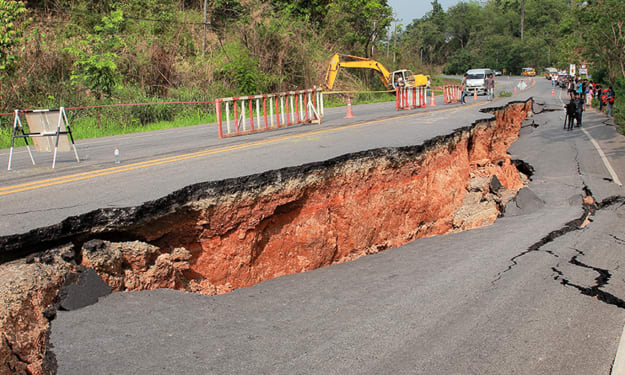
Imagine waking up and hearing a news report that begins with: “There’s a 100% chance of an earthquake today.” It sounds alarming, almost apocalyptic—something that would send people rushing to pack emergency kits, secure their homes, and perhaps even panic about what’s to come. But here’s the truth: that statement is completely accurate, and not because someone has cracked the code of earthquake prediction. Rather, it’s because earthquakes happen every single day on our planet. The only question is where and how strong.
By Fazal Ur Rahmanabout a year ago in Earth
Amazing Animals the Democratic Republic of the Congo
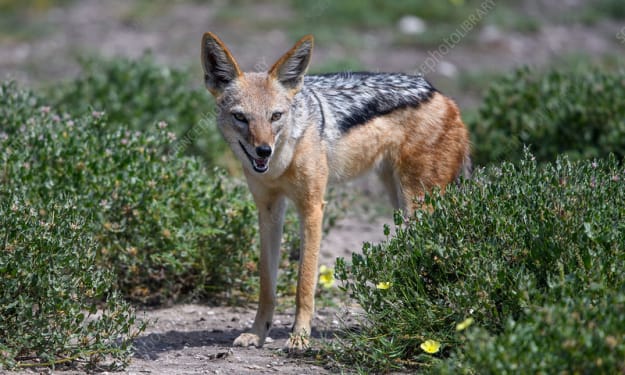
The Democratic Republic of the Congo (DRC) is one of Africa’s most biodiverse countries. It is home to the mountain gorillas. The country is home to the oldest national park in Africa, Virunga National Park. The diverse landscape includes rainforests, savannas, wetlands, and volcanic landscapes.
By Rasma Raistersabout a year ago in Earth
Upon the Waves of the Atlantic
Bluefintuna are fish that have a high tolerance for disparity in temperatures since they have the ability to keep warm. These fish have a metallic blue color that blends into their environment. With their streamlined bodies, they can build up speed gliding through the water. They feed on herring, mullet, mackerel, squid, crabs, and shrimp. They’re known for traversing the Atlantic Ocean repeatedly each year.
By Rasma Raistersabout a year ago in Earth
Nha Trang's Husband Rock formation.
Many folk tales surround Hon Chong. The strangest is on the highest point. A giant handprint is pressed deep into a large rock. It shows the palm and five fingers. It looks like a huge hand held on as the rock formed. This mark remains today.
By hale243027about a year ago in Earth
Rising Waters, Rising Resilience
Rising Waters, Rising Resilience How Communities Are Adapting, Innovating, and Thriving in the Face of Floods Floods have long been seen as devastating forces of nature—sweeping away homes, crops, and livelihoods. But in many corners of the world, communities are rewriting the narrative. Instead of merely bracing for disaster, they are preparing, adapting, and even finding opportunities to grow stronger. This is the story of resilience—of people who face the rising waters not with fear, but with innovation and unity. In the rural district of Gaibandha, Bangladesh, where monsoon floods are an annual certainty, families used to spend months each year displaced from their homes. But today, something remarkable is happening. Thanks to local initiatives supported by NGOs and climate-adaptive strategies, homes are being built on raised earthen mounds called plinths. These mounds rise above expected flood levels, keeping families dry even when surrounding areas are submerged. “When the floods come, we stay home now,” says Anika, a mother of three. “We used to lose everything each year. Now we can grow vegetables on floating gardens, and my children still go to school.” These floating gardens—constructed from water hyacinth, bamboo, and soil—are another example of how communities are adapting creatively. They allow for year-round farming, even during flood season. Crops like spinach, pumpkin, and okra are grown on rafts that gently rise and fall with the water, ensuring food security and income when traditional fields are underwater. Innovation is not limited to rural areas. In the city of Rotterdam, Netherlands, which lies largely below sea level, engineers and urban planners have turned water management into an art form. The city features flood-resilient infrastructure like water plazas—public spaces that serve as parks in dry weather and water catchment areas during storms. Buildings are constructed on floating platforms or elevated on stilts, and the city’s complex system of dikes, canals, and surge barriers are managed with cutting-edge technology. “We don’t fight water—we live with it,” says Pieter de Vries, a water management engineer in Rotterdam. “That’s the secret to our success.” In Jakarta, Indonesia, frequent floods once paralyzed the city. Today, local youth groups are leading awareness campaigns, helping clean drainage systems, and planting trees in urban wetlands to prevent runoff. They’ve also helped implement a digital flood-warning system that alerts residents via mobile phones hours before floodwaters arrive, giving them time to protect their homes and evacuate if necessary. Education plays a critical role in fostering resilience. In the Philippines, where typhoons and flooding are increasingly common, schools are teaching children how to respond during disasters, turning them into “young preparedness ambassadors.” These students often go home and teach their families what to do—how to build emergency kits, where to go, and when to act. Across the world, governments, scientists, and citizens are collaborating to develop more adaptive and inclusive flood strategies. Satellite data and artificial intelligence are being used to predict floods with increasing accuracy. Community leaders are working closely with scientists to integrate traditional knowledge with modern solutions. And more importantly, marginalized groups—often the most affected by flooding—are being included in planning and decision-making processes. Floods are no longer viewed solely as natural disasters but as challenges that can be managed and even anticipated. Through smart design, community education, and local empowerment, people are learning not just to survive, but to thrive in the face of rising waters. These stories of resilience carry a powerful message: Climate change may be intensifying floods, but human determination is rising even faster. “The water doesn’t scare us anymore,” says Anika, smiling as she pulls fresh tomatoes from her floating garden. “It reminds us to stay ready, to stay united, and to keep building better.” In every flooded field turned into a floating farm, every child learning disaster readiness, and every community reimagining how to coexist with water, a quiet revolution is underway. The world may be changing—but so are we. And in that change lies hope.
By Muhammad Saad about a year ago in Earth
Lemuria
Lemuria… A lost civilization that holds a much deeper secret than the shadow of Atlantis. This ancient civilization was not merely a place lost in the depths of time, but also humanity’s lost spiritual heritage. Yet perhaps a very different reality awaits us: Lemuria did not vanish completely… it is a land whose presence can still be felt in the quiet flow of time.
By Infinite Queriesabout a year ago in Earth
The Hidden Fury of Nature:
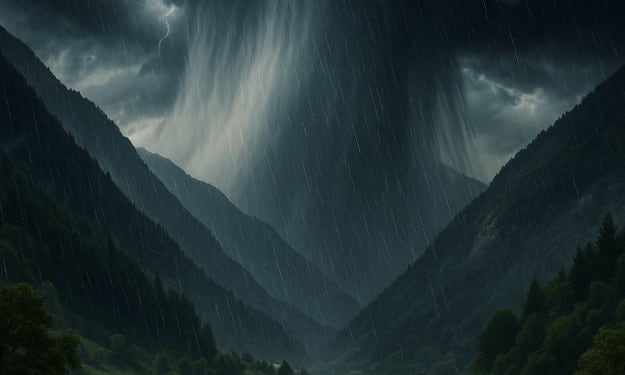
When we think of natural disasters, images of earthquakes, hurricanes, and floods often come to mind. However, in recent years, one term has frequently made headlines in many parts of the world, particularly in mountainous regions: cloud burst. The phenomenon of a cloud burst can transform a peaceful valley into a raging torrent within minutes, leaving devastation in its wake. But what exactly causes a cloud burst, and why does it happen so suddenly? Let’s dive deep into the science, geography, and human factors behind this frightening event. --- What is a Cloud Burst? In simple terms, a cloud burst is an extreme amount of rainfall that occurs in a very short period of time, usually localized to a small area. Imagine the sky opening up like a giant water tap, pouring down massive quantities of rain in a matter of minutes. Unlike a regular downpour or thunderstorm that can last for hours and cover large regions, a cloud burst is concentrated, intense, and sudden. Scientists typically classify a cloud burst as rainfall exceeding 100 millimeters (about 4 inches) within an hour over a small area of around 25 square kilometers or less. This level of rainfall is too much for the soil, rivers, or drainage systems to handle, resulting in flash floods, landslides, and destruction. --- The Science Behind Cloud Bursts Cloud bursts occur because of a combination of meteorological and geographical factors. Here are the main causes: 1. Orographic Lifting (Mountains at Work) Most cloud bursts occur in mountainous regions such as the Himalayas. This is because moist air from oceans or plains moves upward when it encounters mountains. As the air rises, it cools rapidly, and the water vapor condenses to form dense clouds. If these clouds become saturated and unstable, they can release their moisture suddenly, causing a cloud burst. 2. Convectional Rainfall In hot climates, warm air near the surface rises quickly and carries a large amount of moisture. When this air cools at higher altitudes, the vapor condenses and results in heavy rainfall. In some cases, the condensation becomes so intense that it leads to an explosive downpour — the hallmark of a cloud burst. 3. Low-Level Jet Streams A lesser-known but significant cause involves jet streams, which are fast-moving air currents in the atmosphere. When these streams interact with monsoon winds, they can push massive amounts of moisture into a localized area. This enhances rainfall intensity, triggering conditions suitable for a cloud burst. 4. Thermodynamic Instability Sometimes the atmosphere becomes unstable because of temperature differences between the ground and the upper atmosphere. When moist, warm air collides with colder air masses, it creates instability that can result in sudden and concentrated rainfall. --- The Role of Geography Geography plays a critical role in determining where cloud bursts occur. Areas with steep slopes, narrow valleys, and fragile soil are particularly vulnerable. This is why countries like India, Nepal, and Pakistan, which lie along the Himalayan range, frequently experience cloud bursts during the monsoon season. The limited area of valleys also means that water has fewer outlets. When a sudden downpour happens, rivers swell beyond capacity, causing flash floods. The lack of wide floodplains in hilly regions only amplifies the damage. --- Human-Induced Factors While cloud bursts are natural events, human activity has worsened their impact: 1. Deforestation: Cutting down forests weakens the soil’s ability to absorb water, leading to landslides after heavy rain. 2. Urbanization: Expanding towns and cities in vulnerable areas reduce natural drainage, increasing the risk of flash floods. 3. Climate Change: Rising global temperatures increase the water-holding capacity of the atmosphere. This means storms and rainfall events, including cloud bursts, are becoming more frequent and intense. --- Recent Examples Cloud bursts have caused significant tragedies in recent decades. For example: In 2010, Leh in Ladakh, India, witnessed a devastating cloud burst that killed over 200 people and left thousands homeless. In 2021, Himachal Pradesh and Uttarakhand faced multiple cloud bursts that triggered landslides and destroyed homes, showcasing the vulnerability of Himalayan states. Similar events in Nepal and Pakistan have displaced entire communities, proving that this is a regional challenge linked closely with geography and climate change. --- How Can We Mitigate the Impact? We cannot stop cloud bursts from occurring, but we can certainly reduce their destructive effects. Here are some preventive and adaptive measures: 1. Early Warning Systems: Installing Doppler radars and using satellite data can help predict extreme rainfall events. 2. Sustainable Construction: Limiting construction in ecologically sensitive and flood-prone zones. 3. Afforestation: Planting trees strengthens soil and reduces landslides caused by cloud burst rain. 4. Community Preparedness: Educating local populations about emergency protocols, evacuation routes, and disaster management. --- Conclusion A cloud burst is not just a meteorological event; it is a reminder of nature’s power and unpredictability. While rooted in natural processes like orographic lifting and atmospheric instability, the intensity of cloud bursts is undeniably linked to human-induced climate change and reckless land use. Understanding the causes of cloud bursts is the first step toward preparedness. As communities continue to expand into fragile landscapes, it becomes increasingly important to respect ecological balance, adopt sustainable practices, and develop effective disaster management strategies. Only then can we hope to coexist safely with this fierce and sudden fury of nature.
By Hasbanullahabout a year ago in Earth
Cloudburst: Nature's Unexpected Fury from the Sky
A cloudburst is one of nature’s most extreme and sudden weather events. It is characterized by extremely heavy rainfall in a short period, often in localized areas, leading to flash floods and devastating consequences for life, property, and the environment. Unlike regular rain, cloudbursts are abrupt and powerful, dumping large volumes of water — sometimes more than 100mm within an hour — overwhelming drainage systems and natural waterways.
By Muhib Ullah about a year ago in Earth
"Climatic Changes and Religion"
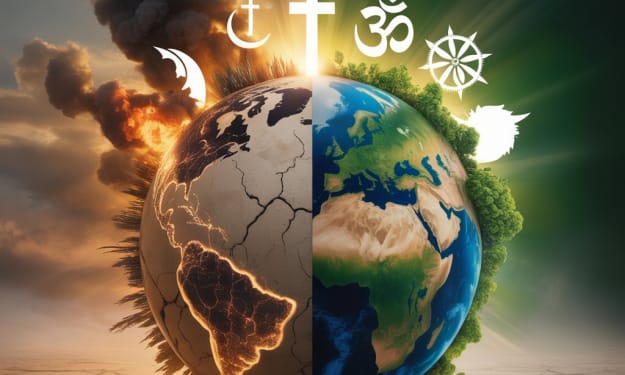
A Critical Analysis of Faith-Based Denial and Responsibility Climate change is one of the greatest global threats of the 21st century. Rising sea levels, intense heat waves, prolonged droughts, and more frequent floods are no longer abstract predictions but realities confronting communities worldwide. Yet, despite overwhelming scientific evidence, many religious groups and individuals remain skeptical, dismissing climate change as either an exaggeration, a natural cycle, or worse, a punishment sent by God. This mindset, while rooted in faith, creates significant barriers to climate action. In this article, we critically analyze how religion can sometimes fuel denial of climate change, why this perspective is dangerous, and how religious frameworks can still be redirected toward constructive solutions.
By Malik Rohail Khanabout a year ago in Earth
Swat and Buner Flood Devastation: A Wake-Up Call for Pakistan
On the night of August 15, 2025, the peaceful valleys of Khyber Pakhtunkhwa were transformed into rivers of destruction. A rare cloudburst unleashed an unprecedented 150mm of rainfall within an hour, tearing through Buner and Swat districts with merciless force. What followed was a catastrophe that has left Pakistan reeling: hundreds dead, thousands displaced, and entire communities reduced to mud and rubble.
By Fazal Ur Rahmanabout a year ago in Earth